Manduka Begin vs Retrospec Solana 1/2": Which One Should You Buy?
Both of these get bought by people who have just signed up for a class. The Begin is Manduka's beginner mat, 5 mm of TPE with an alignment stripe printed down the middle. The Solana is half an inch of foam for $25 with a nylon strap in the box. One is teaching you something and the other is padding your knees.
As an Amazon Associate, we earn from qualifying purchases made through links on this page. How this works
The quick answer
The Begin is 68 by 24 inches, 5 mm, 2.5 pounds, ten colorways, 4.3 stars across roughly 1,428 Amazon ratings. The Solana half inch is 72 by 24, 12.7 mm of NBR foam, 3 pounds, $24.99, 4.4 stars across about 9,232 ratings, with a six month defect warranty and a strap. Neither has been through GearLab's testing.
Get the Begin if you want the alignment stripe and a firm surface that holds still in balance poses. Get the Solana if your knees hurt on a hard floor, if you are taller than about five foot eight, or if $37 matters more than a printed line.
Get the Manduka Begin if...
- You want a center line to square your hands and feet against
- Balance poses feel wobbly on soft mats
- You want 2.5 pounds, the lightest mat Manduka makes
- You want a reversible mat with two colors
Get the Retrospec Solana 1/2" if...
- Your knees and wrists want real padding
- You want four extra inches of length
- You'd rather spend $25 than $62
- You want a carry strap in the box
Side by side
Price
The Solana 1/2" lists for about $37 less.
$62
List price · check price at Amazon
$24.99
List price · check price at Amazon
Thickness
The Solana 1/2" is 154% thicker.
5 mm0.2″
12.7 mm0.5″
Weight
The Begin is 0.5 lbs lighter.
2.5 lbs1.1 kg
3 lbs1.36 kg
Size
The Solana 1/2" is 4″ longer; same width.
Same on both
- 24 inches wide
- Closed surfaces, so sweat sits on top
- 2.5 to 3 pounds
- Reversible, with the same surface on both faces
Full specs
Dimensions
Materials & build
Buying
Two mats bought in the first week of yoga
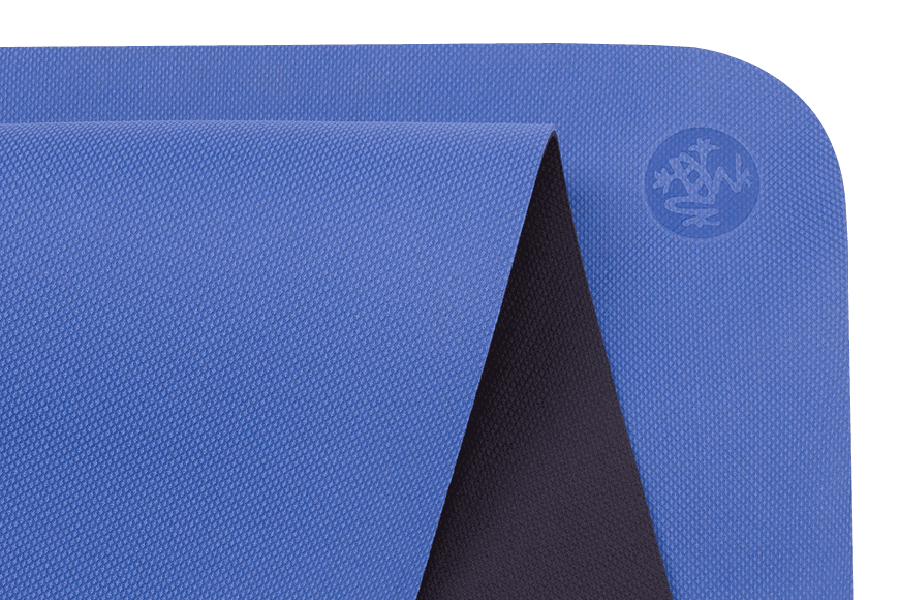
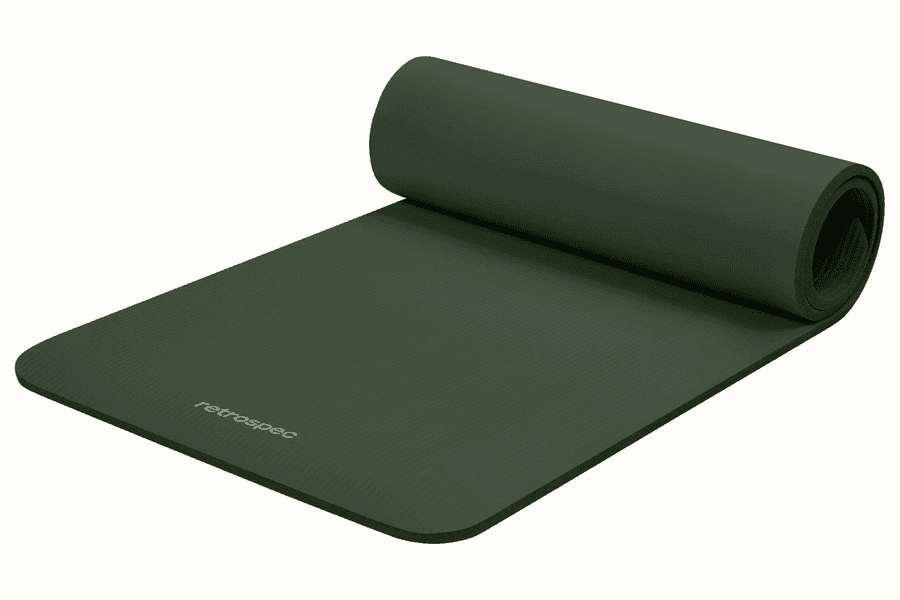
The Begin is Manduka’s starter mat: 5 mm of soft-touch TPE with an alignment stripe printed down the middle, $62. The Retrospec Solana is 12.7 mm of NBR foam for $24.99, with a nylon strap in the box and 4.4 stars across roughly 9,232 Amazon ratings.
One is trying to teach you something and the other is padding your knees. Both are reasonable first mats, and the $37 between them buys a specific pair of things rather than a general upgrade.
The alignment stripe is what you are paying for
It is a printed center line, and for someone practicing at home without a teacher it earns its place. Squaring hands, feet and hips against a fixed reference is feedback you would otherwise be guessing at, and it is under your nose every session.
Two caveats worth knowing. It is printed rather than moulded, so it fades over years of heavy use. And once your practice settles you stop seeing it, at which point a plain mat does the same job.
The Begin is short, and there is no longer one
68″ against the Solana’s 72″. Four inches does not sound like much until savasana, where at around five foot eight and up your heels or your head end up on the bare floor.
Manduka sells the Begin in one size only, so there is no way to fix this within the model. If you are tall and set on Manduka, the Manduka X is 71 inches for $72, and the PROlite line goes to 79.
Half an inch of foam is a lot of foam
The Solana is more than twice the Begin’s thickness, and it is softer material on top of that. For kneeling, floor work and stretching on a hard surface it is genuinely more comfortable, and for a beginner with sore wrists it is the kinder mat.
Standing up, it works against you. Soft foam compresses unevenly under one foot, so tree pose and warrior three become a negotiation with the surface. The Begin’s firmer TPE gives a flatter read on the floor, which is the more useful property while you are learning shapes.
Grip: fine in a cool room, poor once you sweat
Both surfaces are closed, so neither absorbs anything. Dry, both grip well enough that you will not think about them, and the Begin’s firmer surface has a slight edge because it does not shift under your hand.
Damp, both give way. Texture stops helping the moment your palms are wet, which is true of every mat at this price and not a specific failing of either. Plan on a mat towel if you are heading for heated classes.
Weight, bulk, and what comes in the box
The Begin is 2.5 pounds, the lightest mat Manduka makes, and it rolls slim. The Solana is 3 pounds and rolls into a much fatter cylinder, because half an inch of foam does not compress.
The Solana includes a nylon carry strap; the Begin includes nothing and Manduka sells slings separately. If the mat rides to a studio, the Begin is the easier one to carry despite the Solana’s strap, purely on bulk.
A couple of years from either
TPE dents and can flake where hands and feet land, and sunlight speeds it up. NBR foam compresses and takes a permanent set, so the plush half inch you bought is measurably thinner at the kneeling spots by year two.
Retrospec covers defects for six months alongside a 30 day return window. Manduka gives the Begin 30 day returns and no warranty at all. Neither promise addresses the way these mats actually end, which is normal at this price.
Price and what to do with the difference
Check the current prices on the Begin and the Solana. Both move with colorway sales, and the Solana comes in thirteen colors against the Begin’s ten.
Thirty-seven dollars is real money at this end of the market. Spent on the Solana plus a couple of blocks and a strap, it covers most of a beginner’s kit. Spent on the Begin, it buys the stripe and a firmer surface, and nothing else.
Materials, colors, and smell
The Begin is TPE made in Taiwan, reversible so the underside gives you a second color, in around ten colorways. TPE contains no PVC and no latex, and it is milder out of the box than most cheap mats, though a day unrolled still helps.
The Solana is NBR foam in thirteen colorways, ribbed on both faces. NBR is a synthetic rubber foam rather than natural rubber, so it is safe with a latex allergy, and it arrives with a chemical smell that passes over a few days.
Neither is the mat to buy if avoiding plastics is the point. That search leads to natural rubber, cork or jute, and it starts at roughly double the Begin’s price.
Bottom line
Get the Begin if you are learning at home and want the alignment line, or if wobbling in balance poses is what frustrates you. It is firmer, lighter, and the stripe is a genuinely good idea for a beginner. Just check your height against 68 inches first.
Get the Solana if your knees hurt, if you are taller than about five foot eight, or if $25 is the right amount to risk while you find out whether this sticks. When it flattens or gets slippery, that is your cue to move up a tier, and our Manduka PRO comparison covers what the money buys at the far end.
Manduka Begin
List price $62
Retrospec Solana 1/2"
List price $24.99
Frequently Asked Questions
- Is the alignment stripe worth $37?
- For a genuine beginner practicing at home without a teacher watching, it earns a lot of its keep. Squaring hands, feet and hips against a fixed line is feedback you otherwise have to guess at. Two caveats: it is printed rather than moulded, so it fades over years of heavy use, and once your practice settles you stop noticing it.
- Is half an inch too much cushioning for yoga?
- For standing poses, usually yes. Soft foam at 12.7 mm compresses unevenly under one foot, so tree pose and warrior three turn into balance drills against the mat. For floor work, restorative practice and stretching it is a real benefit. The Begin's firmer 5 mm is the better standing surface by a clear margin.
- Which is long enough for me?
- The Begin is 68 inches, which is short. If you are around five foot eight or taller, your heels or your head will hang off in savasana, and Manduka does not sell a longer Begin. The Solana is 72 inches, the normal standard. That four inch difference matters more than most spec-sheet gaps at this price.
- Which grips better when I sweat?
- Neither. Both are closed surfaces, so sweat sits on top with nowhere to go. Dry, in a cool room, both are fine and you will not think about it. If heated classes are where you are heading, plan on a mat towel over either one, or budget for a rubber or polyurethane-topped mat instead.
- How long will each one last?
- A couple of years of regular practice from either. The Begin's TPE dents and can flake where hands and feet land. The Solana's NBR foam compresses and takes a permanent set, so the plush half inch you buy is thinner where you kneel by year two. Retrospec covers defects for six months; Manduka gives the Begin 30 day returns and no warranty.
- What should I upgrade to later?
- Once a few months on a starter mat has told you what actually bothers you, the usual next step is a natural rubber mat around $100, which fixes grip, or a dense PVC mat like Manduka's PROlite if durability is your complaint. Buying the cheap mat first is a reasonable plan, not a mistake to avoid.
Related comparisons
- Amazon Basics 1/2 Inch Extra Thick vs Retrospec Solana 1/2"
- Manduka Begin vs IUGA Eco Friendly Non Slip PU
- Manduka Begin vs Gaiam Performance Dry-Grip 5mm
- Manduka Begin vs Hugger Mugger Earth Elements 5mm
- Manduka Begin vs JadeYoga Level One
- Manduka Begin vs Gaiam Performance Dry-Grip Long & Wide
- Retrospec Solana 1/2" vs Gaiam Essentials Fitness Mat 10mm
- Manduka Begin vs 42 Birds The Robin
- Manduka Begin vs Gaiam Premium Reversible 6mm