Manduka Begin vs b, halfmoon B Mat Everyday 4mm: Which One Should You Buy?
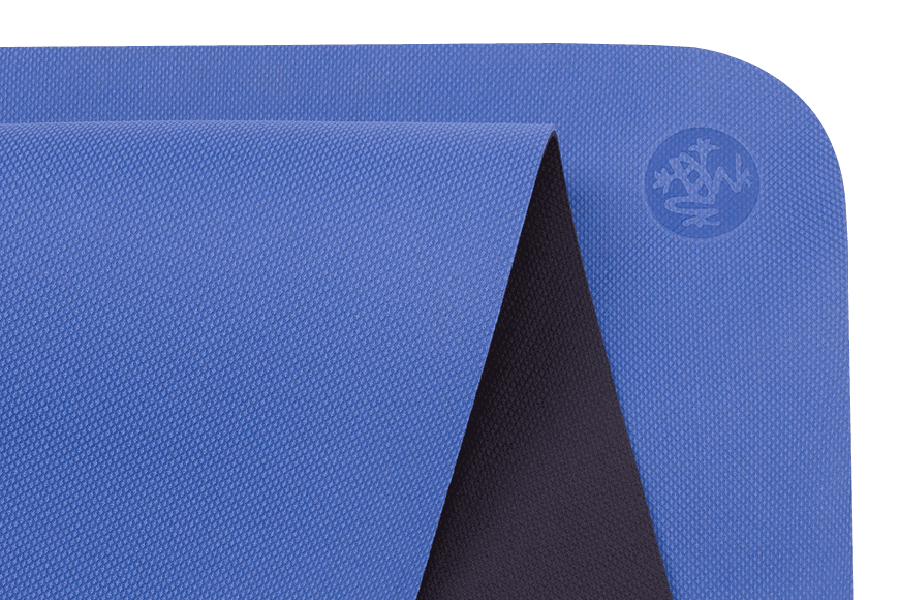
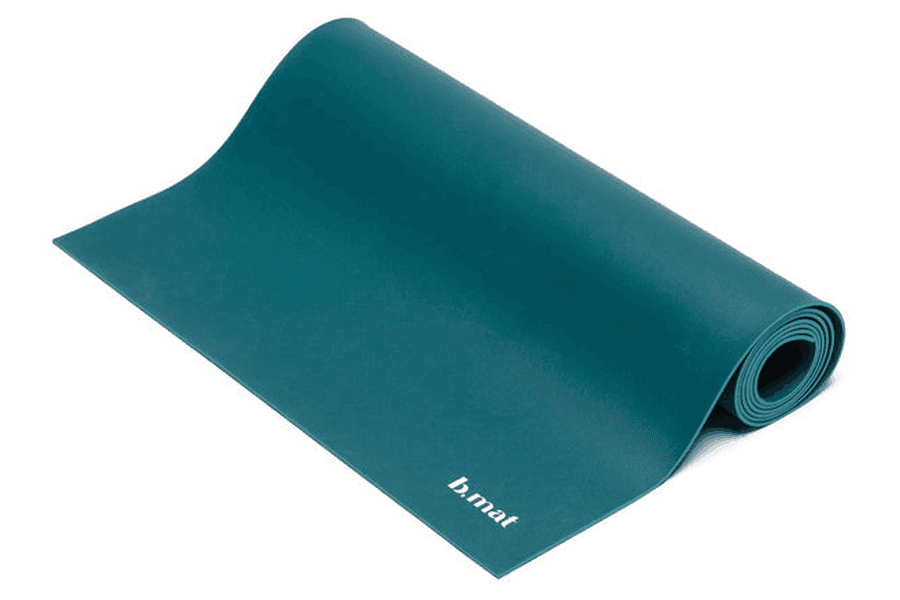
The Begin is Manduka's starter mat: light TPE, an alignment stripe, $62. The B Mat Everyday is a 4 mm rubber mat from b, halfmoon that costs $118 and is known almost entirely for one thing, which is how well it grips. This is a straightforward question about whether grip is worth $56 to you yet.
As an Amazon Associate, we earn from qualifying purchases made through links on this page. How this works
The quick answer
GearLab reviewed the B Mat Everyday at 78 out of 100, with 9 out of 10 for grip and 8 for comfort, in a standalone test dated November 2023. That review is filed under the brand's old B Yoga name and is flagged as discontinued because of the rename, so treat the score as sound and the label as out of date. The Begin has not been tested; it is 5 mm of TPE at 2.5 pounds with 4.3 stars across roughly 1,428 Amazon ratings.
Get the Begin if you are still finding out whether yoga sticks, because $62 is the right amount to risk on that. Get the B Mat Everyday if your hands already slide and you know you will keep practicing, since that is the specific problem it solves and TPE does not.
Get the Manduka Begin if...
- You are new and not ready to spend $118
- You want an alignment stripe to square up against
- You want 2.5 pounds to carry instead of 4.1
- You practice in a cool room and stay dry
Get the B Mat Everyday if...
- Your hands slide and it is ruining poses
- You want 26 inches of width instead of 24
- You want OEKO-TEX certified rubber made in Spain
- You want a mat with a year of warranty behind it
Side by side
Price
The Begin lists for $56 less.
$62
List price · check price at Amazon
$118
List price · check price at bhalfmoon.com
Thickness
The Begin is 25% thicker.
5 mm0.2″
4 mm0.2″
Weight
The Begin is 1.6 lbs lighter.
2.5 lbs1.1 kg
4.1 lbs1.86 kg
Size
The B Mat Everyday is 3″ longer; the B Mat Everyday is 2″ wider.
Same on both
- Reversible, with a usable surface on both faces
- Grippy from the first session, no break-in
- Around 4 to 5 mm thick
- Both fade or degrade if left in the sun
Full specs
Dimensions
Materials & build
Buying
- Everyday Long85" × 26"
A starter mat and a grip specialist
The Begin is Manduka’s beginner mat: 5 mm of light TPE with a printed alignment stripe, $62. The B Mat Everyday is 4 mm of dense rubber from b, halfmoon at $118, and it is known almost entirely for one property.
GearLab reviewed the B Mat at 78 out of 100, with 9 out of 10 for grip and 8 for comfort. That review is dated November 2023 and sits under the brand’s old B Yoga name, so treat the score as sound and the label as out of date.
Grip is the whole $56
Rubber has a tack that TPE cannot reproduce. Owners describe the B Mat as holding a dry palm from the first class, with no break-in period at all, and GearLab’s 9 out of 10 is one of the higher grip marks it has handed out.
The Begin’s soft-touch TPE is fine in a cool room and gives way once your palms are damp, which is true of every closed-cell foam mat. The B Mat is dense enough that sweat pools rather than soaking in too, so a heavy sweater still wants a towel on either.
The Begin has a teaching aid the B Mat does not
The printed center line is genuinely useful for a beginner practicing at home. Squaring hands, feet and hips against a fixed reference is feedback that otherwise needs a teacher in the room.
It is printed rather than moulded, so it fades over years, and experienced practitioners stop seeing it. The B Mat’s surface is plain, which is what most people end up wanting once alignment stops being the thing they are working on.
Size: the B Mat is wider, the Begin is short
The B Mat is 71″ × 26″. The Begin is 68″ × 24″, which is short by three inches and narrow by two. Above about five foot eight, savasana on the Begin ends with heels or head on the floor.
The extra two inches of width show up in wide-legged forward folds and side angle work. b, halfmoon also makes an Everyday Long at 85 inches for anyone who needs serious length; Manduka sells the Begin in one size only.
Five millimeters of TPE against four of rubber
On paper the Begin is thicker. In practice the mats feel different rather than one feeling plusher: dense rubber protects a joint better than the same thickness of foam, but the Begin’s softer TPE is actually the kinder surface for long kneeling holds.
The B Mat is the firmer platform for standing work, and firmness is what balance poses want. Neither is a cushioned mat. A folded towel under the knee settles it on either one.
Rubber lasts, TPE does not
This is the second half of the price gap. The B Mat is dense rubber covered by a one year warranty, and rubber wears slowly and evenly and keeps working while it does.
The Begin’s TPE dents and can flake within a couple of years of frequent use, and Manduka gives it 30 day returns and no warranty at all. Both mats hate sunlight, rubber especially, so neither belongs in a hot car.
Weight and carrying
2.5 pounds for the Begin, the lightest mat Manduka makes, against 4.1 for the B Mat. That is a real difference on a walk to a studio, and it is one of the few rows the cheap mat wins outright.
Neither is heavy in absolute terms. For comparison, the Manduka PRO runs 7.5 pounds, which is the weight class people actually complain about.
Where to buy each one
The B Mat sells direct from us.bhalfmoon.com at $118 in seven colorways. The old B Mat Amazon listings are dead, so there is no marketplace price to compare and no discount to hunt.
The Begin is an Amazon staple at $62 in around ten colorways, and it does get discounted. Check the current price there, since a sale occasionally widens this gap past $60.
Materials, certification, and latex
The B Mat is mostly natural rubber with some synthetic, made in Spain and certified to OEKO-TEX Standard 100, which means the finished material has been tested for harmful substances. It is also the reason the mat is unsuitable for anyone with a latex allergy.
The Begin is TPE, which contains no latex and no PVC and carries no certification. That makes it the safer choice for a latex-sensitive household and the weaker one on every other materials question.
Smell splits the same way. Rubber has a strong first few weeks that fades and never quite disappears; TPE is milder from the start. Whichever you buy, unroll it somewhere ventilated for a day or two before the first session.
Bottom line
Buy the Begin if you are still finding out whether yoga sticks. Sixty dollars is the right amount to risk on that, the alignment stripe helps while you are learning, and the mat is light enough to carry anywhere. Just check your height against 68 inches.
Buy the B Mat Everyday if your hands already slide, or if you know you are going to keep practicing. Grip is the specific problem it solves and TPE does not solve it at any price. Buying it now saves you buying twice, which is what usually happens.
Manduka Begin
List price $62
B Mat Everyday 4mm
List price $118
Frequently Asked Questions
- Is the B Mat really that grippy?
- Yes, and it is the mat's reputation for good reason. GearLab's standalone review scored it 9 out of 10 for grip, one of the higher marks it has given, and owners describe a tacky feel from the first class with no break-in. The rubber is dense enough that sweat pools rather than soaking in, so a heavy sweater still wants a towel.
- Why does GearLab list the B Mat as discontinued?
- Because the brand renamed itself. B Yoga became b, halfmoon, and GearLab's review page still sits under the old name with a discontinued flag attached. The mat is still made and sold at us.bhalfmoon.com for $118. The test results are fine to cite; the discontinued label is about the branding, not the product.
- Is 4 mm enough cushioning?
- For standing practice on a wooden floor, yes, and dense rubber protects a joint better than the same thickness of foam would. For long kneeling holds on concrete it is thin, and the Begin's softer 5 mm TPE is actually the kinder surface there. Folding a towel under the knee solves it on either mat.
- Which is better for a complete beginner?
- The Begin, mostly on price and the alignment stripe. Spending $62 while you find out whether the habit sticks is sensible, and a printed center line is real teaching help at home. If you already know you are committed and grip is your complaint, skipping straight to the B Mat saves you buying twice.
- How long does each one last?
- The B Mat, considerably longer. Rubber wears slowly and it carries a one year warranty from b, halfmoon. The Begin's TPE dents and can flake within a couple of years of frequent use, and Manduka gives it 30 day returns and no warranty. Neither mat likes sunlight, and rubber in particular degrades in it.
- Where do I buy the B Mat?
- Direct from b, halfmoon. The old B Mat Amazon listings are dead, so there is no marketplace price to compare against and $118 is what you pay. The Begin is on Amazon at $62 and does get discounted by colorway, which occasionally widens the gap between these two further.
Related comparisons
- Manduka Begin vs IUGA Eco Friendly Non Slip PU
- Yoga Design Lab Combo 3.5mm vs b, halfmoon B Mat Everyday 4mm
- b, halfmoon B Mat Everyday 4mm vs Manduka GRP Adapt Lite 2.1 4mm
- Manduka PROlite vs b, halfmoon B Mat Everyday 4mm
- Lululemon The Mat 5mm vs b, halfmoon B Mat Everyday 4mm
- Manduka PROlite Long vs b, halfmoon B Mat Everyday 4mm
- Manduka Begin vs Gaiam Performance Dry-Grip 5mm
- b, halfmoon B Mat Everyday 4mm vs Manduka PRO Lite Terra 4.7mm
- b, halfmoon B Mat Everyday 4mm vs JadeYoga Harmony 2.0 68"