Liforme Classic vs Gaiam Premium Reversible: Which One Should You Buy?
Four times the price, and almost nothing in common beyond the shape. The Liforme Classic is eco-polyurethane bonded to natural rubber, bigger than a standard mat, and etched with the alignment grid that won it OutdoorGearLab's award for fine-tuning alignment. The Gaiam Premium Reversible is a $39.98 printed PVC mat with a second design on the back. Anyone comparing these two is really asking one question, so we will answer it directly.
As an Amazon Associate, we earn from qualifying purchases made through links on this page. How this works
The quick answer
Liforme is the better mat on every performance measure that has been tested. GearLab scored it 76 of 100 against the Gaiam's 54, rated its wet and dry grip among the best in the group, gave it the top mark in the test for care and cleaning, and named it best for fine-tuning alignment. It is also nearly two inches wider and four inches longer, and it comes with a proper carry bag.
None of that makes $125 automatic. If your practice is gentle and occasional and you want a mat that looks good in a spare room, the Gaiam does that. If you practice regularly, want alignment feedback, and sweat, the Liforme is worth the money and will feel worth it within a week.
Get the Liforme Classic if...
- You would use etched alignment lines to check your placement
- You want grip that survives sweaty hands
- You want the bigger surface at 72.8″ × 26.8″
- You practice often enough to notice a mat compressing under you
Get the Gaiam Premium Reversible if...
- You want a decent-looking mat for under $40
- You practice gently and occasionally, in a cool room
- You want two printed designs in one mat
- You would rather put $125 toward classes
Side by side
Price
The Gaiam Reversible lists for about $125 less.
$165
List price · check price at Amazon
$39.98
List price · check price at Amazon
Thickness
The Gaiam Reversible is 43% thicker.
4.2 mm0.17″
6 mm0.24″
Weight
The Gaiam Reversible is 2.2 lbs lighter.
5.5 lbs2.5 kg
3.3 lbs1.5 kg
Size
The Liforme is 4.8″ longer; the Liforme is 2.8″ wider.
Same on both
- Both roll out flat and stay put on hard floors
- Both come in patterns or colors rather than plain black
- Neither is machine washable
- Both are surfaces that will eventually show wear rather than fail outright
Full specs
Dimensions
Materials & build
Buying
A $165 mat and a $39.98 one, and what separates them
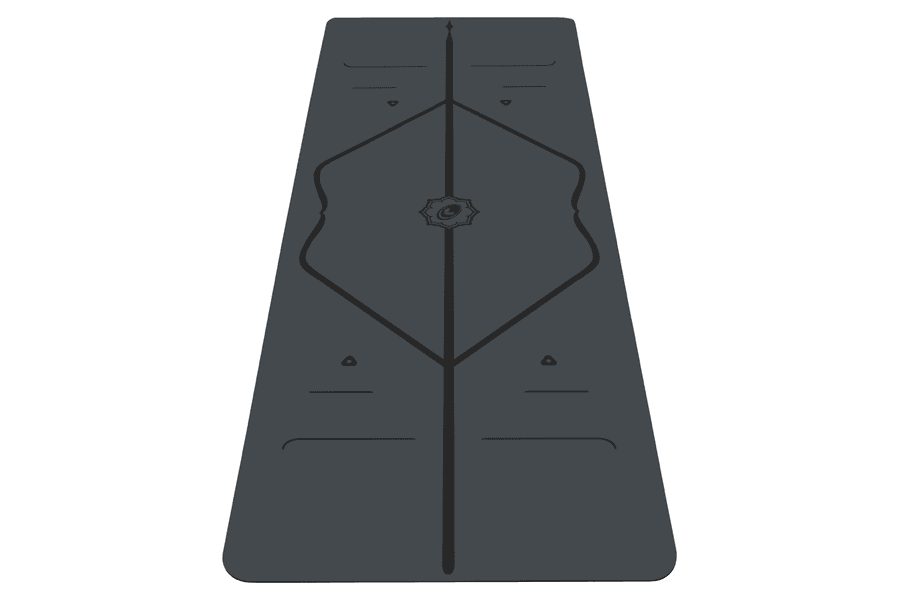
The Liforme Classic is eco-polyurethane bonded to natural rubber, 72.8″ × 26.8″, with an alignment grid etched into the surface. OutdoorGearLab scored it 76 out of 100 and named it the best mat in its test for fine-tuning alignment.
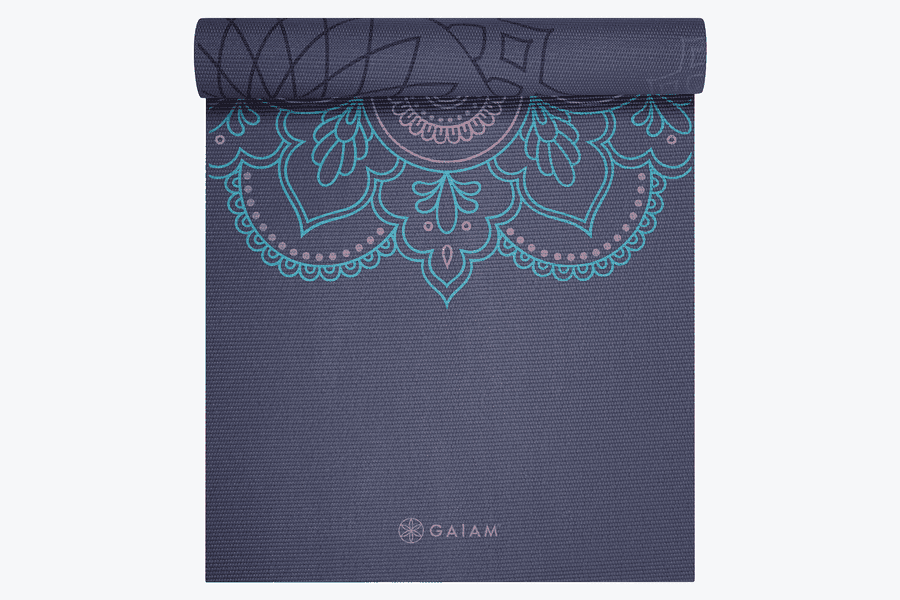
The Gaiam Premium Reversible is printed PVC foam, 6 mm, with a second design on the underside. GearLab scored it 54 out of 100, fifteenth of nineteen.
Nobody is genuinely torn between these two mats on performance. The question people are actually asking is whether $125.02 of difference is justified by anything they will personally notice, so that is what we will answer.
The alignment lines are the reason the Liforme exists
The Liforme’s surface carries an etched center line, placement markers for hands and feet, and angled guides for stance direction. Etched rather than printed, so they do not wear off, and subtle enough that they do not read as a diagram once you are moving.
What they do is give you fixed references. Is your back foot at 45 degrees or 60. Are your hips square or is the left one drifting forward. Are your hands actually the same distance from the center line. That is the feedback a teacher would give you, available on every home practice, and it is why GearLab handed the mat its alignment award.
The honest counterpoint: some people never look down. If you have practiced for years and your placement is automatic, the grid is decoration and you are paying for a feature you will not use.
Grip when you sweat
This is the second reason for the price. The Liforme’s polyurethane top absorbs moisture rather than letting it pool, so traction holds when your palms are damp. GearLab rated it 9 out of 10 dry and 7 wet, and listed excellent wet and dry grip in its pros.
The Gaiam scored 5 and 5, with slippery when wet in its cons. Its sticky finish depends on the surface staying dry, which it does in a cool room during gentle work and does not in anything heated or vigorous.
If you run warm or practice hot yoga, this section alone decides it. If you do slow, unheated work in a cold living room, the gap genuinely may not reach you.
The Liforme is bigger in both directions
72.8″ × 26.8″ against 68″ × 24″. Nearly five inches longer and almost three wider, which in practice means your hands stay on the mat in a wide down dog and your head is not on the floor when you lie down.
It also comes with a proper full-length carry bag rather than a strap, which is not a small thing at 5.5 pounds and is not something the Gaiam offers at all.
The cheaper mat is thicker and softer, not better
On the spec sheet the Gaiam is 6 mm and the Liforme is 4.2. GearLab still listed poor cushion among the Gaiam’s cons despite its 6 mm spec, which is what happens when soft foam compresses under the points you load hardest.
The Liforme is thinner and much denser, so it reads firm under a knee and stable under a standing foot. Neither mat is a joint-relief mat. If padding is your priority, spend a fraction of this money on a thick foam mat and accept the grip that comes with it.
Neither one lasts forever, and the paperwork is backwards
Liforme offers no warranty at all, just a 30 day return window, on a $165 mat. Gaiam advertises a lifetime guarantee on a $39.98 one. In practice neither policy will help you, because both mats wear rather than break.
The Liforme’s polyurethane top scuffs and takes on marks where hands and feet land, and GearLab noted it is not as durable as other high performers in the test. Liforme also states that its materials are designed to biodegrade. Expect a few years of regular practice. Expect less from the Gaiam, whose foam flattens first.
Care: more work, better result
The Liforme wants water or a very diluted mild soap after sweaty sessions, a full dry before rolling, no hot cars, no direct sun, and no strong cleaners, which damage both the top layer and the rubber base. Despite that list, GearLab gave it the highest care and cleaning score in the whole test, 9 out of 10, because the surface responds well to being looked after.
The Gaiam takes a wipe and no thought. GearLab did note its printed surface can transfer color onto clothing, which is worth knowing if you practice in pale leggings.
Prices, colors, and where to buy
The Liforme sells on liforme.com and Amazon, in gray, blue, purple and several more colorways, with the carry bag included either way. The Gaiam is on Amazon and gaiam.com in around ten printed designs, and it is discounted often enough that paying list is unnecessary.
If the Liforme appeals but the price does not, the closest alternative with the same absorbent construction is Manduka’s hot yoga mat, which we put head to head with the Liforme for $32 less and no alignment lines.
Bottom line
Buy the Gaiam Premium Reversible if you practice occasionally and gently, want a pattern you like, and would rather put $125 toward classes or a decent block set. It is a perfectly serviceable mat for a light practice and it does not pretend otherwise.
Buy the Liforme Classic if you would use the alignment grid, if you sweat, or if you want the extra size. Go in knowing there is no warranty and that the surface will show its age in a few years. What you get for that is the best-rated alignment mat available and a surface that keeps working when the room heats up.
Liforme Classic
List price $165
Gaiam Premium Reversible 6mm
List price $39.98
Frequently Asked Questions
- Are the Liforme's alignment lines actually useful?
- For most people, yes, and more than a printed stripe would be. The etched center line, placement markers, and angled guides give you fixed references for stance width, foot angle, and whether your hips are square, which is the feedback a teacher would otherwise give you. OutdoorGearLab named the Liforme its best mat for fine-tuning alignment. If you already know you would never look down, that is $125 you can keep.
- Which grips better when I sweat?
- The Liforme, comfortably. Its polyurethane top absorbs moisture instead of letting it bead, and GearLab rated its wet grip 7 out of 10 with excellent wet and dry grip listed among its pros. The Gaiam's sticky PVC scored 5 out of 10 wet and 5 dry, and slippery when wet appears in its cons. If you run warm, this is the whole comparison.
- The Gaiam is 6 mm and the Liforme is 4.2 mm. Is the Gaiam more comfortable?
- It is softer, not more supportive. GearLab still listed poor cushion among the Gaiam's cons despite its 6 mm spec, because soft PVC foam compresses under the exact points you load. The Liforme is thinner and denser, so it feels firmer under a knee and steadier under a standing balance. If joint padding is your priority, neither of these is the right answer and a thick foam mat is.
- What warranty do you get on each?
- This one is genuinely upside down. Liforme offers no warranty, just a 30-day return window, on a $165 mat. Gaiam advertises a lifetime guarantee on a $39.98 one. In practice both mats wear out rather than break, so neither policy is likely to matter, but it is worth knowing that the expensive mat comes with less paperwork, not more.
- How long does a Liforme last?
- Expect a few years of regular practice, not a decade. GearLab lists staining over time and durability below other high performers among its cons, and the polyurethane top is the part that goes: it scuffs and takes on marks where your hands and feet land. Liforme also states that its materials are designed to biodegrade. Treat it as a performance purchase you will replace, not an heirloom.
- How do I look after each one?
- The Liforme needs care and rewards it: wipe the top with water or very diluted mild soap after sweaty sessions, dry it fully before rolling, keep it out of hot cars and direct sun, and skip strong cleaners, which damage both the top layer and the rubber base. GearLab still gave it the best care and cleaning score in the test. The Gaiam takes a wipe-down and no thought at all, though GearLab noted its surface can transfer color onto clothing.
- Is either safe with a latex allergy?
- The Gaiam is latex-free PVC. The Liforme is built on a natural rubber base, so it is not safe with a genuine rubber allergy. If you want alignment lines without rubber, that is a narrower search than it sounds.
Related comparisons
- Gaiam Premium Reversible 6mm vs Gruper TPE 6mm
- Amazon Basics 1/4 Inch Thick TPE vs Gaiam Premium Reversible 6mm
- Gaiam Premium Reversible 6mm vs YogaAccessories Extra Thick Deluxe 1/4"
- JadeYoga Harmony XW vs Liforme Classic
- Liforme Classic vs Yoloha Unity Pro Cork
- Manduka PROlite Long & Wide vs Liforme Classic
- Manduka Begin vs Gaiam Premium Reversible 6mm
- Alo Warrior vs Liforme Classic
- Manduka GRP Adapt 2.0 Long vs Liforme Classic