Liforme Classic vs B Mat Everyday: Which One Should You Buy?
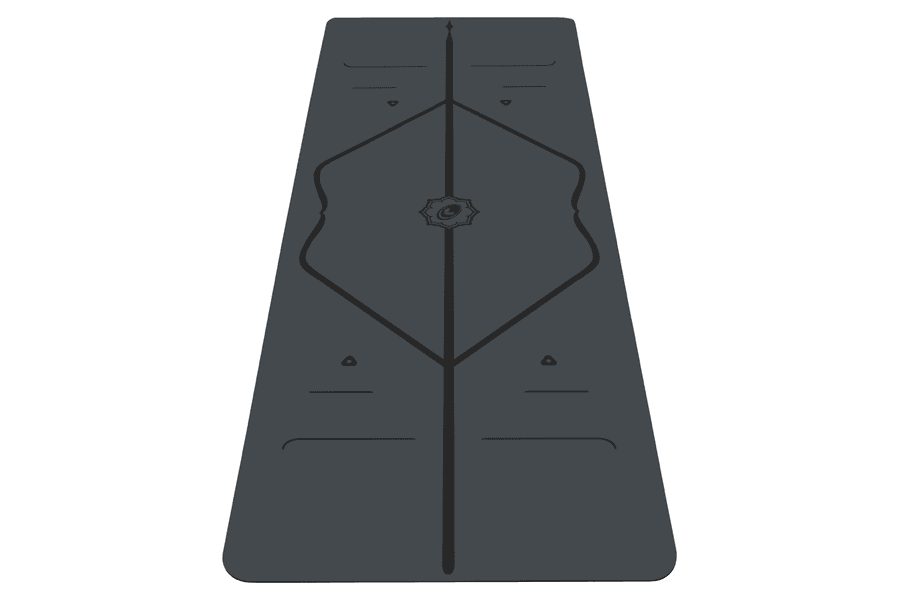
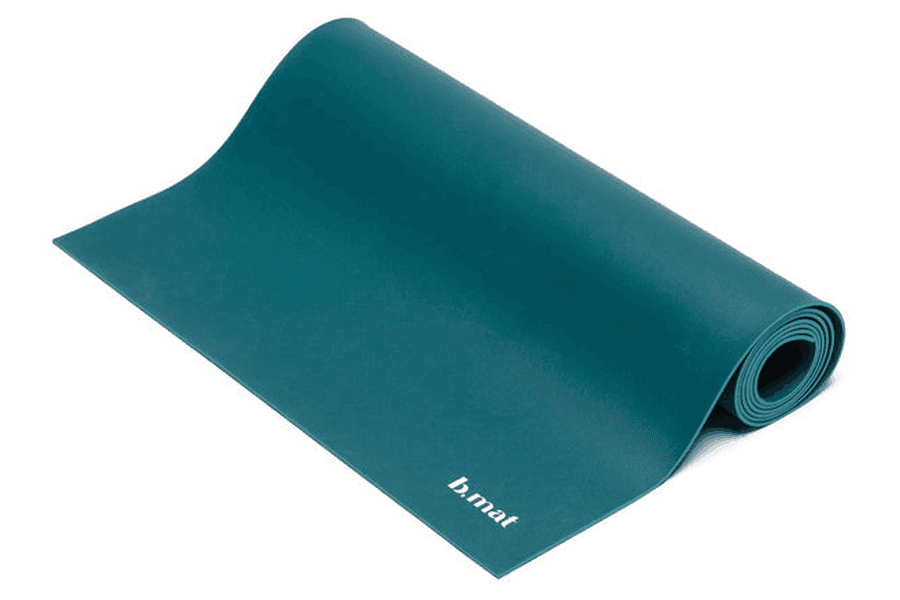
Both of these are bought by people who got tired of sliding. The Liforme puts an eco-polyurethane top over natural rubber and etches an alignment system into it. The B Mat Everyday is Spanish rubber, tacky the moment you unroll it, with nothing printed on it at all. The Liforme costs $47 more, weighs 1.4 pounds more, and is the only one of the two with a bag in the box.
As an Amazon Associate, we earn from qualifying purchases made through links on this page. How this works
The quick answer
Independent testing likes both. GearLab scored the Liforme 76 of 100 in its main roundup and gave it the alignment award, and reviewed the B Mat Everyday separately at 78 with grip at 9 of 10, calling it a favorite for hot yoga. On raw traction the B Mat is at least the Liforme's equal, and it costs $47 less and carries a written one-year warranty.
The Liforme's case is the alignment system, the wider footprint, easier cleaning, and a mat designed to biodegrade. The B Mat's case is grip, price, weight, and coverage. Both are honest buys; almost nobody needs both.
Get the Liforme Classic if...
- You would use etched alignment guides to check placement and stance
- You want the wider mat at 26.8 inches, and a carry bag included
- You want a smoother surface that lets a foot glide between poses
- End-of-life biodegradability matters to you
Get the B Mat Everyday if...
- You want the grippiest surface here, wet or dry
- You want to keep $47 and carry 1.4 pounds less
- You want a written year of coverage and an OEKO-TEX certification
- You would rather have plain rubber than markings on your mat
Side by side
Price
The B Mat Everyday lists for $47 less.
$165
List price · check price at Amazon
$118
List price · check price at bhalfmoon.com
Thickness
The Liforme is 5% thicker.
4.2 mm0.17″
4 mm0.2″
Weight
The B Mat Everyday is 1.4 lbs lighter.
5.5 lbs2.5 kg
4.1 lbs1.86 kg
Size
The Liforme is 1.8″ longer; the Liforme is 0.8″ wider.
Same on both
- Natural rubber in the build, so neither suits a latex allergy
- Grip from the first class with no break-in period
- Both are firm rather than plush
- Both wear from the surface down over a few years
- Neither has a reliable first-party Amazon listing for the brand
Full specs
Dimensions
Materials & build
Buying
- Everyday Long85" × 26"
Two mats for people who got tired of sliding
Neither of these is a beginner purchase. Both get bought by practitioners who worked out that their mat was the reason their hands kept creeping forward, and both fix it, by different routes.
The Liforme puts an eco-polyurethane top over natural rubber and etches an alignment system into it, for $165. The B Mat Everyday is Spanish rubber, tacky from the second you unroll it, with nothing printed on it at all, for $118. The gap is $47, and the more expensive mat isn’t the grippier one.
What independent testing says
GearLab covered these separately rather than head to head. In its main roundup the Liforme scored 76 of 100, took the award for fine-tuning alignment, and rated 9 out of 10 dry and 7 wet on grip, with testers describing the stickiness as gecko-like and noting a waterproof middle layer protecting the rubber base.
The B Mat Everyday got its own review at 78 overall, with grip at 9 out of 10, comfort and support 8, materials 6 and ease of use 7. The verdict called it a favorite for hot yoga, with rubber that held through sprinkles, puddles and waves of sweat and required no break-in.
Read that as two excellent surfaces, with the cheaper one at least matching the more expensive one on traction.
The grip feels different, not just stronger
The Liforme is smooth. Its top absorbs moisture rather than gripping by friction, so it holds your palm without grabbing it, and a foot can still glide forward when a sequence asks for it.
The B Mat is tacky. GearLab’s testers found the rubber held hands and feet firmly enough that they gave up sliding into position and began picking their feet up instead, and called it a poor fit for gliding-heavy styles. The same surface collects dirt, hair and lint constantly, so the review recommends storing it in a bag rather than a car trunk.
Which you prefer is genuinely personal. Fast vinyasa tends to favor the Liforme; slow, weighted, sweaty practice tends to favor the B Mat.
The alignment system
The Liforme’s markings are etched into the material rather than printed, so they don’t wear off, and they give fixed references for hand and foot placement, stance width, and whether you’re square. GearLab gave the mat an award specifically for that.
Whether it justifies $47 depends on your practice. Working from videos at home without anyone correcting you, or rebuilding form after an injury, the lines get used constantly. In a class where a teacher already adjusts you, most people stop noticing them inside a month, and the B Mat’s plain rubber costs nothing.
Size, cushion, and weight
The Liforme is 72.8″ × 26.8″ against the B Mat’s 71″ × 26″, so nearly two inches longer and a little wider. Both are wider than the old 24 inch standard, which is one of the quieter reasons people like them.
Thickness is close: 4.2 mm against 4, with comfort scores of 7 and 8. If you want more under your knees, b, halfmoon’s answer is the 6 mm B Mat Strong. The B Mat’s rubber is springier and GearLab called its cushioning hard to find at that thickness; its one complaint is bare skin, since a tacky surface isn’t the softest thing to lie on. The Liforme is denser and testers found it usable even on concrete and tile.
Weight favors the B Mat: 4.1 pounds against 5.5. The Liforme answers with a fully enclosed carrying bag in the box, which the B Mat doesn’t include.
Durability and coverage
Both wear at the surface and neither promises years. The Liforme’s polyurethane top fades with heavy practice, and GearLab rated it less durable than the top performers in its lineup. Liforme offers no warranty at all, deliberately, because the mat is built to biodegrade in one to five years, with a 30-day money-back guarantee from its own site.
b, halfmoon writes down one year, adds an OEKO-TEX Standard 100 certification, and describes its mats as built for two or more years of practice. GearLab noticed water staining on its test mat after the review period and found owners commonly reporting the top layer lifting where hands and feet land. Same end, better paperwork.
Materials and the eco angle
Both sit on natural rubber, so neither is safe with a genuine latex allergy. The Liforme’s environmental case is the stronger one: PVC-free, eco-polyurethane over natural rubber, and designed to break down in one to five years under normal landfill conditions, a claim almost nothing else in the category makes.
The B Mat is mostly natural rubber with some synthetic, made in Spain, and carries the certification the Liforme doesn’t. GearLab rated its materials 6 of 10 and the Liforme’s 7, so the gap is narrower than the marketing on either side suggests.
Where to buy
The Liforme sells through its own site and Amazon, where prices move around by colorway, so it’s worth checking both. One oddity: liforme.com shows prices in the currency of whichever regional storefront it routes you to, so confirm you are seeing US dollars.
The B Mat comes from b, halfmoon and nowhere reliable else; anything under its name on a marketplace is resold stock the brand will not stand behind. Shoppers who value a frictionless return will notice that.
Bottom line
Get the B Mat Everyday if grip is what you came for. It matches the Liforme on traction at $47 less, weighs 1.4 pounds less, and is the only one of the two with a written warranty. Accept that it grabs a sliding foot and attracts every hair in the building.
Get the Liforme if the alignment guides would genuinely shape your practice, if you want the smoother surface for fast transitions, or if biodegradability is your tiebreaker. It’s the best version of the alignment-mat idea and its grip lives up to the reputation. For the thicker version of the B Mat argument, see our Liforme vs B Mat Strong comparison.
Liforme Classic
List price $165
B Mat Everyday 4mm
List price $118
Frequently Asked Questions
- Which one grips better when you sweat?
- The B Mat, or at worst a tie. In its own review GearLab scored the B Mat's grip 9 out of 10, called it a favorite for hot yoga, and reported traction surviving everything from a light sprinkle to standing water, with no waiting period before it worked. The Liforme scored 9 dry and 7 wet in the main roundup, which is excellent, with testers calling its stickiness gecko-like. Both are among the best you can buy; the B Mat gets there for $47 less.
- Are the alignment lines worth $47?
- Only if you would use them. They are etched into the material rather than printed, so they do not wear off, and they give fixed references for hand and foot placement, stance width and centering; GearLab gave the mat an award specifically for that. Practitioners working from videos at home, or rebuilding form after an injury, lean on them constantly. People with a settled practice often stop noticing them inside a month, at which point the B Mat's plain surface costs nothing.
- What is the catch with the B Mat's grip?
- It grabs. GearLab's testers found the surface held hands and feet firmly enough that they gave up sliding into position and started picking their feet up instead, which they called a bad fit for gliding-heavy styles. It also collects dirt, hair and lint constantly, to the point the review recommends keeping it in a bag rather than a trunk. The Liforme's smoother top does neither of those things.
- Which is more comfortable?
- Close, with different reasoning. The Liforme is 4.2 mm of dense rubber under polyurethane and GearLab rated its comfort 7 of 10, finding it usable even on concrete and tile. The B Mat is 4 mm of springier rubber and scored 8, with the testers calling the cushioning hard to find at that thickness. Its one complaint is bare skin: a tacky surface is not the softest thing to lie on. Neither is a plush mat.
- How do the warranties compare?
- b, halfmoon wins this outright. It writes down one year, adds an OEKO-TEX Standard 100 certification, and describes its mats as built for two or more years of practice. Liforme offers no warranty at all, deliberately, because the mat is designed to biodegrade in one to five years, with a 30-day money-back guarantee from its own site. Both surfaces wear the same way in the end, so the paperwork is the difference.
- Where do you buy each one?
- The Liforme sells through liforme.com and Amazon, where prices move by colorway, so it is worth checking both; note the site quotes whichever currency matches the storefront it sends you to. The B Mat is a direct purchase from b, halfmoon, since its marketplace listings are resold stock with no coverage attached. If Prime returns matter to you, that is a point for the Liforme.
Related comparisons
- Yoga Design Lab Combo 3.5mm vs b, halfmoon B Mat Everyday 4mm
- b, halfmoon B Mat Everyday 4mm vs Manduka GRP Adapt Lite 2.1 4mm
- Manduka PROlite vs b, halfmoon B Mat Everyday 4mm
- Lululemon The Mat 5mm vs b, halfmoon B Mat Everyday 4mm
- Manduka PROlite Long vs b, halfmoon B Mat Everyday 4mm
- b, halfmoon B Mat Everyday 4mm vs Manduka PRO Lite Terra 4.7mm
- b, halfmoon B Mat Everyday 4mm vs JadeYoga Harmony 2.0 68"
- JadeYoga Harmony 74" vs b, halfmoon B Mat Everyday 4mm
- Manduka eKO Lite Long vs b, halfmoon B Mat Everyday 4mm