Jade Level One vs Yoloha Unity Pro Cork: Which One Should You Buy?
Both mats are made in the USA, and neither is safe with a latex allergy. The Yoloha Unity Pro is a $159, 7 pound, 6 mm cork mat that GearLab scored 66 out of 100. The Jade Level One is Jade's $66.50 beginner mat, 4 mm of open-cell rubber that nobody has formally tested. The question is whether a bigger, firmer, cork-topped mat is worth more than twice the price.
As an Amazon Associate, we earn from qualifying purchases made through links on this page. How this works
The quick answer
The Unity Pro is bigger, thicker and one of the steadiest mats GearLab tested, with an antimicrobial cork surface and sizes up to 84 by 30 inches. It's also $159 and 7 pounds, it had the lowest care score in GearLab's roundup, and GearLab found it only moderately grippy and suggests misting it before practice, whatever Yoloha's no-towel copy says. The Level One is less than half the price, lighter, grips without any preparation and comes with a one-year warranty.
For most people practicing indoors, especially newer ones, the Level One is the better buy. Get the Unity Pro if you want a large, firm cork mat or need a long or extra-wide size, and the price doesn't worry you.
Get the Jade Level One if...
- You want grip that works without spraying water first
- You'd rather spend $66.50 than $159
- You carry your mat and don't want 7 pounds on your shoulder
- You want a written one-year warranty
Get the Yoloha Unity Pro if...
- You want an extra-firm, very stable mat for balance work
- You need more than 68 inches of length, or a 30 inch width
- You like cork and want 83% USDA-certified renewable materials
- The mat stays home, so 7 pounds doesn't matter
Side by side
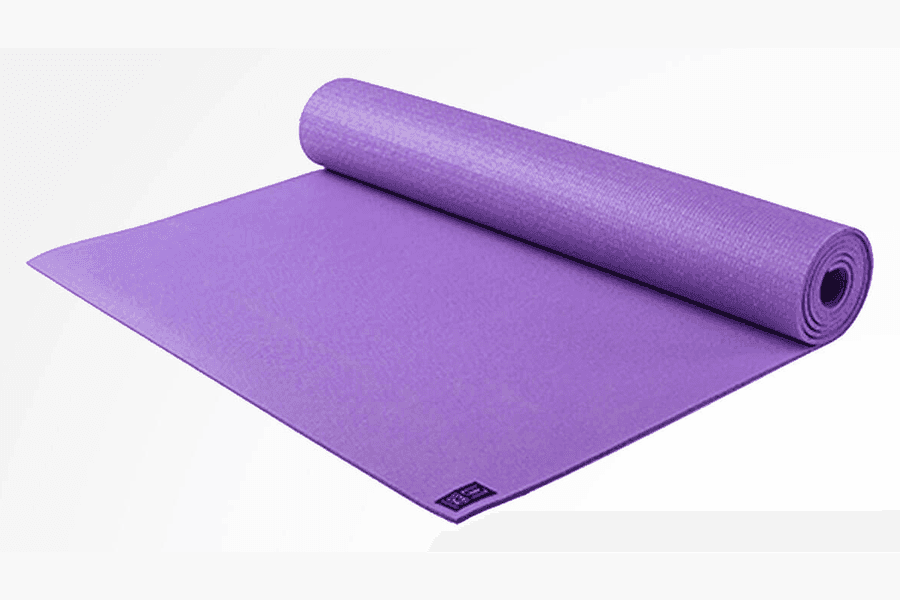
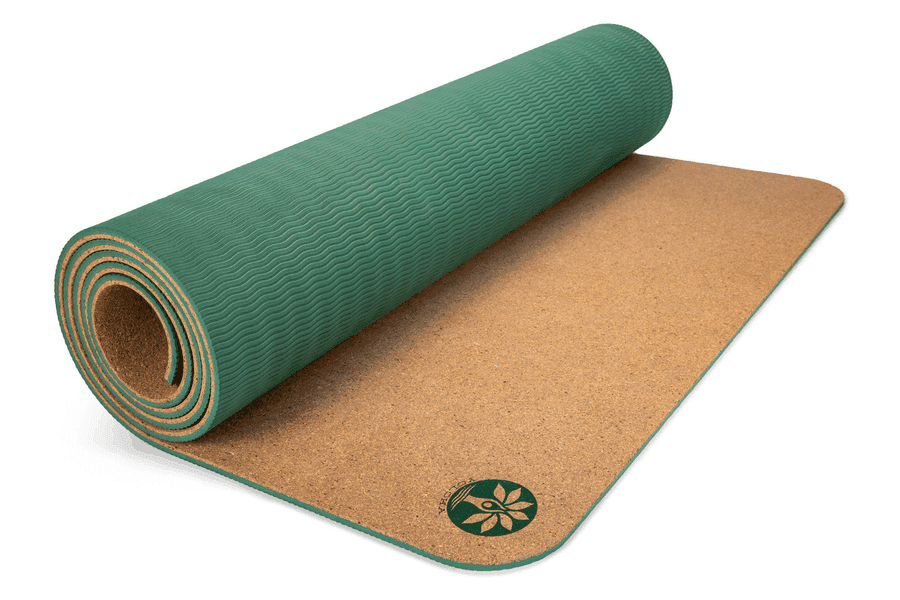
Price
The Level One lists for about $93 less.
$66.50
List price · check price at jadeyoga.com
$159
List price · check price at yolohayoga.com
Thickness
The Unity Pro is 50% thicker.
4 mm0.16″
6 mm0.24″
Weight
The Level One is 3 lbs lighter.
4 lbs1.8 kg
7 lbs3.2 kg
Size
The Unity Pro is 4″ longer; the Unity Pro is 2″ wider.
Same on both
- Made in the USA
- Natural rubber in the surface, so neither suits a latex allergy
- Sold direct from the brand, not on Amazon
Full specs
Dimensions
Materials & build
Buying
- Long80" × 26"
- XL84" × 30"
Entry-level rubber or premium cork
The Yoloha Unity Pro costs $159, more than twice the Jade Level One’s $66.50, and it’s the bigger mat on every axis: 72″ × 26″ and 6 mm against 68″ × 24″ and 4 mm. Its surface is a cork and natural rubber blend, bonded to foam made from plants, and Yoloha bills it as the most durable mat it has made.
The Level One is open-cell rubber all the way through, and Jade aims it at beginners. Both are made in the USA. Only the Yoloha has an independent score, 66 out of 100 and 10th of 19 in GearLab’s roundup; nobody we rely on has tested the Level One.
Where the Unity Pro lost points
GearLab gave the Unity Pro 7 of 10 for comfort and support, 6.5 for materials and 5 for care and cleaning, the lowest care score of the 19. Its grip table shows 7.5 dry and 6 wet. On the plus side it lists an eco-friendly, biodegradable build, antimicrobial cork, attractive designs and a grounding feel; on the minus side, the price, the weight, the bulk and a slick surface when wet.
That 66 put it behind the $66.99 IUGA at 75 and just ahead of the $29.98 Gaiam Premium 6mm at 62. It tells you nothing about how the Level One would score, but it does show that more than twice the money didn’t buy a place near the top of the table.
Grip claims against grip scores
Yoloha advertises grip that holds wet or dry without a towel. GearLab describes something more modest: moderately grippy either way, best after a spritz of water on the spots your hands and feet land, and in need of a towel once sweat starts to pool, because nothing soaks into the cork. Yoloha’s care guide itself suggests wetting the mat before you start.
The Level One asks for no preparation. Open-cell rubber is tacky dry and soaks up some sweat as you go, so traction lasts through a normal class. The catch comes later: soak it and it gets slippery too, and whatever goes in has to be washed out.
Neither one is a hot yoga specialist. Our GRP Adapt 2.0 vs Level One page covers the mat GearLab rated best for heated rooms.
Stable underfoot, both of them
GearLab’s testers put the Unity Pro at the firm end of the scale and called it one of the steadiest mats in the roundup, which helps in balances and anywhere your wrists carry weight. The cost of that firmness is the comfort score of 7, so 6 mm here feels less padded than the number suggests.
The Level One is 2 mm thinner, dense rubber with a little rebound. It’s firm and steady too, with even less between a knee and a hard floor. Neither is the pick for sore joints on its own; GearLab’s advice there is a dense mat plus extra padding when you need it.
More floor, and bigger sizes on offer
The standard Unity Pro gives you 4″ more length and 2″ more width than the Level One, and Yoloha also makes it at 80″ × 26″ for $179 and 84″ × 30″ for $219. If you’re tall or like room to spread out, the Yoloha line has an answer and the one-size Level One doesn’t.
For a bigger Jade of similar thickness, the Harmony comes as a 74″ at $109.95 and an 80″ × 28″ XW at $149.95, both cheaper than the standard Yoloha. Our Harmony vs Unity Pro comparison covers that step up.
Seven pounds on your shoulder
Yoloha lists the Unity Pro at 7 pounds, GearLab’s scale agreed, and heavy and bulky both made the cons list. Rolled, it’s about 5″ in diameter by Yoloha’s spec.
We list the Level One at 4 pounds. Jade’s page doesn’t state a weight and its store data suggests closer to 5, but even at that figure the Jade is two pounds lighter. On foot to a studio, you notice that every trip. At home the Yoloha’s mass helps it stay put, though GearLab found its underside can skid slightly on polished wood.
Neither one is low-maintenance
GearLab’s text and its care score don’t quite line up. The text says the antimicrobial cork keeps the Unity Pro fresh between sessions and that it just needs spraying, wiping and air drying. The score is 5 of 10 anyway, bottom of the field.
The Level One is demanding in a different way. Open-cell rubber soaks up sweat and skin oil, and GearLab’s guide says mats like that need a periodic deep clean to stay hygienic. Use gentle products only, because Jade’s warranty won’t cover damage from harsh ones, and keep it out of hot cars and direct sun, which that warranty also excludes.
Latex rules out both
Yoloha works natural rubber into its cork surface, and the Level One is natural rubber throughout. By Jade’s own description its mats are 99% latex free, which isn’t enough for an allergy, and the same caution applies to the Yoloha. If you’re allergic, a cork mat with no rubber in it, such as the 42 Birds Robin, makes more sense.
Both brands give specifics on sustainability. Yoloha says 83% of the mat is USDA-certified renewable material, mainly cork, natural rubber and sugarcane. Jade’s rubber is tapped from trees, with no PVC in the build, and Jade says it has planted more than two million trees, one for each mat sold.
Warranty, returns and where to buy
Jade’s one-year warranty on the Level One leaves out sun damage and harsh cleaners. Yoloha offers no warranty at all, and its 30-day return window requires the mat back clean and unmarked, which in practice means unused.
Both sell direct. The Level One is $66.50 at jadeyoga.com, in two colors. The Unity Pro is $159 at yolohayoga.com, plain cork or with printed artwork. It has sold for $139 on sale before, and was at full price when we checked.
Bottom line
Buy the Level One if you’re fairly new to yoga, practice indoors, and want grip that works without any preparation. It’s under half the price, a couple of pounds lighter, and comes with a written year of cover.
Buy the Unity Pro if you want a bigger, thicker, firmer mat, need the long or extra-wide size, or want a cork surface and Yoloha’s renewable build, and $92.50 more doesn’t bother you. Expect the grip GearLab measured, not the grip on Yoloha’s product page, and budget for a towel in sweaty classes.
Jade Level One
List price $66.50
Yoloha Unity Pro Cork
List price $159
Frequently Asked Questions
- Is the Yoloha Unity Pro worth $159?
- Only if you specifically want what it offers: a large, extra-firm cork mat that GearLab rated one of the most stable it tested, in sizes up to 84 by 30 inches. Its overall score of 66 out of 100 put it 10th of 19, behind the $66.99 IUGA and just ahead of the $29.98 Gaiam Premium 6mm, and GearLab's cons were expense, weight, bulk and slickness when wet. For a newer yogi practicing indoors, the $66.50 Level One covers the basics for less than half the money.
- Do you need a towel with the Yoloha for hot yoga?
- Probably. Yoloha claims its mat grips wet or dry with no towel needed, but GearLab scored it 7.5 dry and 6 wet, listed slick when wet as a con, and suggested keeping a towel handy because water doesn't soak into the cork and can pool. Both GearLab and Yoloha recommend spritzing water on the mat before practice. The Jade's open-cell rubber absorbs light sweat but gets slippery once soaked, so neither is a hot yoga specialist.
- Which is better for balance poses?
- Both are firm. GearLab called the Unity Pro extra-firm and among the most stable mats it tested, and it is 6 mm thick. The Level One is 4 mm of dense rubber, also firm, with a little more rebound and less padding under your knees. Neither is soft, which is what you want for standing work.
- How heavy is each mat?
- Yoloha lists the Unity Pro at 7 pounds, and GearLab's scale agreed. We list the Level One at 4 pounds, though Jade doesn't print a weight on its page and its store data suggests closer to 5. Even at the higher figure, the Jade is about two pounds lighter, which matters if you carry the mat to class.
- Are either of these safe with a latex allergy?
- No. The Level One is natural rubber, and Jade, which calls its mats 99% latex free, advises people with a latex allergy against them. The Unity Pro blends natural rubber into its cork top. If you're allergic, look at a cork mat with no rubber in it, such as the 42 Birds Robin, or at PVC or TPE mats.
- Can you return either mat?
- Yoloha accepts returns within 30 days, with free return shipping on the 72 and 80 inch sizes, but its policy says mats must come back free of damage, dirt and marks, so a mat you've practiced on may not qualify, and there's no warranty. Jade gives the Level One a one-year warranty against defects, excluding sun damage and harsh cleaners, and doesn't advertise a trial period.
Related comparisons
- JadeYoga Level One vs Gaiam Performance Dry-Grip 5mm
- Manduka PRO vs Yoloha Unity Pro Cork
- Manduka X vs JadeYoga Level One
- Manduka PRO Long vs Yoloha Unity Pro Cork
- JadeYoga Level One vs IUGA Eco Friendly Non Slip PU
- JadeYoga Harmony XW vs Yoloha Unity Pro Cork
- Manduka Begin vs JadeYoga Level One
- JadeYoga Level One vs Gaiam Performance Dry-Grip Long & Wide
- Alo Warrior vs Yoloha Unity Pro Cork