Jade Harmony vs Gruper TPE 6mm: Which One Should You Buy?
The Gruper is one of the mats people buy first: 6 mm of TPE, 2.6 pounds, a strap and a storage bag in the box, and a price under $30. The Harmony is often the mat they buy second, usually after a summer of sliding in down dog. Both are reasonable purchases; they just answer different questions.
As an Amazon Associate, we earn from qualifying purchases made through links on this page. How this works
The quick answer
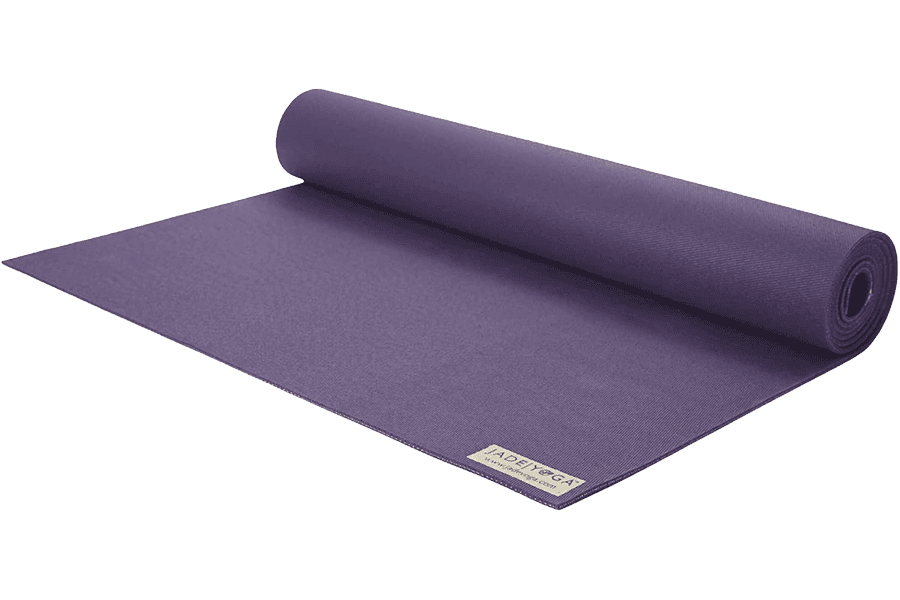
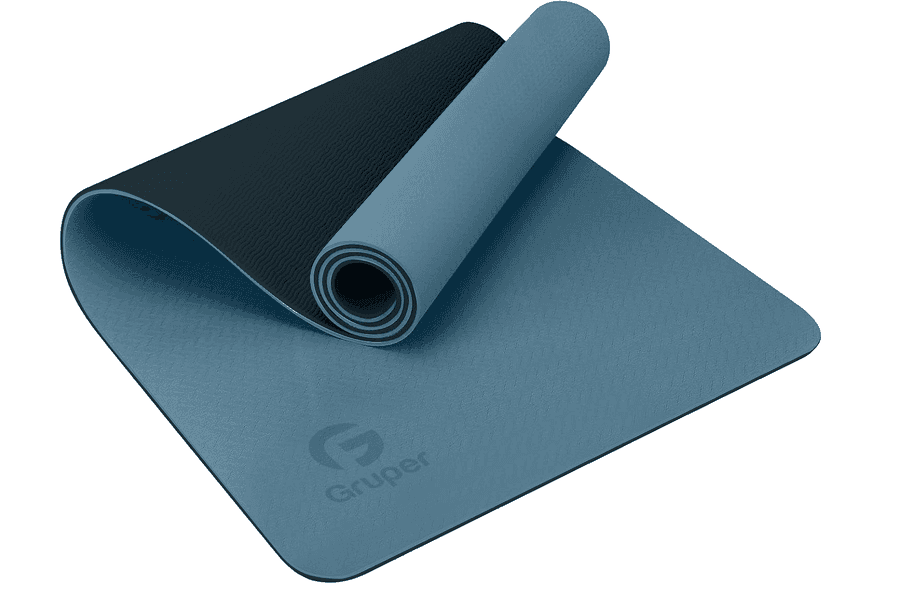
The Harmony is open-cell natural rubber made in the USA, tacky from the first class, and $99.95. It absorbs sweat rather than letting it sit on the surface, which is the reason it has stayed in studios for twenty years. The Gruper is a two-layer TPE mat with a fine texture on top and a corrugated grip underneath, 4.4 stars across roughly 10,500 Amazon ratings, and it weighs half what the Harmony does.
Start with the Gruper if you are new and unsure yoga will stick; there is no sense spending $100 to find out. Move to the Harmony if you already know your hands slide, if you practice several times a week, or if you want a mat that will not be flaking in eighteen months.
Get the Jade Harmony if...
- You sweat, and grip is the thing you keep fighting
- You want a firmer surface that holds still underfoot
- You want natural rubber made in the USA rather than foam
- You want a mat that survives several years of regular practice
Get the Gruper TPE if...
- You're new and don't want to spend $100 to try yoga
- You want 2.6 pounds to carry rather than 4.8
- You want 6 mm of cushion, a strap and a bag included
- You'd rather keep about $72
Side by side
Price
The Gruper lists for about $72 less.
$99.95
List price · check price at Amazon
$27.99
List price · check price at Amazon
Thickness
The Gruper is 25% thicker.
4.8 mm0.19″
6 mm0.24″
Weight
The Gruper is 2.2 lbs lighter.
4.8 lbs2.2 kg
2.6 lbs1.18 kg
Size
The Gruper is 4″ longer; same width.
Same on both
- Latex-free claims worth checking against your own allergy
- Lightweight enough to carry to class
- Textured on both faces
- Both fade and degrade if left in the sun
Full specs
Dimensions
Materials & build
Buying
The first mat and the second mat
The Gruper is what a lot of people buy in week one: 6 mm of TPE, 2.6 pounds, a strap and a storage bag in the box, under $30. It holds a 4.4 star average across roughly 10,500 Amazon ratings, which is a fair verdict on what it is.
The Harmony tends to be the second mat, bought after a summer of hands creeping forward in down dog. It is $99.95 of natural rubber made in the USA, and the extra $72 is almost entirely about what happens when you sweat.
Grip: this is the whole comparison
Open-cell rubber absorbs moisture into the surface, so a damp palm still finds traction. That is a mechanical property rather than a coating, which is why the Harmony grips on day one, keeps gripping as a class heats up, and needs no break-in period at all.
Gruper’s answer is texture: a fine S-pattern on the top face and a corrugated grip underneath. Dry, it works. Damp, sweat sits on top of a closed-cell surface with nowhere to go, and you slide. That is not a criticism of Gruper specifically; it is what every budget foam mat does.
Feel: 6 mm of soft against 4.8 mm of dense
The Gruper is thicker and softer, which reads as more comfortable in a shop and behaves differently in a class. Under a kneecap it is the kinder mat. Under one standing foot it compresses unevenly, so balance poses take more work than they should.
Jade specs the Harmony at 3/16 of an inch, which most retailers round to 5 mm, and its rubber is dense enough to support rather than sink. Most people find the firmer surface more pleasant once they are actually flowing, and the softer one better for restorative work.
Weight and carrying
The Gruper is 2.6 pounds against the Harmony’s 4.8, and it ships with a strap and a bag. Neither mat is heavy in absolute terms, but two pounds is noticeable on a walk across town and the Gruper is the easier one to throw in a car.
For actual travel neither is ideal. A folding travel mat around 1.5 mm packs into a suitcase in a way a 6 mm mat never will, and Jade makes one: the Voyager.
Natural rubber against TPE
TPE is a thermoplastic elastomer, sitting between plastic and rubber. It contains no PVC and no latex, it is lighter and softer than either PVC or natural rubber, and it is recyclable in principle. It is also the softest of the common mat materials, which is why it compresses and tears sooner, especially where hands and feet keep landing.
The Harmony is tapped tree rubber, made in the USA, and Jade plants a tree for every mat sold, more than two million so far. The catch is the allergy note: Jade calls its mats 99% latex free and does not recommend them for anyone with a latex allergy, which is one area where the cheap mat is the safer choice.
Durability and what backs each mat
Gruper publishes no warranty. Your protection is the Amazon return window, and after that the mat is yours however it ages. In daily use, expect visible wear on TPE within a year or two, starting where your hands land in down dog.
Jade’s warranty is one year and specifically excludes sun damage and harsh cleaners, which are the two things that kill natural rubber. Kept indoors and rinsed gently, several years of steady practice is a fair expectation. Neither mat is in the decade class; for that, see our Harmony vs Manduka PRO comparison.
Cleaning an open-cell mat is more work
The Harmony drinks whatever lands on it, which is what makes it grip, and also what makes cleaning a real routine: gentle rinse, mild soap at most, dry thoroughly before rolling. Jade’s warranty excludes damage from harsh cleaners, so the antibacterial spray in the studio cupboard is not your friend here.
The Gruper wipes down with a damp cloth and cold water, and nothing soaks in. Gruper also warns against washing machines, dryers and long sun exposure, which is standard advice for TPE.
Sizes and versions
Both mats are 24 inches wide. The Gruper is 72″ long against the Harmony’s 68″, and Gruper also offers an 8 mm version at 3.1 pounds. Jade’s answers to length are a 74″ Long and an 80″ × 28″ XW.
One version note on the Jade side: the Harmony 2.0 is a different mat, made in Spain with different certifications, and it is the one carrying the recent OutdoorGearLab award. This page covers the original USA-made Harmony.
Price and value
List prices are $99.95 and $27.99, and the Gruper’s street price moves by colorway. Check the current price on the Harmony and the Gruper at Amazon before deciding.
If you are three classes in and unsure, $28 is the right amount to risk. If you already know that your hands slide, buying a $28 mat first is just a delay, because nothing at that price fixes grip and you will end up buying twice.
Bottom line
Buy the Gruper if you are new to this, want something light and cheap, or need a second mat for a spare room. It is a competent starter mat with a strap and bag thrown in, and it will not survive daily practice for years.
Buy the Jade Harmony if grip is the problem, if you practice several times a week, or if you want natural rubber made in the USA. It is the mat people upgrade to, and it solves the one thing the cheap shelf cannot.
Jade Harmony
List price $99.95
Gruper TPE 6mm
List price $27.99
Frequently Asked Questions
- Is the Gruper slippery?
- Dry, it holds fine. The S-pattern texture on the top face does real work and the corrugated underside keeps the mat on the floor. Wet is another matter: TPE is closed-cell, so sweat sits on the surface and your palms start to travel. That is the normal budget mat story, and it is exactly the problem the Harmony's absorbent rubber solves.
- The Gruper is thicker. Is it more comfortable?
- For kneeling, yes. Six millimetres of soft TPE cushions more than 4.8 mm of dense rubber. Standing is the other way round: soft foam compresses unevenly under one foot and the Harmony does not move. Most people find the Harmony more comfortable overall once they are actually flowing, and the Gruper nicer for restorative work.
- Is the Harmony latex free?
- Not really. Jade describes its mats as 99% latex free, which is a careful phrase for a natural rubber product, and Jade does not recommend them for anyone with a latex allergy. Gruper's TPE contains no latex and no PVC, so if allergy is the deciding factor, the cheap mat wins that one outright.
- How long will the Gruper last?
- TPE is the softest of the common mat materials and it compresses and tears sooner than rubber or dense PVC, particularly where hands and feet land. In daily use, expect visible wear inside a year or two. Gruper publishes no warranty at all, so the Amazon return window is your only protection. The Harmony carries a one year warranty that excludes sun damage and harsh cleaners, and several years of steady practice is a fair expectation if you keep it indoors.
- What about the environmental side?
- The Harmony is natural rubber tapped from trees, made in the USA, and Jade plants a tree for every mat it sells, more than two million so far. TPE is a petroleum product, though a cleaner one than PVC and free of the plasticizers that make PVC hard to recycle. Neither claim should decide the purchase on its own, but if it matters to you the Harmony has the stronger case.
- Which Jade Harmony is this?
- The original, made in the USA, at $99.95 for the 68 inch. Jade also sells a Harmony 2.0 made in Spain with different certifications, and that is the version carrying the recent OutdoorGearLab award, so do not assume a review of one applies to the other. Jade also offers this mat in a 74 inch Long and an 80 by 28 inch XW.
Related comparisons
- JadeYoga Harmony 68" vs Suga SugaMat
- Amazon Basics 1/4 Inch Thick TPE vs Gruper TPE 6mm
- Gaiam Premium 6mm vs Gruper TPE 6mm
- JadeYoga Harmony 68" vs Manduka PRO Lite Terra 4.7mm
- Gruper TPE 6mm vs Gaiam Essentials 6mm
- JadeYoga Harmony 68" vs Manduka eKO Lite
- Manduka PROlite vs JadeYoga Harmony 68"
- YogaAccessories Extra Thick Deluxe 1/4" vs Gruper TPE 6mm
- JadeYoga Harmony 68" vs Manduka GRP Adapt 1.0