Jade Harmony vs Amazon Basics TPE: Which One Should You Buy?
This is the honest version of the budget-versus-premium question, because the Amazon Basics 1/4 inch TPE is an actual yoga mat: firm, grippy dry, stable in balance poses, and about $26. The Jade Harmony is the mat studios standardized on for twenty years at $99.95. The roughly $74 between them buys real things, but fewer things than the price ratio suggests, and which ones matter depends entirely on your practice.
As an Amazon Associate, we earn from qualifying purchases made through links on this page. How this works
The quick answer
The Harmony's advantages are concentrated where practices get serious: open-cell rubber that absorbs sweat and holds damp palms, the tacky natural feel people stay loyal to for decades, a written 1 year warranty, and a surface that rewards daily use for years. The Amazon Basics holds its own everywhere else: stable underfoot, grippy with dry hands, 73.6" long against the Harmony's 68", 2 pounds against 4.8, latex free where tree rubber can never be, and cheap enough to be a no-regret experiment.
If you sweat, or yoga is already a fixture of your week, buy the Harmony. If you're starting out with a dry practice, or testing whether the habit sticks, the $26 mat is a legitimate first mat and an easy one to outgrow gracefully.
Get the Harmony if...
- Your palms get damp and you need grip that survives it
- You're past the experimenting stage of practice
- The classic tacky rubber feel is what you want
- A written 1 year warranty matters to you
Get the Amazon Basics TPE if...
- You're testing yoga before investing in it
- You're tall: 73.6" beats 68" at any price
- You have a latex allergy: TPE has none, rubber does
- You'd rather keep about $74
Side by side
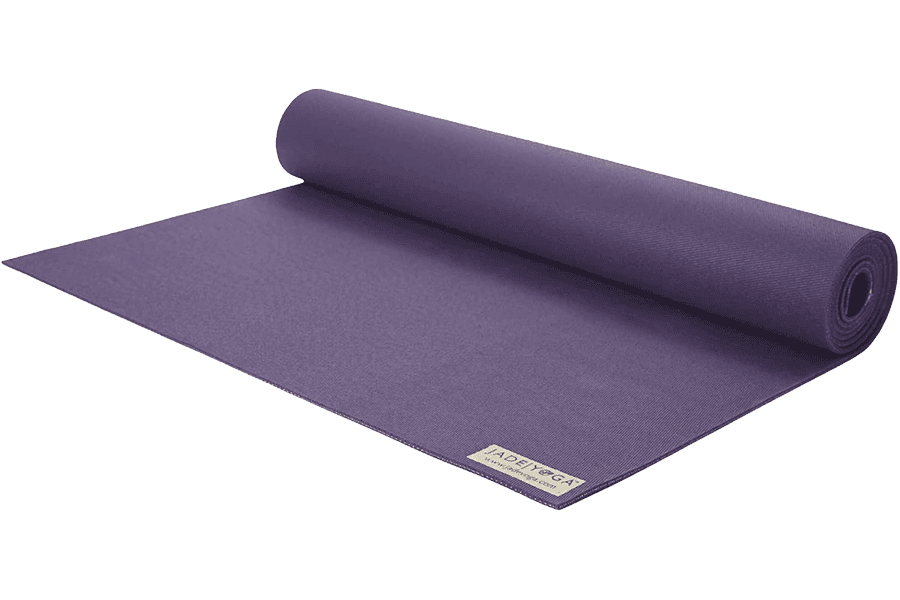
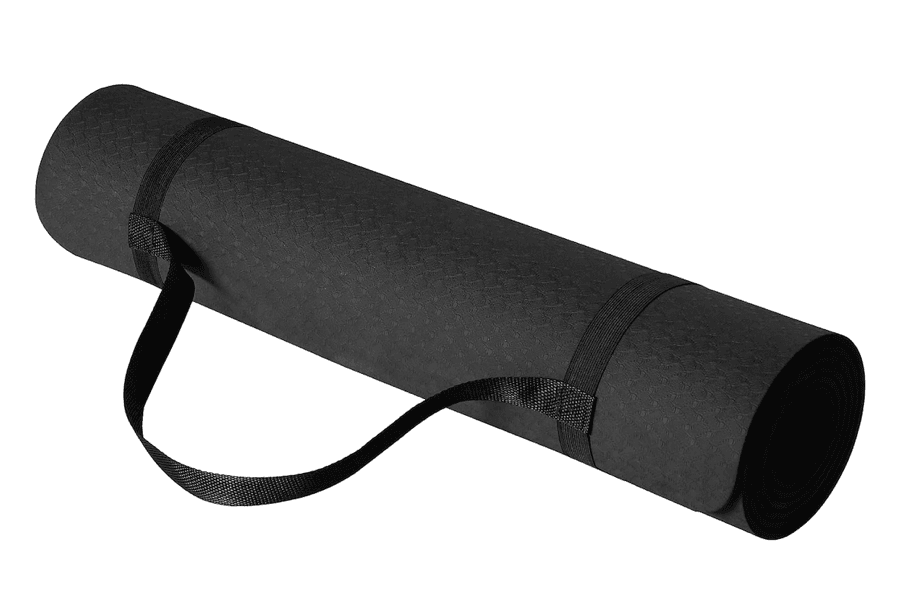
Price
The Amazon Basics lists for about $74 less.
$99.95
List price · check price at Amazon
$26.36
List price · check price at Amazon
Thickness
The Amazon Basics is 25% thicker.
4.8 mm0.19″
6 mm0.24″
Weight
The Amazon Basics is 2.8 lbs lighter.
4.8 lbs2.2 kg
2 lbs0.9 kg
Size
The Amazon Basics is 5.6″ longer; same width.
Same on both
- Firm, stable surfaces for standing practice
- Grip from the first practice, no break-in
- Sold on Amazon at first-party prices
- Roll and carry easily
Full specs
Dimensions
Materials & build
Buying
The budget mat that deserves the matchup
Cheap mats usually lose to the Jade Harmony before anyone unrolls anything, because most cheap mats are soft foam wearing a yoga costume. The Amazon Basics 1/4 inch TPE is the exception worth taking seriously: firm, dual-textured, stable under a standing foot, nearly 6 inches longer than the Harmony, and about $26.36. Against it, the $99.95 Harmony has to argue on its actual merits.
It can, and the argument fits in three words: sweat, feel, years. Whether those three are worth roughly $74 to your particular practice is the whole page.
Sweat: the capability the budget tier can’t buy
The Harmony’s open-cell rubber absorbs light moisture as it lands, which is why damp palms keep their hold on it, the quality Wirecutter credits for its traction in sweaty sessions. The Basics is closed-cell TPE: sweat beads where your hands go, and grip leaves with it. No $26 mat solves this, because the solution is the material, and the material is the price.
Run the practice forward a year before deciding this doesn’t apply to you. Beginners who fall for vinyasa usually meet their own sweat eventually, and the mat that handled a gentle first month starts needing a towel by month eight.
Feel: the difference hands notice immediately
The Harmony’s surface is the one studio mats get measured against: warm, tacky, faintly grabby, dense enough that the mat lies planted at 4.8 pounds. The Basics feels like what it is, light springy TPE with a coarse texture, 2 pounds that can creep on smooth floors during vigorous flows. Neither fails a dry practice. One of them makes it nicer every single day, and that’s a legitimate thing to pay for once a practice is permanent.
Size: the cheap mat is the long one
Here the money runs backwards. The Basics measures 73.6″ to the Harmony’s 68″, nearly 6 extra inches that tall practitioners feel in every lying pose, at the same 24″ width. A six-footer on a budget genuinely gets the better fit from the cheaper mat. With more to spend, the fix is the 74″ Harmony at $109.95, or the oversized Harmony XW if width matters too.
Materials: latex, smell, and stories
The practical column goes to the Basics: TPE carries no latex, making it the only safe pick here for allergic practitioners, and it arrives odorless where the Harmony ships with weeks of rubber smell. The values column goes to Jade: tapped tree rubber, made in the USA, and a tree planted for every mat sold, past two million by its count. The Basics has no story at all, which for a $26 commodity is fair enough.
Years and what backs them
Both carry warranties, and the cheaper one is longer on paper: Amazon writes 1 year on the Basics against Jade’s 1 year on the Harmony. Service life doesn’t match the paperwork. Budget TPE scuffs, compresses, or sheds within a few years of regular practice, while the Harmony wears over a longer arc, with CNN Underscored putting the gentle-care ceiling around ten years. A daily practitioner replaces two or three Basics mats in one Harmony’s lifetime, which shrinks the real gap to something like $25 to $45.
The Harmony’s side of the ledger includes upkeep: no direct sun, no hot cars, gentle cleaners. The Basics tolerates any closet and most neglect.
Price and value
List prices are $99.95 for the Harmony and about $26.36 for the Basics, which drifts with Amazon’s pricing. Both sell first-party on Amazon; check current prices on the Harmony and the Amazon Basics TPE.
The clean way to spend here: buy the Basics to find out who you are as a practitioner, or buy the Harmony because you already know. The expensive mistake isn’t either mat; it’s buying the Harmony for a practice that never materializes, or grinding through Basics mats for years after your practice earned better.
Bottom line
Get the Harmony if your practice sweats, deepens, or already anchors your week. The grip technology, the feel, and the years are all real, and they’re exactly the things a maturing practice starts caring about. Twenty years of studio floors got measured on this mat for good reasons.
Get the Amazon Basics TPE if you’re starting, tall on a budget, latex-allergic, or honestly unsure yoga will stick. It’s a competent mat with no hidden catch, and its shortcomings, sweat and lifespan, announce themselves in plenty of time to plan the upgrade. Plenty of Harmonys get bought as second mats; there are worse paths to one.
Jade Harmony
List price $99.95
Amazon Basics 1/4 Inch Thick TPE
List price $26.36
Frequently Asked Questions
- Is the Jade Harmony really worth $74 more than the Amazon Basics TPE?
- For a sweaty or committed practice, yes. The Harmony's open-cell rubber keeps traction when palms dampen, the quality Wirecutter credits in sweaty sessions, and its surface holds up to years of daily use. For a dry beginner practice, much of that $74 buys capability you won't touch yet. The TPE mat runs the same fundamental practice for $26; it just runs it for fewer years and fails faster once sweat arrives.
- How different do they feel?
- Noticeably. The Harmony is dense, warm, tacky natural rubber, planted on the floor at 4.8 pounds; it feels like equipment. The 2 pound Amazon Basics is springy TPE with a coarser texture that does the job while reminding you of the price. Neither wobbles under standing work, which is the test cheap mats usually fail, but hands can tell these two apart instantly.
- Which handles sweat better?
- The Harmony, and it's the clearest gap on this page. Its open-cell surface absorbs light moisture as it lands, keeping palms planted through a warming class. The Basics is closed-cell; sweat pools where hands go and grip leaves with it. If heated or vigorous practice is the plan, the budget tier simply doesn't offer this capability, on this mat or any other.
- What about the length difference?
- It runs the wrong way for the money: the $26 mat is 73.6" long, nearly 6 inches more than the Harmony's 68". Tall buyers on a budget genuinely win here. Tall buyers with Harmony money should put it toward the 74" Harmony at $109.95, which restores the length without giving up the rubber.
- Which is safe for a latex allergy?
- The Amazon Basics. TPE is a synthetic with no latex. The Harmony is natural tree rubber, and Jade itself says its mats are 99% latex free but may carry trace latex proteins, so it doesn't recommend them for latex allergies. For allergic practitioners the price gap is irrelevant; the material decides.
- How do lifespan and warranty compare?
- The Harmony lasts longer and is the only one with meaningful backing despite the paperwork suggesting otherwise. Amazon writes the TPE mat a 1 year warranty, but budget TPE typically scuffs, compresses, or sheds within a few years of regular use. The Harmony wears over a longer arc, with CNN Underscored putting the gentle-care ceiling around ten years, and Jade's 1 year warranty covers defects and premature wear from a company that supports its products.
Related comparisons
- JadeYoga Harmony 68" vs Suga SugaMat
- Amazon Basics 1/4 Inch Thick TPE vs Gruper TPE 6mm
- JadeYoga Harmony 68" vs Manduka PRO Lite Terra 4.7mm
- Amazon Basics 1/4 Inch Thick TPE vs Gaiam Premium 6mm
- JadeYoga Harmony 68" vs Manduka eKO Lite
- Amazon Basics 1/4 Inch Thick TPE vs Gaiam Essentials 6mm
- Manduka PROlite vs JadeYoga Harmony 68"
- JadeYoga Harmony 68" vs Manduka GRP Adapt 1.0
- Amazon Basics 1/4 Inch Thick TPE vs YogaAccessories Extra Thick Deluxe 1/4"