Jade Fusion vs IUGA Eco Friendly PU: Which One Should You Buy?
The IUGA is bigger, lighter, and $108 cheaper, and OutdoorGearLab gave it a Best Buy award as the Best Value Upgrade. So the Fusion has to earn its price on cushioning and materials. We'll go through the test numbers and where each mat genuinely makes sense.
As an Amazon Associate, we earn from qualifying purchases made through links on this page. How this works
The quick answer
The IUGA scored 75 of 100 in GearLab's 2026 roundup, with 8 of 10 for comfort and 8 dry, 7 wet for grip, at 2.1 pounds and 72 by 26 inches. That is a lot of mat for $66.99, and it comes with a carry strap. The Fusion is 8 mm of natural rubber made in the USA: more cushioning, more durability, and eight pounds.
For most people the IUGA is the better buy. Get the Fusion if joint protection is the specific thing you need and the mat is going to stay put.
Get the Jade Fusion if...
- You need the deepest cushioning you can get for sore joints
- You want a mat that lasts years rather than a few
- You want natural rubber made in the USA
- The mat stays in one room, so weight doesn't matter
Get the IUGA if...
- You want a bigger mat, 72" × 26" against 68" × 24"
- You carry it anywhere, at 2.1 pounds against 8
- You want strong wet grip for a heated class
- You'd rather keep about $108
Side by side
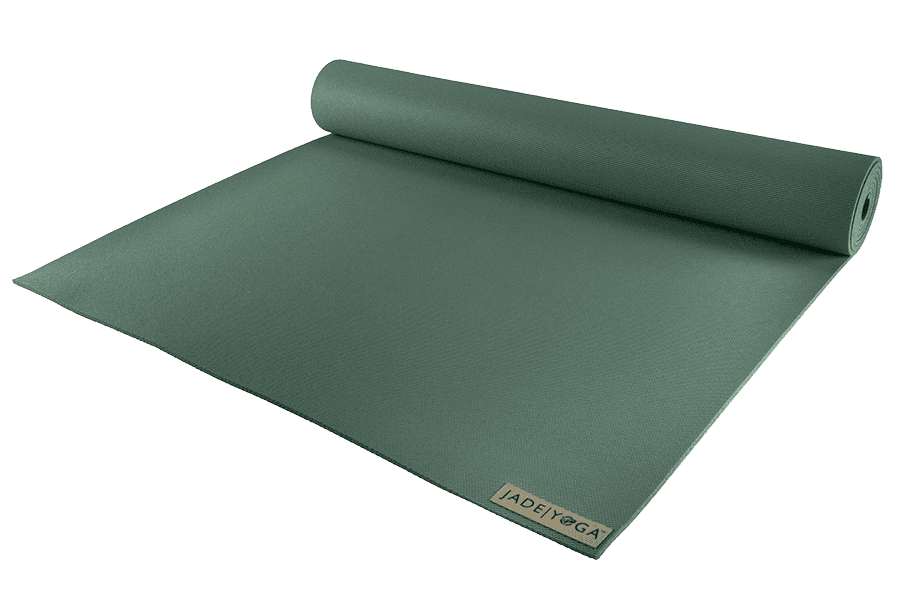
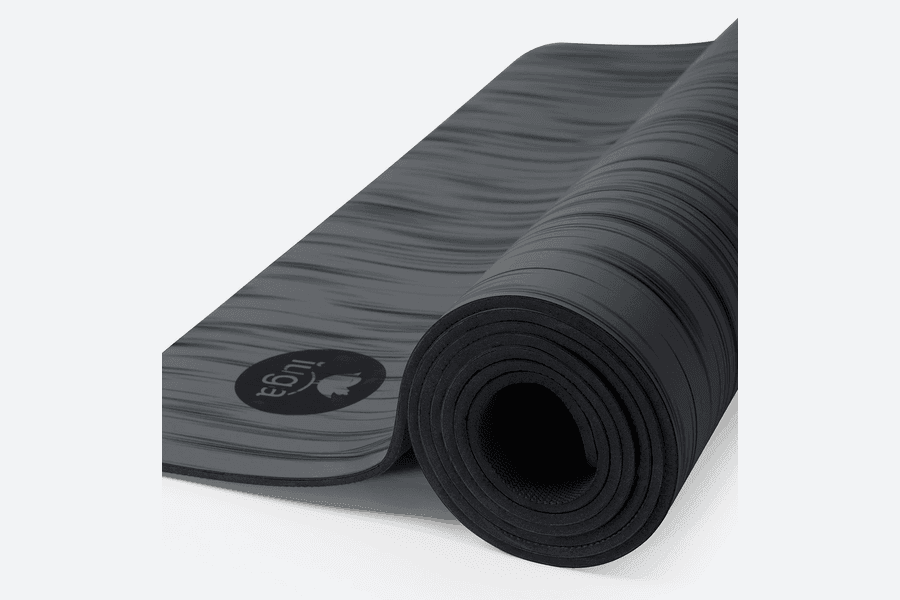
Price
The IUGA lists for about $108 less.
$174.95
List price · check price at Amazon
$66.99
List price · check price at Amazon
Thickness
The Fusion is 60% thicker.
8 mm0.31″
5 mm0.2″
Weight
The IUGA is 5.9 lbs lighter.
8 lbs3.6 kg
2.1 lbs0.95 kg
Size
The IUGA is 4″ longer; the IUGA is 2″ wider.
Same on both
- Both absorb sweat rather than repelling it
- Both are slow to dry after a deep clean
- Both use a natural rubber component
- Neither carries a third-party certification
Full specs
Dimensions
Materials & build
A heavyweight against the lightest good mat we know
The Jade Fusion is $174.95 and 8 pounds of 8 mm natural rubber. The IUGA is $66.99 and 2.1 pounds of polyurethane over a rubber base, and OutdoorGearLab gave it a Best Buy award as the Best Value Upgrade in its 2026 roundup, scoring it 75 of 100.
The IUGA is also bigger, at 72″ × 26″ against the Fusion’s 68″ × 24″, and it costs $108 less. So the Fusion has to earn its price on cushioning and materials, because it is losing on everything else.
Cushioning: 8 mm against 5
GearLab scored the IUGA 8 of 10 for comfort and support, calling the cushion thick enough to protect your knees but firm enough for single-leg balances. That is a strong result for a mat that weighs two pounds, and it is why the mat won its award.
Eight millimeters is still eight millimeters. GearLab’s standalone Fusion review gave its comfort a perfect 10 and noted it levels uneven ground, though that review dates to 2013 and the Fusion is not in the current lineup. For a practice on tile or concrete, for long yin holds, or for knees that already hurt, the Fusion is still the more protective surface.
Grip: closer than the price gap suggests
GearLab rated the IUGA 8 of 10 dry and 7 wet, which puts it in the top third of the lineup for wet traction and level with the Manduka PRO and the Liforme. Its polyurethane top absorbs sweat rather than repelling it, which is why it holds on in a heated room.
The Fusion is open-cell natural rubber, tacky from the first unroll, and GearLab’s older review scored it 9 dry and 9 wet. Both are good. The difference in feel is bigger than the difference in numbers: Jade rubber grabs, and the IUGA’s polyurethane is smooth until moisture wakes it up, which means the IUGA can feel slick for the first few minutes of a class.
Size: the cheaper mat is the bigger one
The IUGA is 72″ × 26″, four inches longer and two wider than the Fusion. GearLab put its wide and long dimensions first in the list of pros, and it matters: a 24 inch mat leaves a foot on the floor in a wide-legged stance and a 68 inch mat runs out under a tall practitioner.
Jade’s answer costs money. The 74″ Fusion is $199.95 and still 24 inches wide; the Fusion XW is 80″ × 28″ and costs more again.
Weight: two pounds against eight
GearLab weighed the IUGA at 2.1 pounds and called it one of the lightest non-travel mats they tested, which is the point: it ships with an adjustable carry strap and their testers named it a first pick for taking outdoors.
The Fusion is 8 pounds, nearly four times as much, and it rolls thick enough to be awkward under an arm. GearLab’s older review put its portability at 3 of 10. If the mat leaves the house, this is the line that decides it.
Durability: the IUGA’s weak point
GearLab was direct about this. The IUGA’s cons include a short lifespan and durability concerns after a few years, and the review notes the open-cell design degrades faster when used on abrasive surfaces like pavement or dirt. Their recommendation was the Manduka PRO or a Jade if you want five-plus years out of a mat.
The Fusion is a dense slab of rubber and outlasts it, with the usual Jade condition attached: natural rubber breaks down in sunlight, and Jade’s one year warranty excludes sun damage and harsh cleaners. Stored indoors and rolled, owners get years. IUGA offers a 45 day return window and no warranty.
Cleaning, drying, and smell
Both mats absorb sweat, and both are slow to dry as a result. GearLab listed long dry time against the IUGA and scored the Fusion 4 of 10 for ease of care for the same underlying reason. Plan on hanging either one after a deep clean rather than rolling it up damp.
The IUGA arrives with a strong smell, which GearLab flagged and which fades over a couple of weeks. The Fusion smells of rubber for about as long. Airing either one out somewhere ventilated before first use makes a noticeable difference.
What each mat is made of
The Fusion is sustainably farmed natural rubber, made in the USA, with no PVC, and Jade plants a tree for every mat sold. It is 99 percent latex free rather than latex free, so a latex allergy rules it out.
The IUGA is a polyurethane top over a natural rubber base and IUGA does not state where it is made. GearLab scored its materials 7 of 10, the same as the Liforme and the Jade Harmony 2.0, which is a good result at this price. Neither mat carries a third-party certification.
Price and where to buy
$174.95 against $66.99. The IUGA sells mostly through Amazon, where it discounts regularly, so check the current IUGA price at Amazon before paying list.
The Fusion holds its price in four colorways. Compare the current Jade Fusion price at Amazon against jadeyoga.com.
Bottom line
For most people, buy the IUGA. It is bigger, it weighs a quarter as much, it grips well wet and dry, it comes with a strap, and it costs $108 less. GearLab called it the best value upgrade in the category and we would not argue. Expect to replace it in a few years.
Buy the Fusion if joint protection is the specific thing you need and the mat will stay put. It is the more cushioned and the more durable of the two, it is made in the USA from a renewable material, and none of that helps if you were going to carry it. If you want Jade rubber that travels, the Jade Level One at 4 mm and 4 pounds is the compromise.
Jade Fusion
List price $174.95
Frequently Asked Questions
- Is the IUGA really as good as GearLab says?
- In its own terms, yes. GearLab scored it 75 of 100, eighth of nineteen mats, gave it a Best Buy award as the Best Value Upgrade, and rated it 8 of 10 for comfort with 8 dry and 7 wet for grip. Their reviewers described it as an ideal upgrade for people practicing once or twice a week. They also flagged the catch: a short lifespan and durability concerns after a few years.
- Which is more comfortable?
- The Fusion, though not by as much as the price gap suggests. GearLab rated the IUGA's cushion 8 of 10, thick enough to protect knees and firm enough for single-leg balances. The Fusion is 8 mm against the IUGA's 5, and GearLab's standalone Fusion review gave its comfort a perfect 10 while noting it levels uneven ground. For a practice on tile or concrete, the Fusion is still the more protective surface.
- Which grips better when you sweat?
- They are close. GearLab rated the IUGA 8 dry and 7 wet, level with the Manduka PRO and the Liforme for wet traction. The Fusion's open-cell rubber absorbs sweat and GearLab's older review scored it 9 dry and 9 wet. The feel is different: Jade rubber grabs immediately, while the IUGA's polyurethane is smooth until moisture wakes it up, so it can feel slick for the first few minutes of a class.
- How long will the IUGA last?
- GearLab was direct about it: short lifespan and durability concerns after a few years, and the open-cell design degrades faster when used on abrasive surfaces like pavement or dirt. They recommended a Manduka PRO or a Jade if you want five-plus years. IUGA offers a 45 day return window and no warranty; Jade covers the Fusion for one year, excluding sun damage.
- Do either of them smell?
- Both, at first. GearLab listed a strong initial smell among the IUGA's cons, and the Fusion smells of rubber for a couple of weeks because there is a lot of material there. Airing either one out somewhere ventilated before first use makes a noticeable difference, and both fade with use.
- Which is easier to carry?
- The IUGA, and it is not close. GearLab weighed it at 2.1 pounds and called it one of the lightest non-travel mats they tested, and it ships with an adjustable carry strap. The Fusion is 8 pounds and its portability score in GearLab's standalone review was 3 of 10.
Related comparisons
- Manduka Begin vs IUGA Eco Friendly Non Slip PU
- Manduka X vs IUGA Eco Friendly Non Slip PU
- Gaiam Performance Dry-Grip 5mm vs IUGA Eco Friendly Non Slip PU
- IUGA Eco Friendly Non Slip PU vs Hugger Mugger Earth Elements 5mm
- JadeYoga Level One vs IUGA Eco Friendly Non Slip PU
- IUGA Eco Friendly Non Slip PU vs Gaiam Performance Dry-Grip Long & Wide
- 42 Birds The Robin vs IUGA Eco Friendly Non Slip PU
- JadeYoga Travel 68" vs IUGA Eco Friendly Non Slip PU
- Manduka PRO Long vs JadeYoga Fusion 68"