Amazon Basics 1/4 Inch TPE vs Liforme Classic: Which One Should You Buy?
Most budget-against-premium comparisons end with the cheap mat not really being a yoga mat. This one doesn't. The Amazon Basics TPE is firm, stable and grippy with dry hands for about $26. The Liforme Classic costs $165 and is one of the best surfaces made. The useful question isn't whether the cheap mat works, it's what the other $139 buys.
As an Amazon Associate, we earn from qualifying purchases made through links on this page. How this works
The quick answer
In a dry room the gap is smaller than the price implies: the TPE is longer, lighter, thicker and perfectly stable. What it can't do is hold on when you sweat, because closed-cell foam lets moisture pool where your palms land. The Liforme's polyurethane top absorbs it instead, rating 9 out of 10 dry and 7 wet with GearLab, and it adds nearly three inches of width and an etched alignment grid.
If you practice dry and unheated, buy the TPE and spend the difference on classes. If you sweat, flow hard, or would use the alignment guides, the Liforme earns its price every session. Just know it has no warranty and it won't help your knees.
Get the Amazon Basics TPE if...
- Your practice is dry, gentle and unheated
- You're new and still finding out whether this sticks
- You want more cushion and 0.8 more inches of length
- A latex allergy rules natural rubber out
Get the Liforme Classic if...
- You sweat, flow hard, or practice in a heated room
- You'd use etched alignment guides at home
- You want the extra 2.8 inches of width
- You want the best surface here regardless of price
Side by side
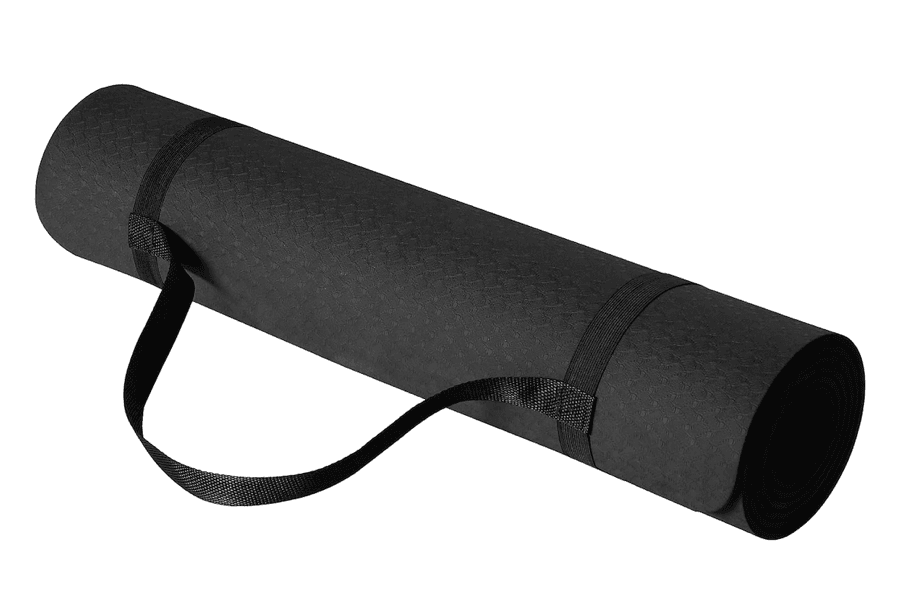
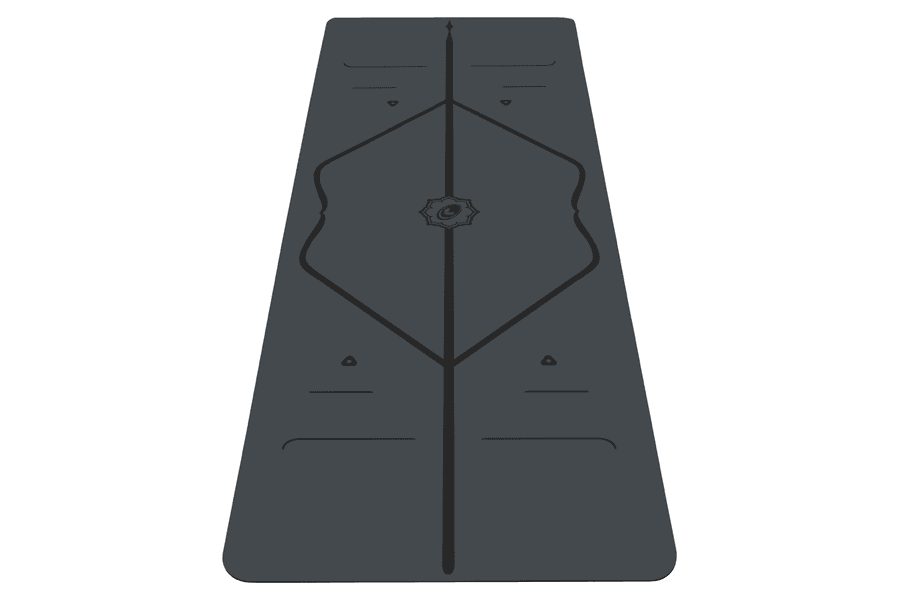
Price
The Amazon Basics lists for about $139 less.
$26.36
List price · check price at Amazon
$165
List price · check price at Amazon
Thickness
The Amazon Basics is 43% thicker.
6 mm0.24″
4.2 mm0.17″
Weight
The Amazon Basics is 3.5 lbs lighter.
2 lbs0.9 kg
5.5 lbs2.5 kg
Size
The Amazon Basics is 0.8″ longer; the Liforme is 2.8″ wider.
Same on both
- Firm rather than plush
- One size only
- Mild smell out of the packaging that clears within a week
- Wear out in years, not decades
Full specs
Dimensions
Materials & build
Buying
Dry practice: closer than the price suggests
In an unheated room the TPE concedes less than six times the price would imply. Its pressed texture grips dry hands and feet from the first practice with no break-in, its firm 6 mm holds steady under a standing foot, and at 2 pounds it is the easier mat to carry anywhere.
The Liforme is better, just not by six times. GearLab rated its dry grip 9 out of 10, and the surface has a soft, planted quality that the TPE’s springier foam does not match. If your practice is gentle, dry, and mostly at home, the honest gap between these two mats is small enough that spending the difference is a preference rather than a fix.
Sweat is where the money goes
The TPE is closed-cell, so nothing passes into the surface. Sweat pools exactly where your palms land and traction leaves early and does not come back. That is not a flaw in this particular mat; it is what closed-cell foam does, and it applies to every budget mat built this way.
The Liforme’s polyurethane top absorbs moisture instead of letting it bead, so grip survives damp palms. GearLab rated it 7 out of 10 wet, listed excellent wet and dry grip among its pros, and that combination is the single clearest thing the price buys. If you flow hard, practice heated, or simply sweat a lot, this section decides the page on its own.
The etched grid, and who it is really for
A center line, hand and foot markers, and angled guides for stance direction, cut into the surface rather than printed on it so they will not wear off. GearLab gave the Liforme its alignment award for them, and they are the best implementation of the idea anyone sells.
They help most when nobody is watching you and you cannot see yourself, which describes a beginner practicing at home. The awkward part is that a beginner is also the least likely person to spend $165, and that tension does not resolve. If the guides sound useful but the price does not, plenty of people manage with a mat that has a visible center seam and a bit of attention.
Length to one, width to the other
The TPE is the longer mat, 73.6″ against 72.8″, which is a genuine advantage for a tall practitioner and an unusual one at this price. The Liforme is much wider, 26.8″ against 24″.
Day to day the width does more work, because it is what keeps your hands on the mat in a wide down dog and your back foot on it in warrior two. The Liforme also ships with a full-length carry bag rather than a strap, which matters at 5.5 pounds against the TPE’s 2. Neither comes in another size.
Cushion and stability
The cheap mat is thicker, 6 mm against 4.2, and in kneeling and seated work on a hard floor you feel it. TPE is springy, though, so under a standing foot it compresses a little unevenly and has a faint float that some people never notice and others dislike in a long balance.
The Liforme is thinner and denser, sitting on a natural rubber base that does not move. It is not a plush mat and it will not do anything for sore knees; what it gives you instead is a surface that stays exactly where you put your foot. If cushion is the actual problem, neither of these is the answer and a thick foam mat is.
Both wear out, and the paperwork is backwards
TPE has a short clock. It dents where knees land, the texture polishes smooth under hands and feet, and edges fray once they start. A year or two of steady practice is the fair expectation, and at $26 that is a defensible cost of ownership.
The Liforme is not a decade mat either. Its polyurethane scuffs and takes on marks where hands and feet land, and GearLab noted it is not as durable as other high performers in its test. Liforme also states its materials are designed to biodegrade, which is a virtue and a hint.
Then the coverage: Amazon Basics gives a 1 year warranty, and Liforme gives none at all beyond a 30 day return window, on a $165 mat. Worth knowing before you check out rather than after.
Care, materials, and latex
The TPE takes a wipe and no thought. The Liforme wants water or a very diluted mild soap after sweaty sessions, a full dry before rolling, and no hot cars, direct sun, or strong cleaners. Despite that list GearLab scored it 9 out of 10 for care and cleaning, the joint best in its test, because the surface itself is easy to keep.
On allergies the cheap mat wins outright. TPE is synthetic through and through, while the Liforme sits on a natural rubber base, so a genuine latex allergy takes it off your list no matter how good the surface is. Both off-gas mildly out of the packaging and both clear within a week or so of airing.
Price and value
List prices are about $26.36 and $165. Check current prices on the Amazon Basics TPE and the Liforme Classic; Liforme discounts rarely and by colorway when it does.
Run the comparison over a decade and it still does not flatter the Liforme on cost: replacing a $26 mat every eighteen months runs around $170, roughly one Liforme, and the Liforme will not last ten years either. The case for spending the money is not durability, it is that you get a better surface to practice on every single day in the meantime. That is a real reason, and it is worth being clear that it is the reason.
Bottom line
Buy the Amazon Basics TPE if your practice is dry and unheated, if you are new and still finding out whether this sticks, if you are tall, or if latex is a medical issue. It is a genuinely competent mat for the price of a single class, and the only serious thing it cannot do is hold on when you sweat.
Buy the Liforme Classic if you sweat, flow hard, or would actually use the alignment grid. It is one of the best yoga surfaces made and the extra width is a daily pleasure. Go in knowing there is no warranty, it will show its age in a few years, and it will not help your knees. If the wet grip is what you want but $165 is not, the IUGA solves the same problem for a fraction of it.
Amazon Basics 1/4 Inch Thick TPE
List price $26.36
Liforme Classic
List price $165
Frequently Asked Questions
- Is the Liforme worth six times the price of a cheap mat?
- It depends on whether you sweat. In a dry, gentle practice the Amazon Basics TPE grips fine, stays stable and is longer and lighter, so the gap is genuinely small and hard to justify. Once sweat enters the picture the TPE slides and the Liforme keeps working, and no amount of value math makes a mat you're slipping on the better purchase. GearLab scored the Liforme 76 out of 100 and gave it the award for fine-tuning alignment.
- Does the Liforme Classic come with a warranty?
- No. Liforme offers a 30 day return window and no warranty after it, on a $165 mat. The Amazon Basics TPE carries a 1 year warranty against defects. That is an odd result at this price gap and worth knowing before you check out. GearLab also noted the Liforme is not as durable as other high performers in its test, and its polyurethane scuffs and marks where hands and feet land.
- Do the Liforme alignment lines actually help?
- They help most when nobody is watching you and you can't see yourself, which describes a beginner practicing at home. The center line, hand and foot markers and angled stance guides are etched into the surface rather than printed, so they won't wear off, and GearLab gave the mat its alignment award for them. The awkward part is that a beginner is also the least likely person to spend $165, and that tension doesn't really resolve.
- Which one is better for sore knees?
- The Amazon Basics TPE, by virtue of being thicker: 6 mm against the Liforme's 4.2. Neither is a plush mat, though. If cushion is the actual problem, a thick foam exercise mat does something neither of these can, and plenty of people end up laying a thin grippy mat over a thick foam one to get traction on top and padding underneath.
- Is the Liforme safe with a latex allergy?
- No. It sits on a natural rubber base under the polyurethane top, so a genuine latex allergy takes it off your list however good the surface is. TPE is synthetic through and through, which makes the Amazon Basics the safe option here.
- How do you clean a Liforme mat?
- Water or a very diluted mild soap after sweaty sessions, then a full dry before rolling, and no hot cars, direct sun or strong cleaners. Despite that list, GearLab scored it 9 out of 10 for care and cleaning, joint best in its test, because the surface itself is easy to keep. The TPE takes a wipe and no thought at all.
Related comparisons
- Amazon Basics 1/4 Inch Thick TPE vs Gruper TPE 6mm
- Amazon Basics 1/4 Inch Thick TPE vs Gaiam Premium 6mm
- Amazon Basics 1/4 Inch Thick TPE vs Gaiam Essentials 6mm
- Amazon Basics 1/4 Inch Thick TPE vs YogaAccessories Extra Thick Deluxe 1/4"
- Amazon Basics 1/4 Inch Thick TPE vs Gaiam Premium Reversible 6mm
- Amazon Basics 1/4 Inch Thick TPE vs Gaiam Classic Print 4mm
- JadeYoga Harmony XW vs Liforme Classic
- Liforme Classic vs Yoloha Unity Pro Cork
- Manduka PROlite Long & Wide vs Liforme Classic