Alo Warrior vs Gaiam Performance Dry-Grip Long & Wide: Which One Should You Buy?
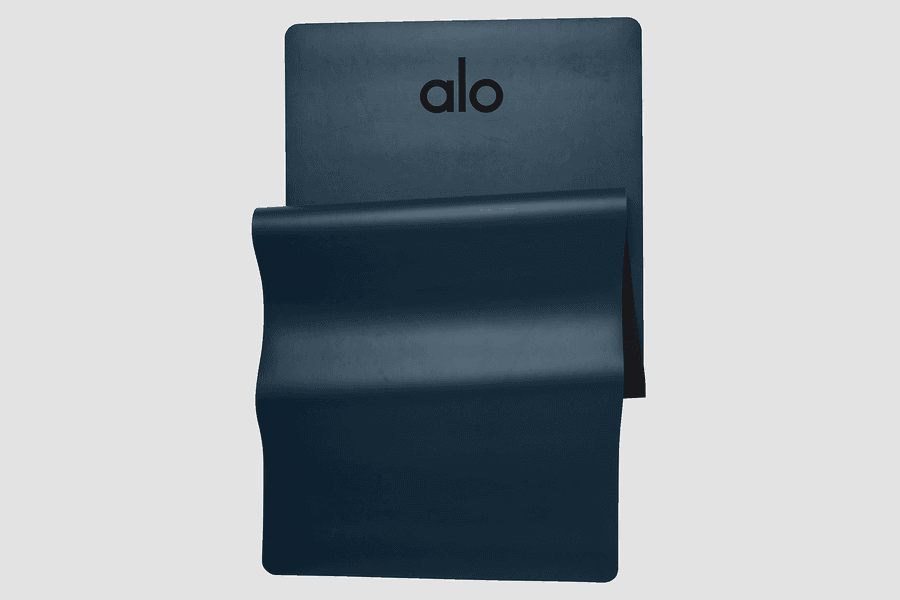
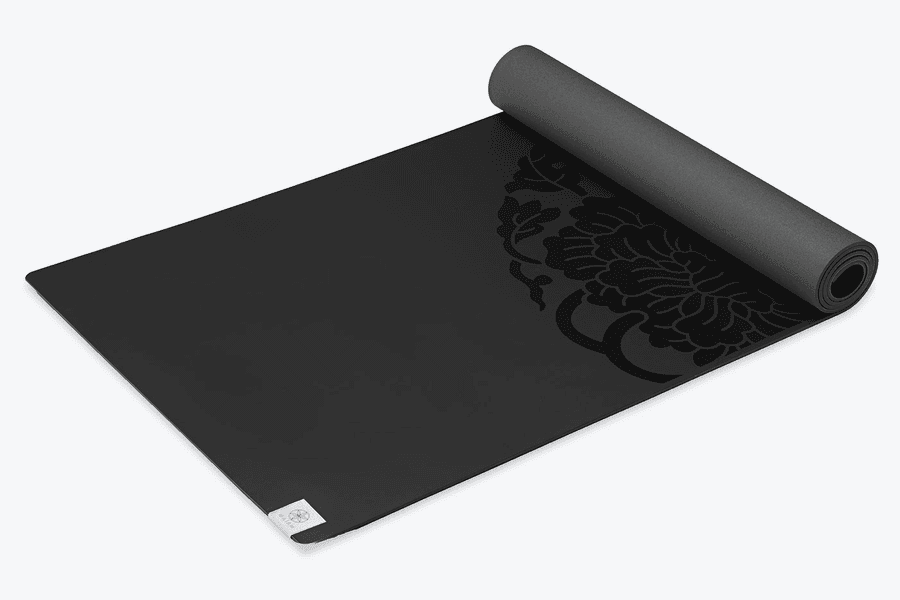
These two landed on exactly the same GearLab total, 62 out of 100, from opposite ends of the price range. The Warrior is $148 of polyurethane leather over natural rubber; the Gaiam Dry-Grip Long & Wide is $74.98 of coated PVC that happens to be four inches longer. When two mats tie on the headline number, the sub-scores are where the decision lives.
As an Amazon Associate, we earn from qualifying purchases made through links on this page. How this works
The quick answer
GearLab gave the Warrior 7 for comfort and support, 6 for materials and grip of 7 dry and 4.5 wet. It gave the Dry-Grip construction 8 for comfort and support, 4 for materials and grip of 6.5 dry and 3.5 wet, the second worst wet result in a field of 19. Same total, different shape: the Gaiam is more comfortable, the Warrior grips better and is built from better stuff.
The Gaiam is the value pick and the one to take if you are tall, since 78 inches for $75 is hard to find. The Warrior is the better long-term mat and it costs twice as much for a tie on paper, which tells you something about what you are actually paying for.
Get the Alo Warrior if...
- You want better grip when your hands are damp
- You want natural rubber and polyurethane, not coated foam
- You want a heavy mat that never moves
- You want the mat to still look good in two years
Get the Gaiam Dry-Grip Long & Wide if...
- You're tall and want 78 inches of length
- You want more cushion underfoot
- You want a lifetime guarantee on paper
- You'd rather keep about $73
Side by side
Price
The Dry-Grip L&W lists for about $73 less.
$148
List price · check price at aloyoga.com
$74.98
List price · check price at Amazon
Thickness
Identical thickness.
5 mm0.2″
5 mm0.2″
Weight
The Dry-Grip L&W is 3 lbs lighter.
8 lbs3.6 kg
5 lbs2.27 kg
Size
The Dry-Grip L&W is 3.6″ longer; the Warrior is 0.4″ wider.
Same on both
- 26 inches wide
- 5 mm thick
- Both scored 62 out of 100 in GearLab's 2026 test
- Both are around 5 to 8 pounds and not travel mats
Full specs
Dimensions
Materials & build
Buying
Same score, half the price
GearLab gave both of these 62 out of 100 in its 2026 test. The Alo Warrior costs $148; the Gaiam Performance Dry-Grip Long & Wide costs $74.98. When two mats tie on the headline number from opposite ends of the price range, the sub-scores are the only place the decision can live.
Both are 5 mm and 26 inches wide, so the shapes are similar. The Gaiam is four inches longer at 78″ and three pounds lighter.
Where the two 62s came from
The Warrior scored 7 for comfort and support, 6 for materials, 7 for care and cleaning, and grip of 7 dry and 4.5 wet. The Dry-Grip construction scored 8 for comfort and support, 4 for materials, 7 for care and cleaning, and 6.5 dry and 3.5 wet.
So the Gaiam is the more comfortable mat and the Warrior is the grippier, better-built one. The 3.5 wet grip was second worst of the 19 mats tested, which is worth holding onto when you read the listing.
The hot yoga claim on the Gaiam
Gaiam’s own copy says the topcoat wicks moisture and grips harder as temperatures rise, and describes the mat as ideal for hot yoga. That is marketing rather than a measurement, and the measurement puts its wet grip near the bottom of the field.
The Warrior’s 4.5 is better and still not good. If heated classes are your regular practice, a towel over either mat is the sensible answer, and mats built around absorbent tops are the category to look at instead.
A topcoat against a laminated top
The clearest gap in the sub-scores is materials: 6 for the Warrior, 4 for the Dry-Grip. A dry-grip topcoat is a thin layer bonded to PVC foam, and it thins out where hands and feet keep landing. Once it is gone you have a plain PVC mat.
The Warrior’s polyurethane leather top also wears, and Alo offers no warranty against it, but it starts from a denser and better-finished base. If you expect to still be using the mat in three years, that difference is the one that matters.
Four inches, and whether you need them
Both of these are already long mats. The Warrior is 74.4″ and the Gaiam is 78″, so this is not the dramatic gap you would see against a standard 68 inch mat. If you are well over six foot, the Gaiam has the edge and costs half as much.
Alo also sells a Long version of the Warrior at 84″ × 26″, which outruns the Gaiam if length is your problem and you want the Alo surface.
Eight pounds against five
GearLab measured the Warrior at 8.1 pounds, heaviest of the 19 mats it tested and heavier than a Manduka PRO. The Gaiam is 5. Both are room mats rather than commuting mats, but three pounds is a real difference if you do move it.
The Warrior’s heft does buy something: it stays exactly where you put it on any floor, in any sequence. The Gaiam is fine on that front too, just less emphatically so.
Care and the new-mat smell
Gaiam asks you to unroll the mat and air it for two to three days before your first session, because PVC releases a strong odor when first unwrapped, and it publishes a guide about getting rid of it. It also warns that extended sun exposure makes the mat brittle.
The Warrior needs a lighter touch than a PVC mat: polyurethane does not tolerate harsh cleaners or soaking, and hard scrubbing takes years off the surface. GearLab rated both 7 out of 10 for care and cleaning, for different reasons.
A lifetime guarantee against nothing
Gaiam’s lifetime guarantee looks like a decisive win and covers manufacturing defects rather than a topcoat wearing thin or foam compressing. Those are the ways this mat actually ends, so the document is narrower than it sounds.
Alo offers 30 day returns and no warranty at all, which is thin at $148. Neither policy should decide this, though it is a fair point against the more expensive mat.
The value question
Two mats, one score, one costing twice the other. On the numbers the Gaiam is the better buy, and if you are tall it is better still. On build quality and grip the Warrior is ahead, and it should be at this price.
If you want a premium mat that actually tests like one, GearLab put the Manduka eKO at 87 for $114 and Lululemon’s The Mat at 81 for $118. Our PRO vs Warrior comparison covers the mat that won the test outright.
Bottom line
Buy the Gaiam Dry-Grip Long & Wide if you want size and value. Make sure the listing is set to 78 by 26 inches rather than the standard 68 by 24, and do not buy it for the hot yoga claim.
Buy the Alo Warrior if you want the grippier surface and the better-made mat, and the weight is not an obstacle. It is sold through Alo only.
Alo Warrior
List price $148
Frequently Asked Questions
- Two mats, same score. What separates them?
- Grip and materials against comfort and price. GearLab rated the Warrior 7 dry and 4.5 wet with 6 for materials; the Dry-Grip got 6.5 dry and 3.5 wet with 4 for materials, but 8 for comfort and support against the Warrior's 7. The Gaiam feels softer and the Warrior holds you better and lasts longer. The totals hide that.
- Is the Gaiam good for hot yoga like it says?
- The test says no. GearLab measured the standard Dry-Grip at 3.5 out of 10 for wet grip, second from the bottom of 19 mats, despite Gaiam's listing calling it ideal for hot yoga. That claim is the company's own copy, not a test result. The Warrior's 4.5 is better and still not good; a towel is the sensible answer with either.
- How much does the extra length matter?
- The Gaiam is 78 inches against the Warrior's 74.4, so it is not the huge gap it would be against a standard 68 or 71 inch mat. The Warrior is already long. If you are over six foot, both work; if you are well over, the Gaiam has the edge and costs half as much.
- Which one lasts longer?
- The Warrior, on materials, though neither is a decade mat. A dry-grip topcoat is a thin layer bonded to PVC and it thins out where hands and feet land, which is what GearLab's 4 out of 10 describes. The Warrior's polyurethane top also wears, but it starts from a denser, better-made base. Gaiam's lifetime guarantee covers defects rather than coating wear, and Alo offers 30 day returns and no warranty.
- What about weight?
- The Warrior is 8 pounds, measured at 8.1 by GearLab, the heaviest mat in its test. The Gaiam is 5. Both are room mats rather than commuting mats, but three pounds is noticeable if you do move it, and the Warrior's heft does keep it planted.
- Where can I buy each?
- The Warrior comes from aloyoga.com and Alo's stores only; there is no Amazon listing, and the list price is $148. The Gaiam sells on Amazon and gaiam.com, and the Amazon listing carries multiple sizes, so make sure you are choosing the 78 by 26 inch version and not the standard 68 by 24.
Related comparisons
- Manduka X vs Gaiam Performance Dry-Grip Long & Wide
- JadeYoga Harmony XW vs Alo Warrior
- Manduka PROlite Long & Wide vs Alo Warrior
- Manduka PRO vs Alo Warrior
- Alo Warrior vs Manduka PRO Terra 6mm
- Manduka GRP Adapt 2.0 Long vs Alo Warrior
- Hugger Mugger Earth Elements 5mm vs Gaiam Performance Dry-Grip Long & Wide
- Manduka GRP Adapt 1.0 vs Gaiam Performance Dry-Grip Long & Wide
- Manduka eKO Long vs Alo Warrior