Manduka PROlite Long & Wide vs Manduka eKO Lite: Which One Should You Buy?
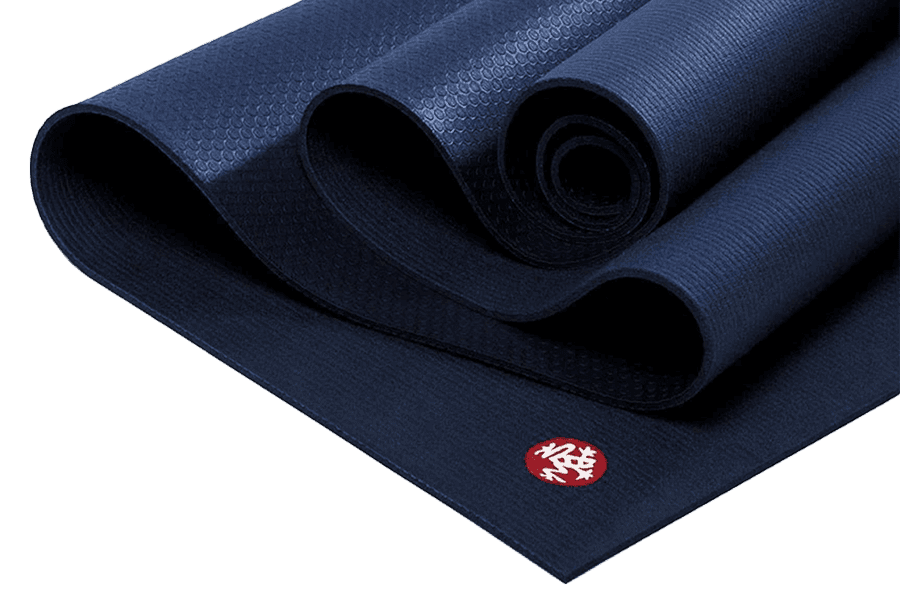
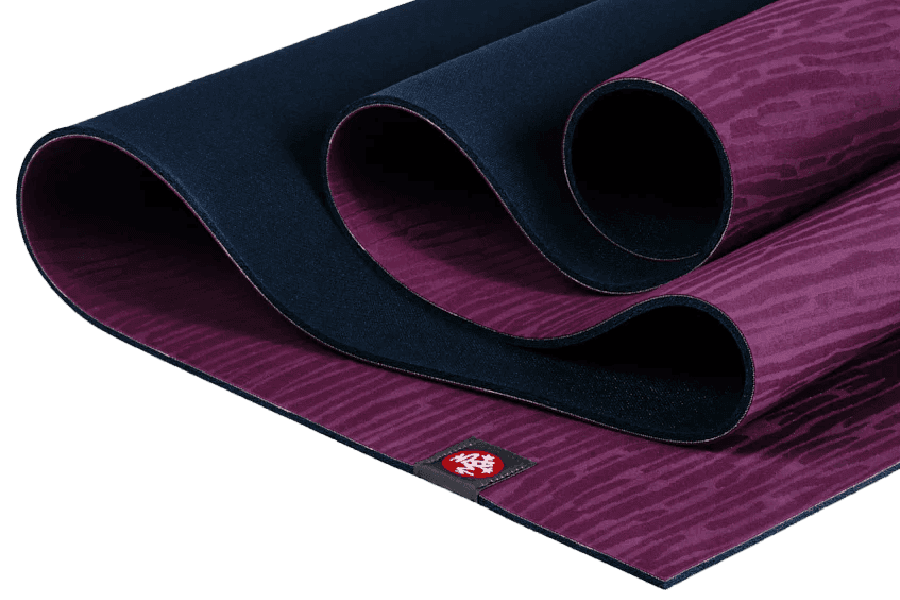
One of these is a piece of home equipment and the other is a mat you take places. The PROlite Long & Wide is 79" × 30" of dense PVC at $144, backed by Manduka's lifetime guarantee and effectively furniture once you unroll it. The eKO Lite is the standard 71" × 24" in 4 mm of natural rubber at $96, 5 pounds, grippy from the first class, with a 30 day return window standing where a warranty would be. The $48 between them buys about 40% more practice surface and roughly a decade of life.
As an Amazon Associate, we earn from qualifying purchases made through links on this page. How this works
The quick answer
The Long & Wide is the bigger, firmer, longer-lived mat by a wide margin: 666 more square inches underfoot, dense PVC that GearLab keeps finding in service five to twenty years on, and a guarantee standing behind it. It's also slick for its first weeks, sold in two colors, and hopeless as a commuter, because a 30 inch roll fits no strap or bag made. The eKO Lite reverses every one of those. It grips immediately, weighs 5 pounds, comes in around 8 colorways, saves $48, and wears out in a few years of daily practice.
If the mat leaves your house, the eKO Lite wins before the other specs get a vote. If the mat lives on your floor and standard cuts crowd you, the Long & Wide earns the gap and then some.
Get the PROlite Long & Wide if...
- Your mat stays in one room and never moves
- You're tall or broad and 71" × 24" crowds you
- You want the lifetime guarantee, not a 30 day window
- Firm, dense support matters more than instant grip
Get the eKO Lite if...
- You carry your mat to class; 5 pounds and a 24" roll manage that
- You want rubber grip with no break-in period
- You'd rather keep $48 and choose from about 8 colorways
- Natural rubber matters to you more than PVC longevity
Side by side
Price
The eKO Lite lists for $48 less.
$144
List price · check price at Amazon
$96
List price · check price at Amazon
Thickness
The Long & Wide is 18% thicker.
4.7 mm0.19″
4 mm0.16″
Weight
The eKO Lite is 2 lbs lighter.
7 lbs3.2 kg
5 lbs2.2 kg
Size
The Long & Wide is 8″ longer; the Long & Wide is 6″ wider.
Same on both
- Made by Manduka
- Closed-cell surfaces (sweat sits on top)
- Firm rather than plush
- Need a towel in a heated room
Full specs
Dimensions
Materials & build
A room fixture and a mat you carry
The PROlite Long & Wide is 79″ × 30″ of dense PVC at $144, 7 pounds, backed by Manduka’s lifetime guarantee. The eKO Lite is the standard 71″ × 24″ in 4 mm of natural rubber at $96, 5 pounds, grippy from the first class, backed by 30 days of returns.
Same brand, and that’s about where the overlap ends. One of these mats is something you install in a room; the other is something you sling over a shoulder on the way to class. The $48 between them buys about 40% more practice surface and roughly a decade of use.
666 more square inches
The Long & Wide covers 2,370 square inches. The eKO Lite covers 1,704. That’s 8 more inches of length and 6 more of width, and the practical result is that you stop placing yourself carefully. Hands and feet land on mat wherever they go, savasana stops being a negotiation with the edges, and you can move around during a sequence without checking the boundaries.
The cost is total immobility. A 30 inch roll fits no standard mat sling, sticks out of every bag, and monopolizes floor space in a busy studio. The eKO Lite’s 24 inch roll is the width every strap, cubby, and locker was designed around. If you take mats places, this single fact settles the page before you read the rest of it.
Grip: the eKO Lite starts ready
The eKO Lite’s textured rubber holds from the opening class. That’s the trait that sells rubber mats, and it delivers without qualification, though Manduka’s own copy phrases the promise as reliable traction in dry conditions rather than in all conditions.
The PROlite Long & Wide makes you earn it. New PRO-family PVC arrives with a sealed, genuinely slippery surface and needs a few weeks of regular practice to break in. Manduka has retired the old salt-scrub shortcut and now says use alone resolves it, which lines up with owner reports. Give it that month and the dry grip becomes excellent, then keeps improving for years while rubber slowly polishes and loses tack.
Neither mat handles real sweat. Both are closed-cell, so moisture beads and sits, and a hot class wants a towel on either. For heavy sweat, an open-cell mat like the Jade Harmony or an absorbent one like the GRP Adapt 2.0 is a better tool than either mat here.
Cushioning: density beats the spec sheet
The numbers read 4.7 mm against 4, which sounds like a rounding error. Underfoot the gap is wider than that, because the materials compress differently. The PROlite’s PVC is dense enough that a kneecap doesn’t reach the floor through it, so kneeling sequences on tile or concrete stay comfortable. The eKO Lite’s rubber is springier and pleasant in standing work, but it bottoms out sooner under concentrated weight.
Both are firm, thin-side mats, and neither is the answer for genuinely painful knees. If cushioning is the reason you’re shopping, the 6 mm Manduka PRO or the 5 mm eKO protect more than either of these.
Where the $48 comes back
The Long & Wide carries Manduka’s lifetime guarantee, which in the fine print means roughly ten years of regular use with one replacement, proof of purchase from an authorized seller required. The material earns the paper: GearLab keeps finding this PVC construction in service five to twenty years on, and it tolerates careless ownership, sun, hot cars, and whatever cleaner is handy.
The eKO Lite gets 30 day returns and a care sheet. Natural rubber wants shade and gentle cleaners, and owners who practice daily typically see visible surface wear within a few years. At 4 mm there isn’t much material to spare either. One $144 mat that runs a decade costs less than three or four rounds of a $96 one over the same period, so the eKO Lite has to win on feel and portability rather than on cost.
Rubber versus a long-lived plastic
Manduka makes the eKO Lite in Taiwan from natural rubber with over 30% recycled content, which is a real answer for buyers who don’t want PVC in the house. The Long & Wide is the material those buyers avoid, defended by OEKO-TEX Standard 100 certification and by the arithmetic of buying once per decade instead of every few years.
Neither mat is meaningfully recyclable at end of life, which is why lifespan does more environmental work in this comparison than the material label does. Worth noting as well: Manduka doesn’t market its rubber mats as safe for latex allergies, so sensitive buyers should treat the eKO Lite with caution and take the PVC mat instead.
Colors and other sizes
The eKO Lite is the color pick, with around 8 colorways at last count against Black or Midnight on the Long & Wide. Manduka always shortens the palette on oversized cuts, so this is the usual trade rather than a slight against the PROlite.
Both mats have obvious cousins. The eKO Lite comes in a 79″ × 24″ Long version at $104 for taller practitioners, and the PROlite family runs from the 71″ standard at $112 through the 79″ × 24″ Long before reaching the Long & Wide. If you want length without the 30 inch roll, that middle option is usually the smarter buy. We run the rubber version of this matchup on our Long & Wide vs eKO Lite Long page.
Price and value
List prices are $144 for the PROlite Long & Wide and $96 for the eKO Lite. Check current prices on the Long & Wide and the eKO Lite; both drift below list at times.
Long term the Long & Wide is the cheaper mat despite the larger number, for the lifespan reasons above. The eKO Lite’s case is immediate and perfectly respectable: $48 stays in your pocket, the grip works today, the mat actually travels, and if yoga turns out not to stick you’re out far less money.
Bottom line
If the mat leaves your house, buy the eKO Lite and stop reading. The Long & Wide is not a commuter mat at any price, and no amount of extra room compensates for a roll you can’t carry to class.
If the mat lives on your floor, the Long & Wide is worth the gap, particularly if you’re tall or broad enough that standard cuts crowd you. You get 40% more surface, firmer support for kneeling work, and a guarantee that turns $144 into roughly $14 a year.
Frequently Asked Questions
- How much bigger is the Long & Wide really?
- About 40% more mat. The Long & Wide is 2,370 square inches against the eKO Lite's 1,704, from 8 extra inches of length and 6 extra of width. In practice that reads as never placing yourself carefully: hands and feet land on mat wherever they go, and savasana stops being a negotiation with the edges. It also reads as a mat that dominates a room and can't be tidied away quickly.
- Which one grips better?
- The eKO Lite, immediately and without qualification, for the first month or so. Its textured natural rubber holds from the opening class, though Manduka's own copy is careful to call that traction reliable in dry conditions. The Long & Wide starts slick and needs a few weeks of use to break in, after which its dry grip is excellent and keeps improving. Neither mat copes with heavy sweat.
- Is 4 mm of rubber enough cushioning?
- For standing practice on any normal floor, yes. For kneeling work on tile or concrete, the eKO Lite is thin and its rubber bottoms out more readily under a kneecap than the PROlite's denser 4.7 mm does. Neither of these is a plush mat. If joint protection is the reason you're shopping, the 6 mm Manduka PRO or a thick foam mat protects considerably more than either.
- Why does one Manduka get a lifetime guarantee and the other 30 days?
- Because the materials wear at completely different rates, and Manduka's warranty terms line up with that. Dense closed-cell PVC barely changes over years of use, so the PROlite line carries the guarantee, roughly ten years of regular use with one replacement and proof of purchase from an authorized seller. Natural rubber softens, shows surface wear within a few years of daily practice, hates direct sun, and wants gentle cleaners, so the eKO Lite gets returns and nothing more.
- Which is the greener purchase?
- By materials, the eKO Lite: Manduka makes it in Taiwan from natural rubber with over 30% recycled content, and no PVC is involved. The counterargument for the Long & Wide is arithmetic rather than chemistry, since one mat lasting a decade creates less waste than three or four rubber mats over the same span. Both positions are defensible. The PVC mat does carry OEKO-TEX Standard 100 certification, which speaks to what's in it, not to how it's disposed of.
- Can the Long & Wide travel at all?
- Realistically, no. At 7 pounds it's not the weight that stops you, it's the geometry: a 30 inch roll won't sit in a standard mat sling, sticks out of every bag, and takes up two people's worth of floor in a full class. Manduka's own long PVC option for carrying is the 79" × 24" PROlite Long, which rolls normally. Treat the Long & Wide as something you install.
Related comparisons
- Manduka PROlite Long & Wide vs JadeYoga Harmony XW
- JadeYoga Harmony 68" vs Manduka eKO Lite
- Manduka PROlite Long & Wide vs Alo Warrior
- Manduka eKO Lite vs Suga SugaMat
- Manduka eKO Lite vs Lululemon The Mat 3mm
- Manduka PROlite Long & Wide vs Lululemon The (Big) Mat 5mm
- Manduka eKO Lite vs JadeYoga Harmony 2.0 68"
- JadeYoga Harmony 74" vs Manduka eKO Lite
- Manduka PROlite Long & Wide vs b, halfmoon B Mat Strong 6mm