Manduka PROlite Long & Wide vs Amazon Basics 1/2 Inch Extra Thick: Which One Should You Buy?
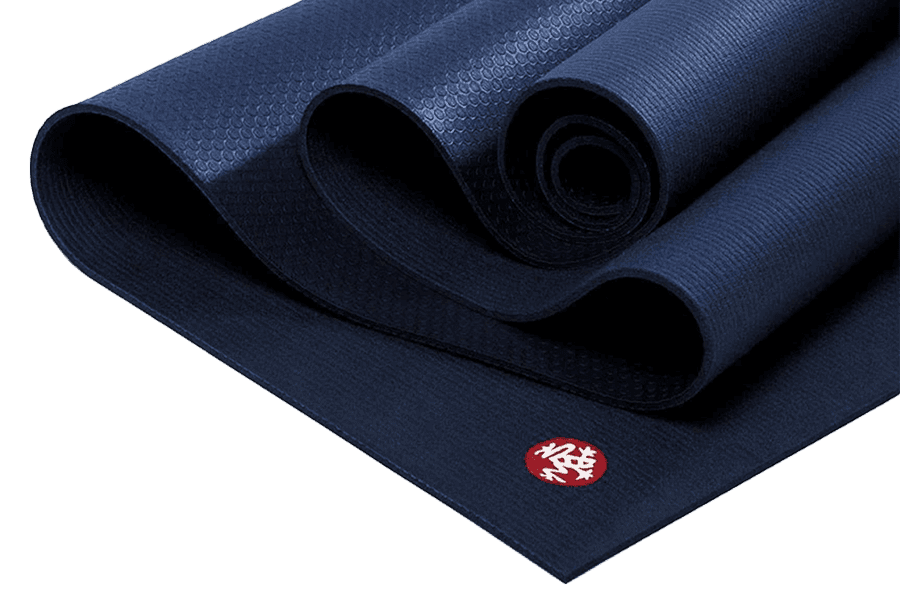
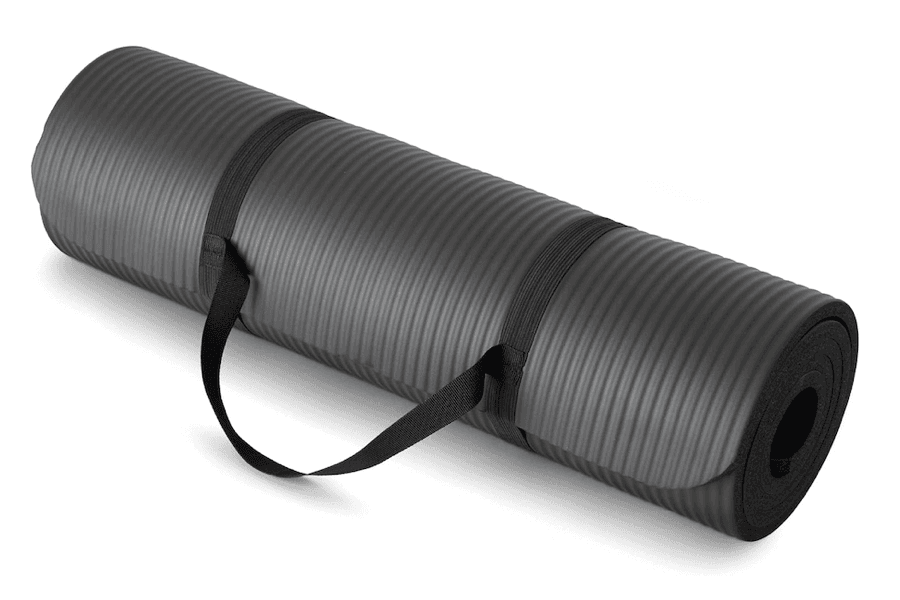
There's $121 between these two mats and almost nothing else in common. The PROlite Long & Wide is 4.7 mm of dense German PVC across 79" × 30", 7 pounds, OEKO-TEX certified, guaranteed for roughly a decade. The Amazon Basics 1/2 Inch Extra Thick is 12.7 mm of soft NBR foam at 74" × 24", 2.2 pounds, with a carrying strap and a one year warranty. The thick one is nearly three times as thick and the thin one is far better for yoga, which takes some explaining.
As an Amazon Associate, we earn from qualifying purchases made through links on this page. How this works
The quick answer
Thickness and support are not the same thing. The Amazon Basics mat's half inch of soft foam is lovely for floor stretching, physio work, and anything where you're lying down, and it's the more comfortable surface under a kneecap. Stand on it in tree pose and it compresses under your foot, which is why serious practitioners tend to leave it for mat pilates and abdominal work.
The PROlite Long & Wide is firm, planted, much larger, and built to outlive several foam mats. If yoga is the actual activity, it's the better buy despite the price, and the guarantee makes the cost per year defensible. If you want cushioning for floor exercises or you're spending $25 to see whether any of this appeals, the Amazon Basics mat is honest value and nobody should feel bad about starting there.
Get the PROlite Long & Wide if...
- Balance poses and standing sequences are the point
- You want 79" × 30", the largest mat Manduka makes
- You want a decade-long guarantee instead of one year
- You want a grippier surface that improves with use
Get the Amazon Basics 1/2 Inch if...
- You want maximum cushioning for floor and stretching work
- You're spending as little as possible to try yoga out
- 2.2 pounds and an included strap suit how you'll carry it
- You need a cheap second mat for guests or a spare room
Side by side
Price
The Amazon Basics lists for about $122 less.
$144
List price · check price at Amazon
$22.48
List price · check price at Amazon
Thickness
The Amazon Basics is 170% thicker.
4.7 mm0.19″
12.7 mm0.5″
Weight
The Amazon Basics is 4.8 lbs lighter.
7 lbs3.2 kg
2.2 lbs1 kg
Size
The Long & Wide is 5″ longer; the Long & Wide is 6″ wider.
Same on both
- Longer than a standard 71 inch mat
- Wipe clean with a damp cloth
- Latex free
- A short list of colorways (2 and 3 at last count)
Full specs
Dimensions
Materials & build
A $121 gap and almost no overlap
The PROlite Long & Wide is 4.7 mm of dense German PVC across 79″ × 30″, 7 pounds, OEKO-TEX Standard 100 certified, guaranteed for roughly a decade, at $144. The Amazon Basics 1/2 Inch Extra Thick is 12.7 mm of soft NBR foam at 74″ × 24″, 2.2 pounds, one year warranty, carrying strap in the box, at $22.48.
The cheap one is nearly three times thicker and the expensive one is far better for yoga. That sounds backwards until you separate thickness from support, which is what the rest of this page does.
Thick foam is comfortable and unstable
Half an inch of soft foam is genuinely pleasant when you’re lying down. Floor stretching, physio exercises, abdominal work, and anything that puts a spine or a kneecap against the floor feels better on the Amazon Basics mat than on the PROlite, and that isn’t a small thing if your knees hurt.
Then you stand up. Soft foam compresses under concentrated weight, so the ball of your foot sinks in tree pose and your ankle spends the whole hold correcting for a surface that keeps moving. The PROlite’s 4.7 mm barely compresses at all, which is why a thinner mat feels dramatically more stable. Thickness helps most when you’re lying or kneeling, and works against you in anything that asks for balance.
Grip: adequate against excellent
NBR foam doesn’t have much traction to offer. The Amazon Basics mat is acceptable dry and gets vague as soon as your hands are damp, which is the most common complaint owners raise about it. It’s fine for stretching and gentle work and frustrating in a flowing sequence.
The PROlite Long & Wide starts slick, as all new PRO-family PVC does, and needs a few weeks of practice to break in. Manduka retired the salt-scrub advice it used to give and now says use alone resolves it. Once it does, the fabric-like surface holds well and keeps improving for years. Neither mat copes with real sweat, since both are closed-cell; a hot class wants a towel on either, or a mat built for it like the GRP Adapt 2.0.
Size is not the reason to skip the cheap mat
At 74″ × 24″, the Amazon Basics mat is actually longer than a standard 71 inch yoga mat, which is one of its quiet advantages and something a lot of $100 mats don’t manage. Tall practitioners genuinely can use it.
The Long & Wide is bigger again at 79″ × 30″, roughly a third more surface, and the six extra inches of width is the part you feel daily. But if budget is the constraint, don’t let anyone tell you the Amazon Basics mat is too small. The reasons to skip it are stability and lifespan.
One year against ten
Foam this soft takes a set. Owners typically report permanent dents where hands and feet land within a year of regular use, along with flaking at the edges once the surface skin breaks. Amazon warrants the mat for one year, which is a fair reflection of what it is rather than a mark against it.
The PROlite Long & Wide carries Manduka’s lifetime guarantee, which in the fine print means roughly ten years of regular use with one replacement, and proof of purchase from an authorized seller, with Amazon counting only when the listing is sold and shipped by Amazon itself. GearLab keeps finding this construction in service five to twenty years on. One $144 mat that lasts a decade costs less than replacing a $22.48 mat every year.
Out of the box
New NBR foam has a strong chemical smell, and owners mention it consistently. Unrolling the mat somewhere ventilated for several days handles most of it, and it does fade. The PROlite has a faint new-plastic scent that clears within days and carries OEKO-TEX Standard 100 certification, which is an independent test for harmful substances in the finished product rather than a marketing claim.
The Amazon Basics mat does come with a carrying strap, which Manduka doesn’t include with anything. At 2.2 pounds it’s also far easier to move than the 7 pound, 30 inch PROlite roll, which fits no strap at all.
Price and value
List prices are $144 for the PROlite Long & Wide and $22.48 for the Amazon Basics 1/2 Inch. Check current prices on the Long & Wide and the Amazon Basics mat, where individual colorways often sell below list.
The Amazon Basics mat is honest value: nobody is pretending it’s a premium product, and $22 to find out whether yoga appeals is a better use of money than $144 spent on a guess. The PROlite is the better mat by every measure that matters to a regular practice, and over ten years it’s also the cheaper one. Both statements are true at once.
Bottom line
Buy the Amazon Basics mat if you want cushioning for floor and stretching work, if you’re testing whether yoga is for you, or if you need a cheap spare for guests. Just don’t expect it to hold still under a balance pose or last much past a year of regular use.
Buy the PROlite Long & Wide if yoga is the actual activity and you have a place to leave it. It’s stable, much larger, grippier once broken in, and guaranteed for about a decade. If you want cushioning and stability together, look at the 6 mm Manduka PRO rather than at thicker foam, or keep a cheap foam mat folded under your knees for kneeling sequences and practice on the firm mat the rest of the time.
Amazon Basics 1/2 Inch Extra Thick
List price $22.48
Frequently Asked Questions
- Isn't thicker always better?
- Not for yoga. Soft foam compresses under concentrated weight, so a half inch mat sinks under the ball of your foot in standing balances and your ankle does extra work to stay steady. The PROlite's 4.7 mm barely compresses at all, which is why it feels more stable despite being thinner. Thickness helps most when you're lying or kneeling and hurts most when you're balancing.
- How do they compare on grip?
- The Amazon Basics foam is fine dry and gets vague quickly once your hands are damp, and NBR foam doesn't have much traction to give in the first place. The PROlite Long & Wide arrives slick and needs a few weeks of use to break in, after which its dry grip is excellent and holds for years. Neither handles heavy sweat; both want a towel in a hot room.
- How long does a $22 foam mat last?
- Typically a year or so of regular use before it develops permanent dents where your hands and feet land, and the surface starts flaking at the edges. Amazon backs it for one year, which is a fair reflection of that. The PROlite Long & Wide is guaranteed for roughly ten years of regular use with one replacement, and GearLab keeps finding this PVC construction in service well beyond that. One $144 mat that runs a decade costs less than replacing a $22 mat every year.
- Is the Amazon Basics mat big enough?
- At 74" × 24" it's actually longer than a standard 71 inch yoga mat, which is one of its quiet advantages, though it's 6 inches narrower and 5 inches shorter than the Long & Wide. Height isn't the reason to skip it. Stability and lifespan are.
- Does the Amazon Basics mat smell?
- New NBR foam has a noticeable chemical smell out of the packaging, and owners consistently mention it. Airing it out unrolled for several days handles most of it. The PROlite Long & Wide has a faint new-plastic scent that clears within days and carries OEKO-TEX Standard 100 certification, which tests for harmful substances in the finished product.
- What should I buy if I want cushioning and stability?
- Look at a dense 6 mm mat rather than a soft 12.7 mm one. The Manduka PRO is the obvious example: same firm PVC as the PROlite with more of it, so knees get real protection without the wobble that soft foam introduces. Alternatively, keep a cheap foam mat folded under your knees for kneeling sequences and practice on the firm mat the rest of the time, which is what a lot of people with cranky joints actually do.
Related comparisons
- Amazon Basics 1/2 Inch Extra Thick vs Retrospec Solana 1/2"
- Manduka PROlite Long & Wide vs JadeYoga Harmony XW
- Manduka PROlite Long & Wide vs Alo Warrior
- Manduka PROlite Long & Wide vs Lululemon The (Big) Mat 5mm
- Manduka PROlite Long & Wide vs b, halfmoon B Mat Strong 6mm
- Manduka PROlite Long & Wide vs Yoloha Unity Pro Cork
- Amazon Basics 1/2 Inch Extra Thick vs Gaiam Essentials Fitness Mat 10mm
- Manduka PROlite Long & Wide vs Liforme Classic
- Manduka PROlite Long & Wide vs Lululemon The Mat 5mm