Manduka PROlite Long & Wide vs Amazon Basics 1 Inch Extra Thick: Which One Should You Buy?
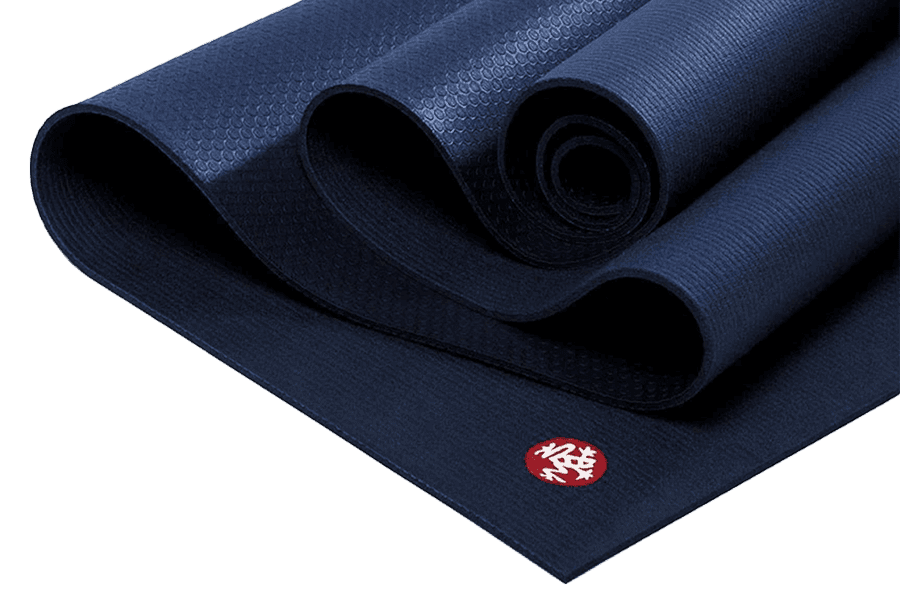
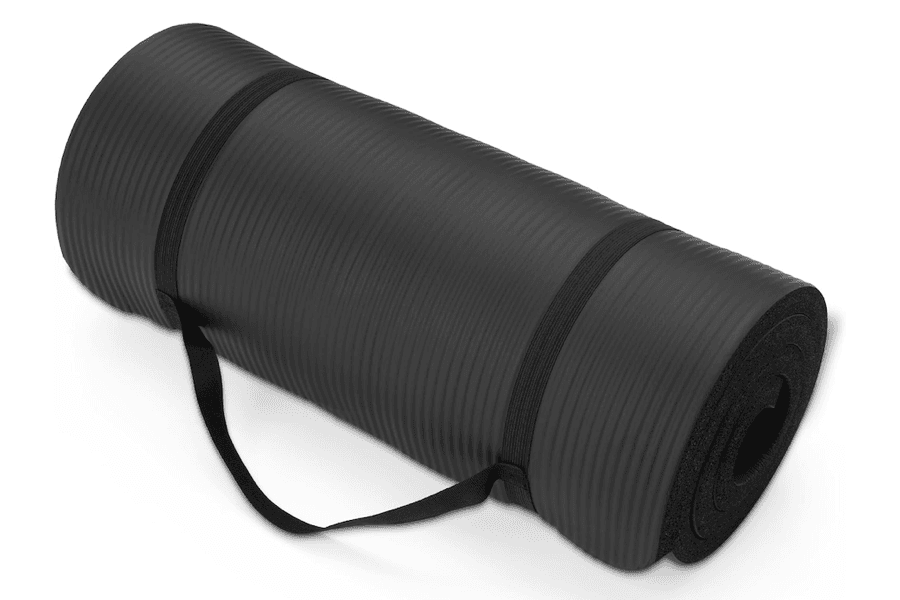
An inch of foam sounds like the most comfortable mat money can buy, and for lying down it is. The Amazon Basics 1 Inch Extra Thick is 25.4 mm of soft NBR foam at 74" × 24", 4.6 pounds, one year warranty, $38.40 with a strap in the box. The PROlite Long & Wide is 4.7 mm of dense PVC at 79" × 30", 7 pounds, OEKO-TEX certified, guaranteed for roughly a decade, $144. The thin one is the better yoga mat by a wide margin, and the reason is worth understanding before you spend either amount.
As an Amazon Associate, we earn from qualifying purchases made through links on this page. How this works
The quick answer
An inch of soft foam does one thing brilliantly and one thing badly. Kneeling, lying, planks, physio work, and anything on your back are all more comfortable on the Amazon Basics mat than on any yoga mat at any price. Stand on it and it compresses under your foot until balance poses turn into ankle exercises, and it is too thick to fold or roll into anything a strap will hold neatly.
The PROlite Long & Wide barely compresses, which is why a 4.7 mm mat feels far more stable than a 25 mm one. It's also 33% larger, grippier once broken in, and built to outlast a decade of foam mats. Buy the Amazon Basics 1 Inch for floor exercise, stretching, or a home gym. Buy the PROlite if the activity is actually yoga.
Get the PROlite Long & Wide if...
- Standing poses and balances are a real part of your practice
- You want 79" × 30", the biggest mat Manduka makes
- A decade-long guarantee beats a one year warranty
- You want grip that improves rather than fades
Get the Amazon Basics 1 Inch if...
- Your knees and spine need maximum padding on a hard floor
- You're doing floor work, stretching, or physio more than yoga
- You want to spend under $40 and get a strap included
- You need a cheap mat for a home gym or a spare room
Side by side
Price
The Amazon Basics lists for about $106 less.
$144
List price · check price at Amazon
$38.40
List price · check price at Amazon
Thickness
The Amazon Basics is 440% thicker.
4.7 mm0.19″
25.4 mm1″
Weight
The Amazon Basics is 2.4 lbs lighter.
7 lbs3.2 kg
4.6 lbs2.1 kg
Size
The Long & Wide is 5″ longer; the Long & Wide is 6″ wider.
Same on both
- Longer than a standard 71 inch mat
- Wipe clean with a damp cloth
- Latex free
- Three colorways or fewer at last count
Full specs
Dimensions
Materials & build
An inch of foam against 4.7 mm of PVC
The Amazon Basics 1 Inch Extra Thick is 25.4 mm of soft NBR foam at 74″ × 24″, 4.6 pounds, one year warranty, carrying strap in the box, $38.40. The PROlite Long & Wide is 4.7 mm of dense German PVC at 79″ × 30″, 7 pounds, OEKO-TEX Standard 100 certified, guaranteed for roughly a decade, $144.
One is five times thicker and costs a quarter as much. The other is the better yoga mat by a wide margin. Both of those things are true, and the reason is the single most useful thing to understand before buying any mat.
Why the thin mat feels more solid
Support comes from density, not depth. NBR foam is soft enough that it compresses substantially under concentrated weight, so in tree pose or warrior three the ball of your standing foot sinks into it and keeps sinking as you shift. Your ankle spends the entire hold managing a surface that won’t stay put. On an inch of foam the effect is pronounced enough that some people conclude they have poor balance when they actually have a poor mat for balancing.
The PROlite’s PVC hardly compresses at all. Put a foot down and the floor is exactly where you left it, which is why 4.7 mm feels dramatically steadier than 25.4. It’s also why premium yoga mats cluster between 4 and 6 mm rather than racing each other upward.
Where the foam genuinely wins
Lie down and the ranking reverses completely. An inch of soft foam is the most comfortable thing in this comparison for supine work, floor stretching, physio exercises, abdominal sequences, and long kneeling holds on tile or concrete. If your knees are the reason you’re shopping, this mat solves that problem more cheaply and more thoroughly than any yoga mat on the market.
That’s the real division here. The Amazon Basics mat is an exercise mat that people also use for yoga. The PROlite is a yoga mat that happens to be comfortable enough for floor work. Which one suits you depends on the proportion of your practice spent standing.
Grip: foam has very little to offer
NBR foam isn’t a grippy material. Dry, the Amazon Basics mat is acceptable; damp, it gets vague fast, and it’s the most common complaint owners raise. There’s also the sliding problem underneath: a light foam mat on a smooth floor tends to travel during a flowing sequence in a way a 7 pound PVC slab never does.
The PROlite arrives slick, as every new PRO-family mat does, and needs a few weeks of regular practice to break in. Manduka has retired the salt-scrub advice it once gave and now says use alone resolves it. From there its fabric-like surface holds well and keeps improving for years. Neither mat absorbs sweat, so a hot class wants a towel on either, or a mat built for heat like the GRP Adapt 2.0.
Size and handling
The PROlite is 79″ × 30″ against 74″ × 24″, about a third more surface, and the six extra inches of width is what you notice every practice. The Amazon Basics mat is no shrimp though; at 74 inches it’s longer than a standard 71 inch yoga mat, so height isn’t the reason to skip it.
Carrying is bad on both, for different reasons. The foam mat is lighter at 4.6 pounds but an inch of it rolls into a bulky cylinder that fights the strap it ships with and won’t compress. The PROlite is 7 pounds and rolls to 30 inches, which no standard mat sling accommodates. If you need something that actually commutes, Manduka’s 79″ × 24″ PROlite Long at $124 is the version to look at.
One year against ten
Soft foam takes a set. Owners typically report permanent dents where hands, feet, and knees land within a year of regular use, plus flaking at the edges once the surface skin breaks. Amazon warrants it for one year, which is an accurate reflection of the product rather than a criticism of it.
The PROlite Long & Wide carries Manduka’s lifetime guarantee: roughly ten years of regular use with one replacement in the fine print, proof of purchase from an authorized seller required, and Amazon counting only when the listing is sold and shipped by Amazon itself. GearLab keeps finding this PVC construction in service five to twenty years on. One $144 mat that lasts a decade costs less than replacing a $38.40 mat every year.
Price and value
List prices are $144 for the PROlite Long & Wide and $38.40 for the Amazon Basics 1 Inch. Check current prices on the Long & Wide and the Amazon Basics mat, since individual colorways often sell below list.
For a yoga practice the PROlite is both the better mat and, across ten years, the cheaper one. For a home gym the comparison barely applies: $38 buys a lot of padding for floor work, and the PROlite would be a strange thing to do burpees on. Neither is bad value for what it is.
Bottom line
Buy the Amazon Basics 1 Inch if your sessions are mostly on the floor: stretching, physio, core work, or gentle practice on a hard surface. It’s the most comfortable mat here for those things and it’s under $40.
Buy the PROlite Long & Wide if you do standing yoga on a mat that stays home. If you want cushioning and stability together, the answer isn’t thicker foam but denser rubber or PVC; the 6 mm Manduka PRO is the obvious place to look, or keep the cheap foam mat folded under your knees for kneeling sequences and practice on the firm mat the rest of the time.
Amazon Basics 1 Inch Extra Thick
List price $38.40
Frequently Asked Questions
- Why isn't a thicker mat better for yoga?
- Because soft foam moves when you load it. In tree pose or warrior three, the ball of your standing foot sinks into an inch of foam and your ankle spends the whole hold correcting for a surface that keeps shifting. Dense mats like the PROlite compress almost not at all, so the floor stays where you put your foot. Thickness helps when you're lying or kneeling and works against you the moment you balance on one leg.
- Can I use the Amazon Basics 1 Inch for yoga anyway?
- For gentle, restorative, or floor-based practice, yes, and it'll be the more comfortable of the two. For a flowing class with standing sequences, most people find it frustrating within a few sessions. A common compromise is to keep it as a knee pad and prop underneath a firmer mat, which gets you the padding exactly where it helps.
- Which is easier to carry?
- Neither is good, for opposite reasons. The Amazon Basics mat is lighter at 4.6 pounds but an inch of foam rolls into a bulky cylinder that fights the strap it ships with. The PROlite Long & Wide is 7 pounds and rolls to 30 inches, which no standard mat sling accommodates. If you need to carry a mat regularly, look at Manduka's 79" × 24" PROlite Long instead.
- How long will each one last?
- The Amazon Basics mat typically develops permanent dents where hands, feet, and knees land within a year of regular use, and Amazon warrants it for one year, which is honest. The PROlite Long & Wide carries Manduka's lifetime guarantee: roughly ten years of regular use with one replacement, proof of purchase from an authorized seller required. GearLab keeps finding this PVC construction in service five to twenty years on.
- Do these mats smell?
- The Amazon Basics mat has a strong chemical odor out of the packaging that owners regularly mention, and there's more foam here than in the half-inch version, so there's more of it. Unrolling it somewhere ventilated for several days handles most of it. The PROlite has a faint new-plastic scent that clears in days and carries OEKO-TEX Standard 100 certification, an independent test for harmful substances in the finished mat.
- Is there a middle ground between these two?
- Yes, and it's the better answer for most people with sore knees: a dense 6 mm mat rather than a soft 25 mm one. The Manduka PRO is the obvious example, with the same firm PVC as the PROlite and more of it. Amazon's own 1/2 Inch version splits the difference on price and is less unstable than the 1 Inch, though the same tradeoff applies in smaller form.
Related comparisons
- Amazon Basics 1 Inch Extra Thick vs Retrospec Solana 1"
- Manduka PROlite Long & Wide vs JadeYoga Harmony XW
- Manduka PROlite Long & Wide vs Alo Warrior
- Manduka PROlite Long & Wide vs Lululemon The (Big) Mat 5mm
- Manduka PROlite Long & Wide vs b, halfmoon B Mat Strong 6mm
- Manduka PROlite Long & Wide vs Yoloha Unity Pro Cork
- Manduka PROlite Long & Wide vs Liforme Classic
- Manduka PROlite Long & Wide vs Lululemon The Mat 5mm
- Manduka PROlite Long & Wide vs JadeYoga Harmony 74"