Manduka PRO vs Jade Harmony 74": Which One Should You Buy?
This is the Manduka PRO against the longer of the two classic Jade Harmony cuts. The core matchup is the same one yogis have argued about for two decades: dense closed-cell PVC that lasts forever but starts out slick, against natural rubber that grips from the first class and wears faster. The 74" Harmony adds a wrinkle, though. It's 3 inches longer than the PRO while costing $34 less, which makes it the Harmony that taller people should be cross-shopping.
As an Amazon Associate, we earn from qualifying purchases made through links on this page. How this works
The quick answer
The PRO is the buy-it-once mat: thicker, wider, backed by a lifetime guarantee, and famous for outliving everything around it. It's also 7.5 pounds and slippery for the first few weeks. The Harmony 74" is tacky natural rubber from day one, 3 inches longer, more than 2 pounds lighter, and $34 cheaper, with a 1 year warranty and a real dislike of sunlight.
If you want one mat for the next decade, get the PRO and wait out the break-in. If you want grip today, or you're tall and want the extra length without paying $164 for Manduka's PRO Long, get the Harmony 74".
Get the PRO if...
- You want a mat that lasts decades, with the guarantee to match
- You want the thicker, firmer cushion and 2 extra inches of width
- You want a mat you can leave in a hot car without ruining it
- You don't mind a few weeks of break-in for a lifetime of grip
Get the Harmony 74" if...
- You want real grip on day one, no break-in period
- You're around six feet tall and want 74" under you
- You carry your mat to class, and 5.3 lbs beats 7.5
- You'd rather keep about $34
Side by side
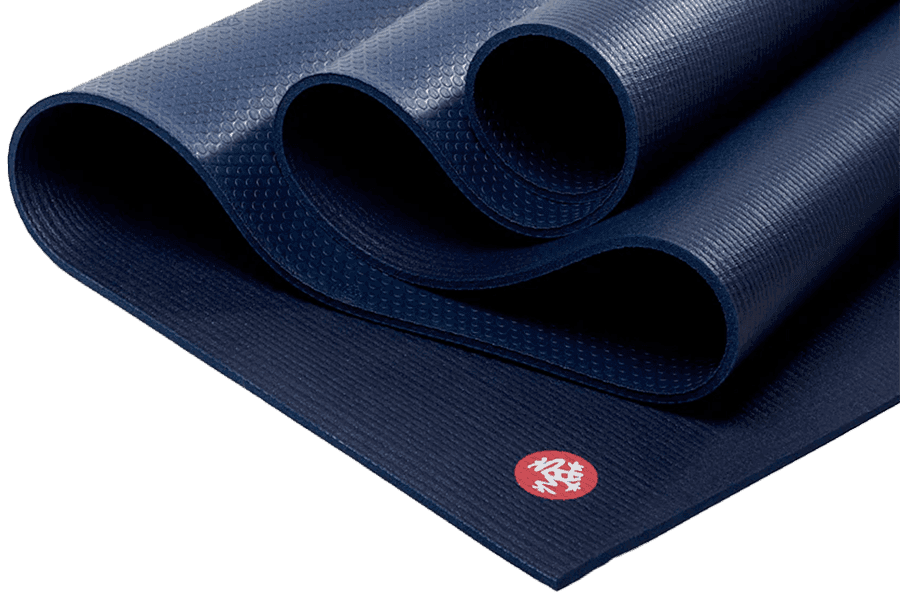
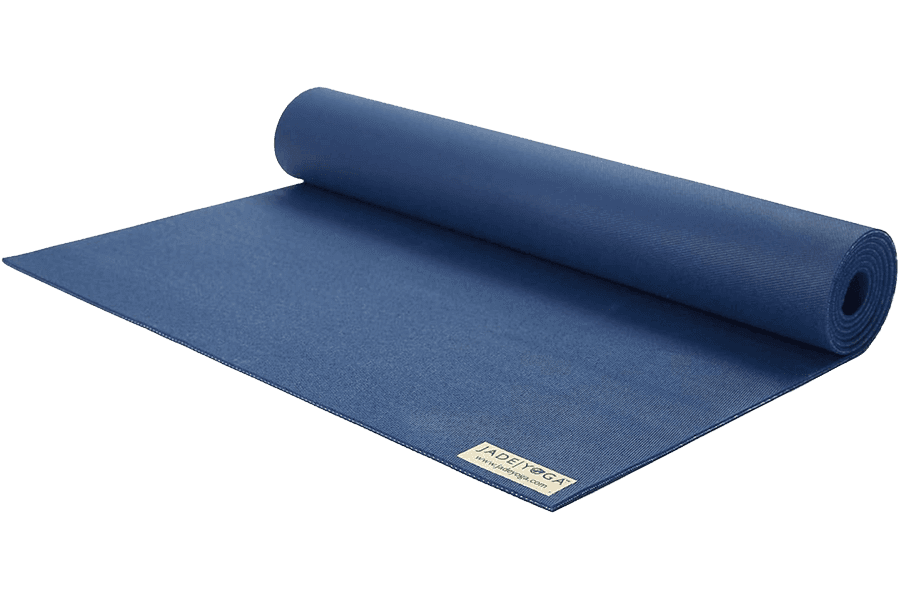
Price
The Harmony 74" lists for about $34 less.
$144
List price · check price at Amazon
$109.95
List price · check price at Amazon
Thickness
The PRO is 25% thicker.
6 mm0.24″
4.8 mm0.19″
Weight
The Harmony 74" is 2.7 lbs lighter.
8 lbs3.6 kg
5.3 lbs2.4 kg
Size
The Harmony 74" is 3″ longer; the PRO is 2″ wider.
Same on both
- Firm, dense cushion
- Lies flat without curling
- Other sizes available
- Decades-old studio favorite
- Wipe-down cleaning only
Full specs
Dimensions
Materials & build
Buying
- Short68" × 26"
- Long85" × 26"
- Long & Wide79" × 52"
- Squared78" × 78"
- Standard68" × 24"
- Harmony XW80" × 28"
The classic matchup, with a longer Jade
Manduka PRO versus Jade Harmony is the longest-running argument in premium mats: dense German PVC that outlives everything against American-made natural rubber that grips from the first class. We’ve covered the PRO against the standard 68″ Harmony separately. This page is about the 74″ cut, and the extra 6 inches change the calculus more than you’d think.
Against the standard Harmony, the PRO was the longer mat. Against this one it isn’t. The Harmony 74″ out-lengths the PRO by 3 inches while costing about $34 less, which makes it the version taller people should actually be weighing. The material trade-offs haven’t moved: the PRO still needs weeks of break-in and then lasts decades, and the Harmony still grips on day one and wears like the natural material it is.
Grip: no waiting on the Harmony
The Harmony’s open-cell rubber is tacky straight out of the box. Jade advertises a Yoga Journal best-grip award on the product page, and owner reviews consistently back the reputation: with dry or slightly damp hands, the surface just holds. Light sweat actually soaks into the rubber instead of pooling, which is the quality Wirecutter credits for the Harmony keeping traction in sweaty sessions.
A new PRO is a different experience, and not a flattering one. The closed-cell surface ships slick, and it takes a few weeks of regular practice before the grip arrives. It’s the most common complaint about the mat, and Manduka’s current position is that you simply practice through it; the old salt-scrub advice has been retired. A broken-in PRO grips well and keeps improving with age, but dripping sweat will always sit on top of it, so heated classes mean a towel.
The Harmony’s grip has its own tax. The tacky surface can feel grabby when you slide a foot forward between poses, and the rubber collects lint and pet hair enthusiastically. If you sweat hard enough to drip, even open-cell rubber gets slick, so heavy sweaters end up with a towel either way.
Length vs width: pick your extra inches
The Harmony 74″ is 74″ × 24″; the PRO is 71″ × 26″. So the Jade gives you 3 more inches of length and the Manduka gives you 2 more inches of width, and which trade wins depends entirely on your body. Length matters for lying poses: if you’re five foot ten or taller, 74″ means your head and heels both stay on the mat, where 71″ starts to run out. Width matters for broad shoulders and for how much margin your hands get in down dog.
If you want both, each brand will sell it to you for more money. Manduka’s PRO Long is 85″ × 26″ at $164, and Jade’s Harmony XW is 80″ × 28″ at $149.95. Between the two mats on this page, tall and narrow favors the Jade, average height and broad favors the PRO.
Cushioning and feel
The PRO is 6 mm thick; the Harmony is 3/16 of an inch, about 4.8 mm. Both land at the firm end of the market, with different personalities. The PRO’s dense PVC feels almost hard, supportive with zero sink. The Harmony’s rubber has a little more spring, a slightly softer landing that still holds steady under balance poses.
The PRO’s extra thickness earns its keep on hard floors. Kneeling and seated work on concrete or tile is where testers reward it; OutdoorGearLab ranked the PRO first of 19 mats tested with a perfect comfort score. On a wood or carpeted floor, the Harmony is comfortable for most practices and most joints, and the gap between them narrows to almost nothing.
Weight: 5.3 against 7.5 pounds
The Harmony 74″ weighs about 5.3 pounds, roughly half a pound more than the standard 68″ version. The PRO weighs 7.5. That 2 pound gap is the difference between a mat you carry to class without thinking about it and a mat that makes you reconsider walking. Plenty of PRO owners admit theirs stopped leaving the house.
At home the PRO’s heft works for it: the mat lies dead flat and stays planted. But if your mat commutes, the Jade is the one you’ll still be happily carrying in a year.
Durability, care, and the warranty gap
This is where the PRO makes its money. Dense closed-cell PVC barely wears; GearLab’s testers ran into instructors’ PRO mats five to twenty years old and still going. Manduka backs it with a lifetime guarantee, defined in the fine print as roughly 10 years of regular use, one replacement, proof of purchase from an authorized seller. Care amounts to wiping it down.
The Harmony asks more of you. Natural rubber softens and sheds with heavy use, sweat accelerates it, and hard-practicing owners tend to replace theirs every few years, though gentler owners report much longer runs. Sunlight is the real enemy: it hardens the rubber, so the Harmony can’t live in a hot car or practice in the park, and Jade excludes sun damage from its warranty. Cleaning means a damp cloth or diluted vinegar, never alcohol or harsh cleaners. The warranty is 1 year.
A lifetime guarantee against a 1 year warranty is each company telling you what it expects from its own material. Believe them both.
The eco question
The Harmony has the cleaner story here. The rubber is tapped from trees, a renewable source, with no PVC or synthetic rubber anywhere in the mat, and Jade plants a tree for every mat sold, more than two million so far by the company’s count. The PRO is PVC, which isn’t practically recyclable. Manduka’s counterargument is longevity: one mat that serves twenty years can beat a series of rubber mats that each served five, and the PRO carries an OEKO-TEX certification for manufacturing substances. Both arguments are honest; pick the framing you believe.
One health note: Jade mats are 99% latex free but can carry trace latex proteins, so with a latex allergy the PRO is the safe choice.
Price and value
List prices are $144 for the PRO and $109.95 for the Harmony 74″, so the Jade saves you about $34 while giving you the longer mat. Street prices move around, especially by colorway, so check the current price on both the PRO and the Harmony 74″ before you decide.
Stretched over a decade, the PRO is probably the cheaper mat, because you buy it once. The Harmony is the smaller check today and the more likely repurchase later. One inventory note: the 74″ Harmony comes in 5 colorways at last count against a dozen for the 68″, so going long with Jade narrows your options.
Bottom line
Buy the PRO if you’re buying for the decade. It costs more, weighs more, and makes you earn the grip over a few weeks of break-in, but nothing in this class lasts longer and the guarantee has real teeth. Under six feet tall with hard floors, it’s the stronger pick.
Buy the Harmony 74″ if you want grip today, or if you’re tall. At five foot ten and up, this mat fits you in a way the standard PRO simply doesn’t, it’s 2 pounds easier to carry, and it costs about $34 less. You’ll shield it from the sun and likely replace it sooner, and for a lot of people that trade is easy to live with.
Manduka PRO
List price $144
Jade Harmony 74"
List price $109.95
Frequently Asked Questions
- Who should get the 74" Harmony instead of the standard 68"?
- Anyone around five foot ten or taller. A mat should be at least your height if you want to lie fully on it, and the standard Harmony runs out at 68". The 74" cut costs $10 more and weighs about half a pound extra, which is a cheap fix. It also comes in fewer colors, 5 at last count against a dozen for the 68".
- Is the Jade Harmony 74" longer than the Manduka PRO?
- Yes, by 3 inches: 74" against the PRO's 71". The PRO is 2 inches wider, though: 26" against the Harmony's 24". If you want length from Manduka you're looking at the 85" PRO Long for $164, so the Harmony 74" is the cheapest way into a longer premium mat between these two brands.
- Which is better for hot yoga, the PRO or the Harmony 74"?
- The Harmony. Its open-cell rubber absorbs moisture, and Wirecutter credits exactly that surface for keeping traction in sweaty sessions. The PRO is closed-cell PVC, so sweat pools on top and grip drops off once your hands are wet. Heavy sweaters will still want a towel over either mat, and constant heavy sweat also wears natural rubber out faster.
- Which lasts longer, the Manduka PRO or the Jade Harmony?
- The PRO, and it isn't close. Dense closed-cell PVC barely wears, and PRO mats routinely stay in service for a decade or more. Natural rubber softens and sheds with heavy use, and sunlight actively breaks it down. The warranty terms line up with that: Manduka backs the PRO for life (roughly 10 years of regular use in the fine print), Jade covers the Harmony for 1 year.
- Can I leave the Jade Harmony in my car or use it outside?
- No. Jade is explicit that Harmony mats aren't intended for outdoor use and shouldn't see direct sunlight, which hardens the rubber and ruins the surface. Sun damage and hot-car storage are specifically excluded from the warranty. If your mat lives in your trunk between classes, the PRO forgives that routine far better.
- Is the Jade Harmony safe if I have a latex allergy?
- No. Jade says its mats are 99% latex free but may contain trace amounts of latex proteins, and doesn't recommend them for people with latex allergies. The Manduka PRO is PVC and latex free, so it's the safer pick of these two if latex is a concern.
Related comparisons
- JadeYoga Harmony 74" vs Manduka PRO Lite Terra 4.7mm
- Manduka PROlite vs JadeYoga Harmony 74"
- JadeYoga Harmony 74" vs Lululemon The Mat 5mm
- Manduka PRO vs Alo Warrior
- JadeYoga Harmony 74" vs Suga SugaMat
- JadeYoga Harmony 74" vs Manduka eKO Lite Long
- JadeYoga Harmony 74" vs Manduka eKO
- Manduka PROlite Long vs JadeYoga Harmony 74"
- Manduka PRO vs b, halfmoon B Mat Strong 6mm