Manduka PRO Squared vs eKO Superlite: Which One Should You Buy?
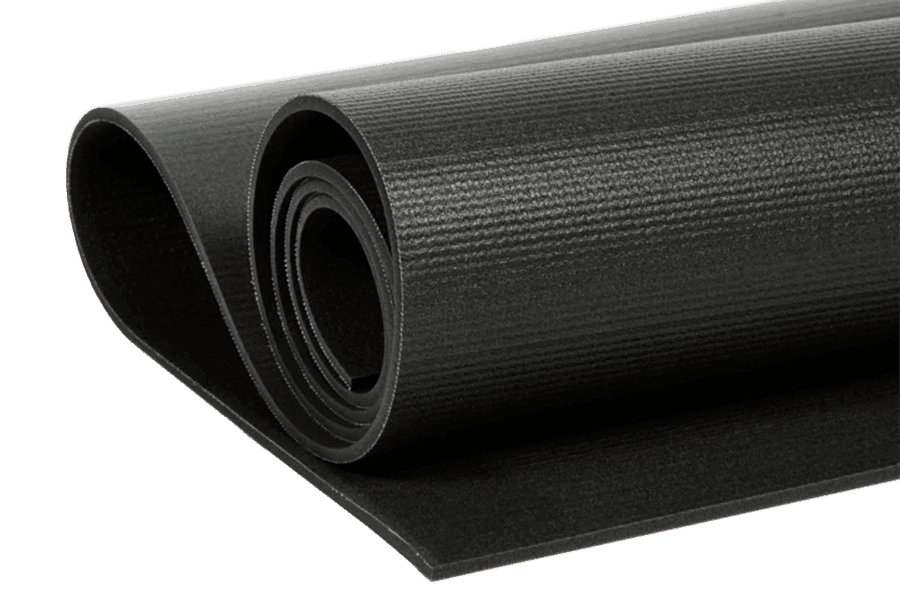
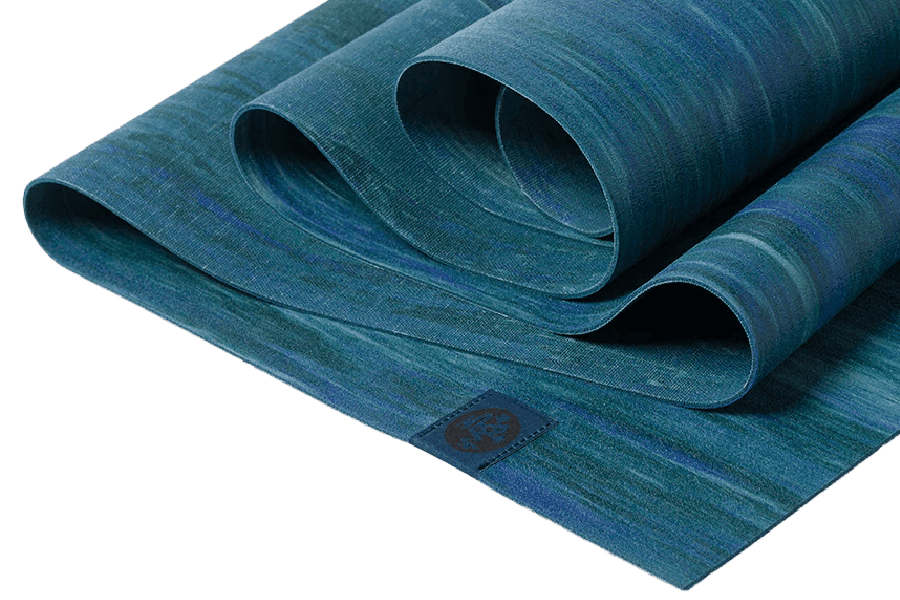
These are the far ends of Manduka's catalog. The eKO Superlite is the smallest thing the brand sells: 1.5 mm of natural rubber, 2.2 pounds, $54, and it folds flat into a backpack. The PRO Squared is the largest: a 78 inch square of 6 mm PVC, 26 pounds, $350. Nobody cross-shops these as rivals. The useful questions are whether the cheap one can be your only mat (mostly no) and whether the two together cover everything (mostly yes).
As an Amazon Associate, we earn from qualifying purchases made through links on this page. How this works
The quick answer
The Superlite is a travel tool, and a good one: real rubber grip from the first practice, a fold that fits a carry-on, and a $54 price. It is not a cushion; at 1.5 mm your knees are effectively on the floor, and GearLab's testers would not hand an ultra-thin travel mat to anyone as a daily solo mat on hard floors. The Squared is the opposite purchase: a permanent 78 by 78 inch practice floor with 6 mm of dense PVC, a lifetime guarantee, and no way to leave the house.
Buy the Superlite for suitcases, retreats, and layering over rental mats. Buy the Squared for a dedicated home practice room. If you are trying to pick one mat for everyday use, pick neither; a standard PRO or eKO covers that job better than either extreme.
Get the PRO Squared if...
- You want a permanent two-person practice surface at home
- Kneeling work on hard floors needs 6 mm, not 1.5
- A lifetime guarantee and decades of wear matter to you
- Zero setup between you and practicing sounds right
Get the eKO Superlite if...
- Your mat needs to fit in a carry-on or backpack
- You practice on carpet, grass, or over rental mats
- Grip from the first class beats a break-in period
- You'd rather keep $296
Side by side
Price
The Superlite lists for $296 less.
$350
List price · check price at Amazon
$54
List price · check price at Amazon
Thickness
The Squared is 300% thicker.
6 mm0.24″
1.5 mm0.06″
Weight
The Superlite is 23.8 lbs lighter.
26 lbs11.8 kg
2.2 lbs1 kg
Size
The Squared is 7″ longer; the Squared is 54″ wider.
Same on both
- Made by Manduka
- Closed-cell surfaces (sweat stays on top)
- Grip better dry than dripping wet
Full specs
Dimensions
Materials & build
Buying
The two ends of the Manduka catalog
No two mats Manduka sells are further apart. The eKO Superlite is the brand at its smallest: 1.5 mm of natural rubber, 2.2 pounds, $54, folds flat and rides in a backpack. The PRO Squared is the brand at its biggest: a 78 inch square of 6 mm PVC, 26 pounds, $350, unrolled once into a room it never leaves. One costs about six and a half times the other and weighs about twelve times as much.
So this page is less about picking a winner than about sorting two very different jobs. We’ll cover what each mat is actually for, where each one fails, and why a fair number of owners quietly end up with both.
Read the thickness numbers first: 1.5 mm against 6
Everything else on this page is downstream of one spec. At 1.5 mm, the Superlite provides grip and hygiene, not protection; on hardwood, tile, or concrete your knees, tailbone, and spine are essentially on the floor with a rubber skin over it. OutdoorGearLab’s testers said as much about ultra-thin travel mats, finding them grippy but with no cushioning for your bones, and not something to recommend as anyone’s everyday solo mat.
The Squared’s 6 mm of dense PVC is the other extreme, firm enough that kneeling work never finds the floor, and it earned the PRO construction a perfect comfort and support score in GearLab’s rankings. On carpet or grass the gap shrinks, because the ground underneath does the cushioning; that is precisely where the Superlite is meant to live.
Portability: a mat that packs like clothing
The Superlite folds to roughly the footprint of a laptop and weighs less than a liter of water. It goes in carry-ons, totes, and glove boxes, with no roll to strap anywhere. For hotel rooms, retreats, park sessions, and studios whose rental mats you would rather not touch bare-handed, it is about as good as the category gets.
The Squared does not participate in this conversation. Twenty six pounds rolls to the size of a rolled rug, and even moving it to another room is a deliberate act. That immobility is not a flaw so much as the design: a surface that is permanently flat and ready, in exchange for never going anywhere.
Grip: day one belongs to the rubber
The Superlite wears the eKO line’s textured natural rubber, and its traction is real from the first practice. A new Squared is the opposite experience: PRO-family PVC starts slick and takes a few weeks of regular use to come around, a break-in Manduka now acknowledges plainly since dropping its old salt-scrub advice.
Thinness adds one caveat on the Superlite’s side. With almost no mass, the mat itself can shift or wrinkle on smooth floors during dynamic flows, something GearLab’s testers flagged on slick surfaces; over carpet or layered on another mat it stays put. And since both surfaces are closed-cell, sweat pools on top of either, so a genuinely wet practice means a towel whichever one you buy.
Durability: decades against seasons
The Squared is backed by Manduka’s lifetime guarantee, which works out to roughly ten years of regular use with one replacement in the fine print, requiring proof of purchase from an authorized seller; Amazon counts when the mat is sold and shipped by Amazon itself. GearLab keeps finding PRO-construction mats in working order after five to twenty years, so the paperwork and the material agree.
The Superlite gets the eKO line’s 30 day return window and no warranty. The single dense layer of rubber outlasts what 1.5 mm suggests, since there is no foam to compress or flake, and traveling owners report years of service. It is still natural rubber: sun degrades it, rough floors sand it down, and daily vigorous practice wears the surface. One more line from Manduka’s own spec sheet: the rubber is 99% latex free, which is not latex free, so anyone with a latex allergy should stay on the PVC side of this page.
Sizes and colors: 19 colorways against 2
The Superlite is 71″ × 24″ and sells in around 19 colorways at last count, the widest palette in Manduka’s lineup, with a 79″ Long cut at $58 in three colors. The Squared comes in Black or Black Sage. If personality matters, the little mat is where Manduka keeps all of it; the Squared is deliberately furniture-neutral, which suits what it is.
The two-mat answer
Because these mats overlap nowhere, they combine unusually well. $350 plus $54 is $404 for a setup that covers a permanent home practice and every trip, class, and hotel room, with the Superlite doubling as a clean layer over rented mats. We rarely steer readers toward buying two mats, but when the alternatives are a $350 mat that can’t travel or a $54 mat that can’t cushion, the pair is the configuration that actually works.
Price and value
List prices sit at $350 for the Squared and $54 for the Superlite, whose colorways cycle through sales often. Check the current price on the PRO Squared and the eKO Superlite at Amazon before buying.
Value depends entirely on matching the mat to its job. $54 for years of travel practice is money well spent, and $350 spread over a decade of daily home practice is too. The bad buys are the crossovers: a Superlite as your daily hard-floor mat leaves your joints paying the difference, and a Squared for someone without a spare room is an expensive rolled-up rug. Shoppers wanting one mat for everything should read our PRO vs eKO Superlite comparison, where the portable side of the argument gets a fairer fight.
Bottom line
These mats answer different questions. The Superlite is for practice that happens away from home: it grips immediately, folds into whatever bag you already carry, and costs $54, and its only real requirement is a forgiving surface underneath.
The Squared is for practice that happens in one room forever: two-person space, 6 mm of support, and a guarantee written in decades, at the cost of $350 and any portability whatsoever. If you were hoping one of them could be your single do-everything mat, neither can; that mat is a standard PRO or eKO, and both extremes here are better bought as exactly what they are.
Frequently Asked Questions
- Can the eKO Superlite be someone's only yoga mat?
- Only if your floors cooperate. Over carpet, grass, or another mat, the Superlite's 1.5 mm is fine, because the surface underneath does the cushioning. On hardwood, tile, or concrete, kneeling and seated work puts your bones more or less on the floor, and GearLab's testers flagged exactly that about ultra-thin travel mats. For daily hard-floor practice, a thicker mat is the right buy even on a $54 budget.
- What does a $296 price gap actually buy?
- A different category of object. The Squared has about three and a half times the Superlite's surface area, roughly four times its thickness, a lifetime guarantee against a 30 day return window, and a PVC construction that GearLab keeps finding in service after five to twenty years. None of that helps you in a hotel room, which is the one place the Superlite wins everything.
- Which grips better?
- Out of the box, the Superlite; its textured rubber holds from the first practice while a new Squared is at its slick worst and needs a few weeks of use to break in. One caveat for the thin mat: with so little mass it can shift or wrinkle on smooth floors during dynamic flows, a behavior GearLab's testers noted on slick surfaces. Both are closed-cell, so a dripping practice wants a towel on either.
- Do these two make sense as a pair?
- Yes, and this is the rare page where that is the practical answer. Together they cost $404 and do not overlap at all: the Squared covers home practice, the Superlite covers travel and doubles as a hygiene layer over studio rental mats. Plenty of owners run exactly that setup.
- How do the warranties compare?
- The Squared carries Manduka's lifetime guarantee, roughly ten years of regular use with one replacement per the fine print, with proof of purchase from an authorized seller; Amazon counts when the mat is sold and shipped by Amazon itself. The Superlite, like every eKO, gets a 30 day return window. The single dense layer of rubber holds up better than 1.5 mm suggests since there is no foam to flake, but sun and rough floors wear it, and nothing covers that.
- Is the eKO Superlite safe for a latex allergy?
- No. Manduka calls the eKO rubber 99% latex free, and the remaining fraction rules it out for latex allergies. The PRO Squared's PVC contains no latex and carries OEKO-TEX Standard 100 certification, so it is the safe choice here.
Related comparisons
- Manduka eKO Superlite vs JadeYoga Voyager
- Manduka eKO Superlite vs JadeYoga Travel 68"
- Manduka eKO Superlite vs JadeYoga Level One
- Manduka eKO Superlite vs IUGA Eco Friendly Non Slip PU
- Manduka eKO Superlite vs Gaiam Classic Print 4mm
- Manduka eKO Superlite vs Gaiam Performance Dry-Grip 5mm
- Manduka eKO Superlite vs Hugger Mugger Earth Elements 5mm
- Manduka eKO Superlite vs Gaiam Premium Reversible 6mm
- Manduka eKO Superlite vs Lululemon The Mat 3mm