Manduka PRO Squared vs Jade Fusion: Which One Should You Buy?
These two are premium solutions to unrelated problems. The Jade Fusion is 8 mm of open-cell natural rubber, the most cushioned serious yoga mat on the market, built for knees and wrists that complain on anything thinner, at $174.95. The Manduka PRO Squared is a 78 inch square of firm 6 mm PVC that turns a room into a practice space, at $350. Deciding between them means deciding whether your body or your floor plan is the thing that needs help.
As an Amazon Associate, we earn from qualifying purchases made through links on this page. How this works
The quick answer
The Fusion is the strongest cushioning tool we cover: OutdoorGearLab scored it a perfect 10 for comfort, its grip works wet or dry from the first practice, and at 8 pounds it can still travel. Its costs are rubber's costs, a surface that soaks up sweat and dries slowly, a 1 year warranty, and a lifespan in years. The Squared is firm rather than plush, protects joints with density instead of depth, needs weeks of break-in, and cannot leave the house, but it offers 6,084 square inches, takes two people, and holds Manduka's lifetime guarantee.
If pain or pressure in your joints sent you shopping, get the Fusion; no amount of floor space substitutes for cushioning. Get the Squared if your body is happy on a firm mat and what you are missing is room.
Get the PRO Squared if...
- Space is your problem: you want to flow without edges
- Two people share your home practice
- You want a decade-scale purchase with a lifetime guarantee
- Sweat mostly stays out of your practice, or a towel is fine
Get the Fusion if...
- Knees, wrists, or hips need real cushioning under them
- You want the grippiest surface GearLab has tested, on day one
- 8 pounds you can still carry beats 26 you cannot
- You'd rather keep about $175
Side by side
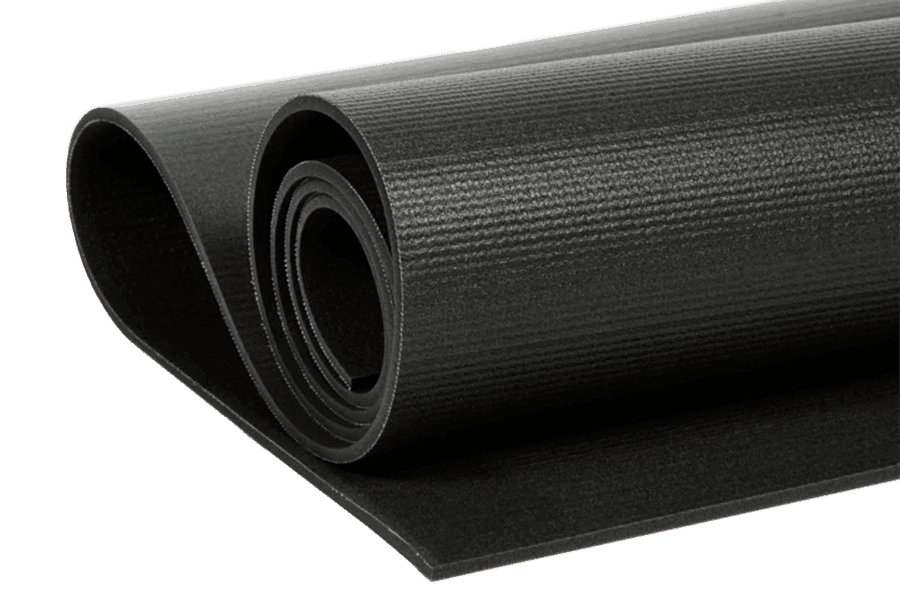
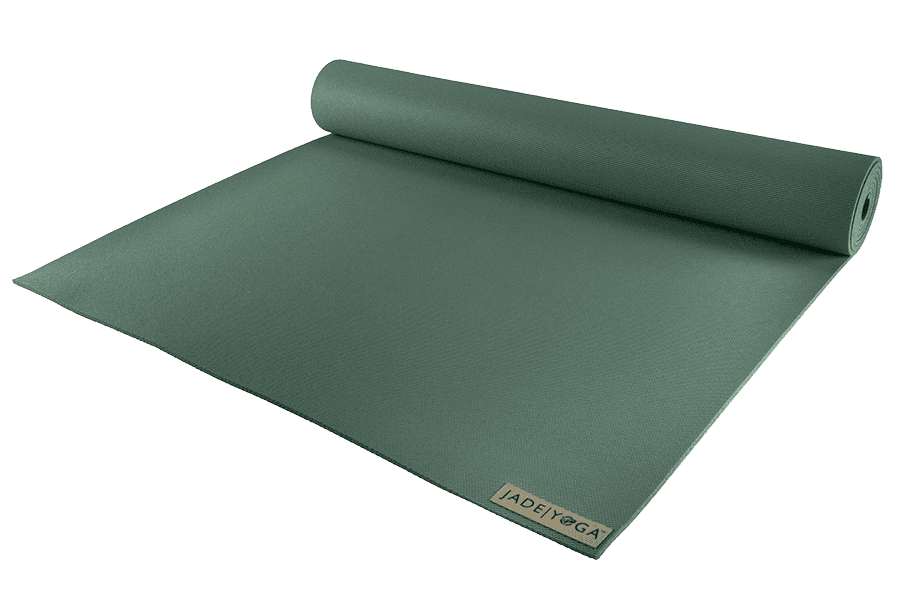
Price
The Fusion lists for about $175 less.
$350
List price · check price at Amazon
$174.95
List price · check price at Amazon
Thickness
The Fusion is 33% thicker.
6 mm0.24″
8 mm0.31″
Weight
The Fusion is 18 lbs lighter.
26 lbs11.8 kg
8 lbs3.6 kg
Size
The Squared is 10″ longer; the Squared is 54″ wider.
Same on both
- Heavyweight, premium construction
- More supportive than a standard 5 mm mat
- Specialist yoga brands with long track records
Full specs
Dimensions
Materials & build
Buying
- Short68" × 26"
- Standard71" × 26"
- Long85" × 26"
- Long & Wide79" × 52"
Your joints or your floor plan
These are premium answers to unrelated problems. The Jade Fusion exists for bodies: 8 mm of open-cell natural rubber, the most cushioned serious yoga mat sold, built for the knees, wrists, and hips that complain on ordinary mats, at $174.95. The Manduka PRO Squared exists for rooms: a 78 inch square of firm 6 mm PVC, 26 pounds, $350, that turns wherever you unroll it into a practice space.
Start by naming which problem you have. If practice hurts on a normal mat, the Fusion fixes that and the Squared does not. If practice feels cramped, the Squared fixes that and the Fusion does not. Money settles nothing here; the two mats simply do different work.
Cushioning: the Fusion has no equal here
The Fusion’s 8 mm of rubber is dense, springy, and deep enough to even out a bad floor. OutdoorGearLab scored it a perfect 10 for comfort, and Yoga Journal named the Fusion line its best thick mat for 2024. For yin and restorative practice, Pilates floor work, or any body that arrives with joint pain, it is the strongest tool on the market, and more floor space is no substitute for it.
The Squared is comfortable a different way. Its 6 mm of PVC is dense enough to barely dent, so knees stay suspended above concrete rather than sinking toward it, and the same firmness makes it the noticeably steadier platform for balance poses. It protects well. It never once feels soft.
Space: the Squared has no equal either
The Fusion is a standard 68″ × 24″ strip, 1,632 square inches, with all the usual consequences: five foot eight is about the ceiling for lying flat, and wide-legged work leaves the mat. Taller buyers should know the same rubber comes as a 74″ Fusion at $199.95 and an 80″ × 28″ Fusion XW at $249.95.
The Squared is 6,084 square inches with no orientation at all. You can face any wall, run a full floor sequence without touching bare floor, or share it with a second practitioner and both keep more width than a standard mat. It asks in return for a clear square about six and a half feet on a side, permanently; measure the room before you fall for the idea.
Grip and sweat: opposite personalities
The Fusion’s surface earned GearLab’s best traction marks of any mat tested, wet or dry, working from the first down dog. Its open-cell rubber swallows sweat and keeps holding, which makes it a hot-practice favorite. The bill arrives afterward: a properly soaked Fusion can take 2 to 3 days to dry by GearLab’s count, and sunning it dry is off the table because sun damages rubber.
The Squared ships slick, needs its famous few weeks of break-in, and then grips very well as long as things stay dry; Manduka has retired the old salt-scrub advice and now says plainly the slickness resolves with use. Its closed-cell top absorbs nothing, so sweat pools and a towel becomes permanent equipment for heated sessions. Sweaty practices are the Fusion’s best case and the Squared’s worst.
Eight pounds that move against 26 that stay
The Fusion is heavy for a mat, 8 pounds with a thick roll that fights standard straps, and it still goes places. It rides to a studio when needed, moves room to room without thought, and stores rolled in a closet between sessions.
The Squared is 26 pounds and effectively immobile once placed. Rolling it back up is a chore you will perform a handful of times in its life, so the honest model is furniture: it occupies its square of the house and waits for you there. Whether that reads as luxury or as burden is a good test of which mat you should buy.
Lifespan, care, and what the warranties admit
The Squared will probably outlive your interest in replacing it. GearLab’s testers keep finding PRO-family mats in service after five to twenty years, and Manduka’s lifetime guarantee runs roughly ten years of regular use with one replacement in the fine print, requiring proof of purchase from an authorized seller; Amazon qualifies when the mat is sold and shipped by Amazon itself. Maintenance is a wipe-down.
The Fusion is 8 pounds of natural rubber and ages like it: the surface softens and sheds under hard use, sweat hurries it along, and sunlight stiffens it outright. Jade covers it for 1 year and excludes sun damage and harsh cleaners; cleaning means a damp cloth or diluted vinegar, never alcohol. Treated well it gives years of service. It will not give decades, and it is priced accordingly.
Materials and the latex line
Jade holds the sourcing high ground: tree-tapped rubber, made in the USA, zero PVC, one tree planted per mat sold with more than two million planted. The Squared answers with longevity, one purchase across decades instead of a rubber replacement cycle, and OEKO-TEX Standard 100 certification on its manufacturing. Both positions hold up; pick the one that matches what you are actually optimizing.
The tiebreaker for some buyers: Jade mats are 99% latex free, which is not latex free, and Jade does not recommend them for latex allergies. The PVC Manduka carries no latex at all.
Price, colors, and checking before you buy
List prices are $350 for the Squared and $174.95 for the Fusion, roughly $175 apart. Check current prices on the PRO Squared and the Jade Fusion before deciding. The Fusion comes in four colorways at last count; the Squared in Black or Black Sage.
Per year, the PVC probably costs less, since one Squared may span three Fusion lifetimes under heavy use. But cushioning is not a thing you can amortize your way into: if your knees need the Fusion, they need it now, on every practice day, and that is worth more than a tidy cost-per-year figure.
Bottom line
Buy the Fusion if your body is the reason you are shopping. It is the most cushioned and grippiest serious mat we cover, it works the day it arrives, and it stays portable enough to live a normal mat’s life. Keep it shaded, clean it gently, and budget for replacement in some years.
Buy the PRO Squared if space is the reason, your joints are happy on firm ground, and a room of your home is available for annexation. And if you want both room and cushion in one Jade purchase, the Squared vs Fusion XW comparison is the version of this fight where the Jade fields its biggest mat.
Jade Fusion
List price $174.95
Frequently Asked Questions
- Is the Jade Fusion too thick for balance poses?
- Less than you would guess. Its 8 mm is dense rubber, not soft foam, so it compresses slowly and stays workable in tree or half moon, just less locked-in than a firm mat. The Squared's dense 6 mm PVC is the steadier platform for balance work. If your practice is heavy on standing balances and light on floor work, that is a real point for the Manduka.
- Can the PRO Squared substitute for the Fusion's cushioning?
- No. The Squared protects joints by refusing to compress, holding you up above the hard floor, and that works well until your body wants actual give. The Fusion has spring the PVC cannot offer, evens out bad floors, and is the mat that makes kneeling sequences and yin holds comfortable on concrete. They are different kinds of comfort, and only the Fusion's is soft.
- How do they handle sweat?
- Opposite failure modes. The Fusion's open-cell surface drinks sweat and keeps gripping, which is great mid-class, but GearLab found a soaked Fusion can take 2 to 3 days to dry and you cannot sun-dry rubber without damaging it. The Squared absorbs nothing; sweat pools on the closed-cell top, so hot practice means a towel every time, forever. Heavy sweaters end up using a towel on either mat.
- How much floor does each one occupy?
- The Fusion is a standard 68" × 24" footprint, rolls up after practice, and disappears into a corner. The Squared claims a clear square about six and a half feet on a side and never gives it back; it stays unrolled because rolling and moving 26 pounds of PVC is a two-arm job you will not do twice a day. You are dedicating a piece of your home to it, and it is worth taping out the footprint before you commit.
- What about durability and the warranties?
- The Squared should outlive the comparison. GearLab's testers keep finding PRO-family mats five to twenty years old and still in service, and the lifetime guarantee runs about ten years of regular use with one replacement in the fine print, with proof of purchase from an authorized seller. The Fusion is natural rubber: it softens and sheds under heavy practice, hates sunlight, and carries a 1 year warranty that excludes sun damage and harsh cleaners. Bought for cushioning, it earns its price anyway; bought to last decades, it will disappoint.
- Is there a middle path between these two?
- A couple. If you want the Fusion's cushioning with more room, the Fusion XW is 80" × 28" and 8 mm at $249.95. If you want Manduka's durability without the footprint, the standard PRO is the same PVC at 71" × 26" for $144. Both are more sensible than forcing this particular pairing to fit.
Related comparisons
- Manduka PRO Long vs JadeYoga Fusion 68"
- JadeYoga Fusion 68" vs Yoloha Unity Pro Cork
- Manduka PRO vs JadeYoga Fusion 68"
- JadeYoga Fusion 68" vs Manduka PRO Terra 6mm
- JadeYoga Fusion 68" vs Alo Warrior
- JadeYoga Fusion 68" vs Liforme Classic
- JadeYoga Fusion 68" vs b, halfmoon B Mat Strong 6mm
- Manduka PROlite Long & Wide vs JadeYoga Fusion 68"
- JadeYoga Fusion 68" vs Manduka GRP Adapt 2.0 Long