Manduka PRO Long vs Gaiam Premium 6mm: Which One Should You Buy?
Both of these are 6 mm mats and that is roughly where the similarity stops. The Gaiam Premium is the $30 mat sold in every sports shop in the country and GearLab named it the best first mat in its 2026 test. The PRO Long is 85 inches of dense German PVC that costs $134 more.
As an Amazon Associate, we earn from qualifying purchases made through links on this page. How this works
The quick answer
GearLab scored the standard Manduka PRO 91 out of 100, first of 19, with perfect 10s for comfort and materials. It scored the Gaiam Premium 62 with 6.5 for comfort and support, 6 for materials, 6 dry grip and 4 wet, and still gave it the Best First Mat award because of what it costs. The PRO Long is the same PRO at 85 inches and 9.5 pounds against the Gaiam's 68 inches and 3.3.
Get the Gaiam if you are new, unsure the habit will stick, or need a mat this month rather than a mat for the decade. Get the PRO Long if you already practice regularly, you are tall, and you would rather buy once.
Get the Manduka PRO Long if...
- You are tall and 68 inches leaves you on the floor
- You want dense support instead of soft foam
- You want one mat for ten years with a guarantee
- You practice several times a week
Get the Gaiam Premium if...
- You are still finding out whether yoga sticks
- You want 3.3 pounds to carry instead of 9.5
- You want softer cushioning under knees and wrists
- You'd rather keep about $134
Side by side
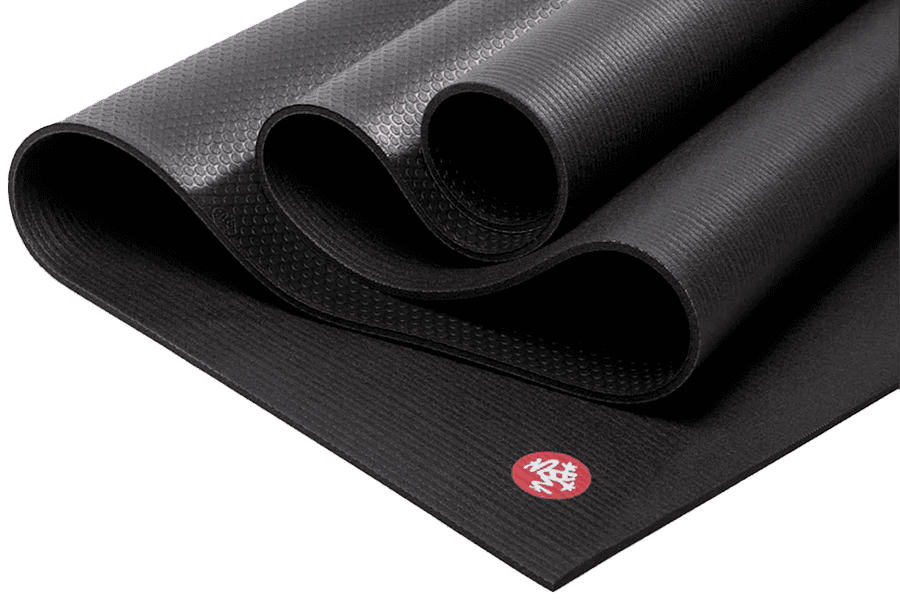
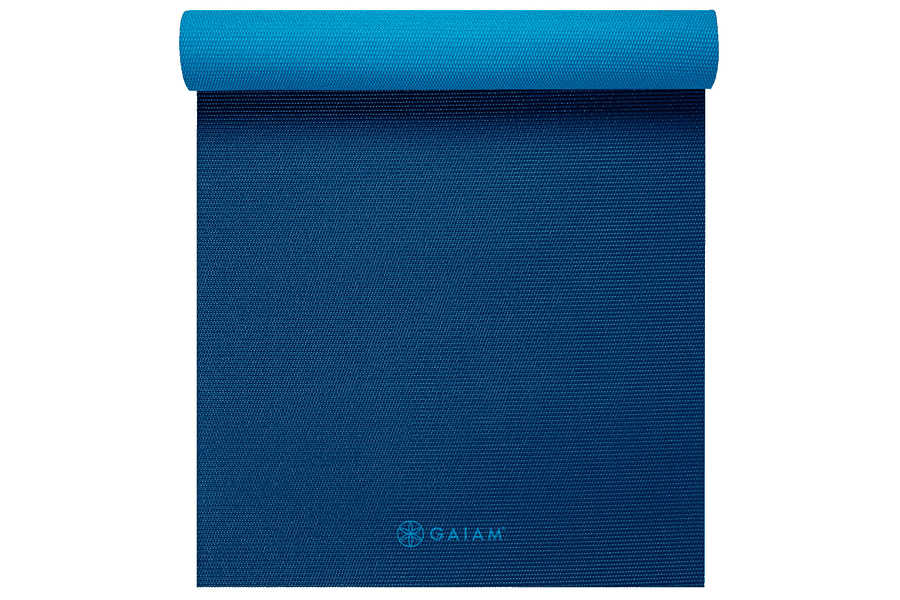
Price
The Gaiam Premium lists for about $134 less.
$164
List price · check price at Amazon
$29.98
List price · check price at Amazon
Thickness
Identical thickness.
6 mm0.24″
6 mm0.24″
Weight
The Gaiam Premium is 6.2 lbs lighter.
9.5 lbs4.3 kg
3.3 lbs1.5 kg
Size
The PRO Long is 17″ longer; the PRO Long is 2″ wider.
Same on both
- 6 mm thick
- PVC, latex-free, closed surfaces
- Both carry a lifetime guarantee on paper
- Both lie flat without curling at the corners
Full specs
Dimensions
Materials & build
Buying
Same thickness, $134 apart
Both of these are 6 mm PVC mats, and the spec sheet does very little to explain why one costs $164 and the other $29.98. The answer is density, size and how long the surface survives.
GearLab tested both in its 2026 roundup of 19 mats. The Manduka PRO took first place at 91 out of 100. The Gaiam Premium scored 62 and still won the Best First Mat award, which tells you the test was weighing price as well as performance.
Density is what the money buys
The Gaiam’s foam compresses under a standing foot and holds a handprint for a moment after you lift your hand, which GearLab noted while rating it 6.5 out of 10 for comfort and support. That softness is pleasant kneeling and unhelpful in tree pose.
The PRO’s PVC barely moves. Its perfect 10 in the same column comes from that firmness rather than from any plushness, and it is why the same 6 mm reads as protection on one mat and as squish on the other.
Seventeen inches of length
The PRO Long is 85″ × 26″ and the Gaiam is 68″ × 24″. That is a bigger difference than most people picture: seventeen inches longer and two wider.
Sixty-eight inches is short even among budget mats, where 72 is the norm. Above about five foot eight the Gaiam leaves your heels or head on the floor in savasana, and there is no longer version of it.
Grip: the cheap mat wins the first month
The Gaiam’s sticky texture works from the first session. A new PRO does not: it feels slick until the fabric-like surface has seen a few weeks of use, and that is the most common complaint about the mat. Manduka dropped its salt-scrub advice and now says it resolves on its own.
Once broken in, GearLab measured the PRO 9 out of 10 dry against the Gaiam’s 6, and 7 wet against 4. Neither is a hot yoga mat. Both are closed surfaces, so sweat sits on top with nowhere to go.
Nine and a half pounds against 3.3
The PRO Long is 9.5 pounds and the Gaiam is 3.3. Nearly three times the mass, and it goes both ways: the PRO stays flat and never bunches mid-flow, and it is a mat you drive to the studio rather than walk with.
If you carry a mat regularly, that alone can decide this. Manduka’s answer for people who want the same surface at 4.6 pounds is the PROlite, which carries the same guarantee.
A decade against eighteen months
The Gaiam’s foam compresses and takes a set, so it flattens where you kneel within a year or two of regular practice. That is normal at $30 rather than a defect, and it is precisely why GearLab framed it as a first mat rather than a bad one.
The PRO is the mat people are still using ten and twenty years later. One $164 mat that runs a decade costs less than replacing a $30 mat every eighteen months, though only if you keep practicing that long, which is the part nobody can promise on your behalf.
Two lifetime guarantees, two meanings
Manduka’s fine print works out to roughly ten years of regular use, one replacement, with proof of purchase from an authorized seller. Amazon qualifies only when the mat is sold and shipped by Amazon rather than a marketplace seller, which catches people out.
Gaiam’s covers manufacturing defects on a $30 mat. Neither one covers foam softening or a surface worn thin by normal use, which is exactly how the Gaiam ends. The coverage terms line up with how the two materials wear.
What each one is made of
The PRO is closed-cell PVC made in Germany and certified to OEKO-TEX Standard 100, meaning the finished material has been tested for harmful substances. That certification is close to the only third-party check available on a PVC mat, and most mats at any price do not carry it.
The Gaiam is latex-free PVC with no certification and no stated country of manufacture. GearLab rated it 6 out of 10 for materials. Neither mat is a natural-materials choice; if that is what you want, rubber or cork is the aisle.
Price, colors and where to buy
The Gaiam Premium comes in four reversible color combos and holds 4.5 stars across roughly 2,732 Amazon ratings. Check the current price there; it moves around its $29.98 list by colorway.
The PRO Long comes in about five colorways and also sells on Amazon at $164. If you buy it there for the guarantee, make sure it is sold and shipped by Amazon itself.
Bottom line
Buy the Gaiam Premium if you are new, if you are not yet sure the habit will hold, or if you need a mat this week. It grips on day one, it is kind on knees, it costs $30, and GearLab named it the best first mat for good reasons.
Buy the PRO Long if you are tall, practice several times a week, and would rather buy once. It scored highest of 19 mats, it is seventeen inches longer, and it comes with a guarantee people actually claim on. The price is a few weeks of break-in and 9.5 pounds on your shoulder.
Manduka PRO Long
List price $164
Gaiam Premium 6mm
List price $29.98
Frequently Asked Questions
- Both are 6 mm, so why does the PRO feel different?
- Density. The Gaiam's foam compresses under a standing foot and holds a handprint for a moment, which GearLab noted while rating it 6.5 for comfort and support. The PRO's PVC barely moves, so the same 6 mm reads as protection rather than squish. Softer for kneeling, firmer for balancing, and the price gap is mostly that difference.
- Do both lifetime guarantees mean the same thing?
- No. Manduka's fine print works out to roughly ten years of regular use, one replacement, with proof of purchase from an authorized seller, and Amazon counts only when sold and shipped by Amazon. Gaiam's covers manufacturing defects on a $30 mat. Neither covers foam softening from normal use, which is exactly how the Gaiam ends.
- Is the Gaiam any good for hot yoga?
- No. GearLab measured it 4 out of 10 wet, and the closed textured surface leaves sweat sitting on top. The PRO is not much better at that job either, being closed-cell PVC. If heated classes are the plan, look at a polyurethane-topped or natural rubber mat rather than either of these.
- How long will the Gaiam last?
- A year or two of regular practice before the foam takes a set and flattens where you kneel. That is normal at $30 rather than a defect, and it is why GearLab framed it as a first mat. One PRO running a decade beats replacing a $30 mat every eighteen months, though only if you keep practicing that long.
- Does the PRO need breaking in?
- Yes, and it catches people out. A new PRO is slick until the surface has seen a few weeks of use. Manduka dropped its salt-scrub advice and now says it resolves with use, which owners confirm. The Gaiam's sticky texture works from the first session, so the cheap mat is the better one on day one.
- Is the size difference a big deal?
- Seventeen inches is enormous. The Gaiam is 68 by 24 and the PRO Long is 85 by 26. Anyone over about five foot eight will notice a 68 inch mat in savasana, and anyone over six foot will notice it constantly. If you like the Gaiam's price but need the length, look at a 72 inch budget mat rather than this one.
Related comparisons
- Gaiam Premium 6mm vs Gruper TPE 6mm
- Amazon Basics 1/4 Inch Thick TPE vs Gaiam Premium 6mm
- Gaiam Premium 6mm vs YogaAccessories Extra Thick Deluxe 1/4"
- Manduka PRO Long vs Yoloha Unity Pro Cork
- Manduka PRO Long vs Alo Warrior
- Manduka PRO Long vs JadeYoga Fusion 68"
- Manduka PRO Long vs Liforme Classic
- Manduka PRO Long vs JadeYoga Harmony XW
- Manduka Begin vs Gaiam Premium 6mm