Manduka GRP Adapt 2.0 vs Gaiam Premium Reversible 6mm: Which One Should You Buy?
This is the upgrade a lot of people consider after their first sweaty class. The Gaiam Premium Reversible is the printed $39.98 mat sold at every big-box store. The Manduka GRP Adapt 2.0 is $128 of polyurethane over natural rubber, and OutdoorGearLab measured the best wet grip in its 19-mat field on it. Here's what the $88 buys, and when the cheap mat is genuinely enough.
As an Amazon Associate, we earn from qualifying purchases made through links on this page. How this works
The quick answer
The GRP wins on the thing it was built for. GearLab rated it 9.5 out of 10 dry and 8.5 wet, the highest wet score in its test, and gave it the hot yoga grip award; it is also steadier underfoot and three inches longer. The Gaiam scored 4 out of 10 for grip with slippery when wet among its cons, and 54 out of 100 overall, near the bottom of that field. What the Gaiam offers back is real: a lifetime guarantee against Manduka's 30-day returns, latex-free PVC, easier cleaning, printed designs, and a price a fifth as high.
Get the GRP if you practice hot or sweat enough that grip is what fails you. Get the Gaiam if your practice is gentle and unheated, or if you need a latex-free mat.
Get the GRP Adapt 2.0 if...
- You practice in heated rooms and want grip without a towel
- You want a surface that stays steady under standing balances
- You want the bigger mat, at 71 by 26 inches
- You want a mat professional testers ranked near the top
Get the Gaiam if...
- Your practice is gentle, unheated and a few times a month
- You have a latex allergy and need a PVC mat
- You want more padding under knees and hips
- You'd rather keep $88 and pick a print you like
Side by side
Price
The Gaiam Reversible lists for about $88 less.
$128
List price · check price at manduka.com
$39.98
List price · check price at Amazon
Thickness
The Gaiam Reversible is 20% thicker.
5 mm0.2″
6 mm0.24″
Weight
The Gaiam Reversible is 2.5 lbs lighter.
5.8 lbs2.6 kg
3.3 lbs1.5 kg
Size
The GRP Adapt 2.0 is 3″ longer; the GRP Adapt 2.0 is 2″ wider.
Same on both
- Both wear out rather than last a decade
- Neither ships with a carrying strap
- Both are sold in more than one design or colorway
- Neither is a firm, dense mat like a Manduka PRO
Full specs
Dimensions
Materials & build
Buying
A hot yoga mat against a printed starter mat
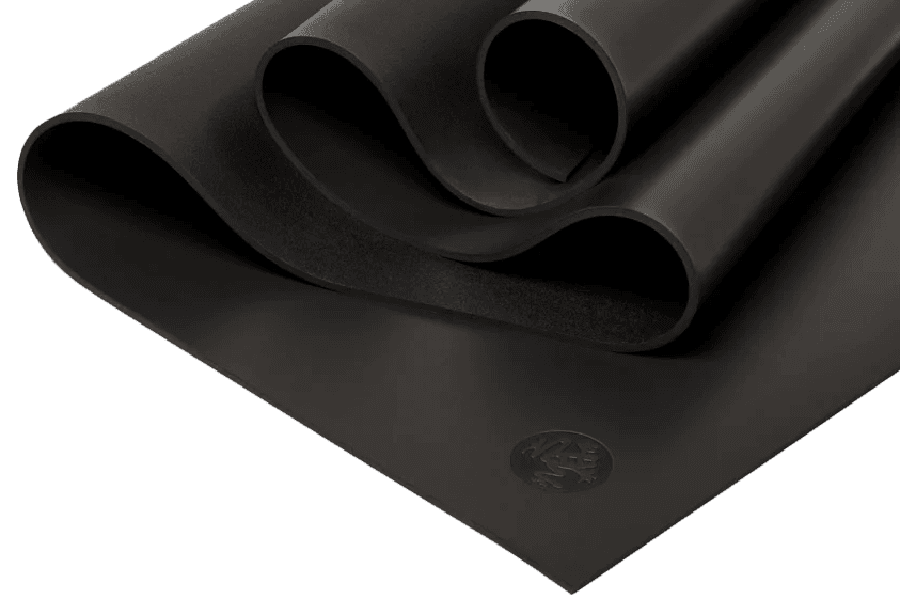
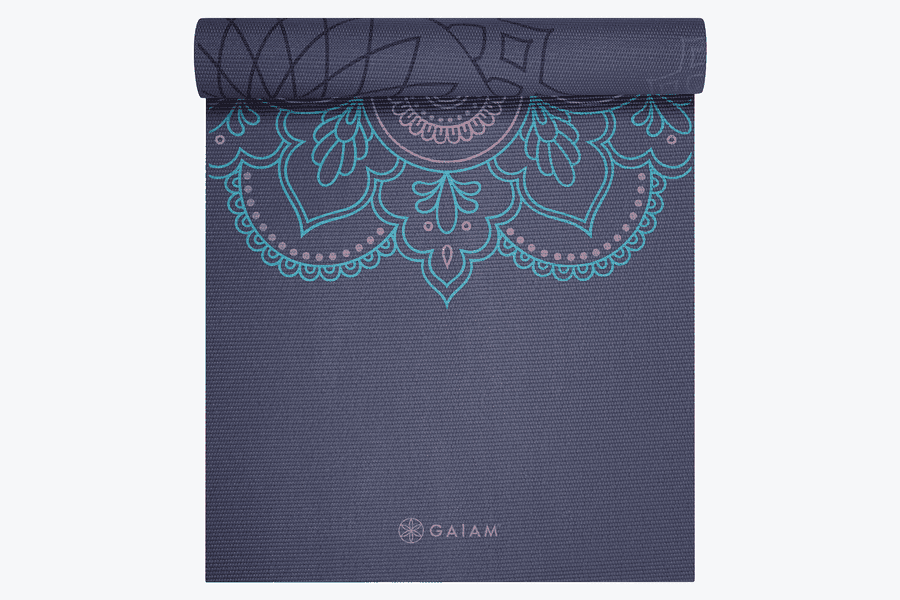
The Gaiam Premium Reversible is the mat a lot of people already own: 6 mm of soft PVC foam printed on both faces, sold at every big-box store for $39.98. The Manduka GRP Adapt 2.0 is $128 of polyurethane over natural rubber, built for people whose hands slide once the room warms up.
An $88 gap between two yoga mats is worth interrogating, and the answer here is narrow but decisive: it is almost entirely about sweat. If your practice is gentle and unheated, the cheap printed mat does the job and the Manduka is a lot of money for grip you will not use.
Grip: this is the whole argument
GearLab rated the GRP Adapt 2.0 at 9.5 out of 10 dry and 8.5 wet. That wet number was the highest of the 19 mats it measured, it earned Manduka the award for hot yoga grip, and the testers described excellent traction without a towel. The polyurethane top absorbs sweat as it lands rather than letting it film over the surface.
The Gaiam Premium Reversible scored 4 out of 10 for grip in the same test, with slippery when wet listed among its cons and an overall score of 54 out of 100, near the bottom of that field. Its sticky PVC finish holds a dry palm and gives up as soon as one dampens, because nothing absorbs. Testers also flagged that the printed surface can transfer color onto clothing.
If your hands creep forward in down dog by the third sun salutation, that contrast is the entire case for spending the money.
The thinner mat is the steadier one
Soft foam gives under a knee and keeps giving, which feels kind in floor work and becomes the problem the moment you stand on one leg. GearLab listed poor cushion among the Gaiam’s cons despite its 6 mm spec, and it scored 6 out of 10 for comfort and support.
The GRP is 5 mm of denser build that gives a little and then holds, and it scored 8.5 for comfort and support. So the thinner mat rates higher for comfort and is steadier underfoot, which surprises people who shop on thickness numbers.
Size
The GRP is 71″ × 26″ against the Gaiam’s 68″ × 24″. Three more inches of length and two more of width is the modern default against the old one, and the width is what you notice first with broad shoulders or a wide stance.
Manduka also sells a 79 inch GRP for $10 more. The Premium Reversible comes in one size only, so if 68 inches is already short for you, this comparison is close to settled.
Where the Gaiam genuinely wins
Three places, and they are worth naming. Cleaning: a closed foam surface wipes down and dries immediately, while the GRP’s absorbent top needs time to dry and shows sweat and traction marks over the years. Coverage: Gaiam puts a lifetime guarantee on a $39.98 mat while Manduka gives the GRP a 30-day return window and no warranty at all.
And allergies. The Gaiam is latex-free PVC. The GRP sits on natural rubber, and tree rubber carries trace latex proteins, so it is not a safe choice if you react to latex. For some buyers that decides this page before grip comes into it.
Both are consumables, on different clocks
Neither is a decade mat. The Gaiam’s foam takes a set where your hands and heels land, and once a spot is flattened it stays flattened. A casual practice a few times a month gets years out of one; daily use flattens it inside a couple, and the print wears at the same contact points.
The GRP’s polyurethane top gradually loses grip and marks where hands and feet go. Expect a few good years and then a replacement. If longevity rather than grip is the thing you are shopping for, dense PVC is the answer instead of either mat here, and our Manduka PRO vs Premium Reversible page covers that route.
Prints, colors and the reversible trick
The Gaiam is the better looking mat by design, with around ten printed patterns at last count and both faces printed, so one mat gives you two appearances. Just know that the reversibility is cosmetic: both sides are finished the same way, so there is no grippy face and cushioned face, only two patterns.
The GRP comes in five colorways at last count, all of them quiet marbled tones, and it looks like equipment. If you are buying a mat partly because you have to look at it every day, that is a real consideration and it favors Gaiam.
Price and where to buy
The GRP is a direct purchase from manduka.com, with no reliable first-party Amazon listing, though Manduka discounts on its own site often enough to be worth watching. The Gaiam sells through Amazon and gaiam.com and frequently goes below list, with prices varying by print on the same listing.
Worth saying plainly: the space between $39.98 and $128 is full of good mats. Natural rubber around $100 grips immediately without the GRP’s drying time and lasts longer than foam. If sweat is not your problem, that middle ground is better value than either end of this page.
Bottom line
Buy the GRP Adapt 2.0 if you practice hot or you sweat hard enough that grip is what fails you. It has the best measured wet traction of any mat in GearLab’s field, it is steadier underfoot, it is bigger, and it needs no towel. Accept the drying time, the marks over the years, and the absence of any warranty.
Buy the Gaiam Premium Reversible if you practice gently in a cool room, want a print you like, or need a latex-free mat. It is a fair $39.98 product with limits it does not hide. If you like Gaiam but want the better-tested version, the plain Premium 6mm scored 62 out of 100 and costs $10 less.
Manduka GRP Adapt 2.0
List price $128
Gaiam Premium Reversible 6mm
List price $39.98
Frequently Asked Questions
- Is the Manduka GRP Adapt 2.0 worth four times the price of a Gaiam?
- Only if sweat is your problem. GearLab rated the GRP 8.5 out of 10 for wet grip, the highest of the 19 mats it measured, against 4 out of 10 for the Gaiam Premium Reversible, and gave the Manduka its hot yoga award. If your hands slide in down dog, that gap is the whole justification. If you practice gently in a cool room, the Gaiam does that job and the extra $88 buys you performance you will not use.
- Which mat is more comfortable?
- Counterintuitively, the thinner one rates higher. GearLab scored the GRP 8.5 out of 10 for comfort and support against 6 for the Gaiam, because dense construction gives a little and then holds while soft foam keeps giving. The Gaiam is kinder for kneeling and seated work; the GRP is far steadier when you stand on one leg.
- Does the Gaiam print rub off?
- GearLab flagged that the Premium Reversible's printed surface can transfer color onto clothing, which is worth knowing before practicing in pale leggings. The print also wears at the contact points where your hands and feet land. Both faces are printed, so the reversibility gives you two patterns rather than two different surfaces to practice on.
- What warranty does each carry?
- The cheaper mat has the better paperwork. Gaiam advertises a lifetime guarantee on the Premium Reversible; Manduka gives the GRP a 30-day return window and no warranty, because its lifetime guarantee belongs to the PVC PRO series. Both policies address manufacturing defects rather than foam that has flattened or a polyurethane top that has lost its grip, so neither should decide the purchase on its own.
- Is either mat safe with a latex allergy?
- The Gaiam is, being latex-free PVC. The GRP sits on a natural rubber base under its polyurethane top, and tree rubber carries trace latex proteins, so it is not a safe choice if you react to latex. For anyone with a genuine allergy that settles this comparison before grip enters into it.
- Where can you buy the GRP Adapt 2.0?
- Directly from manduka.com, which discounts on its own site often enough to be worth watching. There is no reliable first-party Amazon listing for it, unlike the PRO. The Gaiam sells through Amazon and gaiam.com and frequently goes below list, with prices varying by print on the same listing.
Related comparisons
- Manduka GRP Adapt 2.0 vs Lululemon The (Big) Mat 5mm
- Lululemon The Mat 5mm vs Manduka GRP Adapt 2.0
- Gaiam Premium Reversible 6mm vs Gruper TPE 6mm
- Amazon Basics 1/4 Inch Thick TPE vs Gaiam Premium Reversible 6mm
- Gaiam Premium Reversible 6mm vs YogaAccessories Extra Thick Deluxe 1/4"
- JadeYoga Harmony 74" vs Manduka GRP Adapt 2.0
- JadeYoga Harmony XW vs Manduka GRP Adapt 2.0
- Manduka GRP Adapt 2.0 vs b, halfmoon B Mat Everyday 4mm
- Manduka GRP Adapt 2.0 vs b, halfmoon B Mat Strong 6mm