Manduka GRP Adapt 2.0 vs Gaiam Classic Print: Which One Should You Buy?
Five Classic Prints cost a little less than one GRP Adapt 2.0. What the extra $103 buys is grip once you sweat: GearLab rated the GRP best of 19 mats for wet grip. The GRP is also a millimeter thicker, so moving up costs you no cushion, but it's heavier, slower to dry and contains latex.
As an Amazon Associate, we earn from qualifying purchases made through links on this page. How this works
The quick answer
The GRP Adapt 2.0 is GearLab's pick for hot yoga grip, scoring 9.5 dry and 8.5 wet, and it's a little thicker, longer and wider than the Classic Print. It also takes time to dry, shows sweat marks, contains latex and has no warranty. The Classic Print is a $24.98, 2.1 pound latex-free PVC mat with a lifetime guarantee, and many of its owners find it slippery and thin.
If you take heated classes or sweat hard in ordinary ones, get the GRP Adapt 2.0. If you practice gently in a cool room, need latex-free, or want a light printed mat for very little money, get the Classic Print.
Get the GRP Adapt 2.0 if...
- You take hot yoga or sweat heavily in unheated classes
- You want to practice without a towel over your mat
- You want a 26 inch wide mat
- You don't mind 5.8 pounds and some drying time after class
Get the Gaiam Classic Print if...
- Your practice is gentle and your room is cool
- You need a latex-free mat
- You want something around 2 pounds to carry
- You'd rather keep about $103 and pick a printed design
Side by side
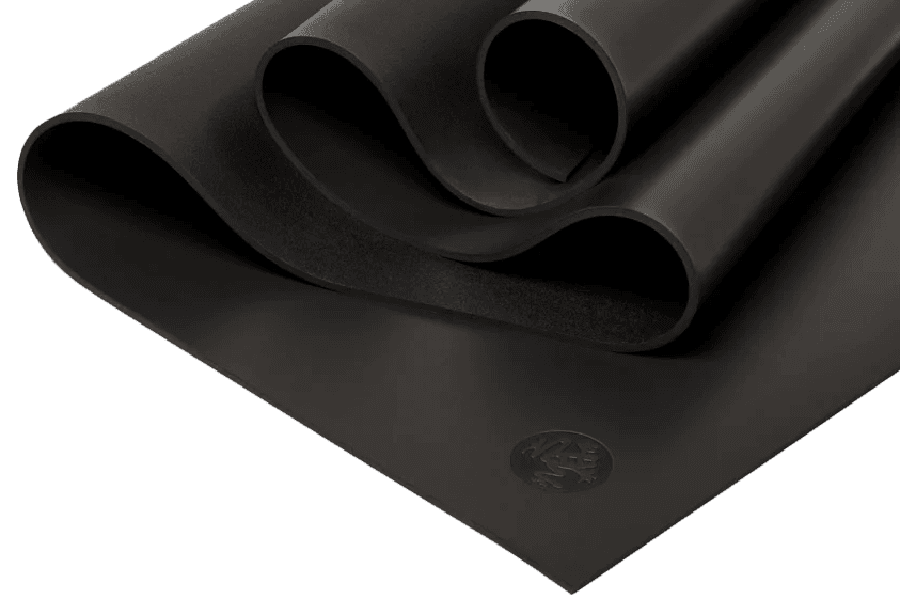
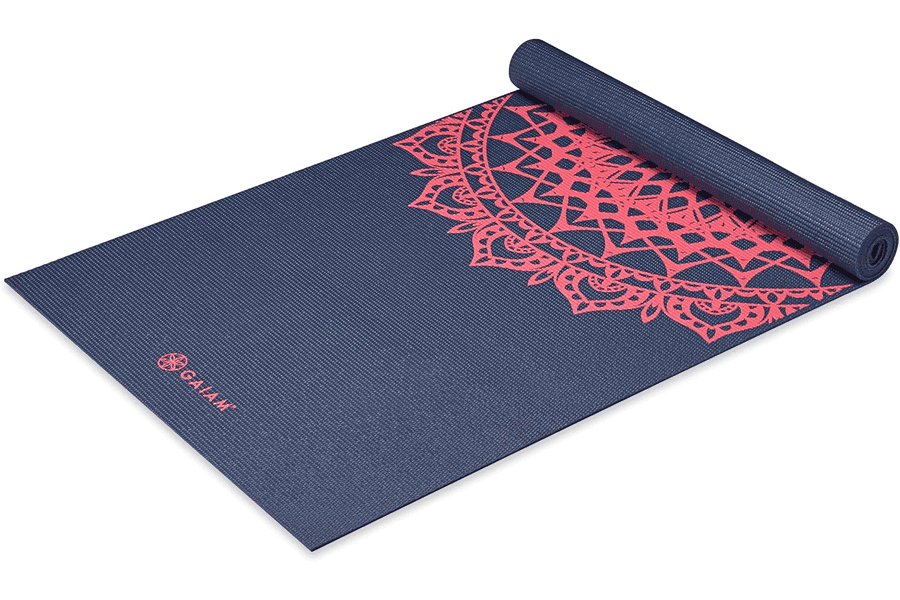
Price
The Classic Print lists for about $103 less.
$128
List price · check price at manduka.com
$24.98
List price · check price at Amazon
Thickness
The GRP Adapt 2.0 is 25% thicker.
5 mm0.2″
4 mm0.16″
Weight
The Classic Print is 3.7 lbs lighter.
5.8 lbs2.6 kg
2.1 lbs0.95 kg
Size
The GRP Adapt 2.0 is 3″ longer; the GRP Adapt 2.0 is 2″ wider.
Same on both
- 4 to 5 mm thick
- Direct returns within 30 days on unused mats only
Full specs
Dimensions
Materials & build
Buying
Five Classic Prints, or one GRP
The Gaiam Classic Print lists at $24.98, so five of them cost a little less than one Manduka GRP Adapt 2.0 at $128. The Gaiam is 4 mm of printed PVC, rated 4.5 stars by about 12,600 Amazon reviewers. The GRP is 5 mm of polyurethane over natural rubber, and it placed third of 19 in GearLab’s 2026 testing at 82 out of 100, taking the award for best grip in hot yoga.
GearLab never tested the Classic Print, so for the Gaiam we rely on its specs and owner reviews. The question is whether the $103.02 difference solves a problem you actually have. The one it solves best is hands sliding once you sweat.
Wet grip: best in the GearLab field
On GearLab’s wet and dry grip table, the GRP scored 9.5 dry and 8.5 wet, and no mat in the test did better wet. Its testers dumped a liter of water on it to mimic a sweaty session, and still felt secure through sun salutations. As they started sweating, the mat soaked up the moisture and stayed sticky.
That is the open-cell top at work. Manduka says the surface draws moisture in like a sponge while the layers below pull it downward, and GearLab lists no need for a towel among the pros. For a heated class, that is the reason this mat costs what it does.
Many Classic Print owners report slipping
Gaiam markets a textured, no-slip surface, and with dry palms it works fine. Owners are split, though: 350 of the 614 grip mentions in Amazon’s review summary are negative. PVC absorbs nothing, so a damp hand ends up on a layer of sweat rather than on the texture.
Gaiam’s own answer to sweaty hands is the Performance Dry-Grip at $69.98, which it calls ideal for hot yoga. GearLab scored that mat 3.5 for wet grip, second lowest of the 19. If sweat is your complaint, the middle step doesn’t fix it, and our GRP Adapt 2.0 vs Dry-Grip page covers that gap in detail.
No cushion trade in this upgrade
Moving up from a 6 mm Gaiam usually means accepting a thinner mat. Not here: the GRP is a millimeter thicker than the Classic Print, and GearLab gave it 8.5 out of 10 for comfort and support. Its testers found it stable in standing poses and firm enough to feel grounded in balance work.
It still isn’t plush. GearLab says the GRP trades deep cushion for lighter weight and can be sharp on the knees in deep lunges, and it recommends the heavier Manduka PRO for sensitive joints. Thickness is already the Classic Print’s sorest point in Amazon’s review summary, where negative mentions outnumber positive ones more than two to one. Neither mat is the answer for bad knees on a hard floor.
An absorbent top needs time to dry
The sponge that makes the GRP grip also holds on to sweat. GearLab’s cons list says it takes time to fully dry, shows sweat and traction marks, and can squeak with friction, and it scored the mat 7 for care and cleaning, a category that also weighs portability.
The Classic Print is simpler to live with. Nothing soaks in, and Gaiam’s instructions stop at a damp cloth with cold water and a little mild detergent, then letting the mat dry flat. If you roll your mat up minutes after class and head out, the Gaiam fits that habit better.
Bigger and heavier
The GRP is 71″ × 26″ against the Classic Print’s 68″ × 24″: 3 inches longer and 2 wider. Manduka also makes a 79″ × 26″ Long for $138, covered on our GRP Adapt 2.0 vs Long page. The Classic Print has no long version.
The Gaiam is far lighter at 2.1 pounds, against 5.8 for the GRP (GearLab’s scale said 5.5). GearLab also notes that the GRP sticks to the floor. Gaiam’s site lists no strap for the Classic Print, though the Amazon listing title now names one.
Rubber under the GRP, none in the Gaiam
The GRP’s polyurethane top sits on natural rubber, it contains 20% recycled materials, and Manduka makes it in Spain. Natural rubber means latex, so it isn’t a mat for anyone with that allergy.
Gaiam makes the Classic Print from latex-free PVC without the six most harmful phthalates. It warns of a strong but harmless smell from a freshly unwrapped printed mat and suggests airing it for a few days first. It also says long sun exposure can leave the mat faded and brittle.
Lifetime guarantee against no warranty
The Classic Print comes with Gaiam’s lifetime guarantee. Gaiam doesn’t publish what it covers, and our reading is defects, not wear. Manduka gives the GRP no warranty, since its lifetime guarantee applies to the PRO series, and both brands take direct returns within 30 days only on unused mats.
As for wear, GearLab scored the GRP 8 out of 10 for materials, though its cons include sweat watermarks. Classic Print owners are mostly positive on durability, and the complaints that do exist describe the plastic peeling off.
Where to buy, and the older GRP
Buy the GRP Adapt 2.0 from manduka.com, where it comes in 5 colorways at last count. Amazon still sells the older GRP Adapt 1.0 as runout stock, which is not the mat GearLab tested; our GRP Adapt 1.0 vs 2.0 page explains the differences.
The Classic Print is $24.98 at gaiam.com in whatever prints Gaiam is currently running, or you can check the Classic Print at Amazon, where prices vary by print.
Bottom line
The GRP Adapt 2.0 is worth it if you take heated classes or sweat through unheated ones. It had the best wet grip in GearLab’s test, it is bigger, and moving up from the Classic Print costs you no cushion. Allow drying time, expect some marks, and know there is no warranty.
Buy the Classic Print if you practice gently in a cool room, want a print you like, need a latex-free mat, or carry it everywhere. At $24.98 it does that job. If you want rubber grip for dry practice without the GRP’s price, see our eKO Lite vs Classic Print comparison.
Manduka GRP Adapt 2.0
List price $128
Gaiam Classic Print 4mm
List price $24.98
Frequently Asked Questions
- Is the GRP Adapt 2.0 worth $103 more than a Gaiam Classic Print?
- Only if sweat is your problem. GearLab scored the GRP 9.5 for dry grip and 8.5 for wet, the best wet result of the 19 mats it tested, and its testers still felt secure after dumping a liter of water on it. The Classic Print is untested, and 350 of 614 grip mentions in its Amazon review summary are negative. In a cool room with dry hands, the cheaper mat does the job.
- Is the Gaiam Classic Print good for hot yoga?
- No. It's PVC, which absorbs nothing, so sweat sits on the surface. Even Gaiam's Performance Dry-Grip, which Gaiam calls ideal for hot yoga, scored only 3.5 for wet grip with GearLab, second lowest of 19. The GRP Adapt 2.0 is the mat GearLab rated best for hot yoga grip.
- Which is better for sensitive knees?
- Neither is ideal. The GRP is 5 mm to the Classic Print's 4 mm and scored 8.5 for comfort and support with GearLab, but GearLab says it can be sharp on the knees in deep lunges and recommends the Manduka PRO for sensitive joints. Many Classic Print owners find it too thin. For kneeling on a hard floor, look at a denser or thicker mat.
- Does the GRP Adapt 2.0 take long to dry?
- Yes. Its open-cell polyurethane top absorbs sweat, which is what makes it grip, and GearLab's cons list says it takes time to fully dry, can show sweat and traction marks, and can squeak with friction. The Classic Print doesn't absorb anything, and Gaiam asks only for a spot clean with a damp cloth and drying it flat.
- Is the GRP Adapt 2.0 latex-free?
- No. Its polyurethane top sits on a natural rubber base, so it isn't suitable for a latex allergy. The Gaiam Classic Print is latex-free PVC made without the six most harmful phthalates.
- Is the GRP Adapt 1.0 on Amazon the same mat?
- No. Manduka dropped the GRP Adapt 1.0 from its own site, and what remains on Amazon is runout stock. The 2.0 is the Spanish-made version GearLab tested and gave its hot yoga award to. Buy the 2.0 from manduka.com.
Related comparisons
- Manduka GRP Adapt 2.0 vs Lululemon The (Big) Mat 5mm
- Lululemon The Mat 5mm vs Manduka GRP Adapt 2.0
- Amazon Basics 1/4 Inch Thick TPE vs Gaiam Classic Print 4mm
- JadeYoga Harmony 74" vs Manduka GRP Adapt 2.0
- Gruper TPE 6mm vs Gaiam Classic Print 4mm
- Manduka GRP Adapt 2.0 vs JadeYoga Harmony 2.0 68"
- JadeYoga Harmony XW vs Manduka GRP Adapt 2.0
- Manduka GRP Adapt 2.0 vs b, halfmoon B Mat Everyday 4mm
- Manduka GRP Adapt 2.0 vs b, halfmoon B Mat Strong 6mm