Manduka eKO Superlite vs GRP Adapt 2.0: Which One Should You Buy?
Manduka makes both of these and they are not really alternatives to each other. The Superlite is a folding travel sheet of rubber that weighs 2.2 pounds. The GRP Adapt 2.0 is the studio mat it built for heated classes. If you are choosing between them, the useful thing to settle is whether the mat is going in a suitcase.
As an Amazon Associate, we earn from qualifying purchases made through links on this page. How this works
The quick answer
GearLab scored the GRP Adapt 2.0 82 out of 100 with 9.5 dry grip and 8.5 wet, the best wet number of the 19 mats in its 2026 test, and gave it the hot yoga award. It scored the eKO Superlite 54, near the bottom of the same field, which is about right for a mat 1.5 mm thick. The Superlite is 2.2 pounds and folds; the GRP is 5.8 pounds and rolls.
Get the GRP Adapt 2.0 if this is the mat you practice on at home or in a studio. Get the Superlite if you already have a main mat and want something to pack, or to lay over a studio loaner.
Get the Manduka eKO Superlite if...
- The mat needs to fold into a suitcase
- You want 2.2 pounds rather than 5.8
- You already own a proper mat for home
- You want a grippy layer over a studio loaner mat
Get the Manduka GRP Adapt 2.0 if...
- This is your everyday practice surface
- You sweat or take heated classes
- You want 5 mm of real cushioning
- You want 26 inches of width rather than 24
Side by side
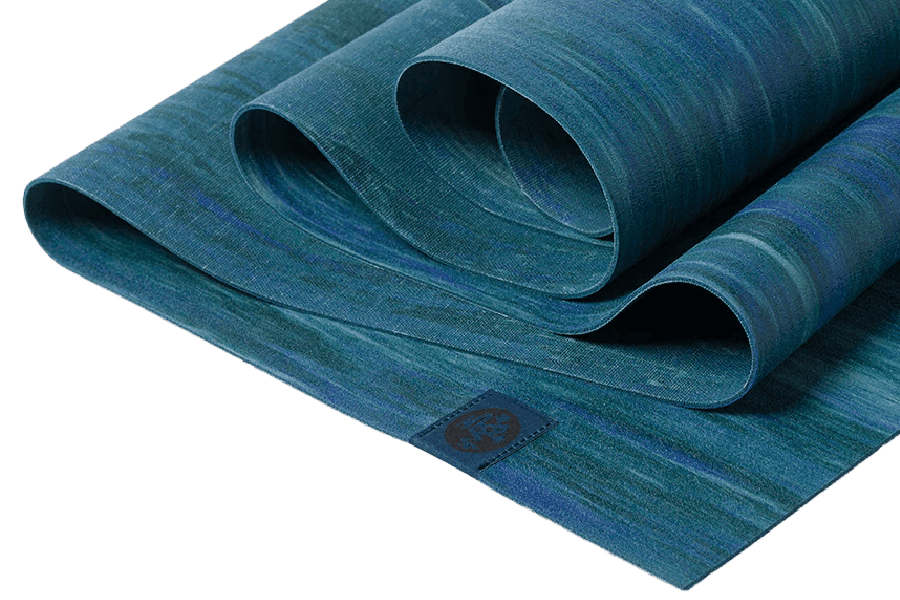
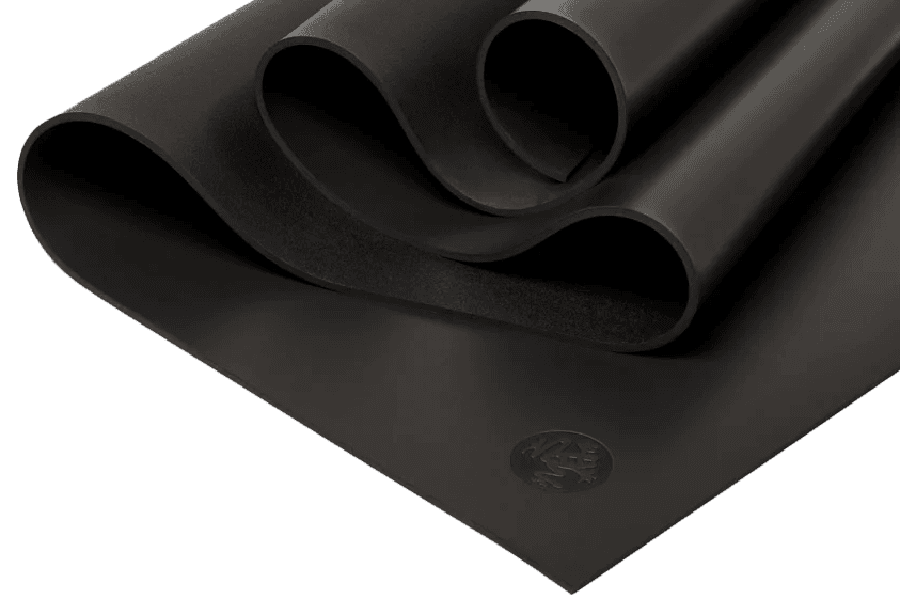
Price
The Superlite lists for $74 less.
$54
List price · check price at Amazon
$128
List price · check price at manduka.com
Thickness
The GRP Adapt 2.0 is 233% thicker.
1.5 mm0.06″
5 mm0.2″
Weight
The Superlite is 3.6 lbs lighter.
2.2 lbs1 kg
5.8 lbs2.6 kg
Size
Same length; the GRP Adapt 2.0 is 2″ wider.
Same on both
- Natural rubber content, so neither suits a latex allergy
- Grippy from the first session, no break-in
- 71 inches long
- 30 day returns and no warranty after that
Full specs
Dimensions
Materials & build
These are not really alternatives
The Superlite is 1.5 mm of rubber that folds into a suitcase and weighs 2.2 pounds. The GRP Adapt 2.0 is Manduka’s heated-practice mat at 5 mm and 5.8 pounds.
GearLab scored them 54 and 82 out of 100 respectively, which looks damning until you notice they are answering different questions. The useful thing to settle first is whether this mat is going in luggage.
A millimeter and a half is not much floor
At 1.5 mm you feel the floor through the Superlite, because you effectively are on the floor. On carpet it is fine. On boards or concrete, long kneeling holds and any pose that puts a hip bone down get unpleasant quickly.
That thinness is why GearLab put it near the bottom of its field of 19 at 54 out of 100. It is not a criticism of the design so much as an accurate description of what you get.
Grip: rubber tack against an absorbent coating
The GRP measured 9.5 dry and 8.5 wet, the best wet result of the 19 mats GearLab tested in 2026, and it took the hot yoga award. Its Satin Grip polyurethane takes moisture into the top rather than leaving a film.
The Superlite is plain closed-cell rubber. It has genuine tack dry and no absorbency at all, so sweat pools on it. Both work from the first unroll with no break-in, which is more than a new Manduka PRO offers.
Only one of these packs
The Superlite folds flat into a suitcase or a backpack instead of rolling. That is the entire product, and nothing about the GRP competes with it: 5.8 pounds of rolled rubber is not going in hand luggage under any circumstances.
Fold creases show over time and do not affect how the mat works. If you fly with a mat more than once or twice a year, this section is the page.
Same length, two inches of width apart
Both are 71 inches long. The GRP is 26 inches wide against the Superlite’s 24, which shows up in wide-legged forward folds and anywhere your hands land outside your shoulders.
Both lines have longer cuts: the Superlite Long at 79 inches for $58, and the GRP Adapt 2.0 Long at 79 by 26 for $138 in Carbon Black only.
How each one wears out
The GRP runs for years, with its polyurethane top the part that eventually flakes under heavy heated practice. Harsh cleaners and soaking accelerate that, so a damp cloth and a mild spray, dried flat, is the routine.
The Superlite is thin rubber that scuffs and can tear, though it sees far less use as a travel mat than a daily one would. Neither is covered past a 30 day return window, since Manduka’s lifetime guarantee applies to the PRO and PROlite lines only.
The Superlite has a second use
A lot of owners lay it over a studio loaner mat rather than practicing on it directly. You get a clean, grippy surface without carrying a real mat across a city, and the loaner underneath supplies the cushioning the Superlite does not have.
Used that way it is an excellent product and the comparison with a $128 studio mat stops making sense. Owning both is a completely reasonable outcome and probably the most common one.
Smell and latex
The Superlite smells of rubber at first, less than the thicker eKO mats because there is less material. The GRP’s polyurethane top mutes the rubber underneath considerably, so it is the easier one to unroll in a small flat.
Both contain natural rubber and neither suits a latex allergy. Both degrade in sunlight, so a hot car is the worst place for either of them.
Price, colors, and which GRP
The Superlite comes in around 19 colorways at $54, holds 4.4 stars across roughly 2,516 Amazon ratings, and discounts by colorway.
The GRP Adapt 2.0 sells direct from manduka.com at $128 in around five colorways. Watch for the older GRP Adapt 1.0 still on Amazon as runout stock near $94; it is a different mat from the Spanish-made 2.0 GearLab tested and awarded.
Cushioning is where the gap is widest
GearLab weights comfort and support at 35 percent of its overall score, more than any other category, which is most of why these two mats finished 28 points apart. The GRP scored 8.5 in that column.
Five millimeters of rubber under a polyurethane top protects a knee by keeping it off the floor. A millimeter and a half does not, because there is not enough material to do it with. On carpet the difference shrinks; on boards or concrete it is the whole experience.
If you want cushioning and portability at once, that is a 4 mm rubber mat around 5 pounds rather than either of these. Nothing that folds into a suitcase is also going to be kind to your knees.
Bottom line
Get the GRP Adapt 2.0 if this is the mat you practice on. It is thicker, wider, better tested, and the best wet-grip mat in GearLab’s field, which is the one thing cheap mats never solve.
Get the Superlite if you already own a proper mat and want something for the suitcase, or a grippy layer to put over a studio loaner. At $54 it is a sensible second mat and a poor only one.
Manduka GRP Adapt 2.0
List price $128
Frequently Asked Questions
- Can I use the Superlite as my only mat?
- You can, and your knees will tell you about it. At 1.5 mm there is almost nothing between you and the floor, which is why GearLab scored it 54 out of 100 near the bottom of its field. On carpet it is fine. On a wooden or concrete floor, long kneeling holds and any pose that puts a hip bone down become unpleasant quickly.
- Which grips better?
- The GRP, especially when damp. Its Satin Grip polyurethane measured 8.5 out of 10 wet with GearLab against a field where nothing else broke 8. The Superlite's plain rubber has genuine tack dry and no absorbency, so sweat sits on top of it. Both work from the first unroll with no break-in.
- Does the Superlite actually fold?
- Yes, and that is the whole product. It folds flat into a suitcase or a backpack rather than rolling into a cylinder. Creases show over time and do not affect how it works. The GRP rolls like a normal mat and is not going in hand luggage under any circumstances.
- Is the GRP worth more than twice the price?
- As a mat you practice on regularly, yes and easily. It is thicker, wider, better tested, and built for the one condition cheap mats fail in. As a travel mat it is useless, because 5.8 pounds of rolled rubber is not going anywhere by plane. They solve different problems and the prices reflect that.
- Which is the older GRP Adapt?
- Manduka replaced the GRP Adapt 1.0 with a redesigned 2.0 made in Spain, and it is the 2.0 that GearLab scored 82 and awarded for hot yoga grip. The 1.0 is still circulating on Amazon as runout stock around $94. Check which version a listing or a review is describing before you rely on it.
- Do both smell of rubber?
- The Superlite does, though less than thicker eKO mats simply because there is less material. The GRP's polyurethane top mutes the rubber underneath considerably. Air either one out unrolled for a few days before the first session. It fades and it is a property of natural rubber rather than a defect.
Related comparisons
- Manduka GRP Adapt 2.0 vs Yoga Design Lab Infinity 5mm
- Manduka GRP Adapt 2.0 vs Hugger Mugger Para Rubber 5mm
- Manduka GRP Adapt 2.0 vs Lululemon The (Big) Mat 5mm
- Manduka eKO Superlite vs JadeYoga Voyager
- Lululemon The Mat 5mm vs Manduka GRP Adapt 2.0
- JadeYoga Harmony 74" vs Manduka GRP Adapt 2.0
- Manduka GRP Adapt 2.0 vs JadeYoga Harmony 2.0 68"
- JadeYoga Harmony XW vs Manduka GRP Adapt 2.0
- Manduka GRP Adapt 2.0 vs b, halfmoon B Mat Everyday 4mm