Manduka eKO Lite vs Yoloha Unity Pro Cork: Which One Should You Buy?
Rubber against cork, and the choice is less about eco credentials than it sounds, because both are plant-based. The eKO Lite is Manduka's lighter natural rubber mat at $96. The Yoloha Unity Pro is a cork-topped 6 mm mat made in the USA at $159, two inches wider and two pounds heavier. What separates them in practice is what happens to your hands as you warm up.
As an Amazon Associate, we earn from qualifying purchases made through links on this page. How this works
The quick answer
Cork does something rubber does not: it gets grippier as it picks up moisture. If you sweat, that is a real advantage and it is the reason to spend the extra $63 on the Yoloha. You also get two more inches of width, two more millimetres of cushion, and a mat made in the USA. It weighs 7 pounds and OutdoorGearLab scored its care and cleaning 5 out of 10, the lowest of the 19 mats it tested.
The eKO Lite is the more practical everyday mat. Five pounds carries easily, the rubber grips immediately whether you are damp or not, it wipes clean in seconds, and $96 is a lot less money. Cork's texture is also divisive; some people love the grain underfoot and some find it abrasive on bare knees.
Get the Manduka eKO Lite if...
- You carry your mat and two pounds matters
- You want a surface that wipes clean without ceremony
- You want colors rather than natural cork
- You'd rather keep the $63
Get the Yoloha Unity Pro if...
- You sweat and want grip that improves as you go
- You want 26 inches of width and 6 mm underfoot
- You want a mat made in the USA
- You like cork's texture and want a mat that does not look like every other mat
Side by side
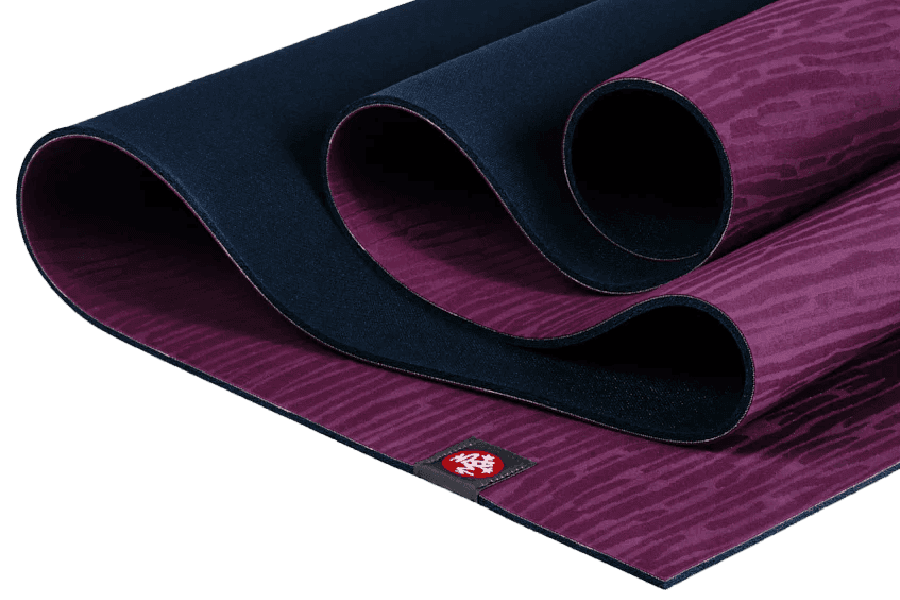
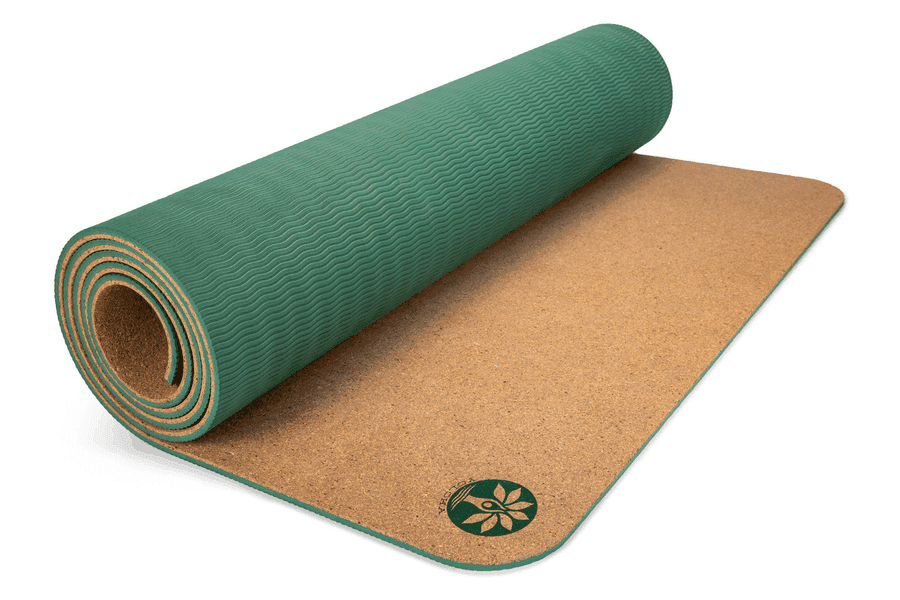
Price
The eKO Lite lists for $63 less.
$96
List price · check price at Amazon
$159
List price · check price at yolohayoga.com
Thickness
The Unity Pro is 50% thicker.
4 mm0.16″
6 mm0.24″
Weight
The eKO Lite is 2 lbs lighter.
5 lbs2.2 kg
7 lbs3.2 kg
Size
The Unity Pro is 1″ longer; the Unity Pro is 2″ wider.
Same on both
- Plant-based materials rather than PVC
- Grip from the first class with no break-in
- 30-day returns and no long-term warranty
- Damaged by prolonged direct sun
Full specs
Dimensions
Materials & build
Buying
Rubber against cork, both plant-based
This is not the eco comparison it looks like. Both mats are built from plants: the eKO Lite is natural tree rubber with over 30% recycled content, and the Unity Pro is cork bonded with natural rubber over a plant-based foam base. Neither has PVC in it.
The real differences are practical. The Yoloha is 6 mm and 26″ wide and weighs 7 pounds at $159. The eKO Lite is 4 mm and 24″ wide at 5 pounds and $96. One of them is easy to live with and one of them does something no rubber mat can.
Cork gets grippier as you sweat
The thing cork does is counterintuitive. Its texture, bonded to the rubber underneath, gives traction that holds up as moisture arrives, which is the opposite of what closed-cell rubber does. If you practice warm and your palms go slick halfway through, that is a genuine reason to consider a cork mat.
Being precise about how good: OutdoorGearLab scored the Unity Pro 7.5 out of 10 dry and 6 wet, and ranked it tenth of 19 mats overall at 66 points. Good, not class-leading. Yoloha’s own claim of an unmatched non-slip surface needing no towel is the brand’s product copy, not a test result, and it is worth separating the two.
The eKO Lite is tacky from the first unroll and stays that way in a cool room. It is closed-cell, though, so sweat beads on top with nowhere to go, and in a heated class your hands will slide. That is the category difference here in one sentence.
Two pounds and a bigger roll
The Unity Pro is about 7 pounds, which GearLab confirmed on its own scale, against 5 for the eKO Lite. It is also a fatter roll because of the 6 mm build and the extra two inches of width.
For a mat that lives in a spare room this is irrelevant. For a mat you carry a mile to a studio, it is the thing you will notice every single time. The eKO Lite was designed as the carryable version of Manduka’s eKO for exactly this reason.
Six millimetres, and it is still firm
The Yoloha is thicker on paper and firmer than the number suggests. GearLab described its build as extra-firm and scored its comfort and support 7 out of 10. Cork does not squash the way foam does, so what you get is stability plus a bit more material rather than plushness.
The eKO Lite is 4 mm of dense rubber with the slight springiness rubber has. On wood or carpet it carries a full class comfortably; on tile a long kneeling sequence gets old. If cushioning is your main problem, neither of these is really the answer and a soft 6 mm mat is.
The cork surface divides people
Cork has a visible grain and a slightly abrasive feel. Some people love it and describe it as the most alive surface they have practised on. Others find it rough on bare knees and shins, and it is the most common complaint in owner reviews of cork mats generally.
The eKO Lite’s rubber is smoother and more familiar, and it comes in 8 colorways at last count, against natural cork and a range of printed art designs from Yoloha. If you have never touched cork, that is worth doing before spending $159.
Cleaning is where the Yoloha struggles
Cork is porous, so it cannot be soaked, sprayed heavily or left damp. GearLab rated the Unity Pro 5 out of 10 for care and cleaning, the lowest score of the 19 mats in its test. The routine is a barely damp cloth and thorough flat air drying, out of the sun.
The eKO Lite is closed-cell, so nothing soaks in and a wipe-down takes seconds. If you practice four times a week, that difference compounds. It is the single most underrated advantage of a closed-cell mat and it applies here.
What wears out first
The cork face itself came through GearLab’s testing intact, and cork resists the compression that flattens foam. The open question is the plant-based foam base and the bond between the layers over years of heavy use. The Unity Pro is made in the USA, which is unusual at this price.
The eKO Lite’s rubber softens and sheds slowly, faster if you sweat heavily, and direct sun ruins it. Neither brand backs its mat beyond a 30-day return window, so in both cases you are relying on the material rather than a warranty. Note also that both contain natural rubber, so neither is safe with a latex allergy.
Price and where to buy
The eKO Lite lists at $96; check the live price on Amazon, where Manduka colorways move independently and often sit below list. The Unity Pro is $159 through yolohayoga.com, with an 80″ version at $179 and an 84″ × 30″ at $219. It is not on Amazon.
That is a $63 gap for a mat that is heavier and harder to clean, and it is worth it only if the moisture-activated grip solves something for you. If it does, nothing else in this price range does the same job.
Bottom line
Get the eKO Lite if you carry your mat, if you want to wipe it down and forget about it, or if you want colors. It is the easier mat to own by a distance, it grips well in a cool room, and it costs $63 less.
Get the Unity Pro if you sweat and want a surface that improves rather than fails when you do, if you want 26 inches of width, or if a USA-made cork mat is the object you want. Accept the seven pounds and the careful cleaning. If hot yoga is your entire practice, a purpose-built mat like the Manduka GRP Adapt 2.0 took GearLab’s award for exactly that and is worth a look before either.
Yoloha Unity Pro Cork
List price $159
Frequently Asked Questions
- Does cork actually grip better when wet?
- It grips differently. Cork's texture combined with the rubber it is bonded to gives traction that holds up as moisture arrives, which is the opposite of what closed-cell rubber and PVC do. OutdoorGearLab scored the Unity Pro 7.5 out of 10 dry and 6 wet, so it is good rather than class-leading; the top rubber mats beat it dry. Note that Yoloha's own claim of an unmatched non-slip surface needing no towel is marketing copy, not a test result.
- Is the Yoloha hard to clean?
- Harder than a rubber mat, yes. Cork is porous, so it does not take a soaking, and GearLab rated its care and cleaning 5 out of 10, the lowest score in a 19-mat test. The routine is a light wipe with a barely damp cloth and thorough air drying, flat and out of the sun. The eKO Lite is closed-cell and takes a proper wipe-down in seconds, which is a genuine day-to-day advantage if you practice often.
- How much heavier is the Yoloha?
- About two pounds. The Unity Pro is roughly 7 pounds, which GearLab confirmed on its own scale, against 5 for the eKO Lite. It is also a bulkier roll because of the 6 mm build and 26-inch width. As a home mat that is irrelevant; as a mat you carry a mile to a studio, it is the main thing you will notice.
- Is cork more durable than rubber?
- The cork face itself holds up well and came through GearLab's testing intact, and the mat resists the compression that kills foam. The question mark is the plant-based foam base and the bond between layers over years of heavy use. Manduka's rubber softens and sheds eventually, particularly with heavy sweat. Neither brand backs its mat beyond a 30-day return window, so you are relying on the material rather than a warranty either way.
- Which is better for hot yoga?
- The Yoloha. The eKO Lite is closed-cell, so sweat beads on top of it and your palms slide; a towel is more or less required in a heated room. Cork handles moisture better and does not turn slick the moment you start dripping. That said, if hot yoga is your entire practice, a dedicated absorbent mat such as the Manduka GRP Adapt 2.0, which took GearLab's award for hot yoga grip, is a stronger choice than either.
- Does the cork surface bother bare knees?
- For some people, yes. Cork has a visible grain and a slightly abrasive feel that is noticeable in kneeling poses, and it is the most common complaint in owner reviews. The extra two millimetres of thickness offsets some of that. If you have sensitive knees and are unsure, the eKO Lite's smoother rubber is the safer pick, or plan on a folded blanket under your knees with the Yoloha.
Related comparisons
- JadeYoga Harmony 68" vs Manduka eKO Lite
- Manduka eKO Lite vs Suga SugaMat
- Manduka PRO vs Yoloha Unity Pro Cork
- Manduka PRO Long vs Yoloha Unity Pro Cork
- JadeYoga Harmony 74" vs Manduka eKO Lite
- JadeYoga Harmony XW vs Yoloha Unity Pro Cork
- Manduka eKO Lite vs Yoga Design Lab Combo 3.5mm
- Alo Warrior vs Yoloha Unity Pro Cork
- Yoloha Unity Pro Cork vs b, halfmoon B Mat Strong 6mm