Lululemon The Mat 5mm vs Gaiam Performance Dry-Grip Long & Wide: Which One Should You Buy?
Both of these are marketed on grip and both were measured by GearLab in 2026, which makes this an easier comparison than most. The Mat came fourth of 19 at 81 out of 100; the Dry-Grip construction came in at 62. The Gaiam's counter-argument is size: 78 by 26 inches for $74.98, against The Mat's 71 by 26 for $118.
As an Amazon Associate, we earn from qualifying purchases made through links on this page. How this works
The quick answer
The Mat's polyurethane top absorbs sweat rather than letting it sit on the surface, and it earned a perfect 10 for comfort and support plus GearLab's award for mixed fitness routines. Gaiam's dry-grip topcoat is meant to do a similar job by wicking moisture away, and GearLab measured it at 3.5 out of 10 wet, second from the bottom of the field. Gaiam still calls the mat ideal for hot yoga.
Buy the Gaiam if you are tall and 78 inches solves a real problem, because no amount of grip helps on a mat you do not fit. Otherwise The Mat is the better mat and the honest choice, and its extra $43 buys a surface that keeps working when you are actually sweating.
Get Lululemon The Mat if...
- You sweat and want grip that survives it
- You want a reversible mat with a natural rubber side
- You want dense rubber rather than coated foam
- 71 inches of length is enough for you
Get the Gaiam Dry-Grip Long & Wide if...
- You're tall and need 78 inches rather than 71
- You want the largest mat you can get under $80
- You want a lifetime guarantee on paper
- You'd rather keep about $43
Side by side
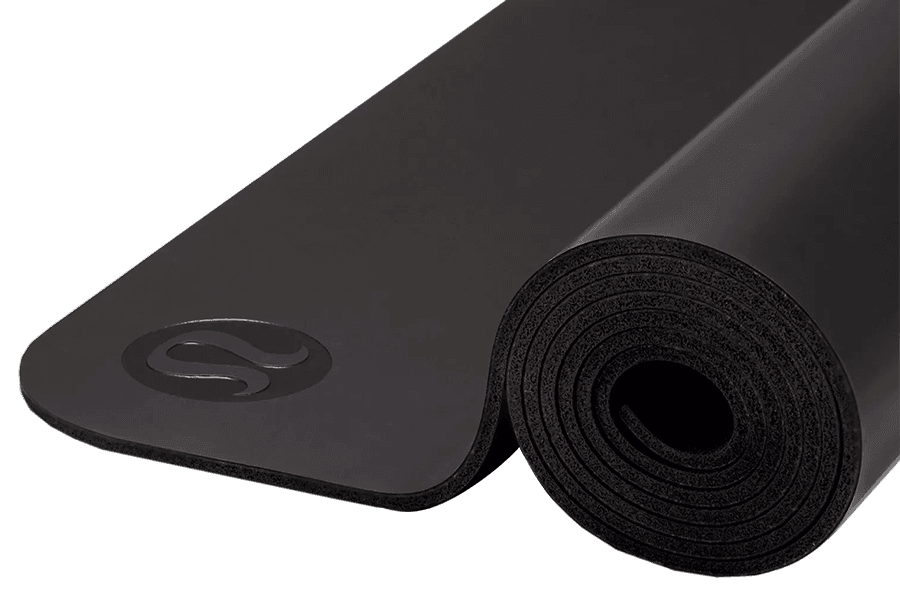
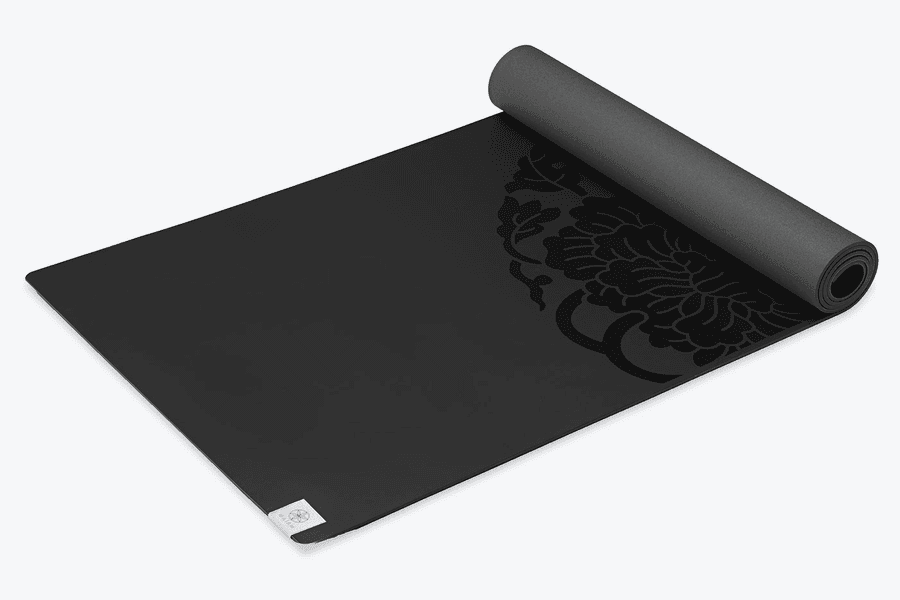
Price
The Dry-Grip L&W lists for about $43 less.
$118
List price · check price at lululemon.com
$74.98
List price · check price at Amazon
Thickness
Identical thickness.
5 mm0.2″
5 mm0.2″
Weight
The Dry-Grip L&W is 0.2 lbs lighter.
5.2 lbs2.4 kg
5 lbs2.27 kg
Size
The Dry-Grip L&W is 7″ longer; same width.
Same on both
- 26 inches wide
- 5 mm thick
- Both were tested by GearLab in its 2026 round-up
- Both are marketed for hot yoga
Full specs
Dimensions
Materials & build
Buying
Two mats making the same promise
Both of these are sold on grip when you sweat. Lululemon bonds a polyurethane top to natural rubber so the surface absorbs moisture; Gaiam applies a topcoat meant to wick it away and calls the mat ideal for hot yoga. GearLab measured both in 2026, which saves a lot of guessing.
The Mat came fourth of 19 at 81 out of 100. The Dry-Grip construction came in at 62, with the second worst wet grip result in the field. Gaiam’s counter-argument is size and money: 78″ × 26″ for $74.98 against 71″ × 26″ for $118.
The hot yoga claim does not survive the test
GearLab scored the standard Gaiam Dry-Grip, the same construction in a smaller cut, at 3.5 out of 10 for wet grip, second from the bottom of 19 mats, with 6.5 dry. Gaiam’s own listing says the topcoat wicks moisture and grips harder as temperatures rise, and describes the mat as ideal for hot yoga. That is company copy, not a measurement.
The Mat scored 6.5 dry and 4.5 wet, which is better and still not great. Its advantage is mechanical: polyurethane takes some moisture into the surface rather than relying on a coating to shed it. If you practice in a heated room regularly, put a towel down whichever you buy.
Seven inches, and who needs them
On a 71 inch mat, anyone over about six foot has heels or head on the floor in savasana and a back foot off the end in a long lunge. The Gaiam’s 78 inches fixes that for less than two thirds of the price, and both mats are 26 inches wide, so you are not giving up width to get it.
Lululemon’s own answer is The Big Mat at 84″ × 28″, which costs considerably more; our The Mat vs The Big Mat comparison covers whether that is worth it.
Feel: dense rubber against coated foam
Both mats are 5 mm, and they do not feel alike. The Mat is dense rubber that does not deflect, which is what GearLab’s perfect 10 for comfort and support is measuring. The Gaiam is softer PVC with a coating on top, and GearLab rated the standard version 8 for comfort and support.
Softer helps on your knees and hurts in a balance hold. If you kneel a lot and stand a little, that 8 might suit you better than the 10. For most practices, the firmer surface is the one you want under a standing foot.
Both wear from the top down
A dry-grip topcoat is a thin layer bonded to PVC. It thins out where hands and feet keep landing, and once it is gone you have a plain PVC mat underneath. GearLab rated the Dry-Grip 4 out of 10 for materials, the lowest score of the mats we cover on this page.
The Mat’s polyurethane top also wears, and owners commonly report flaking or peeling after a couple of years of heavy use. It starts from a better base though, at 7 out of 10 for materials, and the natural rubber underside stays usable even when the top has seen better days.
Care: gentle in both cases, for different reasons
The Mat does not like harsh cleaners or soaking; a damp cloth and a mild spray is the routine, and hard scrubbing takes years off the top layer. Flipping to the rubber side between sweaty sessions helps too.
Gaiam asks you to unroll the mat and air it for two to three days before your first session, because PVC releases a strong odor when first unwrapped, and it publishes a guide on removing the smell. It also warns that extended sun exposure makes the mat fade and turn brittle.
A lifetime guarantee and a quality promise
Gaiam’s lifetime guarantee sounds like the stronger position and covers manufacturing defects, which is not the same as a topcoat wearing thin or foam compressing. Those are the two ways this mat actually reaches the end of its life.
Lululemon’s quality promise has no stated term, which is vaguer than a warranty and applied more generously than most people expect. In practice neither document should decide this purchase.
Where to buy, and one listing trap
Lululemon sells The Mat through its own stores and website only, at a US list price of $118. There is no Amazon listing. Several review sites still quote $98, which is out of date, so check lululemon.com for the current number.
The Gaiam sells on gaiam.com and Amazon, and the Amazon listing carries several sizes on one page, with the default bullets describing the 68 by 24 inch standard mat. Confirm you have selected the 78 by 26 version before you order.
Bottom line
Buy the Gaiam Performance Dry-Grip Long & Wide if you are tall and need the room. Nothing else gives you 78 by 26 inches for $75, and a mat you fit on beats a better grip score you never reach the limits of.
Buy Lululemon The Mat if grip is the thing you are paying for. It scored 81 out of 100 against the Dry-Grip’s 62, it flips over for dry work, and the difference shows up in the first sweaty class. Our PRO vs the standard Dry-Grip comparison covers Gaiam’s smaller cut.
Lululemon The Mat 5mm
List price $118
Frequently Asked Questions
- Which one actually grips better when wet?
- The Mat, and the numbers are close enough to be worth stating precisely. GearLab scored The Mat 6.5 dry and 4.5 wet, and the standard Gaiam Dry-Grip, which is the same construction in a smaller cut, 6.5 dry and 3.5 wet. The Gaiam's wet score was second worst of 19 mats. Neither is a great hot yoga mat; The Mat is the less bad one and it does it through absorption rather than a coating.
- Is the Gaiam's hot yoga claim just marketing?
- It is the company's own copy, not a test result. Gaiam's listing says the topcoat wicks moisture and grips harder as temperatures rise, and describes the mat as ideal for hot yoga. The independent measurement says otherwise. The topcoat does wick a little, but if heated classes are your regular practice you want a towel down regardless of which of these you buy.
- How much does the extra length matter?
- A lot if you are over about six foot. On a 71 inch mat a tall person has heels or head on the floor in savasana and a back foot off the end in a long lunge. The Gaiam's 78 inches fixes that for less money. Lululemon's answer is The (Big) Mat at 84 by 28 inches, which costs considerably more.
- Which one lasts longer?
- Both fail at the surface. The Mat's polyurethane top wears and can flake or peel after a couple of years of heavy use. Gaiam's topcoat thins out where hands and feet land, and once it goes you are left with plain PVC; GearLab rated the Dry-Grip 4 out of 10 for materials against The Mat's 7. Gaiam's lifetime guarantee covers manufacturing defects rather than coating wear, and Lululemon's quality promise has no stated term.
- Does the Gaiam need airing out?
- Yes. Gaiam asks you to unroll the mat and air it for two to three days before your first session, because PVC releases a strong odor when first unwrapped, and it publishes a guide about getting rid of the smell. It also warns that extended sun exposure makes the mat brittle. The Mat has a mild rubber smell that fades.
- Where can I buy each one?
- Lululemon sells The Mat only through its own stores and website, at a US list price of $118, with no Amazon listing. The Gaiam is on Amazon and gaiam.com; the Amazon listing carries the size options, so check that you are selecting the 78 by 26 inch version rather than the standard 68 by 24.
Related comparisons
- Manduka X vs Gaiam Performance Dry-Grip Long & Wide
- JadeYoga Harmony 74" vs Lululemon The Mat 5mm
- Manduka PROlite Long vs Lululemon The Mat 5mm
- Lululemon The Mat 5mm vs JadeYoga Harmony 2.0 68"
- Manduka PROlite vs Lululemon The Mat 5mm
- Lululemon The Mat 5mm vs Manduka GRP Adapt 2.0
- Lululemon The Mat 5mm vs Manduka eKO
- Lululemon The Mat 5mm vs b, halfmoon B Mat Everyday 4mm
- Lululemon The Mat 5mm vs Manduka PRO Lite Terra 4.7mm