Jade Harmony XW vs Manduka eKO: Which One Should You Buy?
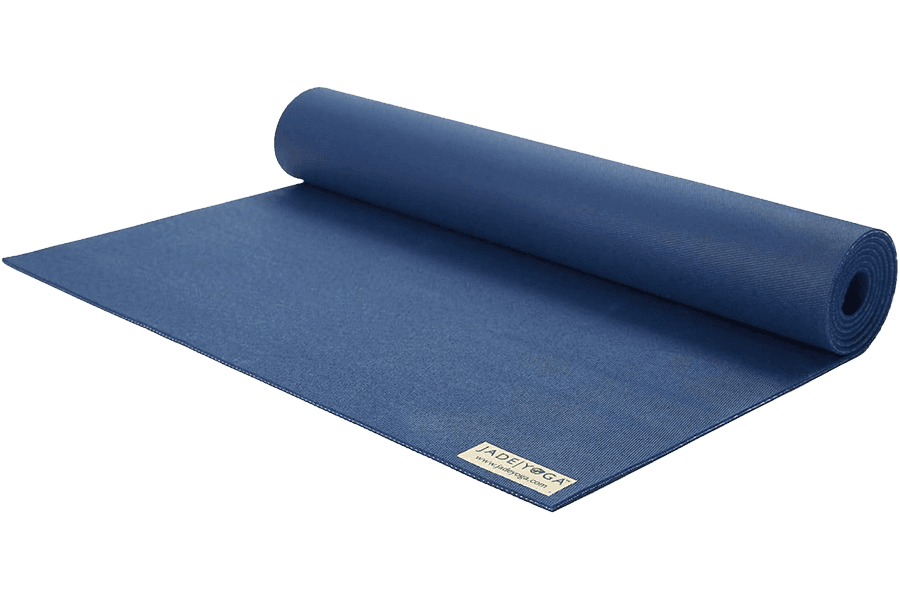
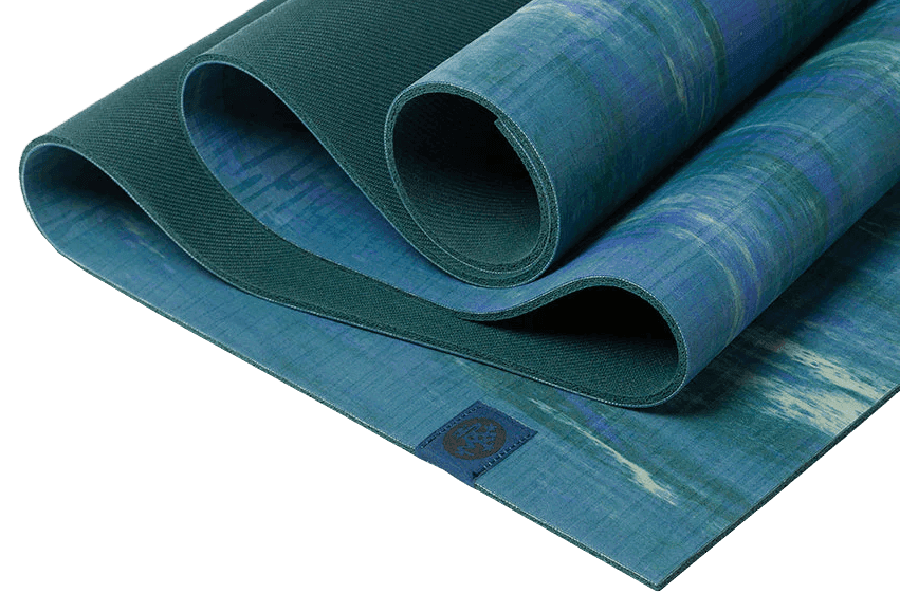
The Harmony XW is the biggest mat Jade makes, 80" × 28" of US-made open-cell rubber sold in a single Midnight Blue. The Manduka eKO is a standard 71" × 26" closed-cell rubber mat in five colorways, about $36 less. Two questions decide this page: whether your body actually needs the extra nine inches of length and two of width, and how each surface behaves once your palms sweat, because the two brands build their rubber in opposite ways.
As an Amazon Associate, we earn from qualifying purchases made through links on this page. How this works
The quick answer
The XW does the things the eKO can't. It fits practitioners past six feet, its 28" width contains broad shoulders, its open-cell surface keeps gripping when palms get damp, and Jade backs it with a written 1 year warranty against Manduka's 30 day return window. Despite carrying about a quarter more rubber, it even weighs 0.3 pounds less. The eKO answers with five colorways, a sealed surface that wipes clean in seconds, over 30% recycled content, and a $114 list price.
If you're under about five foot ten with an ordinary build and a mostly dry practice, buy the eKO and keep the $36; the XW's size would just be bulk in your closet. If you're tall, broad, or sweaty-palmed, the XW is the better practice surface, and living with one color is the only real concession.
Get the Harmony XW if...
- You're near or past six feet; 80" fits with room to spare
- Broad shoulders spill off 26" mats; 28" contains them
- Your palms get damp mid-practice; open-cell rubber keeps its grip
- You want a written 1 year warranty, not just 30 day returns
Get the Manduka eKO if...
- 71" × 26" covers your body; the XW's size would go unused
- Your practice runs dry, where the textured grip is at its best
- You want a choice of 5 colorways instead of one blue
- You'd rather keep about $36 and get the easy-wipe surface
Side by side
Price
The eKO lists for about $36 less.
$149.95
List price · check price at Amazon
$114
List price · check price at Amazon
Thickness
The eKO is 4% thicker.
4.8 mm0.19″
5 mm0.2″
Weight
The Harmony XW is 0.3 lbs lighter.
6.7 lbs3 kg
7 lbs3.2 kg
Size
The Harmony XW is 9″ longer; the Harmony XW is 2″ wider.
Same on both
- Tapped natural rubber, no PVC
- Grippy from the first practice, no break-in
- Rubber smell out of the box that fades
- Must stay out of direct sun and hot cars
- Not suitable for latex allergies
Full specs
Dimensions
Materials & build
The oversized Jade meets the standard eKO
The Harmony XW is the largest mat Jade sells: 80″ × 28″ of the same US-made open-cell rubber as the standard Harmony, listing at $149.95 in Midnight Blue and nothing else. The Manduka eKO is a conventional footprint by comparison, 71″ × 26″ of closed-cell rubber built in Taiwan, listing at $114 in five colorways at last count.
Two things deserve your attention before anything else. First, whether your body actually needs nine extra inches of length and two of width, because unused size is just bulk. Second, how each surface behaves once your palms start sweating, because Jade and Manduka build their rubber in opposite ways and the difference shows up mid-practice, not on the spec sheet.
Size: the XW fits bodies the eKO cuts short
At 71 inches, the eKO covers practitioners to about five foot ten before head or heels start reaching past the end in savasana. The XW’s 80 inches removes height from the conversation entirely; a six-foot-five practitioner fits with room left over. Width tells a similar story. The eKO’s 26 inches is already roomier than the 24″ industry standard, and broad-shouldered practitioners appreciate it. The XW’s 28 inches goes further and keeps winged elbows and wide stances on rubber in poses where even the eKO runs out.
If height is your only complaint and the width leaves you indifferent, Manduka sells the same closed-cell surface at 79″ × 26″ as the eKO Long for $124, though it weighs 8 pounds. Nothing in the eKO family reaches 28 inches wide. Among rubber mats, the XW has that dimension nearly to itself.
Width buyers are a real constituency here, not just tall ones. If your elbows and knees keep landing on floorboards during ordinary practice on a normal mat, two extra inches on each side changes more poses than extra length would, and the XW is one of very few mats that offers it in natural rubber.
Sweat decides the grip contest
With dry hands you would struggle to pick a winner. Both surfaces are tacky the first time you unroll them, with no conditioning period, and both have the warm, slightly organic feel that makes rubber mats pleasant to touch. Moisture separates them. The XW’s open-cell surface takes in light sweat, which is the property Wirecutter credits for the Harmony’s traction in sweaty sessions, so a damp palm keeps finding grip. The eKO’s surface is sealed, so sweat stays on top, and traction depends on the texture pressed into the rubber. Manduka’s own copy describes the grip as reliable in dry conditions, which is a fair summary of the limitation.
Neither mat survives a genuinely dripping room. A heated class that leaves puddles overwhelms open-cell rubber too, and heavy sweaters end up draping a towel over either surface. The XW’s advantage lives in ordinary practice, the large territory between bone dry and soaked.
Cleaning is the closed-cell payoff
What the eKO gives up in damp grip it returns at cleanup. A sealed surface takes nothing in, so a spray and a cloth leave it fresh in under a minute. The XW absorbs whatever lands on it, sweat included, which means it wants a regular wash with mild soap or diluted vinegar and some patience while 80 inches of rubber dries.
Multiply that by the XW’s size and the chore is real. If your mat lives somewhere it collects dust or shares space with pets, the eKO is meaningfully easier to keep presentable week to week.
Expect a rubber smell from either mat out of the box. It fades over the first weeks with both, faster if you let the mat air out unrolled, and owners of each brand describe it as noticeable rather than unbearable.
The bigger mat weighs less
Here is the spec that surprises people: the XW carries roughly a quarter more rubber than the eKO and still weighs 6.7 pounds to the eKO’s 7. Open-cell rubber is less dense than sealed rubber, and the XW is also slightly thinner at 4.8 mm against 5, so the giant mat ends up the lighter one.
That said, neither mat makes commuting effortless, and the XW’s handling problem is shape rather than pounds. It rolls wider than standard straps and bags expect, and it claims floor space in a packed studio that your neighbors may notice. At home, all of this evaporates; both mats lie flat and stay where you put them.
Cushioning, for the record, is a tie. The 0.2 mm between 4.8 and 5 mm sits below anyone’s threshold of perception, and both mats are firm platforms that trade plushness for stability. If knee comfort on hard floors is your actual priority, an 8 mm mat like Jade’s Fusion line serves it better than either mat on this page.
Lifespan and the warranty gap
Natural rubber is a consumable either way. Harmony surfaces soften and shed with heavy practice, and hard-practicing owners replace them every few years, though CNN Underscored puts the ceiling around ten years with gentle care. eKO owners describe a different failure mode on a similar timeline: the sealed surface holds up well at first, then starts flaking after a few years of daily use.
The paperwork is where the two part company. Jade backs the XW with a written 1 year warranty against defects and premature wear, excluding sun damage and harsh cleaners. Manduka gives the eKO a 30 day return window and nothing beyond it, since its lifetime guarantee applies only to the PRO series. Both mats live by the same strict rubber rules regardless: shade, no hot cars, gentle cleaners only.
Two eco pitches, one latex caution
Both brands earn their environmental reputations. Jade taps its rubber, manufactures in the USA, and plants a tree for every mat sold, a count past two million by its own tally. Manduka builds the eKO in Taiwan from natural rubber with over 30% recycled content. Neither touches PVC. Pick whichever argument moves you; there is no wrong answer on this row.
The shared caveat is latex. Jade calls its mats 99% latex free, notes they may carry trace latex proteins, and does not recommend them for latex allergies. The eKO is built on the same tree rubber. An actual latex allergy rules out both mats, and PVC or TPE is the safer aisle.
Colors and the Harmony 2.0 trap
The eKO wins the color row without trying: five colorways at last count, including some genuinely nice marbled options, against the XW’s single Midnight Blue. Jade trades palette for size as its mats grow. The 74″ Harmony still offers five colors at $109.95, and the 68″ standard offers around a dozen, but at 80″ × 28″ you take the blue or leave it.
One version warning before you read reviews: the Jade Harmony 2.0 is a different mat from the one on this page, made in Spain with FSC and OEKO-TEX certifications, and it took a recent OutdoorGearLab award. Praise for the 2.0 does not describe this US-made original, so check which mat a write-up actually tested.
Price and value
List prices are $149.95 for the Harmony XW and $114 for the eKO, about $36 apart. Street prices move around, so check the current price on both the Harmony XW and the eKO before deciding.
The $36 buys nine inches of length, two of width, grip that survives damp palms, and a warranty. It gives up color choice and the wipe-clean surface. Worth noting: if the XW’s size is more mat than your frame requires, the fair comparison shifts to the 74″ Harmony at $109.95, which keeps the open-cell surface and undercuts the eKO fight entirely.
Bottom line
Get the Harmony XW if you are tall, broad, or both, and your palms ever get damp mid-practice. It is the only mat in this pairing that fits a six-footer with margin, the 28″ width is a comfort no eKO matches, it keeps gripping through moisture, and it carries the only written warranty here.
Get the eKO if 71″ × 26″ covers your body and your practice runs dry. You keep about $36, gain a choice of five colors, and own the easier mat to keep clean. Just take Manduka at its word about dry conditions, and budget for a towel on sweaty days.
Jade Harmony XW
List price $149.95
Manduka eKO
List price $114
Frequently Asked Questions
- What does open-cell versus closed-cell mean in practice?
- The Harmony XW's open-cell rubber is porous, so it absorbs light moisture and a damp palm keeps finding traction; Wirecutter credits exactly that quality in the Harmony line for sweaty sessions. The eKO's closed-cell rubber is sealed, so sweat stays on top and grip depends on the molded texture, which Manduka describes as most reliable in dry conditions. The trade runs the other way at cleanup: the eKO wipes clean in under a minute, while the XW needs a proper wash and drying time.
- Who actually needs a mat as big as the XW?
- Two groups. Practitioners over about five foot ten start outgrowing the eKO's 71 inches in savasana, and the XW's 80 inches covers well past six feet. Separately, broad shoulders and winged elbows spill off even a 26 inch mat, and the XW's 28 inches is one of the only natural rubber answers to that. If you're average height with an ordinary build, the extra size mostly adds bulk and cost.
- Is either mat good for hot yoga?
- Not really. The XW handles ordinary damp-palm practice well, but a genuinely dripping heated class saturates open-cell rubber too, and the eKO's sealed surface gets slick as soon as sweat pools on it. Heavy sweaters end up draping a towel over either mat. For dedicated hot practice, an absorbent polyurethane surface like Manduka's GRP Adapt line or Lululemon's The Mat is the better tool.
- How do the warranties compare?
- Jade covers the Harmony XW for 1 year against defects and premature wear, excluding sun damage and harsh cleaners. Manduka gives the eKO a 30 day return window and nothing after; its lifetime guarantee applies only to the PRO series. Both mats need the same care regardless: shade, no hot cars, and gentle cleaners only.
- Which is easier to carry to class?
- Neither is a featherweight, and the surprise is that the bigger mat weighs less: 6.7 pounds for the XW against 7 for the eKO, because open-cell rubber is less dense. The XW's real handicap is shape; a 28 inch roll defeats most straps and bags and takes up extra space in a crowded studio. The eKO rolls to a standard width and fits normal carrying gear, which makes it the more practical commuter of the two despite the extra pound.
- Is this the Jade Harmony that won awards recently?
- No. The recent OutdoorGearLab award went to the Jade Harmony 2.0, a different mat made in Spain with FSC and OEKO-TEX certifications. The Harmony XW on this page is the original US-made formula in its extra-wide cut. Reviews of one don't describe the other, so check which version any write-up tested before leaning on it.
Related comparisons
- Manduka PROlite Long & Wide vs JadeYoga Harmony XW
- JadeYoga Harmony XW vs Alo Warrior
- Manduka eKO vs Lululemon The (Big) Mat 5mm
- Lululemon The Mat 5mm vs Manduka eKO
- JadeYoga Harmony XW vs Manduka GRP Adapt 2.0 Long
- Manduka eKO vs Hugger Mugger Para Rubber 5mm
- JadeYoga Harmony 74" vs Manduka eKO
- Manduka eKO vs Yoga Design Lab Infinity 5mm
- Manduka eKO vs JadeYoga Harmony 2.0 68"