Jade Harmony 74" vs Manduka X: Which One Should You Buy?
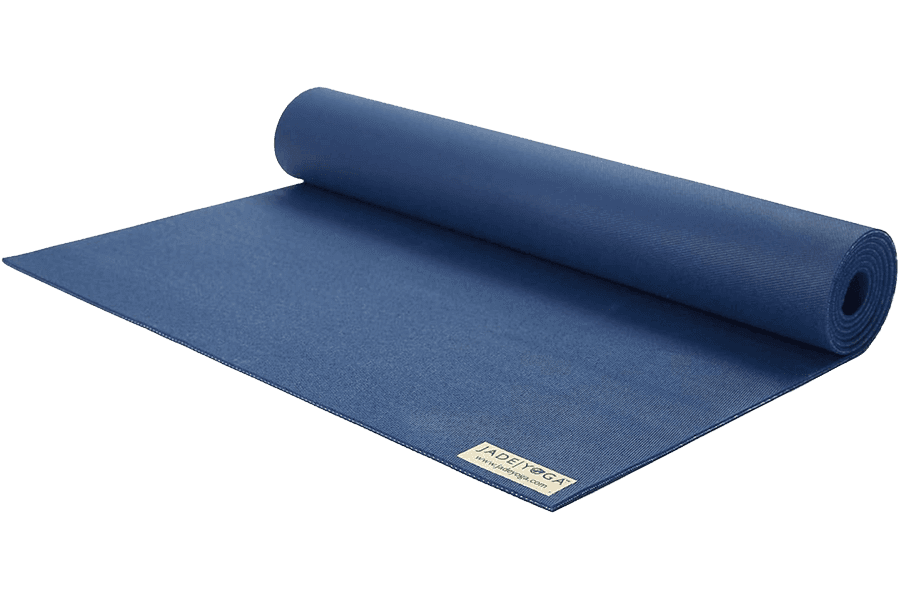
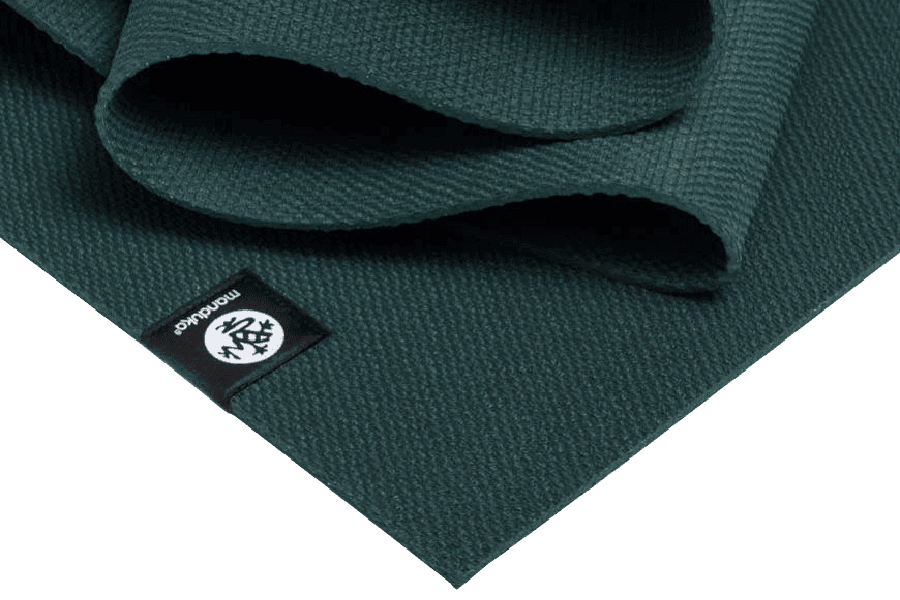
The Jade Harmony 74 is a yoga mat in the classical sense: tacky open-cell rubber, made in the USA, sized long at 74 inches for $109.95. The Manduka X is a fitness mat that does yoga on the side: dense closed-cell TPE at 71 inches and $72, built to shrug off shoes, dumbbells, and workout videos. The $38 between them matters less than an honest inventory of what happens on your mat in a typical week.
As an Amazon Associate, we earn from qualifying purchases made through links on this page. How this works
The quick answer
For yoga itself the Harmony 74 is the better mat and it isn't particularly close. Its rubber grips from the first practice and keeps gripping when palms turn damp, it's three inches longer than the X, and Jade backs it with a written 1 year warranty. The X pushes back on practical grounds: 3.4 pounds against 5.3, $38 kept, no latex for allergic practitioners, no rubber smell, and a surface that tolerates shoes and equipment the Harmony's soft rubber never could.
If the mat's job is yoga, buy the Harmony 74. If the same mat has to host HIIT circuits, weights, or anything in shoes, or a latex allergy is in the picture, the X is the right tool and the cheaper one.
Get the Harmony 74" if...
- Yoga is the mat's whole job and you sometimes sweat
- You want 74 inches instead of 71
- The classic tacky rubber feel matters to you
- You want the only written warranty in this pair
Get the Manduka X if...
- Your mat also hosts circuits, weights, or shoes
- You have a latex allergy: TPE has none, rubber does
- You want the lighter carry at 3.4 pounds
- You'd rather keep about $38
Side by side
Price
The X lists for about $38 less.
$109.95
List price · check price at Amazon
$72
List price · check price at Amazon
Thickness
The X is 4% thicker.
4.8 mm0.19″
5 mm0.2″
Weight
The X is 1.6 lbs lighter.
5.3 lbs2.4 kg
3.7 lbs1.7 kg
Size
The Harmony 74" is 3″ longer; same width.
Same on both
- Grip from the first practice, no break-in
- 24 inches wide
- Firm, stable cushioning near 5 mm
- Sold on Amazon at first-party prices
- Best kept out of direct sun
Full specs
Dimensions
Materials & build
Buying
A yoga specialist and a garage all-rounder
The Jade Harmony 74 has one job. It’s 74″ × 24″ of tacky open-cell natural rubber, made in the USA for bare hands and feet, priced at $109.95. The Manduka X has several jobs: a 71″ × 24″ slab of dense closed-cell TPE at $72, built to survive yoga on Monday, dumbbells on Tuesday, and a shoes-on workout video on Wednesday.
The $38 between them is real money, but the deciding input is your calendar. What actually lands on this mat in an average week settles the comparison faster than any spec below.
For yoga alone, the Harmony is the stronger mat
On pure yoga terms the Harmony 74 takes most rounds. Its rubber surface is tacky from the first class and stays trustworthy as palms go damp, the open-cell behavior Wirecutter has recognized in sweaty practice. The X grips well dry, and its dense TPE holds balance poses steadily, but moisture sits on its sealed surface and hands begin to slide well before a class gets genuinely hot.
Manduka is straightforward about the X’s intent, marketing it for fitness and cross-training rather than heated studios. For an unheated, low-sweat practice the two are closer than the prices suggest; add temperature or effort and the gap opens quickly in Jade’s favor.
For everything else, only the X survives
The comparison inverts the moment anything non-yoga enters the week. The X’s double-sided TPE tolerates shoes, sliders, planks with weights, and equipment set down mid-circuit, and owners report years of exactly that mixed use. It’s the mat Manduka builds for garage gyms.
The Harmony’s soft open-cell rubber would scar and shred under that workload, and damage from equipment or footwear isn’t something Jade’s warranty covers. If your mat has to be one mat for a whole home gym, the Harmony isn’t a candidate, whatever its yoga credentials.
Size and carry weight
The Harmony 74 is the longer mat, 74 inches against 71, extending coverage from about six feet to about six foot one. Both are 24 inches wide and sit near 5 mm thick with a firm feel. The X only comes in its one size; Jade’s line scales down to the 68″ Harmony at $99.95 and up to the oversized Harmony XW.
Weight runs the other way: the X is 3.4 pounds to the Harmony’s 5.3, a difference anyone who walks or bikes to class will notice daily. Rubber density is where the Harmony’s planted feel comes from, and it invoices you for it in the carry.
Materials: latex, smell, and eco claims
The material split decides this pairing for two groups outright. Anyone with a latex allergy takes the X: TPE contains no latex, while the Harmony is tapped tree rubber that Jade itself, despite the 99% latex free phrasing, doesn’t recommend for allergies. And scent-sensitive buyers should know the Harmony arrives smelling like fresh rubber for its first couple of weeks; the X shows up nearly odorless.
Eco stories favor the Jade: US manufacturing from a renewable material, plus a tree planted per mat sold, past two million by Jade’s count. TPE is petroleum-derived but light, and Manduka makes no grand claims for the X beyond durability. Neither mat uses PVC.
Durability and coverage
Kept to yoga, both wear over a similar few-year arc: the Harmony’s surface softens and sheds with heavy use, on a gentle-care ceiling CNN Underscored puts around ten years, while the X’s TPE compresses and scuffs on its own schedule and doesn’t mind rough treatment along the way.
Coverage differs more than lifespan. Jade writes the Harmony 74 a 1 year warranty against defects and premature wear; the X carries Manduka’s 30 day return window and nothing after. Both mats want shade, and the Harmony additionally insists on gentle cleaners and staying out of hot cars.
Price and value
List prices are $109.95 for the Harmony 74 and $72 for the X, about $38 apart. Check current prices on the Harmony 74 and the Manduka X; both sell on Amazon at first-party prices and both dip occasionally.
The $38 buys sweat-proof grip, three inches, the rubber feel, and a warranty. It does not buy versatility; the cheaper mat is the one that does more kinds of work. Price this on your week, not on the mats.
Bottom line
If the mat is for yoga, buy the Harmony 74. The grip that survives damp hands is the feature that matters most often, the 74 inches fit taller bodies, and it’s the only mat here with a written warranty behind it.
If the mat is for yoga plus circuits, weights, or anything in shoes, or if latex is off the table, buy the X. It’s the only one of the two built for that life, it’s lighter to haul around, and it leaves $38 in your pocket. Neither mat does the other’s job well, which makes your actual week the whole decision.
Jade Harmony 74"
List price $109.95
Manduka X
List price $72
Frequently Asked Questions
- Which is better for sweaty or heated practice?
- The Harmony 74, by a wide margin. Its open-cell rubber absorbs light sweat and holds traction as palms dampen, the behavior Wirecutter has singled out in its testing. The X's closed-cell TPE lets sweat pool on the surface, and palms slide once it does; Manduka positions it for fitness rooms, not heated studios. In a truly drenching class both want a towel, but the X needs one far sooner.
- Can I lift weights or wear shoes on either mat?
- On the X, yes; that's what it's for. Its dense double-sided TPE handles shoe traffic, sliders, and set-down dumbbells, and owners report years of that use. The Harmony's soft open-cell rubber would tear up quickly under the same treatment, and abuse isn't covered by Jade's warranty. Any regular non-yoga workload settles this comparison in the X's favor.
- How much does the length difference matter?
- The Harmony 74 gives you 74 inches against the X's 71, which extends coverage from about six feet to about six foot one. If you're under five foot ten, both fit with room to spare and the length shouldn't drive the decision. The X comes in one size only; the Harmony line also offers the shorter 68 inch cut for $10 less and the oversized Harmony XW.
- Which mat suits a latex allergy?
- Only the X. TPE is a synthetic with no latex content. The Harmony is natural tree rubber, and Jade says its mats are 99% latex free but may carry trace latex proteins, so it doesn't recommend them for allergic practitioners. If the allergy is real, the rest of the comparison is moot.
- Do these mats smell new out of the box?
- The Harmony arrives with the distinct smell of fresh natural rubber, which fades over the first couple of weeks aired out flat. The X, being TPE, shows up with little to no odor. Scent-sensitive buyers notice this difference more than any spec on the sheet.
- How do durability and coverage compare?
- Used purely for yoga, both wear over a similar few-year horizon: the Harmony's surface softens and sheds with heavy use, and the X's TPE compresses on its own schedule. The difference is what stands behind them. Jade offers a written 1 year warranty; Manduka offers 30 day returns on the X, though its TPE tolerates rough treatment the rubber can't.
Related comparisons
- Manduka X vs Gaiam Performance Dry-Grip 5mm
- JadeYoga Harmony 74" vs Manduka PRO Lite Terra 4.7mm
- Manduka PROlite vs JadeYoga Harmony 74"
- Manduka X vs Gaiam Performance Dry-Grip Long & Wide
- JadeYoga Harmony 74" vs Lululemon The Mat 5mm
- Manduka X vs IUGA Eco Friendly Non Slip PU
- JadeYoga Harmony 74" vs Suga SugaMat
- JadeYoga Harmony 74" vs Manduka eKO Lite Long
- JadeYoga Harmony 74" vs Manduka eKO