Jade Harmony 74" vs Amazon Basics 1/4 Inch Thick TPE: Which One Should You Buy?
This is the fair version of the budget question, because the Amazon Basics 1/4 Inch TPE is a real yoga mat: firm, stable, grippy with dry hands, and nearly the same length as the Jade at 73.6 inches for about $26. The Jade Harmony 74 is the long cut of the studio-standard rubber mat at $109.95. Roughly $84 sits between two mats that can both, on a dry day, run the same practice. What the money buys shows up when the practice stops being dry, and when the first year ends.
As an Amazon Associate, we earn from qualifying purchases made through links on this page. How this works
The quick answer
The Harmony 74's advantages concentrate where practices get serious: open-cell rubber that absorbs sweat and holds damp palms, a dense planted feel under load, a written 1 year warranty from a company that's supported the mat for decades, and a surface that rewards daily use for years. The Amazon Basics counters with competence almost everywhere else: stable in balance poses, decent dry grip, 2 pounds to the Jade's 5.3, latex free where tree rubber can't be, and cheap enough to try without ceremony.
If you sweat, or yoga is already a fixture of your week, the Harmony 74 is worth its price. If you're starting out with a dry practice, especially a tall beginner who needs the length, the $26 mat is a legitimate first mat that concedes nothing on size.
Get the Harmony 74" if...
- Your palms get damp and you need grip that survives it
- You're past the experimenting stage of practice
- The dense, tacky rubber feel is what you want
- You want a warranty from a brand that answers for it
Get the Amazon Basics TPE if...
- You're testing yoga before investing in it
- You need length on a budget: 73.6 inches for $26
- You have a latex allergy: TPE has none, rubber does
- You'd rather keep about $84
Side by side
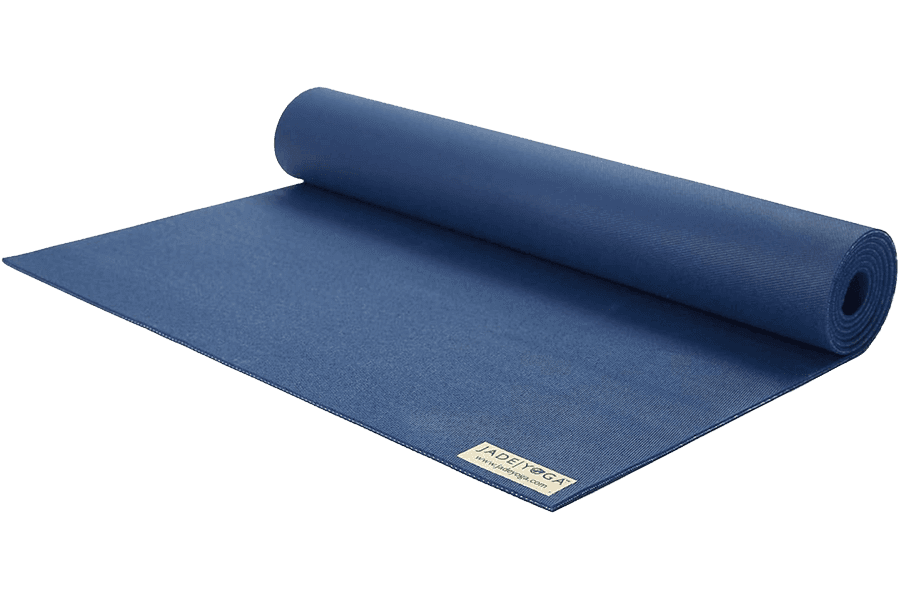
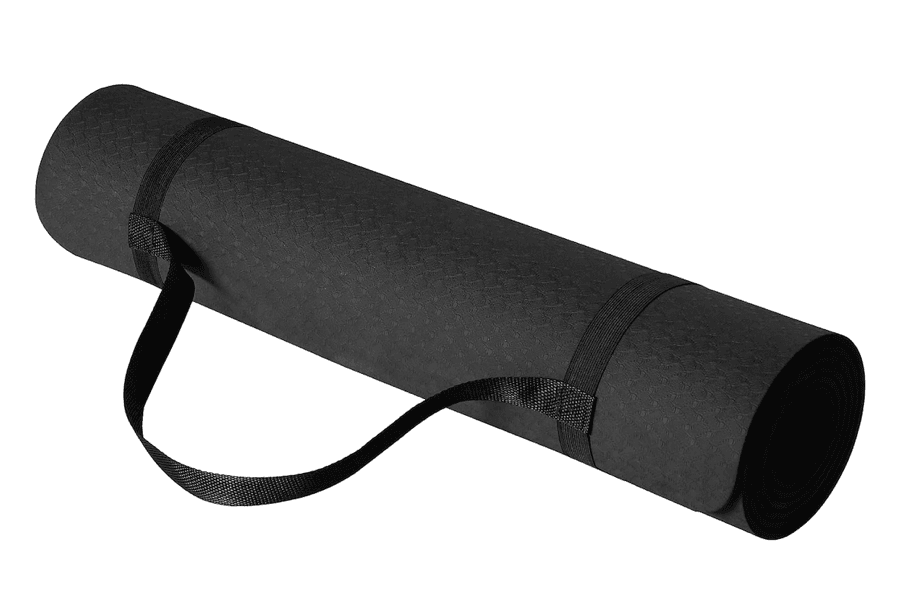
Price
The Amazon Basics lists for about $84 less.
$109.95
List price · check price at Amazon
$26.36
List price · check price at Amazon
Thickness
The Amazon Basics is 25% thicker.
4.8 mm0.19″
6 mm0.24″
Weight
The Amazon Basics is 3.3 lbs lighter.
5.3 lbs2.4 kg
2 lbs0.9 kg
Size
The Harmony 74" is 0.4″ longer; same width.
Same on both
- Long mats near 74 inches, rare at both price points
- Firm, stable surfaces for standing practice
- Grip from the first practice, no break-in
- Sold on Amazon at first-party prices
- Roll and carry easily
Full specs
Dimensions
Materials & build
Buying
The budget question, asked fairly
Unlike the foam pads that clutter this price tier, the Amazon Basics 1/4 Inch TPE is a legitimate yoga mat: 6 mm, firm underfoot, grippy with dry hands, and 73.6″ × 24″ for about $26.36. The Jade Harmony 74 is the mat serious practices tend to end up on: 74″ × 24″ of open-cell natural rubber at $109.95. Both can run the same class on a dry day.
That makes the roughly $84 between them a real question rather than a category error. The answer lives in two places the spec table doesn’t show: what happens when you sweat, and what happens after the first year.
For once, the budget mat matches on length
The most surprising row in this spec table is length: 74 inches for the Jade, 73.6 for the Amazon Basics. Functionally identical, and remarkable at the price; tall practitioners usually pay premium money just to get past 68 inches, which is exactly what the Harmony 74 charges a $10 premium over the standard Harmony for.
A six-foot beginner on a budget should register this: the $26 mat covers your frame. Almost nothing else at the price does, and it removes the most common reason tall buyers get pushed upmarket before they’re ready to spend.
Dry grip is close; damp grip is not
With dry hands the two mats are far closer than an $84 gap implies. The TPE’s textured surface holds standing poses without drama, and the Harmony’s rubber tack, while nicer, isn’t doing anything the budget mat can’t approximate in a cool room.
Sweat ends the truce. The Harmony’s open-cell surface absorbs moisture as it lands and keeps palms planted, the behavior Wirecutter has highlighted in sweaty sessions. The Basics is closed-cell: sweat beads exactly where your hands press, and traction goes with the first drips. A single heated or genuinely vigorous class will demonstrate the difference conclusively, and no towel discipline fully papers over it.
Feel and build
The Harmony feels like equipment: 5.3 pounds of dense rubber that lies flat, stays put on the floor, and carries the warm, slightly tacky surface rubber loyalists recognize instantly. The Basics feels like $26 spent sensibly: 2 pounds, springier and coarser-textured, stable where it counts but lighter in every sense.
The weight cuts both ways. Commuters who carry a mat across town daily may prefer the 2 pound TPE for reasons that have nothing to do with budget; the Harmony’s heft is a feature on the floor and a tax on the shoulder.
Latex, smell, and materials
Two clean wins for the budget mat. TPE contains no latex, while the Harmony is tapped tree rubber that Jade, its 99% latex free phrasing notwithstanding, doesn’t recommend for latex allergies. And TPE arrives essentially odorless, where fresh Harmony rubber takes a week or two of airing out.
The Harmony’s material case is longer-term: renewable rubber, US manufacturing, a tree planted per mat sold, past two million by Jade’s count, and a surface chemistry that’s been serving daily practices for twenty years. The Basics makes no comparable claims, and at its price nobody should expect it to.
The first year against the next five
Budget TPE has a known arc: it works well early, then scuffs, sheds, or compresses within a couple of years of regular practice. Amazon attaches a 1 year warranty, though at $26 most owners just rebuy. The Harmony wears on a longer curve, its surface softening gradually, with CNN Underscored putting the careful-owner ceiling around a decade and Jade covering the first year against defects and premature wear.
For a daily practitioner the arithmetic is straightforward: one Harmony can outlast three or four budget mats. For a twice-a-month practitioner the same arithmetic runs the other way, and the TPE’s couple of years might cover half a decade of actual use.
Price and value
List prices are $109.95 for the Harmony 74 and about $26.36 for the Amazon Basics TPE. Check current prices on the Harmony 74 and the Amazon Basics TPE; the Basics in particular runs colorway-specific sales below its list price.
The $84 buys damp-hand grip, years of surface life, the rubber feel, and a company that answers warranty email. It doesn’t buy length, stability, or the ability to hold a dry practice; the budget mat already has those. Pay for what your practice will actually collect on.
Bottom line
Buy the Harmony 74 if your palms get damp, your practice is already established, or you want a mat you won’t think about again for years. Its advantages are concentrated exactly where practices get serious.
Buy the Amazon Basics TPE if you’re testing the habit, need latex-free, or need length on a small budget; it’s one of the few $26 mats a six-footer can genuinely practice on. If yoga sticks, the upgrade path to the Harmony will still be there, and you’ll know firsthand which of its virtues you were missing.
Jade Harmony 74"
List price $109.95
Amazon Basics 1/4 Inch Thick TPE
List price $26.36
Frequently Asked Questions
- Is the Harmony 74 worth $84 more than the Amazon Basics TPE?
- For a sweaty or established practice, yes: the rubber's damp-palm grip and multi-year surface are things the budget tier doesn't sell at any thickness. For a dry beginner practice, much of that $84 buys headroom you won't use yet. The TPE mat runs the same poses for $26; it runs them for fewer years and gives up first when sweat shows up.
- How close are they in size?
- Unusually close, and it's the most interesting thing about this pairing. The Jade is 74 inches, the Basics 73.6, both 24 wide, so tall practitioners are covered either way, which almost never happens at the $26 price point. If length was the reason you were resigned to paying up, this budget mat is the exception to know about.
- Which grips better?
- Dry, they're closer than the prices imply; both hold standing poses without drama. Damp, they separate completely. The Harmony's open-cell rubber absorbs moisture and keeps traction, the quality that built its studio reputation, while sweat beads on the Basics' closed-cell TPE and pools where your hands go. One warm vinyasa class will show you the difference.
- How do they feel side by side?
- Like different price points, honestly. The Harmony is dense, warm, and planted at 5.3 pounds, with rubber's distinctive tack under your hands. The Basics is light, springy, and coarser-textured at 2 pounds, doing the job while feeling like $26. Neither wobbles, which is the test that matters; only one feels like equipment you'd keep for years.
- Which one for a latex allergy?
- The Amazon Basics, without a second thought. TPE is synthetic and latex free. The Harmony is tapped tree rubber, and Jade's guidance that its mats are 99% latex free still leaves trace proteins it won't recommend to allergic practitioners. When the allergy is real, price and grip comparisons don't get a vote.
- What's the realistic lifespan gap?
- Budget TPE typically scuffs, sheds, or compresses within a couple of years of regular use, and Amazon's 1 year warranty on it is more paperwork than promise. The Harmony wears over a longer arc, with CNN Underscored putting the careful-owner ceiling around a decade, and Jade's 1 year coverage addresses defects and premature wear. Frequent practitioners effectively choose between rebuying and maintaining.
Related comparisons
- Amazon Basics 1/4 Inch Thick TPE vs Gruper TPE 6mm
- JadeYoga Harmony 74" vs Manduka PRO Lite Terra 4.7mm
- Manduka PROlite vs JadeYoga Harmony 74"
- JadeYoga Harmony 74" vs Lululemon The Mat 5mm
- Amazon Basics 1/4 Inch Thick TPE vs Gaiam Premium 6mm
- Amazon Basics 1/4 Inch Thick TPE vs Gaiam Essentials 6mm
- JadeYoga Harmony 74" vs Suga SugaMat
- JadeYoga Harmony 74" vs Manduka eKO Lite Long
- Amazon Basics 1/4 Inch Thick TPE vs YogaAccessories Extra Thick Deluxe 1/4"