Jade Harmony vs YogaAccessories Extra Thick Deluxe: Which One Should You Buy?
If you have taken a class at a gym or a community centre, you have probably practiced on something very like the YogaAccessories Extra Thick Deluxe. It is the wholesale mat: $22, 36 colors, 72 inches long, and thicker than most. The Harmony is the mat people buy for themselves when the loaner mat stops being enough.
As an Amazon Associate, we earn from qualifying purchases made through links on this page. How this works
The quick answer
The Harmony is open-cell natural rubber, made in the USA, grippy without any break-in, and $99.95. The YogaAccessories mat is 6.2 mm of soft PVC at about $22, and GearLab tested it in 2026: 56 out of 100, 14th of 19, with 6.5 for comfort and support, 5 for materials, and grip scores of 5.5 dry and 4 wet.
As a studio mat, a guest mat or a first mat, the YogaAccessories is genuinely good value and it is longer than most cheap mats at 72 inches. As the mat you practice on several times a week, the Harmony is worth the extra $78, and the reason is grip rather than anything you can see in the spec table.
Get the Jade Harmony if...
- You want grip that holds up once your palms are damp
- You want a firm surface rather than soft foam underfoot
- You practice regularly and want a mat that lasts years
- You want natural rubber and a tree planted for the mat
Get the YogaAccessories mat if...
- You need several mats for a studio, class or spare room
- You want more padding at 6.2 mm against 4.8
- You want 36 color options or custom studio printing
- You'd rather keep about $78
Side by side
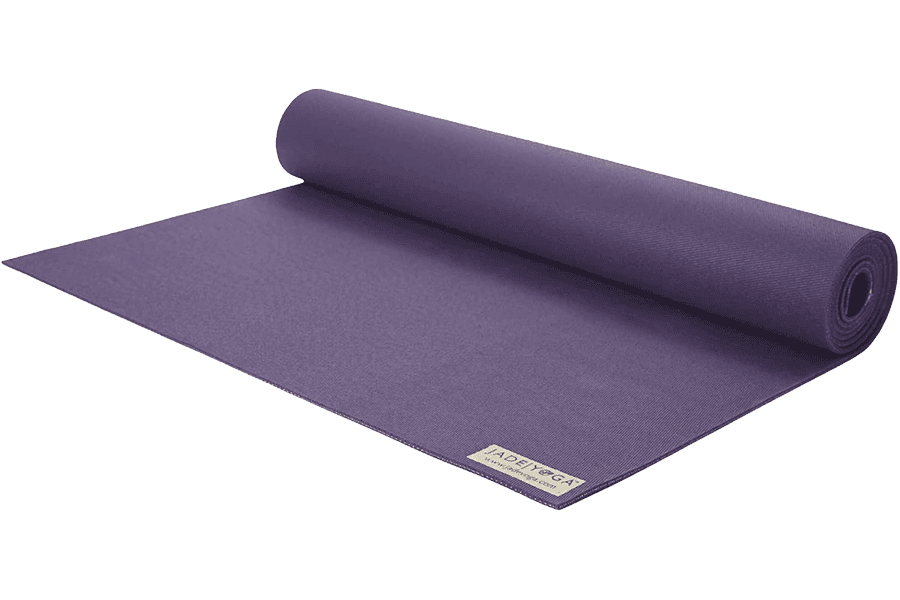
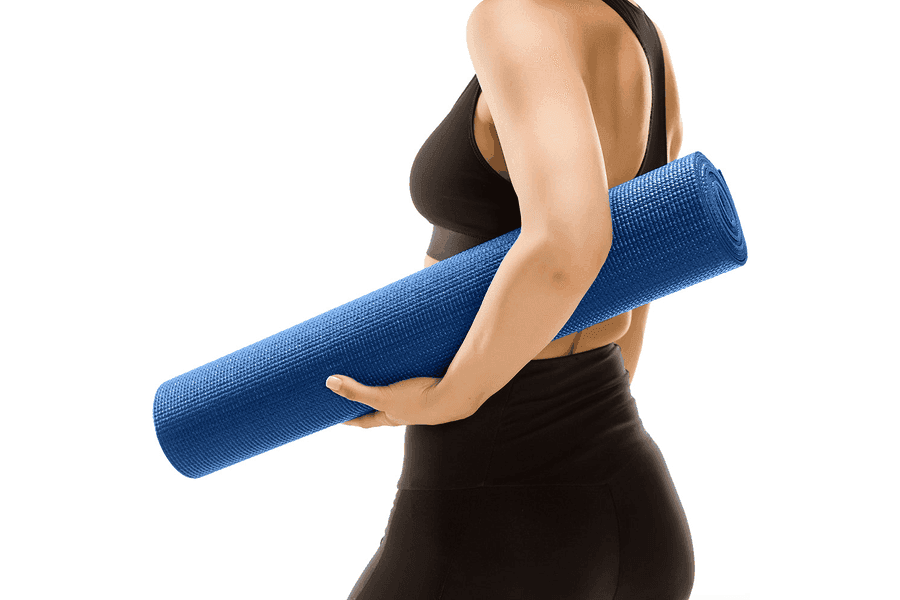
Price
The YogaAccessories lists for about $78 less.
$99.95
List price · check price at Amazon
$21.99
List price · check price at Amazon
Thickness
The YogaAccessories is 29% thicker.
4.8 mm0.19″
6.2 mm0.24″
Weight
The YogaAccessories is 1.2 lbs lighter.
4.8 lbs2.2 kg
3.6 lbs1.63 kg
Size
The YogaAccessories is 4″ longer; same width.
Same on both
- Both run long, at 72 and 68 inches
- 24 inches wide
- Roll up and carry easily at under 5 pounds
- Both wipe clean without special products
Full specs
Dimensions
Materials & build
Buying
The loaner mat and the mat you buy for yourself
If you have practiced at a gym, a community centre or a church hall, you have almost certainly been on something like the YogaAccessories Extra Thick Deluxe. It is the wholesale mat: about $21.99, 36 colorways, custom printing for studios that want their logo on it, and 72 inches long, which is more than most cheap mats manage.
The Harmony is what people buy when the borrowed mat stops being good enough. It costs $99.95, it is natural rubber made in the USA, and it fixes exactly one thing extremely well.
GearLab has actually tested the cheap one
The YogaAccessories was in GearLab’s 2026 test of 19 mats and finished 14th with 56 out of 100. The sub-scores: 6.5 for comfort and support, 5 for materials, 6.5 for care and cleaning, and grip of 5.5 dry and 4 wet. Nothing there is catastrophic and nothing is good.
GearLab has not tested this original USA-made Harmony. It did test the Harmony 2.0, a separate Spanish-made mat with different certifications, which scored 78 with 9.5 dry and 7 wet. Those grip numbers tell you what natural rubber does even though the specific mat is not the one on this page.
Grip: sticky texture against absorbent rubber
YogaAccessories calls its surface super sticky, and in a cool room with dry hands it holds fine. The moment your palms are damp, the texture stops mattering, because closed-cell PVC leaves the moisture sitting on top. GearLab’s 4 out of 10 for wet grip is the measured version of that experience.
The Harmony’s open-cell rubber pulls sweat in instead, so traction holds as you warm up. There is no break-in and no maintenance ritual. If sliding is why you are shopping, this is the entire reason to spend the extra money.
Cushion: the cheap mat is thicker and softer
At 6.2 mm the YogaAccessories has more foam under you than the Harmony’s 4.8 mm of rubber, and it is much softer with it. On tile or hardwood, kneeling is genuinely more comfortable, which is the one place the price gap works in the cheap mat’s favour.
The cost is stability. Soft foam compresses unevenly under a standing foot, which is why GearLab gave it 6.5 for comfort and support rather than something higher. Dense rubber does not move, and that firmness is what makes a standing sequence feel solid.
Size: the cheap mat is the longer one
The YogaAccessories runs 72″ against the Harmony’s 68″, both at 24 inches wide. For anyone over about five foot ten, those four inches matter more than most of the spec table, and they are free.
Jade’s answer is to sell longer versions: the 74″ Harmony and the 80″ × 28″ Harmony XW, both at a premium over the standard mat. If you are tall and budget is tight, the cheap mat’s length is a real argument.
PVC, rubber, and the latex warning
The Harmony is natural rubber tapped from trees and made in the USA, and Jade plants a tree for every mat sold, over two million so far. Jade also describes its mats as 99% latex free and does not recommend them for anyone with a latex allergy, which is not a technicality.
The YogaAccessories is PVC, listed as free of latex, phthalates and heavy metals. PVC is the material most environmental critiques of yoga mats are aimed at, and a soft, cheap PVC mat is the worst version of that argument because it also gets replaced often.
Durability and two thin warranties
GearLab’s 5 out of 10 for materials on the YogaAccessories is the polite way of saying the foam flattens. It loses texture where hands and feet land and it compresses over months of steady practice. YogaAccessories takes returns for 30 days; its Amazon listing mentions a limited lifetime warranty that the company does not publish on its own site, so plan around the 30 days.
Jade offers one year, excluding sun damage and harsh cleaners, and open-cell rubber wears faster for heavy sweaters because it absorbs everything. Several years of steady indoor practice is fair. Neither of these is a decade mat.
Who each one is actually for
The YogaAccessories exists for buyers who need quantity: studios, schools, gyms, and anyone stocking a spare room. Mats used by strangers get cleaned constantly and replaced on a schedule, so cheap and replaceable is the right call. As a first mat for a person who is not sure yoga will stick, it is also a sensible $22.
The Harmony is for a practice that already exists and has a specific complaint. If you have never slid on a mat, you may not notice what you are paying for. If you have, you will notice in the first class.
Price and value
List prices are $99.95 and $21.99. Check the current price on the Harmony and the YogaAccessories at Amazon, where the cheap mat holds about 4.5 stars across roughly 2,700 ratings.
Four YogaAccessories mats cost about what one Harmony costs. That arithmetic is only useful if the mats are interchangeable, and on grip they are not. Spend the $22 if you are still finding out whether you like yoga; spend the $100 once you know what annoys you about a mat.
Bottom line
Buy the YogaAccessories Extra Thick Deluxe if you need several mats, want the extra length and padding for very little money, or are buying your first mat. GearLab’s 56 out of 100 is about right for $22, and 36 colors is a nice bonus.
Buy the Jade Harmony if grip is the problem you are solving. It is firmer, tackier, made from natural rubber in the USA, and it works from the first class. For a cheaper mat that still behaves like a yoga mat, our Harmony vs Gaiam Essentials comparison covers the mainstream budget option.
Jade Harmony
List price $99.95
Frequently Asked Questions
- How did GearLab rate the YogaAccessories mat?
- It finished 14th of 19 in the 2026 test with 56 out of 100: 6.5 for comfort and support, 5 for materials, 6.5 for care and cleaning, and 5.5 dry and 4 wet for grip. Nothing there is a disaster, and nothing is good. GearLab has not tested the original USA-made Harmony, though it did test the Spanish-made Harmony 2.0, which scored 78 with 9.5 dry and 7 wet.
- Is thicker better here?
- Only for kneeling. The YogaAccessories mat is 6.2 mm of soft PVC against the Harmony's 4.8 mm of dense rubber, so it is plusher on a kneecap and less stable under a standing foot, because the foam compresses unevenly. If padding is your main problem, thicker helps. If sliding is your main problem, thickness is beside the point.
- Why is a $22 mat sold to studios?
- Because studio mats get used by strangers, cleaned constantly, and replaced often, so cheap and replaceable beats expensive and durable. YogaAccessories calls this its best-selling wholesale mat and will custom print it with a studio's logo, which tells you the intended buyer. That logic does not transfer to a mat only you use, several times a week, for years.
- Is the Harmony safe for a latex allergy?
- No. Jade describes its mats as 99% latex free, a deliberate phrase for a natural rubber product, and does not recommend them for anyone with a latex allergy. The YogaAccessories mat is PVC and is listed as free of latex, phthalates and heavy metals, so it is the safer option in that case.
- How long does each one last?
- The Harmony gives you several years of steady practice if you keep it indoors, though Jade's one year warranty excludes sun damage and harsh cleaners, and open-cell rubber wears faster for heavy sweaters because it absorbs everything. The YogaAccessories mat is soft foam and it flattens; GearLab's 5 out of 10 for materials is the polite version. YogaAccessories takes returns for 30 days, and its Amazon listing claims a limited lifetime warranty the company does not publish on its own site.
- Which one should a beginner buy?
- If you are not sure yoga will stick, the cheap one, and there is no shame in it. Practice on it for three months and you will learn exactly what annoys you, which is the best possible preparation for spending $100. If you already know you sweat and slide, skip that step; that is the specific problem the Harmony exists to solve.
Related comparisons
- YogaAccessories Extra Thick Deluxe 1/4" vs Gaiam Essentials 6mm
- JadeYoga Harmony 68" vs Suga SugaMat
- Gaiam Premium 6mm vs YogaAccessories Extra Thick Deluxe 1/4"
- JadeYoga Harmony 68" vs Manduka eKO Lite
- Manduka PROlite vs JadeYoga Harmony 68"
- YogaAccessories Extra Thick Deluxe 1/4" vs Gruper TPE 6mm
- JadeYoga Harmony 68" vs Manduka GRP Adapt 1.0
- Amazon Basics 1/4 Inch Thick TPE vs YogaAccessories Extra Thick Deluxe 1/4"
- JadeYoga Harmony 68" vs Manduka eKO Lite Long