Jade Harmony vs Manduka eKO Long: Which One Should You Buy?
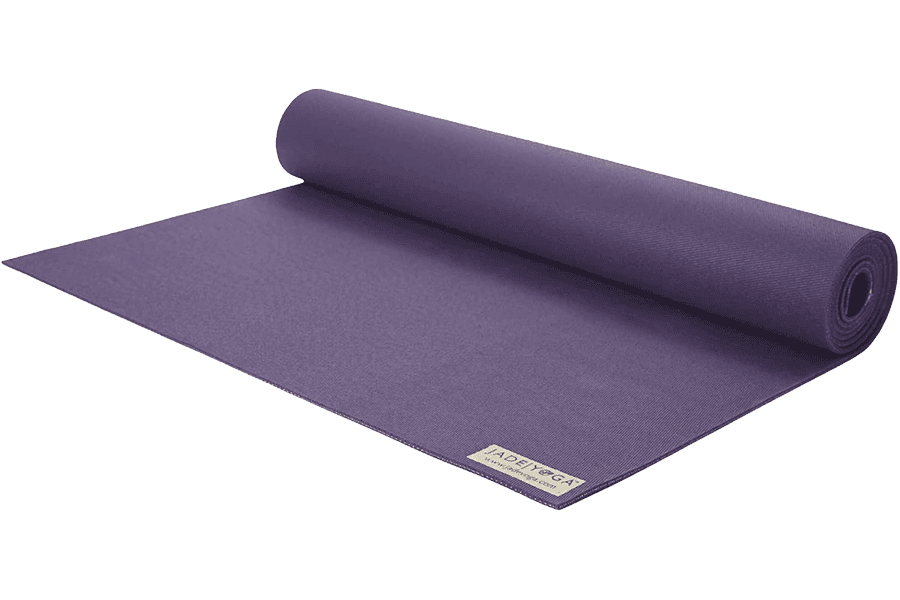
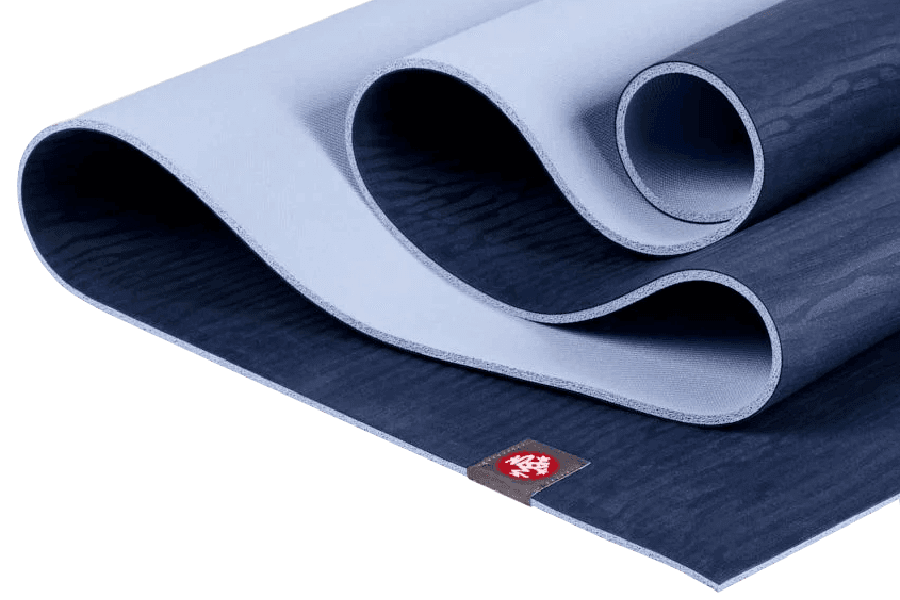
Both of these are natural rubber mats that grip from the first practice, which is where the resemblance stops being useful. The Jade Harmony is 68" × 24" of open-cell American rubber that drinks sweat, at $99.95 and 4.8 pounds. The Manduka eKO Long is 79" × 26" of closed-cell Taiwanese rubber that sheds it, at $124 and 8 pounds, in Midnight only. One is sized for average heights and sweaty palms; the other is sized for tall bodies and dry ones.
As an Amazon Associate, we earn from qualifying purchases made through links on this page. How this works
The quick answer
The eKO Long is simply more mat: eleven extra inches of length, two of width, and a footprint that serves practitioners well past six feet, where the Harmony stops around five foot eight. But its closed-cell surface treats sweat the way PVC does, letting it sit on top; Manduka itself calls the grip most reliable dry. The Harmony's open-cell rubber absorbs a damp class and keeps holding, comes in a dozen colors instead of one, costs $24 less, and weighs 3 pounds less, on the shortest premium footprint sold.
Tall practitioners don't really get a choice here; the Harmony runs out under them, so the eKO Long it is, with a towel for sweaty days. Everyone else should pick by palms: damp ones favor the Jade, dry ones make the eKO Long's size and $24 premium a fair trade only if you actually use the length.
Get the Harmony if...
- You're under about five foot eight, so 68" fits
- You sweat; open-cell rubber absorbs it and holds grip
- You want a 4.8 pound mat that commutes easily
- You'd rather keep $24 and pick from 12 colors
Get the eKO Long if...
- You're near or past six feet; 79" covers you
- You'd use the wider 26" deck every practice
- Your palms stay mostly dry through class
- One color is fine if the size is right
Side by side
Price
The Harmony lists for about $24 less.
$99.95
List price · check price at Amazon
$124
List price · check price at Amazon
Thickness
The eKO Long is 4% thicker.
4.8 mm0.19″
5 mm0.2″
Weight
The Harmony is 3.2 lbs lighter.
4.8 lbs2.2 kg
8 lbs3.6 kg
Size
The eKO Long is 11″ longer; the eKO Long is 2″ wider.
Same on both
- Natural rubber, tapped from trees
- Grip from the first practice, no break-in
- Rubber smell out of the box
- Must stay out of direct sun
- Caution for latex allergies on both
Full specs
Dimensions
Materials & build
Buying
Rubber against rubber, cells against cells
On the shelf these read as siblings: two natural rubber mats, both grippy on day one, both smelling faintly of tree. The specs pull them apart fast. The Jade Harmony is 68″ × 24″ of open-cell rubber, 4.8 pounds, $99.95, made in the USA. The Manduka eKO Long is 79″ × 26″ of closed-cell rubber, 8 pounds, $124, made in Taiwan, sold in Midnight only.
The cell structure is the difference that matters most: open cells absorb sweat, closed cells seal it out. Everything else, size, weight, colors, warranty, follows the usual brand lines.
Sweat: the Jade drinks, the Manduka sheds
Both mats grip well dry, immediately, with no conditioning period. Add perspiration and they part ways: the Harmony’s open-cell surface pulls moisture in and keeps holding, the behavior Wirecutter singled out for sweaty sessions. The eKO Long’s sealed surface leaves sweat pooling on top exactly like a PVC mat would, and Manduka itself describes the eKO grip as most reliable dry. Damp-palmed practitioners will feel this difference weekly; dry ones never will.
Size: the eKO Long is a bigger mat everywhere
Eleven extra inches of length and two of width make the eKO Long the fit for tall bodies: 79″ covers well past six feet where the Harmony runs out around five foot eight, and the 26″ width keeps elbows and wide stances on rubber. The cost is heft: 8 pounds in a wide roll, a mat that commutes reluctantly. The Harmony remains one of the easiest premium mats to carry anywhere.
Jade’s own answers to height, the 74″ at $109.95 and the 80″ × 28″ XW at $149.95, keep the open-cell surface; tall readers wanting Jade grip should detour there before settling.
Feel: a fifth of a millimeter, a shade of spring
At 4.8 mm and 5 mm these mats cushion nearly identically: firm, stable, rubber-warm underfoot. The Harmony’s open structure gives it a slightly softer, springier first impression; the eKO Long’s denser closed surface feels a touch more solid. Neither pampers a sore knee; that’s thick-mat territory, and both brands sell it separately.
Wear and the warranty asymmetry
Natural rubber wears like natural rubber regardless of brand: a few years of visible aging under hard daily use, longer with care, always shaded from sun and cleaned gently. The paperwork splits anyway. Jade backs the Harmony for 1 year, sun and harsh cleaners excluded; Manduka gives the eKO line a 30 day return window and reserves its famous guarantee for PVC. Same material clock, better Jade paper.
Two real eco stories
Neither mat needs greenwashing. The Harmony is tapped rubber manufactured in the USA with a tree planted for every mat sold, past two million by Jade’s count. The eKO Long is tapped rubber with over 30% recycled content in the current build. Both skip PVC entirely. Both also carry the latex caution: Jade’s 99% latex free leaves trace proteins, and Manduka makes no latex-safe claim, so a true allergy rules out this entire page.
Colors, versions, and buying
The Harmony offers around 12 colorways at last count; the eKO Long offers Midnight, full stop. Both carry version footnotes: the Spain-made Harmony 2.0 is a different mat than this US original, and retailers sometimes badge the current eKO as eKO 2.0. Both mats sell on Amazon at first-party prices, which makes cross-checking painless.
Price and value
List prices are $99.95 for the Harmony and $124 for the eKO Long. Check current prices on the Harmony and the eKO Long.
The $24 premium buys about a third more mat, which is fair pricing if the inches serve you. It buys nothing else: the cheaper mat has the better sweat behavior, the better warranty, and the full color deck. That’s why height runs this page; the eKO Long’s case begins at the exact inch the Harmony stops fitting.
Bottom line
Under about five foot eight, the Harmony is the easy call: grippier when damp, lighter on the shoulder, friendlier paperwork, and $24 kept. It’s the better version of the same rubber idea at this size.
At six feet and beyond, the eKO Long is the one that fits, and it’s a good mat in its own right: real day-one grip, a roomy 26″ deck, and an eco story that holds up. Keep it dry-classed or keep a towel handy, and keep it out of the sun like any rubber mat.
Jade Harmony
List price $99.95
Manduka eKO Long
List price $124
Frequently Asked Questions
- Both are rubber, so why does only one absorb sweat?
- Cell structure. The Harmony's rubber is open-cell, a sponge-like surface that pulls moisture in and keeps gripping as class gets damp. The eKO Long is closed-cell, sealed against absorption, so sweat pools on top and slicks under palms just like on a PVC mat. Manduka positions the eKO line's grip as most reliable dry for exactly this reason. It's the single most important difference between these two mats.
- How tall is too tall for the Jade Harmony?
- Past about five foot eight, head or heels start leaving the 68" mat in savasana and full-length poses. Jade's fix is the 74" Harmony at $109.95, which covers to about six foot one. The eKO Long's 79" covers well past six feet, which is the height bracket where this comparison stops being close.
- Which mat lasts longer?
- Similar natural-rubber lifespans: a few years of hard daily use before visible surface wear, longer with gentler treatment, and both need shade and mild cleaners. The paperwork differs more than the wear: Jade gives 1 year excluding sun damage; Manduka gives the eKO line only a 30 day return window. Neither is in dense-PVC territory, where mats run a decade.
- Is the extra width of the eKO Long noticeable?
- Yes, more than most buyers expect. At 24" wide, elbows and knees regularly find the floor; the eKO Long's 26" keeps more of every pose on rubber, and the difference registers daily. Combined with the 79" length it's a genuinely roomy mat. The cost is bulk: 8 pounds and a wider roll that fills a mat bag.
- What about colors and versions?
- The Harmony offers around 12 colorways at last count; the eKO Long comes in Midnight only. Version traps exist on both sides: the Spain-made Jade Harmony 2.0 is a different mat from this US original, and retailers sometimes label the current eKO as eKO 2.0. Check which generation a review describes before trusting it.
- Which is the more eco-friendly buy?
- Both make real claims: the Harmony is US-tapped rubber with a tree planted per mat sold, past two million by Jade's count; the eKO Long is natural rubber with over 30% recycled content in the current build. Neither uses PVC. The Jade's tree program and domestic manufacturing give it the warmer story; the difference in practice is modest.
Related comparisons
- JadeYoga Harmony 68" vs Suga SugaMat
- Manduka eKO Long vs Lululemon The (Big) Mat 5mm
- JadeYoga Harmony 68" vs Manduka PRO Lite Terra 4.7mm
- JadeYoga Harmony 68" vs Manduka eKO Lite
- Manduka PROlite vs JadeYoga Harmony 68"
- JadeYoga Harmony 68" vs Manduka GRP Adapt 1.0
- JadeYoga Harmony 68" vs Manduka eKO Lite Long
- JadeYoga Harmony 68" vs Manduka GRP Adapt Lite 2.1 4mm
- Lululemon The Mat 5mm vs Manduka eKO Long