Gaiam Premium 6mm vs B Mat Everyday: Which One Should You Buy?
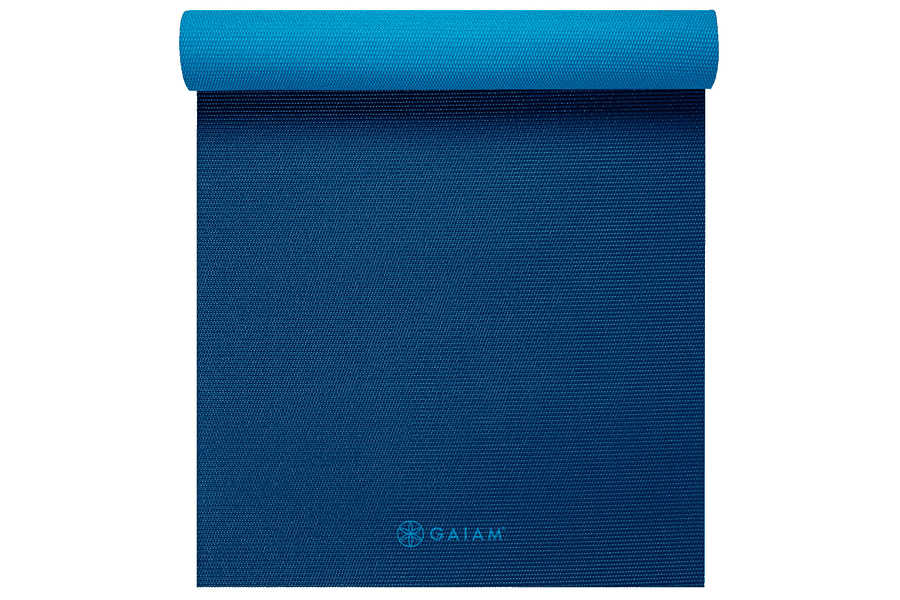
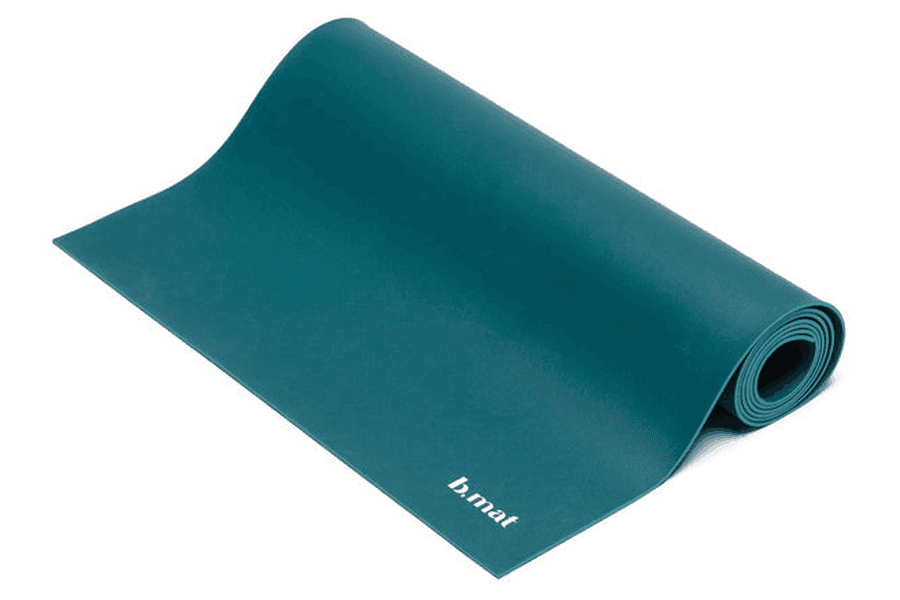
This is the upgrade most people make, laid out end to end. The Gaiam Premium is the mat testers recommend to beginners: 6 mm of soft PVC foam for $29.98 with a lifetime guarantee. The B Mat Everyday is where a lot of those people end up two years later: 4 mm of Spanish rubber that grips hard enough to change how a practice feels, for $118. The $88 buys one thing above all others, and it is traction.
As an Amazon Associate, we earn from qualifying purchases made through links on this page. How this works
The quick answer
GearLab rated the Gaiam 6 out of 10 dry and 4 wet, listed poor wet grip among its three drawbacks, and found the soft foam unstable under balance poses. It gave the B Mat Everyday grip of 9 out of 10 in a separate review, named it a favorite for hot yoga, and reported traction surviving standing water.
The Gaiam is still the better buy for a casual practice: thicker, softer, lighter, and a quarter of the price with a lifetime guarantee. The B Mat is the answer when you have started sweating, started wobbling, or started practicing often enough that a compressed foam mat is a recurring purchase.
Get the Gaiam Premium if...
- Yoga is still a trial rather than a habit
- Floor work, stretching and restorative poses are most of your practice
- Soft padding under knees and wrists matters more than traction
- $29.98 is the right amount to spend right now
Get the B Mat Everyday if...
- Your hands slide once you start to sweat
- You want a firmer platform that holds steady in balance poses
- You want the bigger mat: 71″ × 26″ against 68″ × 24″
- You want a written year of coverage and an OEKO-TEX certification
Side by side
Price
The Gaiam Premium lists for about $88 less.
$29.98
List price · check price at Amazon
$118
List price · check price at bhalfmoon.com
Thickness
The Gaiam Premium is 50% thicker.
6 mm0.24″
4 mm0.2″
Weight
The Gaiam Premium is 0.8 lbs lighter.
3.3 lbs1.5 kg
4.1 lbs1.86 kg
Size
The B Mat Everyday is 3″ longer; the B Mat Everyday is 2″ wider.
Same on both
- Both are easy carries at 3.3 and 4.1 pounds
- Both grip acceptably with dry hands in a cool room
- Wipe-clean care; neither goes in a washing machine
- Both should stay out of extended sun
Full specs
Dimensions
Materials & build
Buying
- Everyday Long85" × 26"
The upgrade most people eventually make
The Gaiam Premium is where a lot of practices start: 6 mm of soft PVC foam for $29.98, with a lifetime guarantee and a best buy award from testers who recommend it as a first mat. The B Mat Everyday is where a lot of those people end up two years later: 4 mm of Spanish rubber for $118.
Four times the price for two millimeters less mat sounds absurd until you know what is failing. In almost every case it’s grip, and that is the one thing this upgrade fixes completely.
Grip: the entire argument
GearLab measured the Gaiam at 6 out of 10 dry and 4 wet, listed poor wet grip among its three drawbacks, and found hands slipping noticeably once things got sweaty. A closed PVC surface absorbs nothing, so damp palms have nowhere for the moisture to go.
Its separate review of the B Mat Everyday put grip at 9 out of 10, named the mat a favorite for hot yoga, and reported traction surviving everything from a light sprinkle to standing water, with no break-in first.
That isn’t a marginal improvement. It’s the difference between adjusting your hands every few poses and forgetting the mat is there.
Stability: the second thing that fails
Six millimeters of soft foam gives under a knee and keeps giving, which is kind in floor work and unhelpful the moment you stand on one leg. GearLab’s testers found the Gaiam unstable under balance poses, with a foot sinking and tilting, and noted that pressing a hand into the foam leaves the print for a moment.
The B Mat’s 4 mm of springy rubber gives a little and holds, and the same publisher rated its comfort and support 8 of 10 against the Gaiam’s 6.5, describing the cushioning as hard to find at that thickness. Less mat, steadier footing, higher comfort score.
Size and weight
The B Mat is 71″ × 26″ against the Gaiam’s 68″ × 24″. Three more inches of length and two of width is the modern standard against the old one, and the width is what runs out first with broad shoulders.
The Gaiam is lighter at 3.3 pounds against 4.1, though both are easy carries. If portability is genuinely your constraint, neither of these is the problem.
What the upgrade costs you
Three things, and they’re worth naming. Cushion: two fewer millimeters, which shows up on tile or concrete in kneeling work. Tidiness: the B Mat’s grip collects dirt, hair and lint constantly, to the point GearLab recommends keeping it in a bag rather than a car trunk, and its tack is aggressive enough that testers gave up sliding into position and started picking their feet up.
And the guarantee. Gaiam covers its mat for life, which is unusual at $29.98; b, halfmoon writes down one year plus an OEKO-TEX Standard 100 certification. Both guarantees address defects rather than the way these mats actually end. The B Mat is also natural rubber, so it isn’t safe with a latex allergy, where the Gaiam’s PVC is latex-free.
How each one ends
The Gaiam’s foam takes a set under regular use, which GearLab called its main durability concern. A few sessions a month can get years out of one; daily practice flattens it inside a couple, and the cushion you bought it for is exactly what goes.
The B Mat wears at the surface instead. GearLab noticed water staining after its test period and found owners commonly reporting the top layer lifting where hands and feet land, with grip fading from there. b, halfmoon describes its mats as built for two or more years of practice stored properly, which is honest rather than impressive.
What sits between them
Worth saying, because for a lot of people the honest recommendation is neither end. The stretch between $29.98 and $118 holds lightweight polyurethane-topped mats that grip well around $70, and natural rubber mats around $100. If the Gaiam’s specific failure is grip rather than durability, several cheaper mats fix it.
Our IUGA vs B Mat Everyday comparison covers the best-value version of that argument, and Jade Level One vs Gaiam Premium covers the cheapest way into real rubber.
Care and the first week
Gaiam tells buyers to leave the mat unrolled for two to three days before practicing on it and keeps a page up about getting rid of the smell, which suggests the question comes in often. After that it wipes clean and prefers to stay out of extended sun, which makes PVC brittle.
The B Mat’s rubber smell is sharp for the first couple of days and clears with airing. It wipes down easily too, though it wants storing in a bag given what its surface attracts, and rubber should never live in a hot car or direct sun. Neither goes in a washing machine.
Bottom line
Stay with the Gaiam if you practise gently, unheated, a few times a month. It’s a fair $29.98 product with limits it doesn’t hide, it’s the softer landing for knees, and it’s easy to buy and replace through Amazon.
Move to the B Mat Everyday when you’re fighting the mat rather than practicing on it: sliding hands, an unsteady standing leg, or foam that has flattened for the second time. It’s the grippiest surface in this price bracket, and it sells direct from b, halfmoon since marketplace listings under its name carry no coverage.
Gaiam Premium 6mm
List price $29.98
B Mat Everyday 4mm
List price $118
Frequently Asked Questions
- Is the B Mat worth four times the price?
- If grip is your problem, yes, and nothing cheaper solves it as completely. If it is not, no. The Gaiam holds up fine for gentle unheated practice, and GearLab still gives it a best buy award as the best first yoga mat. The upgrade pays for itself the moment you are fighting the mat rather than practicing on it, and it does nothing for someone stretching twice a month.
- The Gaiam is thicker. Doesn't that make it more comfortable?
- In floor work, yes. Six millimeters of soft foam is kind to knees and wrists, which is exactly why mats like it fill studio loaner piles. The problem is what happens when you stand up: GearLab found the foam unstable under balance poses and rated it 6.5 of 10 for comfort and support, against 8 for the B Mat's springier 4 mm of rubber. Softness that cushions a knee wobbles under a standing foot.
- Which lasts longer?
- The B Mat, though ten years is out of reach for both. Soft foam compresses permanently with use, which GearLab flagged as the Gaiam's biggest weakness, and a daily practice will flatten one within about two years. b, halfmoon writes down one year and describes its mats as built for two or more years of practice, though GearLab found owners commonly reporting the top layer lifting where hands and feet land. Gaiam's lifetime guarantee is genuine but covers defects rather than foam softening from normal use.
- What do I give up by moving to the B Mat?
- Two millimeters of cushion, about a pound of weight, and a tidy surface. The B Mat's grip collects dirt, hair and lint constantly, to the point GearLab recommends keeping it in a bag rather than a car trunk, and its tack is aggressive enough that testers started stepping between poses instead of sliding. You also lose the lifetime guarantee and gain a one-year one, and it is not safe with a latex allergy where the Gaiam is.
- Is there anything in between?
- Plenty, and it is worth saying. The stretch between $30 and $118 holds lighter polyurethane-topped mats that grip well for around $70, and natural rubber mats around $100. If the Gaiam's specific failure is grip rather than durability, several cheaper options fix it. The B Mat earns its price when you want the grippiest thing available and expect to use it hard.
- Do both mats smell when new?
- Both can, differently. Gaiam tells buyers to leave the mat unrolled for two to three days before practicing on it and publishes a guide on removing the odor, which tells you how often people ask. The B Mat's rubber smell is strong for the first couple of days and clears with airing. Neither is a defect; unroll either in a ventilated room rather than a closet and it resolves.
Related comparisons
- Gaiam Premium 6mm vs Gruper TPE 6mm
- Yoga Design Lab Combo 3.5mm vs b, halfmoon B Mat Everyday 4mm
- Amazon Basics 1/4 Inch Thick TPE vs Gaiam Premium 6mm
- Gaiam Premium 6mm vs YogaAccessories Extra Thick Deluxe 1/4"
- b, halfmoon B Mat Everyday 4mm vs Manduka GRP Adapt Lite 2.1 4mm
- Manduka PROlite vs b, halfmoon B Mat Everyday 4mm
- Lululemon The Mat 5mm vs b, halfmoon B Mat Everyday 4mm
- Manduka PROlite Long vs b, halfmoon B Mat Everyday 4mm
- b, halfmoon B Mat Everyday 4mm vs Manduka PRO Lite Terra 4.7mm