Amazon Basics 1/2 Inch vs Manduka GRP Adapt 2.0: Which One Should You Buy?
Nobody cross-shops these two on purpose, but both turn up under the same yoga mat search, so let's be clear about what each is. The Amazon Basics 1/2 inch is a $22 soft foam pad for floor exercise. The Manduka GRP Adapt 2.0 is a $128 specialist built to grip through the sweat of heated classes. Between them sits nearly every other mat we compare, and honestly, most buyers should be looking there.
As an Amazon Associate, we earn from qualifying purchases made through links on this page. How this works
The quick answer
If your question is which of these to buy for yoga, the answer is the 2.0 if your practice is heated and sweaty, and neither if it isn't. Soft half-inch foam can't stabilize standing poses in any room, hot or cold. The 2.0 is superb at its specialty, with an absorbent top that holds grip bare-handed through a dripping class, but paying $128 for that capability only makes sense if sweat is actually your problem.
If your question is which to buy for stretching and floor exercise, the foam pad wins on price and plushness, and asking the 2.0 to be a $128 stretching pad wastes everything you paid for. Buy for the problem you actually have.
Get the Amazon Basics if...
- You want padding for floor exercise, PT, or stretching
- You're spending about $22, not $128
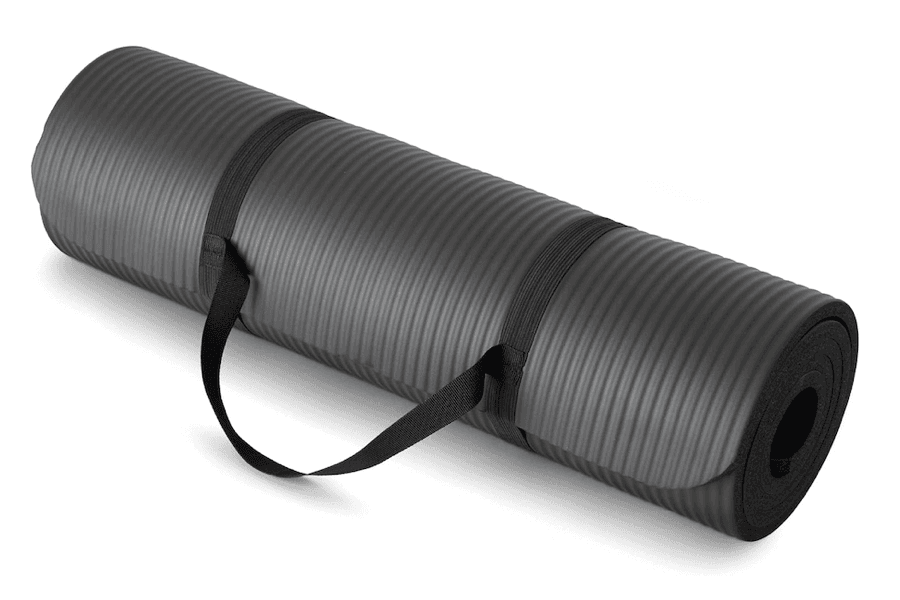
- You want a light 2.2 pound roll with a strap
- Yoga, if any, stays gentle and floor-based
Get the GRP Adapt 2.0 if...
- Hot yoga or heavy sweat defines your practice
- You want bare-hand grip with no towel
- You want a stable 5 mm base for balance work
- You'll keep up the air-dry care routine
Side by side
Price
The Amazon Basics lists for about $106 less.
$22.48
List price · check price at Amazon
$128
List price · check price at manduka.com
Thickness
The Amazon Basics is 154% thicker.
12.7 mm0.5″
5 mm0.2″
Weight
The Amazon Basics is 3.6 lbs lighter.
2.2 lbs1 kg
5.8 lbs2.6 kg
Size
The Amazon Basics is 3″ longer; the GRP Adapt 2.0 is 2″ wider.
Same on both
- Usable for gentle stretching and floor work
- Both roll up for storage
Full specs
Dimensions
Materials & build
Two products that share only a search result
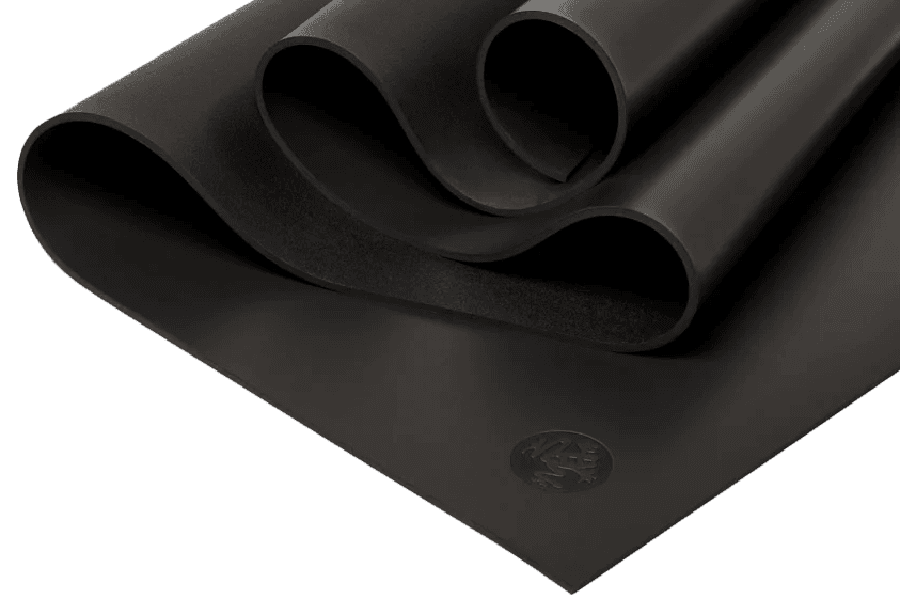
A $22 foam pad and a $128 hot yoga specialist have no business on the same page except that retailers file both under yoga mats. The Amazon Basics 1/2 inch is soft NBR foam for making hard floors comfortable. The Manduka GRP Adapt 2.0 is a firm 5 mm rubber mat whose absorbent polyurethane top exists to keep grip alive through the sweat of heated classes. Each is close to useless at the other’s job, so the only real work here is deciding which problem is yours.
What $22 buys, and what $128 buys
The $22 buys plushness and convenience: half an inch of foam, 74″ long, 2.2 pounds, a carry strap, and enough comfort to make stretching, core work, and physical therapy movements pleasant on any floor. The $128 buys a precision surface: a stable rubber base, a 26″ width, and a Satin Grip top that soaks up sweat instead of letting it pool under your palms, the feature that made this generation OutdoorGearLab’s top hot yoga pick.
The two lists don’t overlap anywhere, which tells you how to shop.
For actual yoga, only one qualifies
Standing and balance poses need a surface that pushes back consistently, and half an inch of soft foam doesn’t; feet sink, ankles improvise, and wrists disappear during planks. Add the sweat of a heated room and the foam is doubly out of its depth, unstable below and slippery on top. The 2.0 holds steady under standing weight and keeps traction bare-handed as a class gets wetter. If a real practice is the goal, the foam pad was never in the running.
For floor comfort, the other one wins
Flip the job and the 2.0 becomes the silly purchase. Nobody needs absorbent polyurethane and 5.8 pounds of rubber to stretch on, and its firm 5 mm offers a fraction of the foam’s cushion for a kneeling or lying body. The Amazon Basics does that work better at a sixth of the price and half the weight, strap included. Paying the Manduka premium for horizontal comfort buys nothing but the logo.
Upkeep, cautions, and lifespans
The foam pad asks nothing of you and doesn’t last: expect flattening and wear inside a year or two of heavy use, matching its 1 year warranty, plus a rubbery new-mat smell that airs out over days. The 2.0 asks for a routine, air-drying fully before rolling, regular gentle cleaning, no harsh products or long sun, and its natural rubber body rules it out for latex-allergic practitioners. Its absorbent top will also show wear after years of heavy heated use, with only 30 day returns behind it. That list is the standing cost of a specialist surface; the foam pad has no equivalent.
The middle of the market, if both feel wrong
Most shoppers who land on this page actually want something between the extremes: a firm, affordable, general-purpose mat. Amazon’s own 1/4 inch TPE covers a budget dry practice for about $26, and the TPE against the 2.0 is the more realistic version of this comparison if heat is in your future. The pad and the flagship are edge cases; the middle is where most practices live.
Price and value
List prices are about $22.48 for the Amazon Basics and $128 for the GRP Adapt 2.0. Check current prices on the 1/2 inch pad at Amazon and the GRP Adapt 2.0 at manduka.com.
There’s no meaningful value comparison across a hundred-dollar gap and two unrelated jobs. The only expensive mistake available is buying either for the other’s task: a $22 pad that fails at yoga in a month, or a $128 specialist doing stretching duty a $22 pad does better.
Bottom line
Buy the Amazon Basics if the job is floor comfort: stretching, PT, core work. It’s cheap, plush, and honest about what it is.
Buy the GRP Adapt 2.0 if the job is heated practice, and only then; a dry or casual practice can’t use what it charges for. And if neither description sounds like you, that’s the signal to shop the firm middle of the market instead.
Amazon Basics 1/2 Inch Extra Thick
List price $22.48
Manduka GRP Adapt 2.0
List price $128
Frequently Asked Questions
- Can I do hot yoga on the Amazon Basics foam mat?
- It's the worst pairing in this comparison. The foam is already unstable under standing feet, and sweat makes its surface slide as well. Heated classes are exactly where mat choice matters most, and where an absorbent-top mat like the 2.0 or a cheaper closed-cell mat plus a good towel are the workable answers. Thick soft foam is neither.
- Is the GRP Adapt 2.0 worth it if I don't do hot yoga?
- Usually not. Its defining feature is wet grip, and in a dry room you're paying a large premium, carrying 5.8 pounds, and maintaining a care routine for a capability you rarely use. Manduka's own catalog serves dry practices better for less. The 2.0 is a specialist, and specialists are only bargains when you have their problem.
- What maintenance does each mat need?
- The foam pad needs approximately none: unroll, use, occasionally wipe. The 2.0's absorbent top asks for real habits: air-dry fully before rolling, clean gently and regularly, keep harsh cleaners and long sun exposure away. Its rubber body also matters to latex-allergic households. The care isn't hard, but it's a commitment the $22 pad never asks of you.
- How do the sizes and weights compare?
- The foam pad is longer at 74" against 71", but the 2.0 is wider at 26" against 24", and width is the dimension you feel in wide stances and floor sprawls. Weight runs the other way: 2.2 pounds for the foam, 5.8 for the 2.0. The pad is the easier carry; the 2.0 is the more planted surface.
- Where do I buy the GRP Adapt 2.0, and what's the 1.0?
- The 2.0 sells through manduka.com in 4 colorways, with a 79" Long at $138; at last check there's no Amazon listing. Amazon carries the older GRP Adapt 1.0, a different generation at a lower price. Recent reviews and awards, including OutdoorGearLab's top hot yoga pick, cover the 2.0, so match the version before comparing prices.
- What should I buy if both of these seem wrong?
- Probably a firm all-purpose mat in between: something like Amazon's own 1/4 inch TPE at about $26 for a budget start, or a 5 mm mat from Manduka's main lines for a longer keep. The half-inch foam and the 2.0 are edges of the market; the middle is where most practices live.
Related comparisons
- Manduka GRP Adapt 2.0 vs Yoga Design Lab Infinity 5mm
- Manduka GRP Adapt 2.0 vs Hugger Mugger Para Rubber 5mm
- Amazon Basics 1/2 Inch Extra Thick vs Retrospec Solana 1/2"
- Manduka GRP Adapt 2.0 vs Lululemon The (Big) Mat 5mm
- Lululemon The Mat 5mm vs Manduka GRP Adapt 2.0
- JadeYoga Harmony 74" vs Manduka GRP Adapt 2.0
- Manduka GRP Adapt 2.0 vs JadeYoga Harmony 2.0 68"
- JadeYoga Harmony XW vs Manduka GRP Adapt 2.0
- Manduka GRP Adapt 2.0 vs b, halfmoon B Mat Everyday 4mm