Retrospec Solana 1″ vs Solana 1/2″: Which One Should You Buy?
Retrospec sells the Solana in two thicknesses and nothing else about them differs. A full inch of foam costs $39.99 and half an inch costs $24.99, both at 72 by 24 inches in the same 13 colorways. Thicker sounds better and for yoga it usually is not, so the useful question is what you actually do on the mat.
As an Amazon Associate, we earn from qualifying purchases made through links on this page. How this works
The quick answer
An inch of soft NBR foam is wonderful under a knee and unhelpful under a standing foot. It compresses as you shift your weight, so balance poses turn into a negotiation with the surface. The half inch has the same character in a milder form, which is why it is the closer thing to a yoga mat of the two.
Get the 1/2″ if you are doing yoga. Get the 1″ if kneeling is what hurts, or if the mat is really for stretching, physio and floor work with some yoga on top.
Get the Solana 1″ if...
- Your knees are the reason you are shopping
- Most of your time on the mat is spent lying down or kneeling
- You want it for physio, Pilates or core work
- You practice on a hard floor with no carpet under it
Get the Solana 1/2″ if...
- You want to balance on one leg without fighting the mat
- You do standing sequences or vinyasa
- You want something that rolls to a normal size
- You would rather keep the $15
Side by side
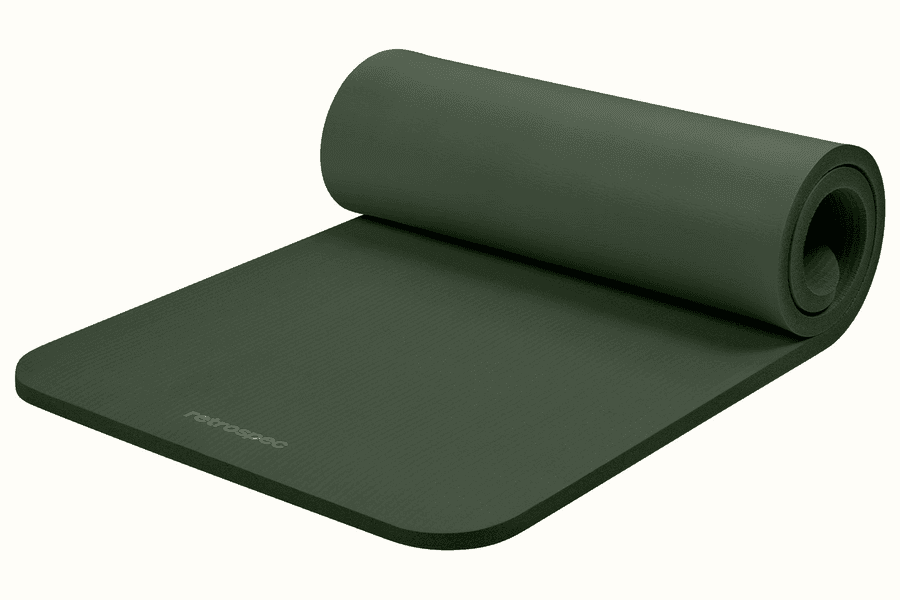
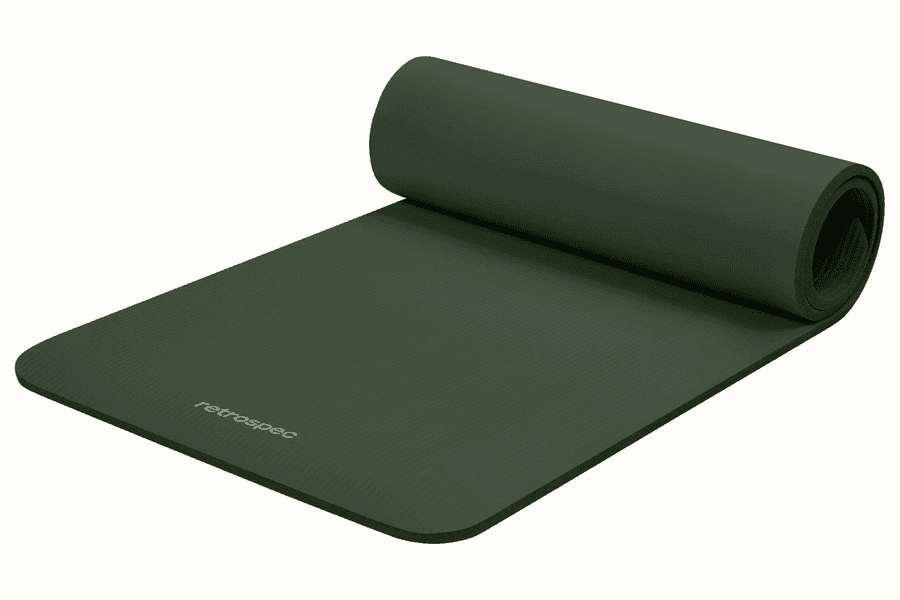
Price
The Solana 1/2" lists for about $15 less.
$39.99
List price · check price at Amazon
$24.99
List price · check price at Amazon
Thickness
The Solana 1" is 100% thicker.
25.4 mm1″
12.7 mm0.5″
Weight
The Solana 1/2" is 1 lbs lighter.
4 lbs1.81 kg
3 lbs1.36 kg
Size
Same length; same width.
Same on both
- 72″ × 24″ NBR foam
- Ribbed non-slip texture on both faces
- Carry strap included
- 13 colorways and a 6 month defect warranty
Full specs
Dimensions
Materials & build
The same mat in two thicknesses
Retrospec sells the Solana as a pair. Same 72″ × 24″ footprint, same NBR foam, same ribbed texture on both faces, same 13 colorways at last count. The only difference on the spec sheet is how much foam is under you: a full inch or half of one, for $39.99 and $24.99.
That sounds like a simple more-is-better decision and it is not. An inch of soft foam changes how the mat behaves under a standing foot, and for most people doing actual yoga the thinner one is the better mat. The thicker one is better at a different job.
An inch of foam moves under you
NBR foam is soft and compressible. Stand on the 1″ Solana in warrior three or tree and your foot sinks in, then keeps adjusting as you wobble. The mat is absorbing the small corrections your ankle is trying to make against the floor.
The 1/2″ version has the same problem to a smaller degree, which is the point. At half an inch you still feel where the floor is. This is why studio mats sit between 4 and 6 mm rather than at 25, and it is worth knowing before you buy thickness for its own sake.
If your practice is mostly standing work, vinyasa, or anything where balance matters, treat the inch as a downgrade rather than an upgrade. Owners who came to the 1″ from a normal yoga mat say the same thing in reviews, usually after a few weeks of it.
Where the thick one earns its money
Kneeling, lying down, and anything on your back or your elbows. On a hard floor a full inch of foam is genuinely comfortable in a way a yoga mat never is, and that is the reason people buy it.
Physio exercises, core work, stretching, Pilates on the floor, sit-ups against a hardwood floor: the 1″ handles all of it better than the 1/2″, and better than almost any purpose-built yoga mat. Sensitive knees are the single most common reason we would point someone at it.
What NBR foam is and is not
NBR is a nitrile rubber foam, the same family of material used in camping pads and gym flooring. It is closed cell, so sweat sits on top rather than soaking in, and it wipes clean with a damp cloth.
It is not sticky. Grip on both Solanas comes from the ribbed pattern pressed into the surface, which works with dry hands and stops working when your palms are wet. Neither mat is a hot yoga mat, and neither is sold as one.
Grip is identical, and untested
The two share a surface, so there is nothing to separate them here. The ribbing gives your hands something to push against on a clean dry floor and gives up once there is moisture involved.
We should be straight about the evidence: GearLab does not test any Retrospec mat, so there is no independent grip number for either Solana the way there is for a Manduka or a Gaiam. What we have is the material, the texture, and a large pile of owner reviews that mostly complain about the foam denting rather than about slipping.
A pound apart, and bulkier than you expect
4 pounds against 3. Neither is heavy, and both come with a carry strap.
Rolled diameter is the real difference. An inch of foam rolls into a cylinder roughly the size of a sleeping bag, which is awkward in a car footwell and worse in a studio cubby. The 1/2″ rolls to something closer to a normal yoga mat. If the mat has to live somewhere between sessions, measure the space first.
Both dent, and the thick one shows it more
Soft foam takes a set. Knees, elbows and heels leave shallow impressions that mostly recover overnight and gradually stop recovering. That is the standard failure mode for this material at this price, on either thickness.
The 1″ has more foam to compress, so the dents are deeper and more visible, though it also takes longer to bottom out. Retrospec covers both for 6 months against defects, with a 30 day return window on top, and normal foam compression is not a defect.
Expect a smell for the first week
New NBR foam off-gasses. Both Solanas arrive with a chemical smell that owners describe as strong for a few days and gone within a week or two if you unroll the mat and leave it somewhere airy.
The 1″ has twice the material, so it takes longer to clear. If you are sensitive to that, unroll it in a garage or a spare room rather than the room you practice in.
Fifteen dollars for a different mat
List prices are $39.99 for the inch and $24.99 for the half, and both hold those numbers reliably rather than swinging around. Check the 1″ on Amazon and check the 1/2″ before you order, since the colorway you want is sometimes priced differently from the rest.
For what it is worth, $15 is close to the entire price of a decent thin yoga mat. If you want both cushion and a usable yoga surface, buying the 1/2″ and a folded blanket for kneeling costs less than the inch and works better.
Bottom line
Buy the 1/2″ Solana if you are doing yoga. Half an inch is already more cushion than a studio mat gives you, and it leaves you enough contact with the floor to balance on one leg without fighting the surface.
Buy the 1″ Solana if your knees are the problem you are solving, or if the mat is for floor work and stretching rather than standing poses. It is a good exercise mat and a mediocre yoga mat, and it is priced like the former.
If neither sounds right, a 6 mm PVC mat sits between them: see the Gaiam Premium against the 1/2″ Solana for that comparison.
Retrospec Solana 1"
List price $39.99
Retrospec Solana 1/2"
List price $24.99
Frequently Asked Questions
- Is a 1 inch mat too thick for yoga?
- For standing poses, yes. NBR foam compresses under a heel, so the mat keeps moving while you try to hold a balance. It is excellent for kneeling, lying down and floor work, which is why we would call it a very good exercise mat and a mediocre yoga mat. Studio mats sit between 4 and 6 mm for exactly this reason.
- Do either of these grip when you sweat?
- No. Both use a ribbed texture pressed into closed-cell foam, so sweat sits on the surface with nowhere to go and the ribbing stops helping. Neither is sold as a hot yoga mat and neither should be treated as one. If you sweat, a polyurethane or natural rubber top is what you want.
- Do they smell?
- Yes, when new. NBR foam off-gasses a chemical smell that owners describe as strong for a few days and gone within a week or two if you unroll the mat somewhere with air moving. The 1″ has twice the material so it takes longer to clear. Unrolling it in a garage or spare room first helps.
- How long do they last?
- Both dent. Knees, elbows and heels leave shallow impressions that recover overnight at first and gradually stop recovering. That is the normal failure mode for soft foam at this price. Retrospec covers 6 months against defects plus a 30 day return window, and ordinary compression is not a defect.
- Which one is easier to store?
- The 1/2″, clearly. An inch of foam rolls into a cylinder roughly the size of a sleeping bag, which is awkward in a car footwell and worse in a studio cubby. The half inch rolls to something close to a normal yoga mat. Both come with a strap, but a strap holds the roll closed rather than making it smaller.
- Is the 1 inch worth $15 more?
- Only if cushion is the thing you are buying. $15 is close to the whole price of a thin yoga mat, so if you want both padding and a usable yoga surface, the 1/2″ plus a folded blanket for kneeling costs less than the inch and works better for most practices.
Related comparisons
- Amazon Basics 1 Inch Extra Thick vs Retrospec Solana 1"
- Amazon Basics 1/2 Inch Extra Thick vs Retrospec Solana 1/2"
- Retrospec Solana 1/2" vs Gaiam Essentials Fitness Mat 10mm
- YogaAccessories Extra Thick Deluxe 1/4" vs Retrospec Solana 1/2"
- Retrospec Solana 1/2" vs Gruper TPE 6mm
- Retrospec Solana 1/2" vs Gaiam Essentials 6mm
- Gaiam Premium 6mm vs Retrospec Solana 1/2"
- Amazon Basics 1/4 Inch Thick TPE vs Retrospec Solana 1/2"
- Gaiam Premium Reversible 6mm vs Retrospec Solana 1/2"