Manduka PROlite Long & Wide vs Gaiam Dry-Grip Long & Wide: Which Is Better?
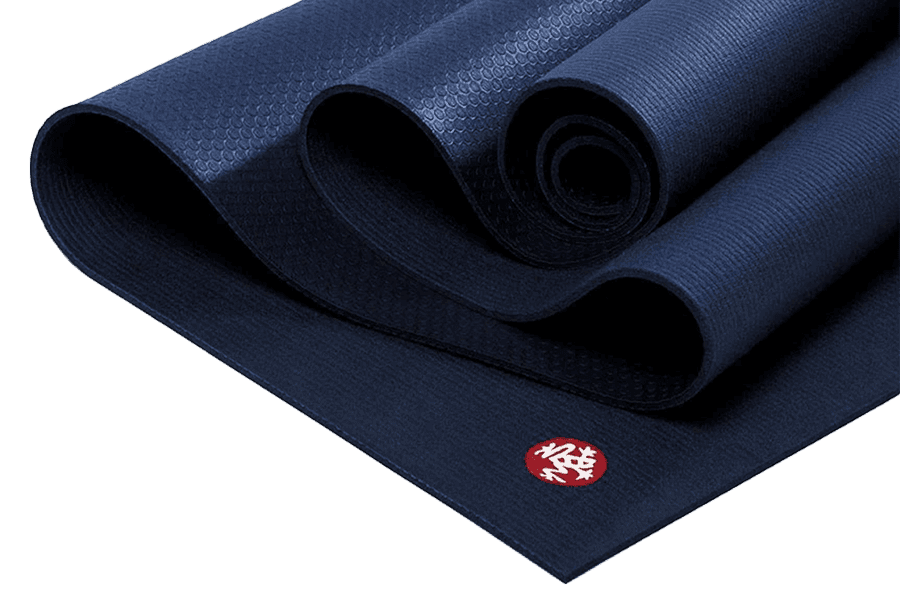
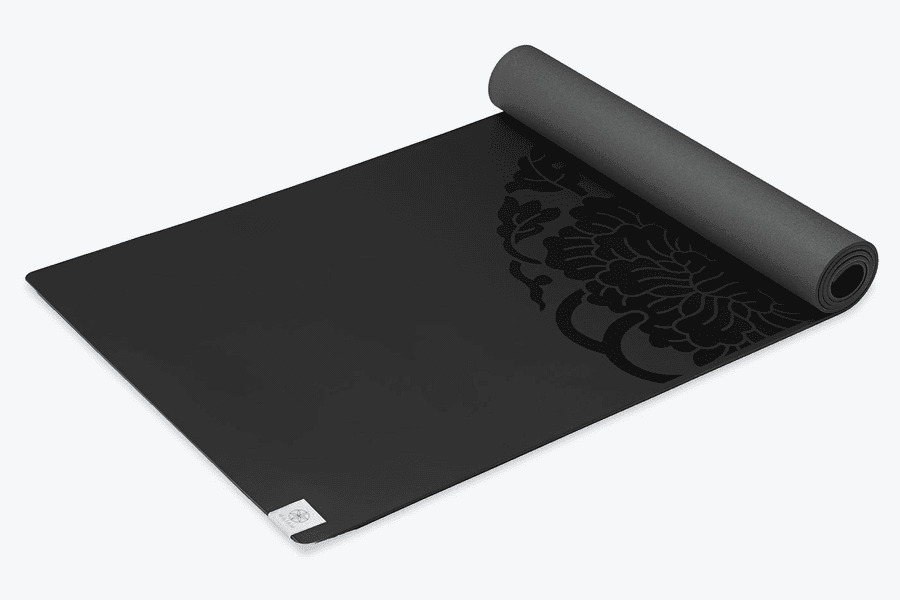
These latex-free PVC mats give tall practitioners almost identical length. Manduka extends to 79 by 30 inches with dense 4.7mm construction and OEKO-TEX certification. Gaiam measures 78 by 26 inches, uses a moisture-wicking 5mm topcoat, weighs two pounds less and costs $69.02 less.
As an Amazon Associate, we earn from qualifying purchases made through links on this page. How this works
The quick answer
The PROlite Long & Wide is the choice for practitioners who need a true 30 inch width or want firm German PVC with OEKO-TEX certification and Manduka's long-term guarantee. It is heavier and needs a break-in period.
The Gaiam Performance Dry-Grip Long & Wide is our pick for most tall practitioners. It gives up four inches of width but keeps nearly identical length, weighs two pounds less and costs $69.02 less while adding a moisture-wicking topcoat.
Get the PROlite Long & Wide if...
- You need a 30 inch wide practice area
- You prefer dense support for standing balance
- OEKO-TEX certification matters to you
- You value Manduka's long-term guarantee
Get the Gaiam Dry-Grip if...
- A 78 by 26 inch surface fits your body
- You want grip designed for rising temperatures
- You prefer a five-pound mat
- You would rather keep $69.02
Side by side
Price
The Dry-Grip L&W lists for about $69 less.
$144
List price · check price at Amazon
$74.98
List price · check price at Amazon
Thickness
The Dry-Grip L&W is 6% thicker.
4.7 mm0.19″
5 mm0.2″
Weight
The Dry-Grip L&W is 2 lbs lighter.
7 lbs3.2 kg
5 lbs2.27 kg
Size
The Long & Wide is 1″ longer; the Long & Wide is 4″ wider.
Same on both
- At least 78 inches of length
- Approximately 5mm of cushioning
- Latex-free PVC construction
- Lifetime guarantee language from each brand
Full specs
Dimensions
Materials & build
Two oversized PVC mats separated by $69.02
The PROlite Long & Wide measures 79″ × 30″, giving tall and broad practitioners one of the roomiest single-person PVC surfaces available. Gaiam’s Performance Dry-Grip Long & Wide is almost as long at 78 inches but narrows to 26 inches. Both are close to 5 mm thick and latex-free.
Manduka lists for $144; Gaiam costs $74.98. The PROlite uses its premium for four extra inches of width, dense German construction and OEKO-TEX certification. The Gaiam is lighter, moisture-wicking and far less expensive. Most buyers should begin by deciding whether 26 inches is already wide enough.
Length is tied; Manduka owns the width
One inch of length is immaterial in practice. Both mats keep most tall practitioners on the surface during savasana and create more room for long limbs in flowing sequences. Either is a meaningful upgrade from a standard 68 or 71 inch mat.
Width creates the actual split. Gaiam’s 26 inches already improves on the traditional 24 inch format. Manduka extends to 30, which helps broad shoulders, wide-legged poses and floor exercises. That surface also occupies more of a studio row and produces a wide roll. Measure your practice and storage spaces before paying for area you may not use.
Gaiam is designed for moisture from the start
Gaiam applies a moisture-wicking topcoat that the company says improves grip as temperatures rise. It needs no break-in and is explicitly positioned for hot yoga. The smooth face feels different from textured rubber, but it gives a sweaty practitioner a more purpose-built surface than ordinary closed-cell PVC.
The PROlite has a fabric-like finish that improves through regular use. New mats can feel slick, and the closed-cell body does not take sweat away from the hands. Once broken in, it provides dependable dry grip and allows easy foot transitions. Heated practice still benefits from a mat towel.
Five millimeters does not mean the same feel
Manduka compresses dense PVC into a 4.7 mm body. The surface feels firm and planted under standing balance, with moderate protection rather than plush padding. That density is a defining part of the PRO line and suits practitioners who dislike movement beneath the foot.
Gaiam uses 5 mm of PVC and markets it as premium cushioning. The material feels softer under a knee, though the numerical difference is only 0.3 mm. Neither is an extra-thick mat for sensitive joints. If kneeling comfort is the main goal, a 6 or 8 mm rubber mat or a separate knee pad provides a clearer improvement.
Gaiam saves two pounds and four inches of roll width
The Dry-Grip weighs 5 pounds. It is large, but a 26 inch roll still works with many conventional straps and studio racks. Carrying it from a car or on a moderate walk is reasonable for a mat with 78 inches of length.
The PROlite Long & Wide weighs 7 pounds and rolls to a full 30 inches across. Its extra width is more awkward than the weight alone suggests, especially on transit. It is better suited to home use or short car trips. Manduka’s 79″ × 24″ PROlite Long is easier to carry if length is the only requirement.
Both clean easily, but the topcoat needs care
Closed-cell PVC keeps moisture from entering the PROlite, so routine care is a surface wipe. It tolerates frequent use well and does not need the long air-drying routine of open-cell rubber. Manduka’s lifetime guarantee defines coverage around roughly ten years of regular use with one qualifying replacement.
Gaiam recommends cold water, mild detergent, spot cleaning and flat drying. It also warns that extended sun exposure can fade and embrittle the mat. Its lifetime guarantee covers the product under Gaiam’s terms, but a moisture-wicking topcoat is still a surface treatment, so gentle cleaning is the sensible approach.
Both are latex-free PVC, with one certification difference
The PROlite is made in Germany and certified to OEKO-TEX Standard 100, which tests the finished material for specified harmful substances. It contains no natural rubber and is appropriate for a practitioner avoiding latex.
Gaiam also identifies the Dry-Grip as latex-free PVC, but does not state its manufacturing country or list a comparable third-party certification. Neither mat offers a plant-based material story. Buyers who prioritize natural rubber or cork need to accept different allergy, weight and care tradeoffs.
Gaiam offers exceptional size for the price
Both mats are sold on Amazon, so compare the current listings for the PROlite Long & Wide and the Gaiam Dry-Grip Long & Wide. Check the selected size carefully because Gaiam groups multiple Dry-Grip variants on some marketplace pages.
At list price, Gaiam delivers nearly identical length, a little more thickness and hot-practice intent for $69.02 less. Manduka’s case rests on the 30 inch width, OEKO-TEX certification, denser feel and established PRO construction. Those are valuable features, but the buyer should need at least one of them to justify the premium.
Bottom line
Buy the PROlite Long & Wide if 30 inches of width is the reason you are shopping, or if you want firm German PVC with OEKO-TEX certification and long-term coverage. It is a substantial home mat that needs time to develop its best grip.
Buy the Gaiam Dry-Grip Long & Wide if 78″ × 26″ fits your body. It is lighter, designed around moisture and $69.02 less. For most tall practitioners who do not specifically need a 30 inch surface, it provides the more efficient combination of space, grip and price.
Frequently Asked Questions
- Which mat is bigger?
- The PROlite Long & Wide is one inch longer and four inches wider at 79 by 30 inches. Gaiam's 78 by 26 inch surface still provides substantially more room than a standard yoga mat.
- Which mat has better grip for hot yoga?
- Gaiam is the more purpose-built option. Its moisture-wicking topcoat is designed to improve grip as temperatures rise. The PROlite needs a break-in and its closed-cell surface can hold sweat beneath the hands.
- Which mat has more cushioning?
- The numbers are nearly tied at 5mm for Gaiam and 4.7mm for Manduka. Gaiam feels somewhat softer, while the dense PROlite feels firmer and more stable during standing balance.
- Which mat is easier to carry?
- The Gaiam weighs five pounds and rolls to 26 inches wide. The PROlite weighs seven pounds and creates a 30 inch roll, making it more awkward on transit and in studio storage.
- Are both mats latex-free?
- Yes. Both brands identify these mats as PVC without natural rubber. The PROlite also carries OEKO-TEX Standard 100 certification, while Gaiam does not list a comparable certification.
- Do both mats have lifetime guarantees?
- Both brands use lifetime guarantee language, but coverage terms differ. Manduka defines its guarantee around roughly ten years of regular use and one qualifying replacement. Review the current terms and buy from an authorized seller.
Related comparisons
- Manduka PROlite Long & Wide vs JadeYoga Harmony XW
- Manduka X vs Gaiam Performance Dry-Grip Long & Wide
- Manduka PROlite Long & Wide vs Alo Warrior
- Manduka PROlite Long & Wide vs Lululemon The (Big) Mat 5mm
- Manduka PROlite Long & Wide vs Hugger Mugger Para Rubber 5mm
- Hugger Mugger Earth Elements 5mm vs Gaiam Performance Dry-Grip Long & Wide
- Manduka PROlite Long & Wide vs Yoga Design Lab Infinity 5mm
- Manduka GRP Adapt 1.0 vs Gaiam Performance Dry-Grip Long & Wide
- Suga SugaMat vs Gaiam Performance Dry-Grip Long & Wide