Manduka PRO Long & Wide vs Jade Harmony: Which One Should You Buy?
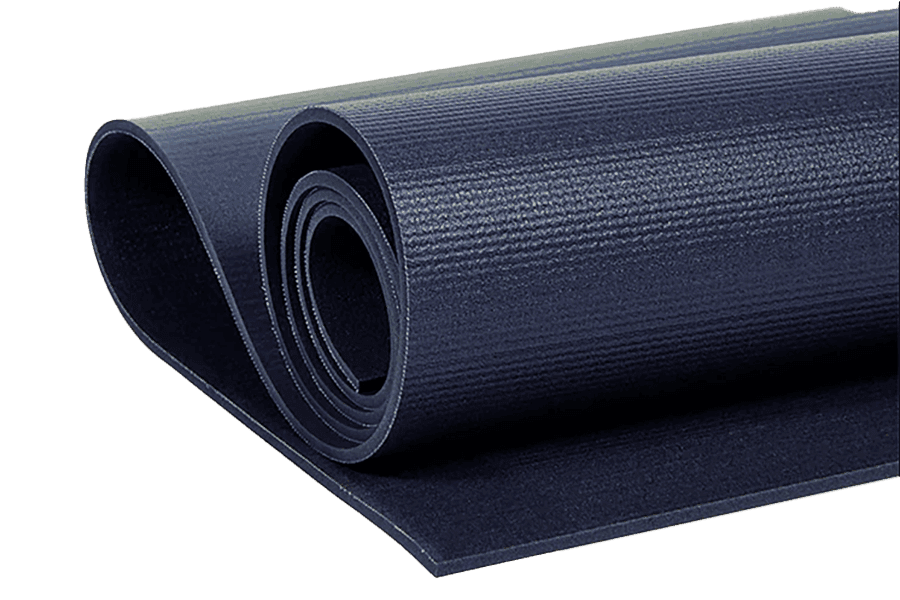
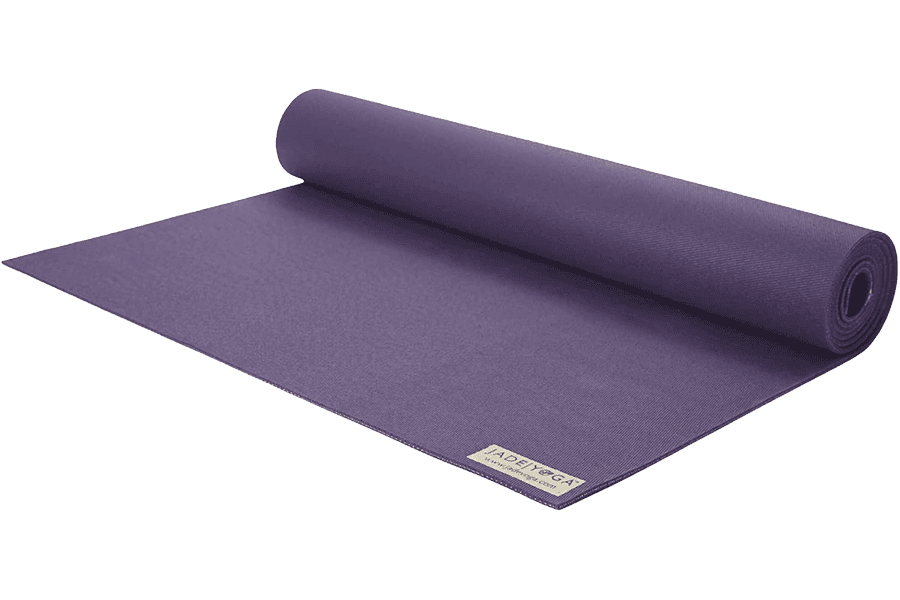
These two are barely in the same category. The PRO Long & Wide is 79 inches by 52, roughly two and a half times the surface of a normal mat, 22 pounds of dense German PVC, at $288. The Jade Harmony is the 68 inch natural rubber classic: grippy from the first class, 4.8 pounds, $99.95, and easy to carry anywhere. You are choosing between a practice space and a mat.
As an Amazon Associate, we earn from qualifying purchases made through links on this page. How this works
The quick answer
The Long & Wide gives you room. At 79" x 52" it holds wide-legged poses, floor work, and rolling side to side with no part of you landing on bare floor, and its dense PVC should still be here in a decade under Manduka's lifetime guarantee. It also weighs 22 pounds, ships slick and needs weeks of break-in, and costs about $188 more. The Harmony grips on day one, absorbs light sweat, weighs 4.8 pounds, and is the greener material, but 68 inches is short for anyone over about five foot eight, and natural rubber wears out in years rather than decades on a 1 year warranty.
If your mat travels, or your budget is real, or you want grip without waiting for it, buy the Harmony. It is the more practical mat by a wide margin, and it's the one we'd point most people to. Buy the Long & Wide only if you have a dedicated space at home and the width is the thing you're actually shopping for.
Get the PRO Long & Wide if...
- You have a dedicated home space and want room to sprawl in it
- You want one mat for the next decade, guarantee included
- Your floors are hard and your practice is mostly dry
- A latex allergy rules out Jade's rubber
Get the Harmony if...
- You are about five foot eight or under, so 68 inches fits you
- Your mat goes to class, so 4.8 pounds beats 22
- You want grip the day it arrives, with no break-in
- You'd rather keep about $188
Side by side
Price
The Harmony lists for about $188 less.
$288
List price · check price at Amazon
$99.95
List price · check price at Amazon
Thickness
The Long & Wide is 25% thicker.
6 mm0.24″
4.8 mm0.19″
Weight
The Harmony is 17.2 lbs lighter.
22 lbs10 kg
4.8 lbs2.2 kg
Size
The Long & Wide is 11″ longer; the Long & Wide is 28″ wider.
Same on both
- Firm, stable feel under standing poses
- Premium build from a specialist yoga brand
- Lies flat without curling
Full specs
Dimensions
Materials & build
Buying
- Long74" × 24"
- Harmony XW80" × 28"
A practice space against a mat
These two are barely competing. The PRO Long & Wide is 79 inches by 52, about two and a half times the surface of a normal mat, 22 pounds of dense German PVC, at $288. The Jade Harmony is the 68 inch natural rubber classic that studios have used for decades: tacky from the first breath, 4.8 pounds, and about $100. One of these is something you install in a room. The other is something you sling over a shoulder on the way out the door.
Because they are so far apart on size, weight, and price, it helps to name the decision plainly. You are not choosing between two mats that do the same job differently. You are choosing whether you are buying a dedicated home practice surface or a mat that goes wherever you go, and the answer to that usually settles everything else on this page.
The size gap is the biggest we cover
The Harmony is 68″ × 24″, which comes to 1,632 square inches. The Long & Wide is 79″ × 52″, which comes to 4,108. Almost all of that difference is width: at 52 inches the Manduka is slightly more than two standard mats laid side by side. Length matters too, though. The Harmony’s 68 inches fits practitioners up to roughly five foot eight before your head or heels start finding the floor in savasana. The Long & Wide’s 79 inches fits past six foot three.
If you are tall and the Jade appeals to you, do not force this pairing. Jade sells the same mat at 74 inches for about $110 and an 80″ × 28″ Harmony XW for about $150, and the XW is the one that actually belongs in a conversation with an oversized Manduka. Our Long & Wide vs Harmony XW comparison covers that matchup.
4.8 pounds against 22
The Harmony weighs 4.8 pounds. It rolls into a normal bundle, fits a normal mat bag, and asks nothing of you. This is a mat that goes to a studio three times a week, lives in a car boot, gets carried up stairs, and comes on a trip.
The Long & Wide weighs 22 pounds and rolls up closer to an area rug than to gym gear. No standard bag or strap will take it. You unroll it once in the spot you have picked and it stays there, which closed-cell PVC is happy to do since it lies flat and does not curl. In exchange it takes a clear rectangle of about 6 feet 7 inches by 4 feet 4 inches of your home, indefinitely. Before anything else on this page matters, that has to be a rectangle you are willing to give up.
Grip: the Jade works today, the Manduka works in a month
Unroll both new and it is not close. The Harmony’s open-cell natural rubber is tacky on contact, holds with dry or damp hands, and pulls light sweat into the surface instead of letting it pool. There is no break-in and nothing to learn, which is a large part of why it has been a studio staple for so long.
The Long & Wide ships slick. The PRO family’s break-in is its most common complaint, and it takes a few weeks of regular practice before the surface comes good; Manduka has retired its old salt-scrub advice and now says the slickness resolves with use, which matches owner reports. After that its dry traction is excellent for years. But the closed-cell surface never absorbs anything, so sweat sits on top of it, and heated practice means a towel for the life of the mat.
Rubber has its own small print: the tack can grab a sliding foot mid-transition, the surface collects lint and pet hair, and dripping-wet hands eventually defeat it too. It still takes this section without much argument.
Cushioning: dense slab against springy rubber
The Long & Wide carries 6 mm of PVC dense enough to barely dent, and the density is the point: knees and hips stay held up above a hard floor rather than sinking, which is why OutdoorGearLab scored the PRO construction perfectly for comfort and support. The Harmony’s 3/16″ of rubber, about 4.8 mm, has more spring and a softer first contact while staying stable enough for balance work.
On wood or carpet, most people would call them equally comfortable. On concrete or tile, through long kneeling holds, the Manduka protects noticeably better. Neither is a plush mat; if deep cushioning is what you are shopping for, the 8 mm Jade Fusion is the mat that actually delivers it.
Durability and care: decades against a few good years
The Manduka is close to maintenance-free and close to permanent. Wipe it down now and then, and expect the kind of lifespan GearLab’s testers keep finding in instructors’ PRO-family mats, which run five to twenty years old and are still in service. The lifetime guarantee, roughly ten years of regular use with one replacement in the fine print, requires proof of purchase from an authorized seller; Amazon counts when the mat is sold and shipped by Amazon itself.
Natural rubber lives a shorter and needier life. Heavy practice softens and sheds it, sweat speeds that up, and sunlight hardens it outright, so a Harmony cannot sit in a hot car or practice in the park. Jade’s 1 year warranty specifically excludes sun damage and harsh cleaners. Cleaning means a damp cloth or diluted vinegar, never alcohol. Owners who practice hard tend to replace theirs every few years; gentler owners report far longer. The warranty terms on both mats line up with how the two materials actually wear.
Eco, latex, and the Harmony 2.0 trap
The Jade has the cleaner material story: rubber tapped from trees, made in the USA, no PVC anywhere, and a tree planted for every mat sold, past two million by the company’s count. The Manduka is PVC with no practical recycling path. Its defense is longevity, since one mat that runs twenty years beats a rotation of shorter-lived ones, plus OEKO-TEX certification on the manufacturing. If material sourcing is your priority, Jade wins. If total waste over time is, it is closer than it looks, though 22 pounds of PVC is a lot of PVC to be right about.
One health note that runs the other way: Jade mats are 99% latex free, which is not latex free. Trace latex proteins remain and Jade does not recommend its mats for latex allergies, so an allergy sends you to the Manduka.
And check which Harmony you are looking at. This page covers the original US-made mat. Jade also sells the Harmony 2.0, a different product made in Spain at about $10 more per length, and the 2.0 is the version carrying the newer certifications and the recent OutdoorGearLab award. Reviews and prices for one get applied to the other constantly.
Price and value
List prices are $288 for the Long & Wide and about $100 for the Harmony, a gap near $188. Check current prices on the PRO Long & Wide and the Harmony before deciding; the Harmony’s 12 colorways at last count give it far more sale surface than the Long & Wide’s two.
Per year of ownership the Manduka probably wins, because you buy it once and it does not wear out. But that comparison only counts if you were going to buy an oversized mat in the first place. For nearly three times the money, the Long & Wide gives you room and permanence, not a better version of what the Harmony does. The Harmony gives you grip, portability, and a renewable material for around $100, and for most people that is the more useful purchase.
Bottom line
Buy the Harmony unless the width is the whole reason you are shopping. It fits anyone up to about five foot eight, grips the day the box opens, weighs a quarter of what the Manduka weighs, costs about $188 less, and has the better environmental story. It asks you to keep it out of the sun and to accept that rubber wears out.
Buy the PRO Long & Wide if you have a dedicated space at home, hard floors, a mostly dry practice, and the intention to buy once. If the width appeals but the weight and the price do not, look at the PROlite Long & Wide first: 79″ × 30″ at $144 and 7 pounds, which adds real width over a standard mat and still travels.
Jade Harmony
List price $99.95
Frequently Asked Questions
- Is the Jade Harmony too short next to the PRO Long & Wide?
- It depends on your height, but the gap is large: 68 inches against 79. The Harmony fits practitioners to about five foot eight before your head or heels leave the mat lying down; the Long & Wide fits past six foot three. If you like the Jade but need length, Jade sells the same mat at 74" for $109.95 and an 80" x 28" XW for $149.95, both of which are a fairer fight.
- How much bigger is the PRO Long & Wide really?
- About two and a half times the surface: 4,108 square inches against the Harmony's 1,632. Almost all of that is width. At 52 inches the Manduka is slightly more than two standard mats side by side, and it needs a clear rectangle of about 6 feet 7 inches by 4 feet 4 inches of your home, permanently.
- Can I take the PRO Long & Wide to a class?
- Realistically, no. At 22 pounds it rolls into a bundle the size of a rolled area rug, and standard mat bags and straps will not take it. It is a mat you unroll once and leave. The Harmony weighs 4.8 pounds and commutes without any planning, which for a lot of people settles this comparison on its own.
- Which one grips better?
- The Harmony, decisively, and from the first practice. Open-cell natural rubber is tacky on contact and drinks light sweat into the surface instead of letting it pool. The Manduka ships slick and needs a few weeks of regular practice to break in, the most common complaint about the PRO line; Manduka has retired its old salt-scrub advice and now says the slickness simply resolves with use. Even broken in, the closed-cell surface absorbs nothing, so heated classes mean a towel for the life of the mat.
- How long does each mat last?
- They age on different timelines. GearLab's testers keep finding instructors' PRO-family mats five to twenty years old still in service, and Manduka's lifetime guarantee covers roughly ten years of regular use with one replacement, with proof of purchase from an authorized seller (Amazon counts only when the mat is sold and shipped by Amazon itself). Natural rubber softens and sheds under heavy use, sweat speeds that up, and sunlight hardens it outright; Jade's 1 year warranty specifically excludes sun damage and harsh cleaners. Hard-practicing Harmony owners tend to replace theirs every few years.
- What's the difference between the Jade Harmony and the Harmony 2.0?
- They are separate products, and the confusion is constant. The original Harmony, the mat covered here, is made in the USA. The Harmony 2.0 is made in Spain, costs about $10 more at each length, and is the version carrying the newer certifications and the recent OutdoorGearLab award. Reviews and prices for one get applied to the other all over the internet, so check which mat a claim actually belongs to before you buy.
Related comparisons
- JadeYoga Harmony 68" vs Suga SugaMat
- JadeYoga Harmony 68" vs Manduka PRO Lite Terra 4.7mm
- JadeYoga Harmony 68" vs Manduka eKO Lite
- Manduka PROlite vs JadeYoga Harmony 68"
- JadeYoga Harmony 68" vs Manduka GRP Adapt 1.0
- JadeYoga Harmony 68" vs Manduka eKO Lite Long
- JadeYoga Harmony 68" vs Manduka GRP Adapt Lite 2.1 4mm
- JadeYoga Harmony 68" vs Lululemon The Mat 5mm
- Manduka PROlite Long vs JadeYoga Harmony 68"