Manduka PRO Long vs Jade Harmony: Which One Should You Buy?
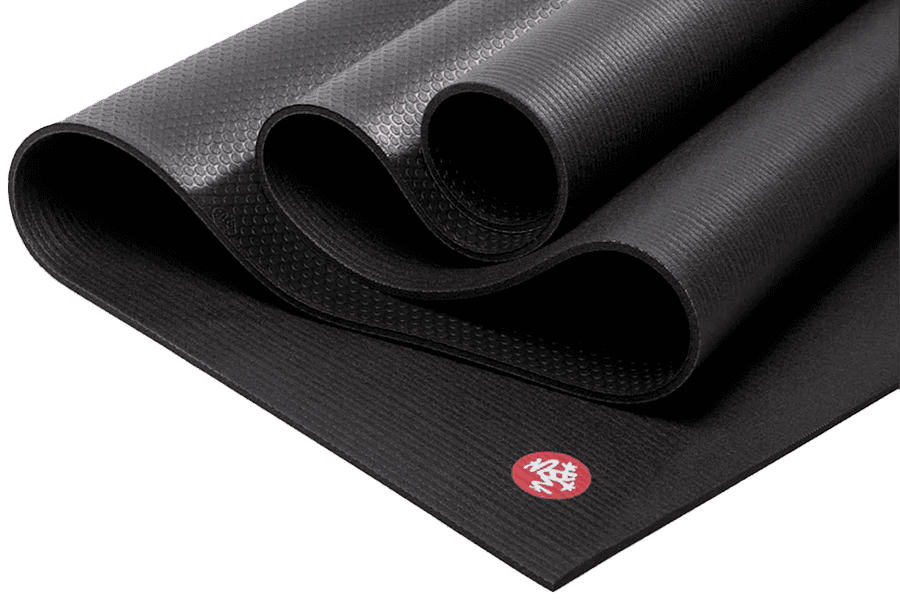
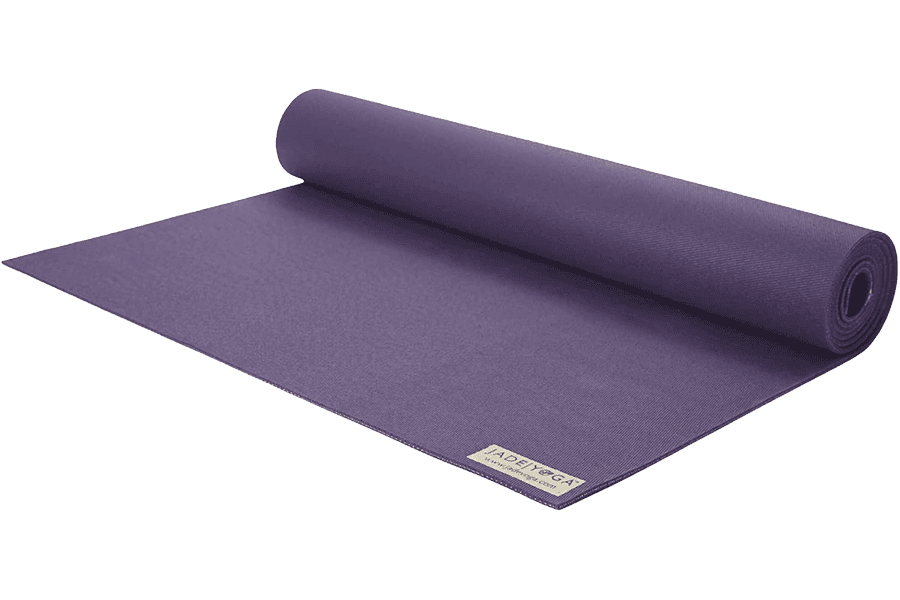
Seventeen inches of length separate these two, the biggest size gap of any comparison we cover. The PRO Long is Manduka's 85" answer for tall practitioners: dense closed-cell PVC, 9.5 pounds, slick until broken in, then effectively immortal. The Jade Harmony is the 68" standard cut of the American-made natural rubber classic: tacky from day one, 4.8 pounds, and about $64 cheaper. For most bodies, only one of these two lengths will actually fit.
As an Amazon Associate, we earn from qualifying purchases made through links on this page. How this works
The quick answer
The PRO Long is bigger in every dimension, 85" x 26" against 68" x 24", more cushioned at 6 mm against 4.8, and built for decades under a lifetime guarantee, but it needs weeks of break-in, pools sweat on its surface, and weighs 9.5 pounds. The Harmony grips from the first practice, absorbs light sweat, weighs half as much, and is the more sustainable choice, but natural rubber wears in years rather than decades, hates sunlight, and carries a 1 year warranty.
Fit decides this one first. Six feet or taller, the 68" Harmony is simply too short, and Jade's 74" or XW cuts are the better comparison. Five-eight or under, the Harmony's day-one grip and lower price make it the easy pick; choose the Manduka only if you're deliberately buying once for the next decade.
Get the PRO Long if...
- You're six feet or taller and want real lying-down margin
- You want one mat for the next decade, guarantee included
- Your practice is mostly dry and your floors are hard
- You have a latex allergy, which rules out Jade's rubber
Get the Harmony if...
- You're about five foot eight or under, so 68" fits you
- You want grip on day one, with no break-in
- You'd rather carry 4.8 pounds than 9.5
- You'd rather keep about $64 and get the greener material
Side by side
Price
The Harmony lists for about $64 less.
$164
List price · check price at Amazon
$99.95
List price · check price at Amazon
Thickness
The PRO Long is 25% thicker.
6 mm0.24″
4.8 mm0.19″
Weight
The Harmony is 4.7 lbs lighter.
9.5 lbs4.3 kg
4.8 lbs2.2 kg
Size
The PRO Long is 17″ longer; the PRO Long is 2″ wider.
Same on both
- Firm, stable feel under standing poses
- Premium build from a specialist yoga brand
- Lies flat without curling
Full specs
Dimensions
Materials & build
Buying
- Short68" × 26"
- Standard71" × 26"
- Long & Wide79" × 52"
- Squared78" × 78"
- Long74" × 24"
- Harmony XW80" × 28"
The biggest size gap we cover
Seventeen inches separate these mats, the widest length gap on this site. The PRO Long is Manduka’s 85″ PVC flagship for tall practitioners, all density and permanence at 9.5 pounds. The Jade Harmony is the 68″ standard cut of the classic American-made natural rubber mat, tacky from the first practice and half the weight. They also disagree about everything else: material, grip philosophy, care, warranty, and about $64 of price.
Because the sizes serve such different bodies, it’s worth saying plainly: if you’re shopping the PRO Long because you’re tall, the 68″ Harmony isn’t really its rival, and Jade would point you at its own longer cuts. If you’re of average height and comparing a premium keeper against a grippy favorite, read on, because then this gets interesting.
Length: one of these fits a tall body
The Harmony’s 68″ suits practitioners to about five foot eight before savasana pushes head or heels onto the floor. The PRO Long’s 85″ fits essentially everyone with margin to spare. If you’re six feet or over, that difference isn’t a preference, it’s a fit problem, and the honest comparison shifts to Jade’s 74″ Harmony or the 80″ × 28″ Harmony XW; our PRO Long vs Harmony 74″ comparison covers the closer matchup. Width tilts the same way: 26″ on the Manduka, 24″ on the Jade.
Grip: rubber wins the handshake
Unroll both new and the Harmony embarrasses the Manduka. Open-cell natural rubber is tacky on contact, holds with dry or damp hands, and drinks light sweat into the surface instead of letting it pool; Jade advertises a Yoga Journal best-grip award, and owner reviews back the reputation. The PRO Long ships slick and takes a few weeks of regular practice to break in, the most common complaint in its reviews, and even broken in, its closed-cell surface leaves heavy sweat sitting on top. Manduka’s answer to a hot room is a towel.
The Harmony’s grip does collect its own tolls: the tacky surface can grab a sliding foot mid-transition, it gathers lint and pet hair, and dripping-wet hands eventually defeat rubber too. But as delivered grip, day one and most days after, this section belongs to the Jade.
Cushioning: dense slab vs springy rubber
The PRO Long’s 6 mm of dense PVC reads as firm verging on hard, and that density is the point: knees and hips stay suspended above hard floors, the construction OutdoorGearLab scored perfect for comfort and support. The Harmony’s 3/16″ of rubber, about 4.8 mm, has more spring, a softer first contact that still stays stable under balance poses. On wood or carpet most people would call them equally comfortable; on concrete or tile, the Manduka protects noticeably better through long kneeling holds.
Weight: half the mat to carry
The Harmony weighs 4.8 pounds, ordinary mat weight, and commutes without complaint. The PRO Long weighs 9.5, rolls long and fat, and mostly lives where it’s unrolled; owners who commute with one tend to stop. If your mat travels several times a week, this line alone may decide the page.
Durability and care: decades vs seasons
The PRO Long is close to maintenance-free and close to immortal: wipe it down occasionally, and expect the decade GearLab’s testers keep finding in instructors’ PRO-family mats. Manduka’s lifetime guarantee, roughly ten years of regular use with one replacement in the fine print, requires proof of purchase from an authorized seller; Amazon counts when the mat is sold and shipped by Amazon itself.
Natural rubber lives a shorter, needier life. Heavy practice softens and sheds it, sweat accelerates the wear, and sunlight hardens it outright, so the Harmony can’t live in a hot car or practice in the park; Jade’s 1 year warranty specifically excludes sun damage and harsh cleaners. Cleaning means a damp cloth or diluted vinegar, never alcohol. Hard-practicing owners replace theirs every few years, gentler ones report much longer. The two warranties are the two companies telling on their own materials, and both are being truthful.
The eco story, latex, and the 2.0 version trap
The Harmony’s material story is the cleaner one: tree-tapped rubber, made in the USA, no PVC anywhere, and Jade plants a tree per mat sold, over two million by its count. The PRO Long is PVC, not practically recyclable, with OEKO-TEX certification and the counterargument that one twenty-year mat can out-green a series of five-year ones. Two health notes: Jade mats are 99% latex free, which means not latex free, so allergies should stay with the Manduka.
And check which Harmony you’re buying. This page covers the original US-made Harmony; Jade also sells the Harmony 2.0, a different mat made in Spain at $10 more per length, and it’s the 2.0 that carries the newer certifications and the recent OutdoorGearLab award. Reviews and prices for one don’t automatically apply to the other.
Price and value
List prices are $164 for the PRO Long and about $100 for the Harmony, a gap of roughly $64. Check current prices on the PRO Long and the Harmony before deciding; both brands discount by colorway, and the Harmony’s 12 colorways at last count give it far more sale surface than the Long’s 5.
Value depends on the clock you use. Per year, the PRO Long probably wins, because you buy it once. Per dollar today, the Harmony delivers premium grip for $64 less, with the understanding that rubber is a consumable on a longer timeline than most, but a consumable all the same.
Bottom line
Buy the PRO Long if you’re tall, your floors are hard, your practice is mostly dry, and you want to make this purchase once. Nothing about the 68″ Harmony fits that brief, least of all its length.
Buy the Harmony if you’re five foot eight or under and want grip that works the day the box opens, at a meaningfully lower price, with the better environmental story. And if you love everything about the Harmony except its 68 inches, don’t force this choice: the 74″ Harmony exists precisely for you.
Manduka PRO Long
List price $164
Jade Harmony
List price $99.95
Frequently Asked Questions
- Is the Jade Harmony too short for a tall person?
- The 68" standard cut fits practitioners to about five foot eight before your head or heels leave the mat lying down. Taller than that, don't force it: Jade makes the same mat in a 74" length for $109.95 and an 80" x 28" XW for $149.95. The PRO Long's 85 inches fits essentially everyone, which is the point of paying for it.
- Which mat grips better?
- Out of the box, the Harmony, decisively. Open-cell natural rubber is tacky on contact and absorbs light sweat, which is why it's been a studio favorite for decades. The PRO Long ships slick and needs a few weeks of regular practice to break in; even broken in, its closed-cell surface leaves sweat pooled on top, so heated classes mean a towel. The Manduka's dry grip after break-in is excellent, but the Jade is at full grip from the first class.
- How long does a Jade Harmony last compared to a Manduka PRO Long?
- They age on completely different timelines. Hard-practicing Harmony owners tend to replace theirs every few years as the rubber softens and sheds, faster with heavy sweat, and sunlight hardens rubber outright, which Jade's 1 year warranty specifically excludes. The PRO Long routinely runs a decade or more; testers keep finding PRO-line mats five to twenty years old still in service, and Manduka's lifetime guarantee covers roughly ten years of regular use with one replacement.
- Is the Jade Harmony okay for someone with a latex allergy?
- No. Jade's natural rubber is 99% latex free, which is not latex free; trace latex proteins remain, and Jade doesn't recommend its mats for latex allergies. The Manduka is PVC throughout, latex-free, and OEKO-TEX certified, making it the safe pick on this point.
- What's the difference between the Jade Harmony and the Harmony 2.0?
- They're separate products. The original Harmony, covered here, is made in the USA; the Harmony 2.0 is made in Spain, costs $10 more at each length, and is the version carrying the newer certifications and the recent OutdoorGearLab award. Reviews of one get misapplied to the other constantly, so check which mat a claim or price actually belongs to before buying.
- Which is better for the environment?
- The Harmony has the stronger case: renewable tree-tapped rubber, no PVC, US manufacturing, and a tree planted for every mat sold, over two million so far by Jade's count. The Manduka's counterargument is longevity, since one mat lasting twenty years generates less waste than a series of shorter-lived ones, plus OEKO-TEX certification on the manufacturing. If material sourcing is your priority, the Jade wins; if waste-over-time is, it's closer than it looks.
Related comparisons
- JadeYoga Harmony 68" vs Suga SugaMat
- JadeYoga Harmony 68" vs Manduka eKO Lite
- Manduka PROlite vs JadeYoga Harmony 68"
- JadeYoga Harmony 68" vs Manduka GRP Adapt 1.0
- JadeYoga Harmony 68" vs Manduka eKO Lite Long
- Manduka PRO Long vs Yoloha Unity Pro Cork
- JadeYoga Harmony 68" vs Lululemon The Mat 5mm
- Manduka PROlite Long vs JadeYoga Harmony 68"
- JadeYoga Harmony 68" vs 42 Birds The Robin