Manduka PRO Long vs Amazon Basics 1/2 Inch: Which One Should You Buy?
On paper the cheap mat looks like the upset: the $22 Amazon Basics is more than twice as thick as the $164 Manduka PRO Long, and at 74 inches it's longer than most yoga mats too. But thickness isn't cushioning quality, and these aren't really the same product. The PRO Long is a dense, firm platform built for a standing yoga practice on a tall body. The Amazon Basics is half an inch of soft NBR foam: wonderful to lie on, wobbly to balance on. What you'll actually do on the mat decides this one.
As an Amazon Associate, we earn from qualifying purchases made through links on this page. How this works
The quick answer
The PRO Long is a yoga mat: 85" × 26" of firm 6 mm support that holds standing poses steady, grips once broken in, and lasts decades with a lifetime guarantee. The Amazon Basics is a padded exercise mat: plush and comfortable for stretching, core work, and floor routines, but its soft foam sinks under standing poses, its grip gets dicey when damp, and the foam compresses with regular use. It does include a carry strap and a 1 year warranty.
For an actual yoga practice these aren't interchangeable, and if $164 is out of reach the answer is a firm budget mat in the $20 to $40 range, not thick foam. Buy the Amazon Basics for floor exercise, stretching, and padding a hard floor; buy the PRO Long for a standing practice and a tall body.
Get the PRO Long if...
- You practice standing yoga and need a stable surface
- You're tall and want the full 85" × 26" platform
- You kneel a lot and want dense, not squishy, support
- You want a mat that lasts decades, with the guarantee to match
Get the Amazon Basics if...
- Your routine is stretching, core work, and floor exercise
- You want maximum padding on a hard floor for about $22
- You want something light with a carry strap included
- Yoga, if any, is gentle and mostly seated
Side by side
Price
The Amazon Basics lists for about $142 less.
$164
List price · check price at Amazon
$22.48
List price · check price at Amazon
Thickness
The Amazon Basics is 112% thicker.
6 mm0.24″
12.7 mm0.5″
Weight
The Amazon Basics is 7.3 lbs lighter.
9.5 lbs4.3 kg
2.2 lbs1 kg
Size
The PRO Long is 11″ longer; the PRO Long is 2″ wider.
Same on both
- Longer than a standard 71" mat
- Textured surfaces that wipe clean
- Both lie flat out of the box
Full specs
Dimensions
Materials & build
Buying
A yoga mat and an exercise mat, priced 7 to 1
The spec sheet sets up an upset: the $22 Amazon Basics mat is more than twice as thick as the $164 Manduka PRO Long, and at 74″ it’s longer than most yoga mats too. If thickness and length were the product, this page would be short.
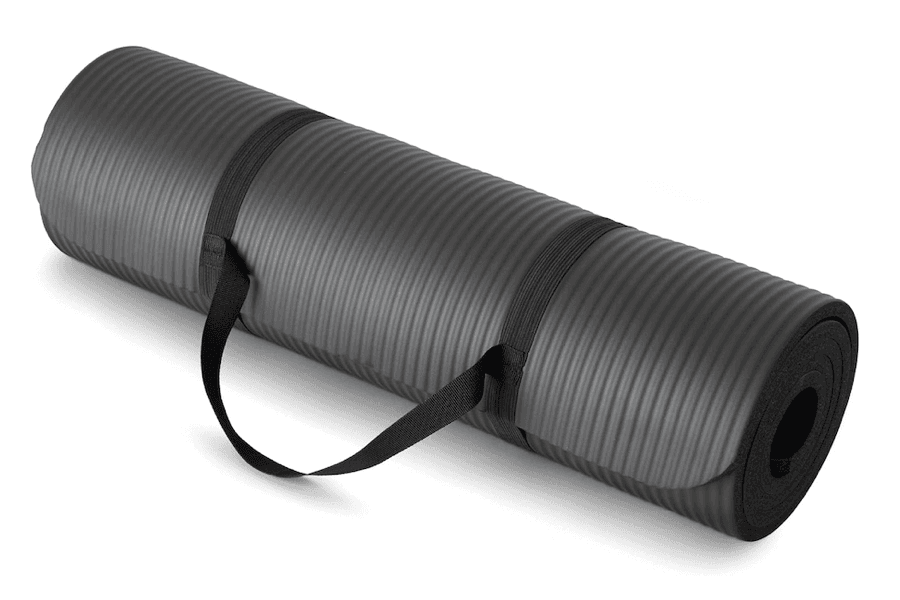
They aren’t. The PRO Long is a dense, firm platform built for a standing yoga practice on a tall body. The Amazon Basics is half an inch of soft NBR foam, closer kin to a camping pad than to a yoga mat: wonderful to lie on, wobbly to balance on. What you plan to do on the mat decides this comparison, so let’s sort that out honestly.
Standing poses: dense wins, and it isn’t close
Put concentrated weight on soft foam and it bottoms out. In practice that means a Warrior II with a front foot that sinks, balance poses that wobble at the ankle, and lunges where the back knee finds the floor through half an inch of squish. Reviewers also note the Basics’ textured surface gets slippery once palms go damp.
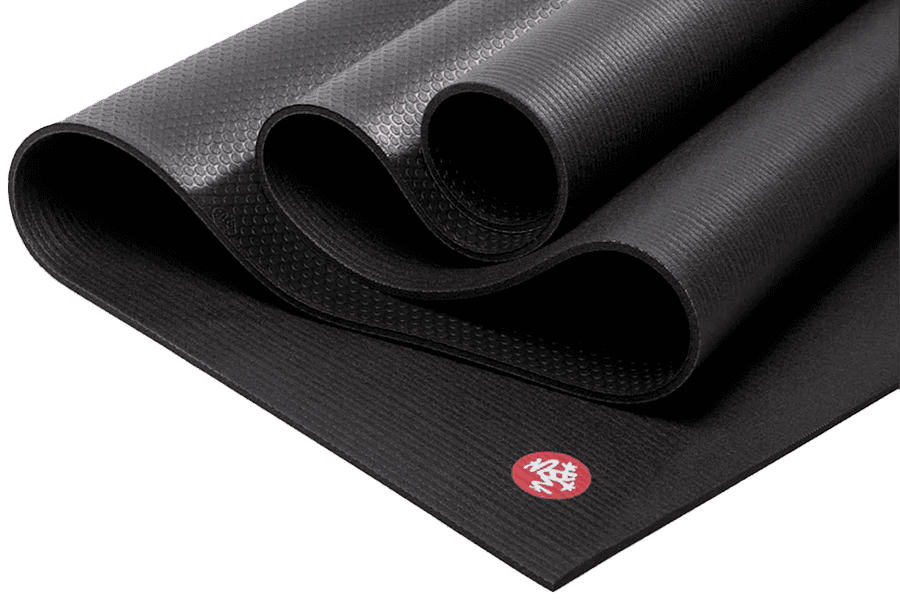
The PRO Long’s 6 mm of dense PVC compresses barely at all. That firmness is why the PRO construction earns perfect comfort scores in GearLab’s testing despite being less than half the Basics’ thickness: joints get support, feet get a stable base, and the mat disappears under the practice the way it should.
Floor work: where the foam mat is honestly great
Flip the routine to stretching, core work, and physical therapy exercises, and the Amazon Basics turns into the right product. Half an inch of plush foam on a hard floor is lovely for spines, elbows, and tailbones; CNN Underscored’s tester praised exactly that cushioned comfort. It weighs 2.2 pounds and ships with a carry strap, which is more portability kit than mats at ten times the price include.
The PRO Long handles floor work fine, of course. It’s just a lot of money for crunches, and the foam mat is softer at the job anyway.
Size: both longer than standard, one much bigger
Unusually for a budget mat, the Basics is long: 74″ beats the 68″ to 72″ of typical yoga mats, and for lying-down work it covers most bodies. The PRO Long is still the bigger platform at 85″ × 26″, eleven inches longer and two wider, and it’s the only one of the two offering a tall person full margin in standing sequences.
Length was never the Basics’ problem. Density is.
Durability: a consumable vs an investment
Owners report the Basics’ foam compressing and thinning within a year or two of frequent use, and the soft surface tears more easily than rubber or PVC. Amazon backs it with a 1 year warranty, which prices in those expectations fairly.
The PRO Long’s dense PVC routinely serves a decade or more; GearLab found instructors’ PRO mats still in service after five to twenty years, and Manduka’s lifetime guarantee, roughly ten years of regular use with one replacement in the fine print, stands behind it. Divide price by years of service and the 7-to-1 sticker gap shrinks dramatically; it just requires believing you’ll still be practicing in year eight.
Grip and upkeep
Neither mat is a grip champion out of the box. The Basics has usable dry traction that deteriorates when damp; the PRO Long starts slick and needs a few weeks of use to break in, after which it grips well for years. Manduka’s current position is that the new-mat slickness simply resolves with practice.
Care is a wash: both wipe clean, neither absorbs sweat, so a hot or heavy-sweat practice wants a towel on either. The foam mat shouldn’t be wrung or machine-washed, and sun will age it; the PRO Long mostly ignores neglect.
If $22 is the actual budget
Plenty of readers land on this page because $164 is out of the question, and the fair answer isn’t to talk you into it. It’s to say that thick soft foam is the wrong cheap mat for standing yoga. Firm 4 to 6 mm TPE and PVC mats sell in the $20 to $40 range and will hold poses far better; Amazon’s own 1/4 inch TPE mat is that idea in the same catalog. The half-inch foam is the right $22 only when the job is floor work and padding.
Price and value
List prices are $164 for the PRO Long and about $22 for the Amazon Basics. Check the current price of the PRO Long at Amazon and the Amazon Basics mat, which moves around by colorway.
Judged as different tools, both are fairly priced. The mistake costs you either $22 (a foam pad that can’t hold a standing practice) or $164 (a professional platform hosting stretching you could do on foam). Know which purchase you’re making.
Bottom line
Buy the PRO Long for a standing yoga practice on a tall body: stable, dense, effectively permanent, and guaranteed. It’s the real yoga mat here, and for that job the Basics isn’t a budget alternative, it’s a different product.
Buy the Amazon Basics for stretching, core work, and padding a hard floor; at that job it beats the premium mat on comfort and costs a seventh as much. And if you want even more padding for floor-only routines, its sibling in our PRO vs Amazon Basics 1 inch comparison doubles down on exactly that trade.
Manduka PRO Long
List price $164
Amazon Basics 1/2 Inch Extra Thick
List price $22.48
Frequently Asked Questions
- Is the Amazon Basics 1/2 inch mat good for yoga?
- For gentle, floor-based yoga, yes; for a standing practice, not really. Half an inch of soft NBR foam sinks under concentrated weight, which makes balance poses wobbly and lunges unstable, and reviewers note the textured surface gets slippery when damp. CNN Underscored's tester liked its plush comfort for exactly what it is: a thick, cushioned exercise mat rather than a performance yoga mat.
- Is the Amazon Basics mat long enough for tall people?
- Longer than most: 74" beats the 68" to 72" of typical yoga mats, though it's still 11 inches shorter than the PRO Long and 2 inches narrower at 24". For lying-down stretching and floor work, 74" covers most bodies comfortably. Length isn't this mat's problem; density is.
- But isn't thicker better for bad knees?
- Only if the material is dense. The Amazon Basics feels wonderful under your knees at first, but soft foam bottoms out under pressure, letting your knee find the floor through it. The PRO Long's 6 mm of dense PVC compresses barely at all, which is why the PRO construction wins comfort tests despite being less than half as thick. For kneeling on concrete all day, the foam mat is lovely; for supporting joints in poses, density matters more than depth.
- How long does the Amazon Basics mat last?
- Owners report the foam compressing and thinning with regular use, typically within a year or two of frequent workouts, and the surface can tear more easily than rubber or PVC. Amazon backs it with a 1 year warranty, which tells you roughly how long they expect it to last. The PRO Long's dense PVC routinely lasts a decade or more, with a lifetime guarantee behind it.
- What's the weight and carry difference?
- The Amazon Basics weighs 2.2 pounds and ships with a carry strap; it rolls up bulky but light. The PRO Long weighs 9.5 pounds and rolls into something closer to a small log; it's a mat you store, not one you commute with. If portability matters at all, the foam mat wins easily.
- If $22 is my budget, should I still buy the Amazon Basics for yoga?
- If your yoga involves standing poses, we'd steer you to a firm, standard-thickness budget mat instead; plenty of 4 to 6 mm TPE or PVC mats sell in the $20 to $40 range and will hold a Warrior II far better than thick foam. The Amazon Basics is a good buy for floor work, stretching, or padding, not for yoga.
Related comparisons
- Amazon Basics 1/2 Inch Extra Thick vs Retrospec Solana 1/2"
- Manduka PRO Long vs Yoloha Unity Pro Cork
- Manduka PRO Long vs Alo Warrior
- Manduka PRO Long vs JadeYoga Fusion 68"
- Manduka PRO Long vs Liforme Classic
- Manduka PRO Long vs JadeYoga Harmony XW
- Manduka PRO Long vs b, halfmoon B Mat Strong 6mm
- Manduka PRO Long vs JadeYoga Fusion 74"
- Manduka PRO Long vs Lululemon The (Big) Mat 5mm