Manduka GRP Adapt 2.0 vs Retrospec Solana 1": Which One Should You Buy?
The Solana 1 inch is a huge Amazon seller and a lot of people find it while shopping for a yoga mat. The GRP Adapt 2.0 is Manduka's heated-practice flagship. Twenty millimeters of thickness sit between them and decide almost everything, including whether you can stand on one leg.
As an Amazon Associate, we earn from qualifying purchases made through links on this page. How this works
The quick answer
GearLab scored the GRP Adapt 2.0 82 out of 100, with 9.5 dry grip and 8.5 wet, the best wet result of 19 mats tested in 2026, plus the award for grip in hot yoga. The Solana has not been tested and would not do well on grip: closed-cell foam leaves sweat on the surface. What it offers is 25.4 mm of padding, a nylon strap and a $39.99 price.
Get the GRP Adapt 2.0 if you practice heated classes or sweat through normal ones. Get the Solana if the mat is really for stretching, physio or floor strength work on a hard surface, where an inch of foam beats any amount of grip.
Get the Manduka GRP Adapt 2.0 if...
- You practice hot yoga or sweat heavily
- You need a floor that stays put in balance poses
- You want 26 inches of width rather than 24
- You want a mat that lasts years, not months
Get the Retrospec Solana 1" if...
- Knees, elbows or spine need serious padding
- You work out on concrete or a hard floor
- You'd rather spend $40 than $128
- You want a carry strap in the box
Side by side
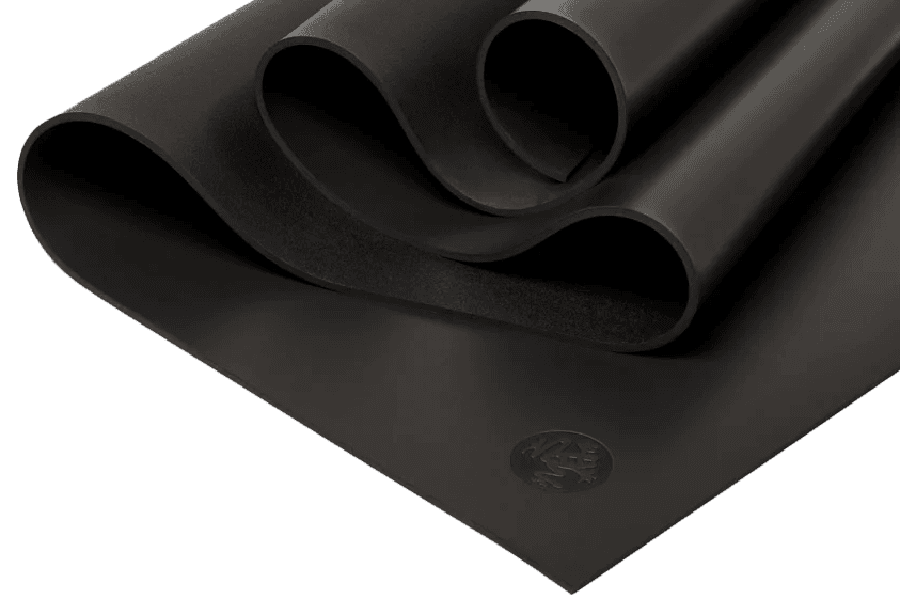
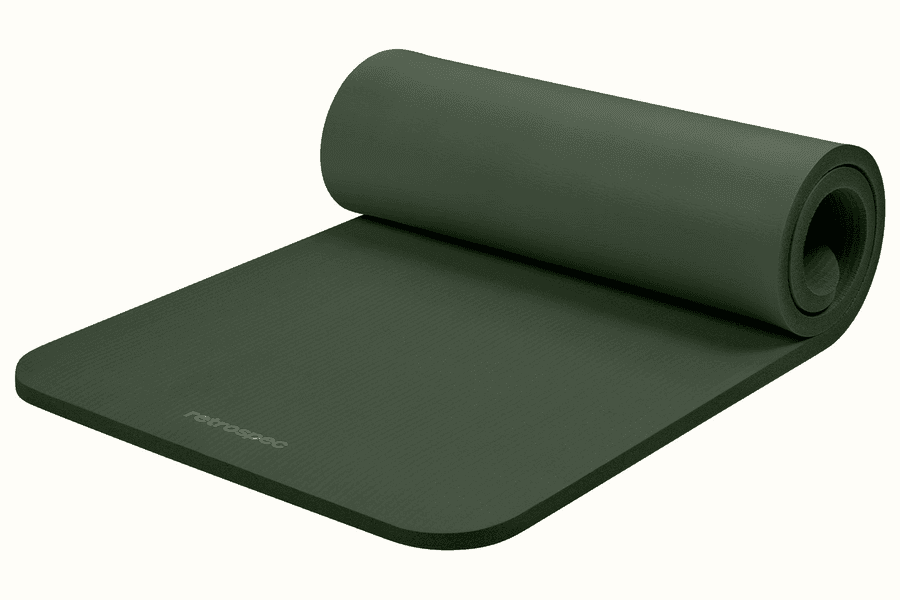
Price
The Solana 1" lists for about $88 less.
$128
List price · check price at manduka.com
$39.99
List price · check price at Amazon
Thickness
The Solana 1" is 408% thicker.
5 mm0.2″
25.4 mm1″
Weight
The Solana 1" is 1.8 lbs lighter.
5.8 lbs2.6 kg
4 lbs1.81 kg
Size
The Solana 1" is 1″ longer; the GRP Adapt 2.0 is 2″ wider.
Same on both
- Around 71 to 72 inches long
- Usable on both faces
- Neither is machine washable
- Both degrade in direct sunlight
Full specs
Dimensions
Materials & build
A hot yoga mat and an exercise pad
The Solana 1″ is one of the biggest sellers in its category, 4.5 stars across roughly 14,894 Amazon ratings, and plenty of those buyers arrive looking for a yoga mat. It is 25.4 mm of NBR foam for $39.99 with a nylon strap.
The GRP Adapt 2.0 is Manduka’s heated-practice flagship at 5 mm and $128. Twenty millimeters of thickness sit between them and decide almost everything.
You cannot balance well on an inch of foam
Soft foam sinks unevenly under one foot. Tree pose and warrior three turn into a negotiation with the mat, where your ankle corrects for the surface instead of holding the shape. That is not imagination; it is what an inch of compressible foam does.
The GRP does not deflect at all. That firmness is why serious yoga mats sit between 4 and 6 mm of dense material rather than chasing thickness, and it is the clearest argument against buying a foam pad for standing practice.
Grip: 8.5 out of 10 against nothing much
GearLab measured the GRP Adapt 2.0 at 9.5 dry and 8.5 wet, the best wet result of the 19 mats in its 2026 field, and gave it the award for grip in hot yoga. Its Satin Grip polyurethane takes moisture into the top layer rather than leaving a film.
The Solana has not been tested and would not do well here. NBR foam is closed-cell, so sweat sits on the surface, and the ribbed texture stops helping the moment your palms are damp. A mat towel makes it survivable.
Where the inch is genuinely worth having
Kneeling work, spinal rolls, elbow planks, anything done lying on a hard floor. For those the Solana beats the GRP outright and beats most yoga mats at any price. Padding is a real feature rather than a consolation.
If the mat is mainly for stretching, physio homework or floor strength work on concrete, the $40 pad is the right product and the GRP’s grip is a feature you will rarely reach for.
A lot of people end up owning both, which is a sensible outcome rather than a failure to decide. A proper mat for practice and a cheap foam pad for knee work covers more ground than any single mat at either price.
Size and width
The Solana is 72″ × 24″. The GRP is 71″ × 26″, so the cheap mat is an inch longer and two inches narrower.
Twenty-six inches is the more generous width and it shows in wide-legged stances. If you need more length from Manduka, the GRP Adapt 2.0 Long is 79 by 26 at $138, in Carbon Black only.
Weight, bulk and storage
The Solana is lighter at 4 pounds against 5.8, and it includes a nylon strap. That is where its portability advantage ends.
An inch of foam does not compress, so rolled it is a large log that will not fit a normal mat bag or a studio cubby. The GRP rolls tight and is the heavier one on a shoulder but the far easier one to store.
Years against a year or two
NBR foam compresses permanently, so the inch you paid for is noticeably less than an inch at the kneeling spots by year two. Retrospec covers manufacturing defects for six months alongside a 30 day return window.
The GRP runs for years, with its polyurethane top the part that eventually flakes under heavy heated use. Manduka gives it 30 day returns and no warranty, since the lifetime guarantee applies to the PRO and PROlite lines only.
Care and cleaning
The GRP wants a damp cloth and a mild mat spray, dried flat, out of the sun. Harsh cleaners and soaking are how people take years off a polyurethane surface, and heated practice means cleaning it often.
The Solana takes cold water and mild detergent and should stay well away from washing machines and dryers. Its ribbed surface traps grit that is fiddly to get out. Neither mat is machine washable and both degrade in direct sunlight.
Where to buy, and which GRP
The Solana comes in thirteen colorways and you can check its current price at Amazon. Its half inch sibling is $24.99 and is the version that behaves more like a yoga mat, if this listing drew you in on color rather than thickness.
The GRP Adapt 2.0 sells direct from manduka.com at $128 in around five colorways. The older GRP Adapt 1.0 still circulates on Amazon as runout stock near $94, and it is a different mat from the Spanish-made 2.0 GearLab tested.
Bottom line
Get the GRP Adapt 2.0 if you practice heated classes or sweat through normal ones. Nothing at $40 fixes grip when your hands are wet, and buying the cheap mat first usually means buying twice.
Get the Solana 1″ if the mat is really for floor work, stretching or physio on a hard surface. It is excellent at that and a third of the price. If you want cushion and grip together, that means a 6 mm rubber mat closer to $100, not a foam pad and not a coated one.
Manduka GRP Adapt 2.0
List price $128
Retrospec Solana 1"
List price $39.99
Frequently Asked Questions
- Can I do yoga on a 1 inch mat?
- Floor sequences and restorative work, yes. Standing poses, badly. An inch of soft foam sinks under one foot and your ankle spends the hold correcting for the mat rather than making the shape. The GRP does not deflect at all, which is why serious mats stay at 4 to 6 mm of dense material.
- How big is the grip difference?
- Large. GearLab measured the GRP 8.5 out of 10 wet, the best of its field, because the Satin Grip polyurethane takes moisture into the top layer. NBR foam is closed-cell, so sweat sits on it and the ribbed texture stops helping once your palms are damp. In a cool dry room you will notice much less.
- Which is easier to carry and store?
- Neither is a joy. The Solana is lighter at 4 pounds against 5.8, but an inch of foam does not compress, so rolled it is a log that will not fit a mat bag or a studio cubby. The GRP rolls tight and is the heavier one on a shoulder. Retrospec at least includes a nylon strap.
- How long does each one last?
- The GRP runs for years, with its polyurethane top the part that eventually flakes under heavy heated use. NBR foam compresses permanently, so the inch is noticeably less than an inch where you kneel by year two. Retrospec covers defects for six months plus a 30 day window; Manduka gives 30 day returns and no warranty.
- Is the GRP worth three times the money?
- Only for the problem it solves. If your hands slide in a warm room, nothing at $40 fixes it and you will buy twice. If you practice dry and mostly on the floor, the GRP's grip is a feature you will rarely reach for and the Solana's padding is the more useful property.
- Which GRP am I looking at?
- Make sure it is the 2.0. Manduka replaced the GRP Adapt 1.0 with a redesigned Spanish-made 2.0, and it is the 2.0 that GearLab tested and awarded. The 1.0 is still on Amazon as runout stock around $94. The 2.0 sells direct from manduka.com at $128 and is not a stable Amazon listing.
Related comparisons
- Amazon Basics 1 Inch Extra Thick vs Retrospec Solana 1"
- Manduka GRP Adapt 2.0 vs Lululemon The (Big) Mat 5mm
- Lululemon The Mat 5mm vs Manduka GRP Adapt 2.0
- JadeYoga Harmony 74" vs Manduka GRP Adapt 2.0
- Manduka GRP Adapt 2.0 vs JadeYoga Harmony 2.0 68"
- JadeYoga Harmony XW vs Manduka GRP Adapt 2.0
- Manduka GRP Adapt 2.0 vs b, halfmoon B Mat Everyday 4mm
- Manduka GRP Adapt 2.0 vs b, halfmoon B Mat Strong 6mm
- Manduka GRP Adapt 2.0 vs Yoga Design Lab Combo 3.5mm