Manduka GRP Adapt 2.0 vs Jade Voyager: Which One Should You Buy?
The Manduka GRP Adapt 2.0 exists to solve sliding in a heated room, and OutdoorGearLab's testing says it does that better than anything else they have measured. The Jade Voyager exists to fit in a suitcase. At $128 and $49.95 these are not competing purchases for most people, but if you practice hot and you also travel, you will end up looking at both.
As an Amazon Associate, we earn from qualifying purchases made through links on this page. How this works
The quick answer
The GRP Adapt 2.0 is the specialist worth paying for if you sweat. GearLab rated its wet grip 8.5 of 10, the highest of the 19 mats they tested, gave it their Best Grip for Hot Yoga award, and ranked it 3rd overall at 82 of 100, with 8.5 for comfort and 8 for materials. The Voyager holds up better than its price suggests, at 9 dry and 7 wet, but it is 1.6 mm and scored 2 of 10 for comfort, so it is a grip surface rather than a mat you practice on.
Buy the GRP Adapt 2.0 if heated classes are your normal. Buy the Voyager as the mat that goes in a bag while something else stays home.
Get the GRP Adapt 2.0 if...
- You practice hot yoga and want the best wet grip GearLab measured
- You want a full 5 mm of cushion and a 71 inch mat
- You want a surface that pulls sweat down instead of leaving it on top
- You'd use the 79 inch Long version if you're tall
Get the Jade Voyager if...
- You already own a mat and need one that folds into luggage
- You want strong grip in a mat that weighs about 1.5 pounds
- You'd rather keep about $78
- You practice on carpet, or over a studio's rental mats
Side by side
Price
The Voyager lists for about $78 less.
$128
List price · check price at manduka.com
$49.95
List price · check price at jadeyoga.com
Thickness
The GRP Adapt 2.0 is 213% thicker.
5 mm0.2″
1.6 mm0.06″
Weight
The Voyager is 4.3 lbs lighter.
5.8 lbs2.6 kg
1.5 lbs0.68 kg
Size
The GRP Adapt 2.0 is 3″ longer; the GRP Adapt 2.0 is 2″ wider.
Same on both
- Natural rubber in the build, so neither suits a latex allergy
- Surfaces that absorb sweat rather than beading it on top
- Both need to dry fully before being rolled or folded
- Neither brand sells these through an Amazon storefront
Full specs
Dimensions
Materials & build
Buying
A hot yoga specialist and a suitcase mat
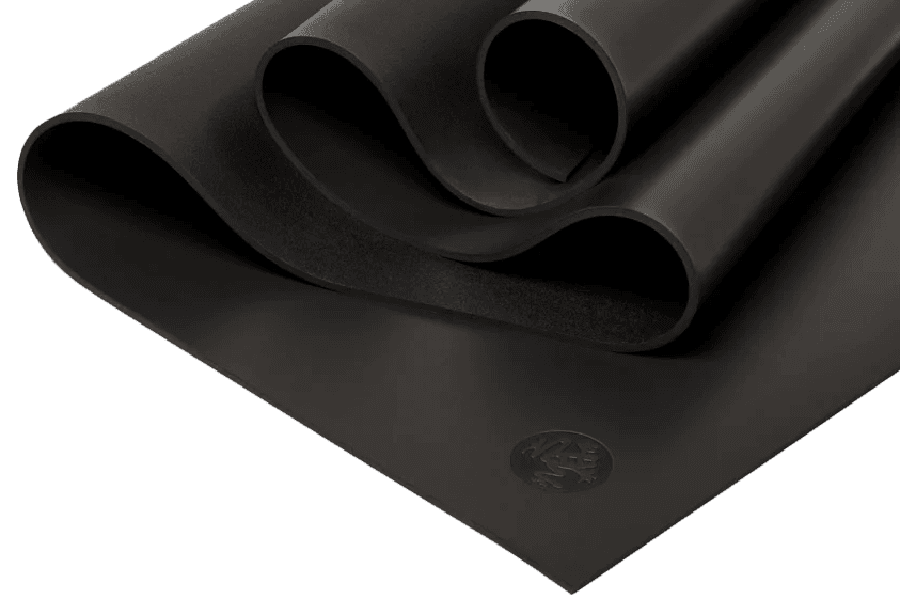
The Manduka GRP Adapt 2.0 was built to stop hands sliding in a heated room. It is 5 mm of natural rubber under a Satin Grip polyurethane layer, made in Spain with 20 percent recycled content, at $128. The Jade Voyager is 1.6 mm of natural rubber at $49.95 that folds into a backpack.
These are rarely a straight choice. Where they meet is the person who practices hot and also travels, and has to decide which problem to solve first.
Wet grip: the best number in the test against a good one
OutdoorGearLab rated the GRP Adapt 2.0 8.5 of 10 for wet grip, the highest of the 19 mats they tested, and gave it their Best Grip for Hot Yoga award. Nothing else in that field cleared 8. It ranked 3rd overall at 82 of 100.
The Voyager scored 7 wet, which is respectable and level with the Manduka PRO and the Liforme. The mechanisms are what separate them as a class goes on. Jade’s rubber holds moisture in the surface, so past a point the surface itself is wet. The GRP keeps moving sweat down and out of the contact area, so the patch under your hands stays closer to dry at minute forty.
The practical version: on the Voyager you will start adjusting your hands somewhere in the back half of a hot class. On the GRP you generally will not. Neither mat throws you off it, and a towel solves the problem on either, but only one of them makes the towel optional.
Dry grip: closer than the price suggests
GearLab rated the GRP 9.5 of 10 dry and the Voyager 9. Both hold from the first practice with no break-in and no waiting for a finish to open up, which is more than several more expensive mats manage.
So if your practice is unheated, the grip case for spending $128 over $49.95 nearly disappears. What remains is cushion, size, and the fact that one of these is a mat you can kneel on.
That is worth pausing on, because the Voyager is often written off purely on price. Its 9 of 10 dry rating matches the Manduka PRO and the Liforme, both of which cost three times as much. For an unheated practice on carpet, the difference between these two mats is not about traction at all.
Cushion: 8.5 of 10 against 2 of 10
GearLab scored the GRP’s comfort and support 8.5 of 10, which is high. The rubber under the grip layer is responsive rather than soft, so it supports a knee without swallowing a standing foot, and it holds up through a full heated class.
The Voyager scored 2. At 1.6 mm there is nothing between you and whatever it is lying on. On carpet, or over a studio’s rental mat, that is fine and it works well. On a hard floor it is a grip surface rather than a mat, and 60 minutes in a hot room on it would be genuinely unpleasant.
The GRP’s materials score of 8 of 10 is also worth a mention, since it is one of the higher marks in GearLab’s field. Manduka makes it in Spain with 20 percent recycled content, and the rubber base is the same sort of dense natural rubber that makes the eKO line durable. The Voyager scored 4 of 10 there, which reflects how little material is present rather than the quality of the rubber itself.
Size and versions
The GRP is 71 by 26 inches with a 79 inch Long version at $138, in five colorways. That is standard width and a real option for tall practitioners, which matters more in a heated class where you are less inclined to reposition.
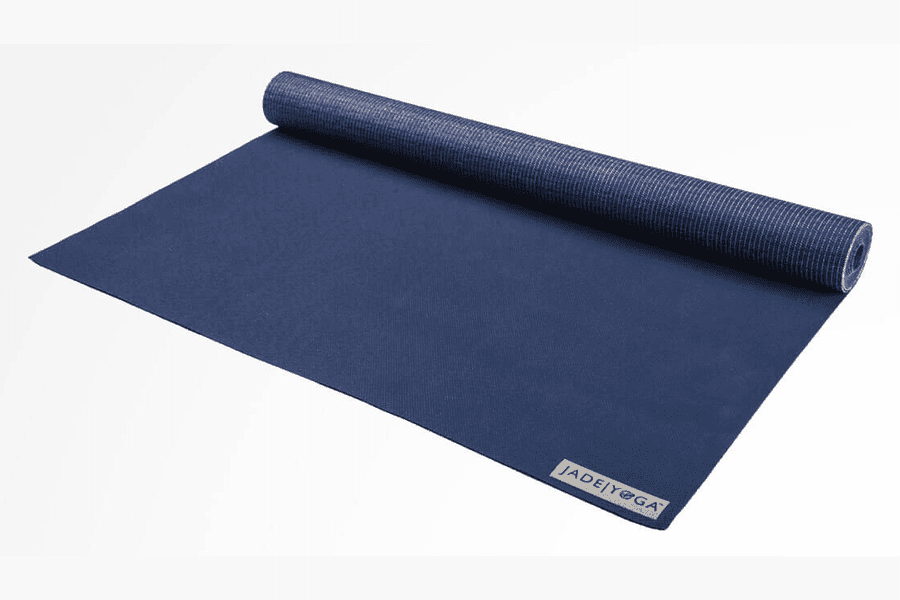
The Voyager is 68 by 24 inches in five colorways, at the short and narrow end of standard, with no larger version. Travel mats usually are, and it is still worth knowing before you unroll one in an unfamiliar room.
Weight and packing
The GRP is 5.8 pounds and GearLab measured 5.5. That is mid-pack for a full-thickness mat and fine to carry to a studio, and it rolls like any normal mat.
The Voyager folds rather than rolls, which is the real difference. It lies flat along the bottom of a suitcase at about 1.5 pounds by Jade’s count, 1.8 on GearLab’s scale, and Jade compares the folded size to a yoga block. Manduka does not make a travel version of the GRP Adapt at that thickness, so if packing is the problem, the GRP has no answer for it.
Care, drying, and odor
Both absorb, so both have to dry fully before being put away. The GRP holds more moisture by design and takes longer to dry, and its softer top shows scuffs sooner than a dense PVC mat would. GearLab scored its care and cleaning 7 of 10 and the Voyager 8.
The Voyager’s version of this problem is worse in practice, because folding damp open-cell rubber into a bag for a long flight is how a mat starts to smell. Diluted mild soap on a cloth suits both, no machine washing, and harsh cleaners void Jade’s warranty.
Coverage, and a Manduka misconception
Jade covers the Voyager for one year, excluding sun damage and harsh cleaners. Manduka gives the GRP Adapt 2.0 its standard 30 day return window and nothing beyond it, which surprises people at $128.
The lifetime guarantee Manduka is known for applies to the PRO line, not the GRP line. It is the single weakest thing about an otherwise excellent mat, and it means the cheaper mat here actually carries the longer coverage. Our GRP Adapt 2.0 vs Jade Level One comparison covers the same tradeoff against a full-size Jade.
Price and where to buy
Neither brand sells these through Amazon. The GRP comes from manduka.com at $128, and the Voyager from jadeyoga.com at $49.95 or through a yoga retailer. Neither discounts often.
Together they run about $178, which is less than a single mat from several premium brands and covers both the studio and the suitcase. For a hot yoga practitioner who travels, that is usually the sensible way to read this page.
Bottom line
Buy the GRP Adapt 2.0 if heated classes are your normal. The wet grip result is the best in the category by a clear margin, the comfort score is high, and there is a Long version if you need it. What you are not getting for $128 is a warranty.
Buy the Voyager as the mat that travels while a different one stays home. It grips far better than its price implies and packs like nothing else, and it will be miserable as a daily mat on a hard floor. If you are choosing only one and you do not already own a mat, it has to be the GRP or something like it.
Manduka GRP Adapt 2.0
List price $128
Jade Voyager
List price $49.95
Frequently Asked Questions
- Is the GRP Adapt 2.0 that much better in a hot room?
- Yes, and the gap widens as the class goes on. Both mats absorb, but the GRP's Satin Grip top layer keeps moving moisture down and out of the contact area, so the patch under your hands stays closer to dry. Jade's rubber holds moisture in the surface, so past a point the surface itself is wet. GearLab's numbers put the GRP at 8.5 of 10 wet against the Voyager's 7, and 8.5 was the highest wet score in their entire test.
- Could the Voyager work for hot yoga in a pinch?
- For a light heated class, over a studio's rental mat, it is better than most travel mats. Its 7 of 10 wet rating is respectable and rubber tack does not vanish when damp. What it cannot do is comfort: 1.6 mm through 60 minutes in a 105 degree room is unpleasant, and open-cell rubber folded away damp will start to smell. It is a stopgap for a trip, not a hot yoga solution.
- How much cushion separates them?
- Almost all of it. The GRP is 5 mm and GearLab scored its comfort and support 8.5 of 10; the Voyager is 1.6 mm and scored 2. The rubber under the GRP's grip layer is responsive rather than soft, so it supports a knee without swallowing a standing foot. The Voyager puts your kneecap effectively on the floor, which is fine over carpet and painful on tile.
- What do the warranties cover?
- Jade covers the Voyager for one year, excluding sun damage and harsh cleaners. Manduka gives the GRP Adapt 2.0 nothing beyond its standard 30 day return window, which surprises people at $128. Manduka's well-known lifetime guarantee applies to the PRO line, not the GRP line. Worth knowing before you buy, because it is the single weakest thing about an otherwise excellent mat.
- Which is easier to look after?
- Both need the same discipline, and the GRP needs more of it. Its absorbent top holds more moisture by design, so it takes longer to dry and shows scuffs sooner than a dense PVC mat would; GearLab scored its care and cleaning 7 of 10 and the Voyager 8. Diluted mild soap on a cloth suits both, no machine washing, and neither should be put away damp. Folding a damp Voyager into a suitcase is the worst version of that mistake.
- Does it make sense to own both?
- For a regular hot yoga practitioner who travels, yes, and it is a common pairing. Together they run about $178, which is less than a single mat from several premium brands, and they cover the studio and the suitcase. Choosing only one comes down to whether you already have a mat at home: if you do not, the Voyager cannot be it.
Related comparisons
- Manduka GRP Adapt 2.0 vs Lululemon The (Big) Mat 5mm
- Manduka eKO Superlite vs JadeYoga Voyager
- Lululemon The Mat 5mm vs Manduka GRP Adapt 2.0
- Manduka eKO Superlite Long vs JadeYoga Voyager
- JadeYoga Harmony 74" vs Manduka GRP Adapt 2.0
- JadeYoga Harmony XW vs Manduka GRP Adapt 2.0
- Manduka GRP Adapt 2.0 vs b, halfmoon B Mat Everyday 4mm
- Manduka GRP Adapt 2.0 vs b, halfmoon B Mat Strong 6mm
- Manduka GRP Adapt 2.0 vs Yoga Design Lab Combo 3.5mm