Manduka GRP Adapt 2.0 vs Gaiam Essentials 6mm: Which One Should You Buy?
The Gaiam Essentials is one of the most-bought first mats in the country, soft PVC with a carry sling for about $22. The GRP Adapt 2.0 is Manduka's hot yoga flagship at $128, and GearLab handed it the award for grip in heated practice. Nearly all of the $106 between them buys one property.
As an Amazon Associate, we earn from qualifying purchases made through links on this page. How this works
The quick answer
GearLab scored the GRP Adapt 2.0 at 82 out of 100 with 9.5 for dry grip and 8.5 wet, the best wet number in a field of 19 mats. The Gaiam Essentials has not been tested, but GearLab measured Gaiam's closely related 6 mm Premium at 6 dry and 4 wet, which is the ballpark. The Essentials is 6 mm of soft PVC, 3.5 pounds, 4.6 stars across roughly 14,965 Amazon ratings, with a lifetime guarantee and a sling in the box.
Get the Essentials if you are new, practice in a cool room, and want to spend as little as possible finding out whether this sticks. Get the GRP Adapt 2.0 if you take heated classes or sweat heavily, because no mat at $22 fixes that and you would end up buying twice.
Get the Manduka GRP Adapt 2.0 if...
- You practice hot yoga or sweat heavily
- Your hands slide once a class warms up
- You want 26 inches of width rather than 24
- You want a mat that stays firm under a standing foot
Get the Gaiam Essentials if...
- You are new and $128 is too much to risk
- You want softer cushioning under knees and wrists
- You want a carry sling included
- You'd rather keep about $106
Side by side
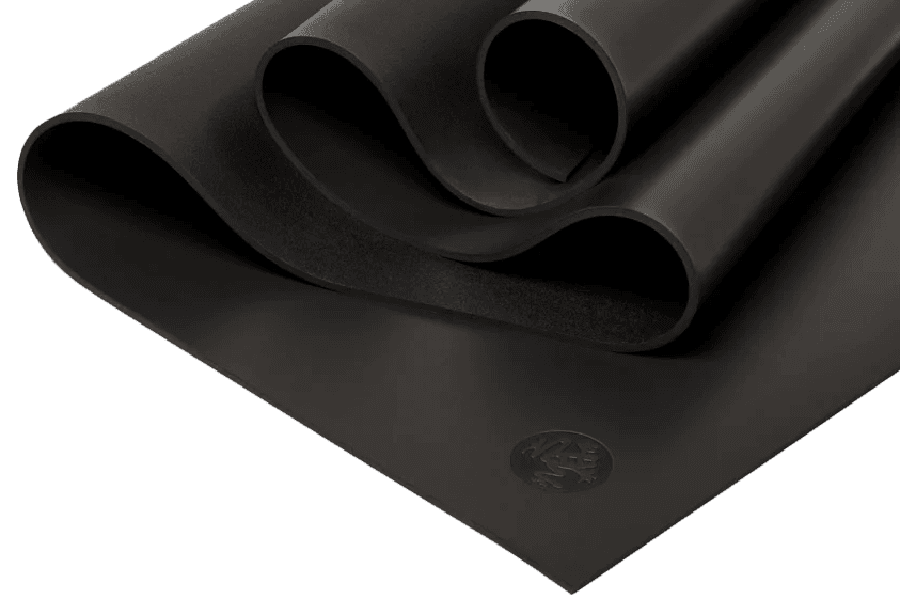
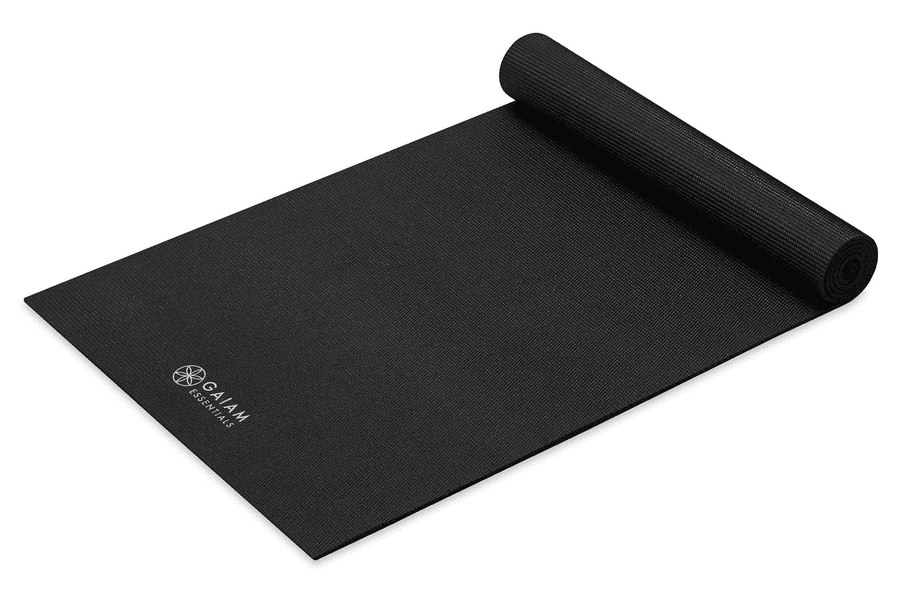
Price
The Gaiam Essentials lists for about $106 less.
$128
List price · check price at manduka.com
$22.13
List price · check price at Amazon
Thickness
The Gaiam Essentials is 20% thicker.
5 mm0.2″
6 mm0.24″
Weight
The Gaiam Essentials is 2.3 lbs lighter.
5.8 lbs2.6 kg
3.5 lbs1.59 kg
Size
The Gaiam Essentials is 1″ longer; the GRP Adapt 2.0 is 2″ wider.
Same on both
- Around 5 to 6 mm of cushioning
- 71 to 72 inches long
- Usable on both faces
- Both suffer if you leave them in the sun
Full specs
Dimensions
Materials & build
Buying
What $106 buys between these two
The Gaiam Essentials is one of the most-bought first mats in the country: 6 mm of soft PVC with a carry sling for about $22.13, holding 4.6 stars across roughly 14,965 Amazon ratings. The GRP Adapt 2.0 is Manduka’s heated-practice mat at $128.
GearLab scored the GRP 82 out of 100 with 9.5 for dry grip and 8.5 wet, the best wet result in a field of 19 mats, and gave it the award for grip in hot yoga. Almost the entire price gap is that one property.
Sweat is the deciding factor
The GRP’s Satin Grip polyurethane takes moisture into the top layer instead of letting it film over. That is a mechanism rather than a texture trick, and it is the reason the mat exists.
The Essentials is closed-cell PVC foam. GearLab has not tested it, but it measured Gaiam’s closely related 6 mm Premium at 6 out of 10 dry and 4 wet, which is the neighbourhood. The listing describes the texture as suitable for heated practice; take that as marketing rather than a test result.
The cheap mat is the softer one
Six millimeters of PVC foam is thicker than most studio mats use, and it is kind to knees and wrists in floor work. That is exactly why mats like this fill loaner piles and beginner shopping lists.
The cost is steadiness. GearLab found the same foam in Gaiam’s Premium unstable in balance poses, rating comfort and support 6.5 out of 10 and noting the surface holds a handprint for a moment. The GRP’s 5 mm of rubber under polyurethane does not deflect at all.
Balance poses separate these two
Six millimeters of soft PVC compresses unevenly under one foot. In tree pose or warrior three that leaves your ankle correcting for the surface as well as holding the shape, which is work the mat should not be creating.
GearLab’s note on Gaiam’s comparable 6 mm foam is that it holds a handprint for a moment after you lift your hand, and it rated that mat 6.5 out of 10 for comfort and support on the strength of it. Softness and stability pull against each other, and cheap foam picks softness.
The GRP’s rubber base does not move at all. Firmness is the second thing the price buys after grip, and the two together are why dense mats sit at 4 to 6 mm rather than chasing thickness with foam.
Size and weight
The Essentials is 72″ × 24″ and the GRP is 71″ × 26″. The cheap mat is an inch longer and two inches narrower, and width is what people notice in wide-legged stances.
On the scale the Essentials wins at 3.5 pounds against 5.8, and it includes a sling the GRP does not. If you need more length, Manduka sells a GRP Adapt 2.0 Long at 79″ for $138.
Years against a couple of seasons
Soft PVC foam compresses and takes a permanent set, so the Essentials you like in month one is flatter by month twenty. That is normal for a $22 mat and not a defect, and it is the reason studios replace these regularly.
The GRP runs for years, with its polyurethane top the part that eventually flakes under heavy heated use. Clean it with a damp cloth and a mild spray and dry it flat; scrubbing hard takes years off the surface.
The coverage runs backwards
Gaiam covers the Essentials for life, which is unusual at $22, and like every guarantee it addresses manufacturing defects rather than foam softening under normal use. Manduka gives the GRP Adapt 2.0 a 30 day return window and nothing after it.
Manduka’s lifetime guarantee applies only to the PRO and PROlite lines, so the cheaper mat has the longer promise on paper. Neither promise changes how these mats actually end.
Smell and unrolling a new mat
Gaiam asks buyers to air its mats out for two to three days before the first session and publishes a guide on removing the odor, which tells you how often people ask about it. It does fade.
The GRP’s polyurethane surface is much milder out of the box, which matters in a small flat. Both mats are latex-free on the surface, though the GRP has a natural rubber base, so it does not suit a latex allergy.
Where to buy, and a version trap
The Essentials is an Amazon staple and frequently sells below its list price, so check the current number before you order. It comes in about seven plain colors.
The GRP Adapt 2.0 sells direct from manduka.com at $128 in around five colorways, and it is not a stable Amazon listing. The older GRP Adapt 1.0 is still floating around Amazon as runout stock near $94, and it is a different mat from the Spanish-made 2.0 GearLab tested.
Bottom line
Buy the Essentials if you are new, practice in a cool room, and want to spend as little as possible finding out whether this sticks. It is a sound first mat, it comes with a sling, and 14,965 owners rating it 4.6 is not nothing.
Buy the GRP Adapt 2.0 if you take heated classes or sweat through normal ones. Nothing at $22 fixes grip when your palms are wet, so if that is your complaint the cheap mat is a detour rather than a saving.
Manduka GRP Adapt 2.0
List price $128
Gaiam Essentials 6mm
List price $22.13
Frequently Asked Questions
- Is the GRP worth almost six times the price?
- If you sweat, yes, and if you do not, no. GearLab measured the GRP at 8.5 out of 10 wet, the best of 19 mats, against roughly 4 for Gaiam's comparable foam. That gap is the difference between finishing a heated class and spending it wiping your palms. In a cool room where you stay dry, the Essentials does the job.
- How does the Gaiam feel underfoot?
- Soft, and softer than most studio mats. Six millimeters of PVC foam is kind to knees and wrists, which is why mats like this fill loaner piles. The cost is steadiness: GearLab found the same foam in Gaiam's Premium unstable in balance poses, rating comfort and support 6.5 out of 10 and noting the surface holds a handprint for a moment.
- Does the Gaiam Essentials smell?
- Often, out of the packaging. Gaiam asks buyers to air its mats out for two to three days before the first session and publishes a guide on removing the odor, which tells you how often people ask about it. It fades. The GRP's polyurethane surface is much milder, which matters if you unroll a mat in a small apartment.
- What about the lifetime guarantee?
- Gaiam covers the Essentials for life, which is genuinely unusual at $22, and like every guarantee it addresses manufacturing defects rather than foam softening from normal use. Manduka gives the GRP Adapt 2.0 a 30 day return window and nothing after it. The coverage runs opposite to the price, and neither promise changes how these mats actually end.
- Which lasts longer?
- The GRP, by a wide margin, though its polyurethane top is the part that eventually flakes after a couple of years of heavy heated use. Soft PVC foam compresses and takes a permanent set, so the Essentials you love in month one is flatter by month twenty. That is normal for a $22 mat rather than a defect.
- Where do I buy each one?
- The Essentials is an Amazon staple and frequently sells below its list price, so check before you order. The GRP Adapt 2.0 is sold direct by Manduka; it is not a stable Amazon listing, so $128 is close to what you will pay. Note the older GRP Adapt 1.0 is still floating around Amazon as runout stock at about $94.
Related comparisons
- YogaAccessories Extra Thick Deluxe 1/4" vs Gaiam Essentials 6mm
- Manduka GRP Adapt 2.0 vs Lululemon The (Big) Mat 5mm
- Gruper TPE 6mm vs Gaiam Essentials 6mm
- Amazon Basics 1/4 Inch Thick TPE vs Gaiam Essentials 6mm
- Lululemon The Mat 5mm vs Manduka GRP Adapt 2.0
- JadeYoga Harmony 74" vs Manduka GRP Adapt 2.0
- Manduka GRP Adapt 2.0 vs JadeYoga Harmony 2.0 68"
- JadeYoga Harmony XW vs Manduka GRP Adapt 2.0
- Manduka GRP Adapt 2.0 vs b, halfmoon B Mat Everyday 4mm