Manduka eKO Superlite vs B Mat Everyday 4mm: Which One Should You Buy?
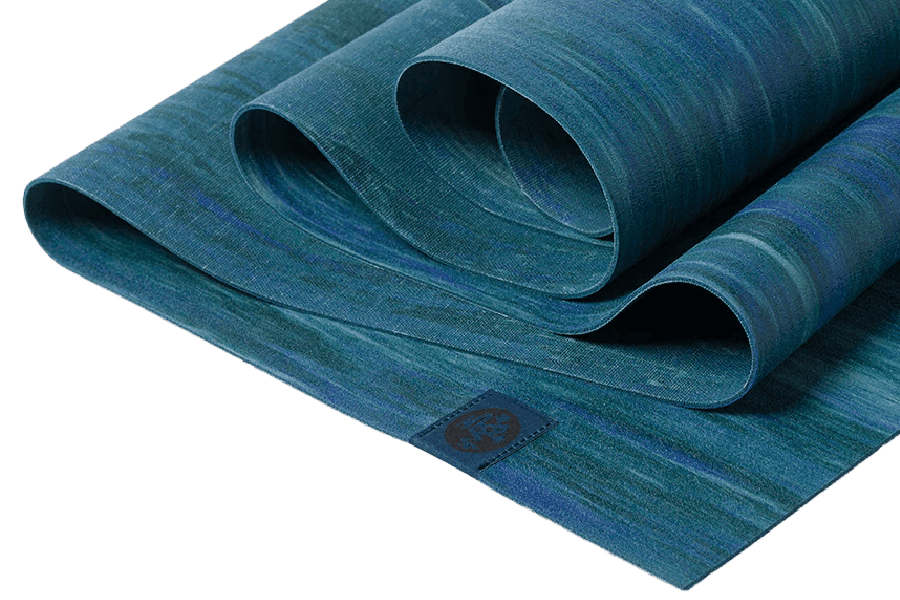
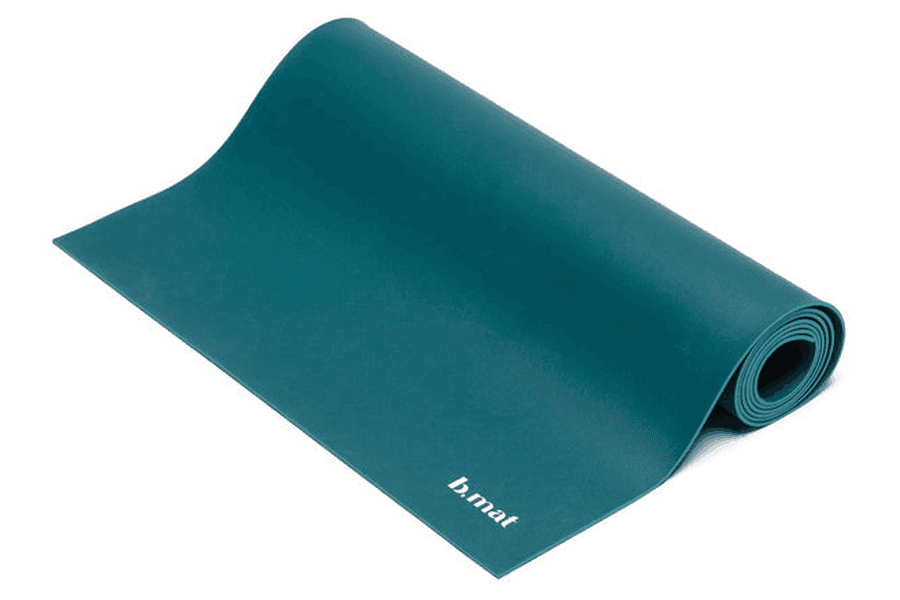
Both of these are rubber and both grip, so the comparison is not about traction. The eKO Superlite is 1.5 mm thick and 2.2 pounds, built to fold into a suitcase, and OutdoorGearLab scored its comfort 2 out of 10, which is what 1.5 mm feels like. The B Mat Everyday is a full 4 mm at 4.1 pounds and $118. One is a travel mat, the other is the mat you practice on.
As an Amazon Associate, we earn from qualifying purchases made through links on this page. How this works
The quick answer
If you are choosing one mat to own, it is the B Mat Everyday. Four millimetres of dense rubber is enough to kneel on, 26 inches is the modern width, the grip is as good as anything at any price, and it carries an OEKO-TEX Standard 100 certificate and a year of coverage. It costs $64 more and weighs almost twice as much.
The Superlite is not competing for that job and should not be judged on it. At 1.5 mm it folds flat, weighs 2.2 pounds, comes in more colorways than almost any mat, and costs $54. Buy it as the mat that lives in your suitcase, and buy it knowing that on a hard floor there is essentially nothing between you and the floor.
Get the Manduka eKO Superlite if...
- You need a mat that folds flat into luggage
- It is your second mat, not your only one
- You want grip from real rubber in a 2.2-pound package
- You want a choice of 19 colorways
Get the B Mat Everyday if...
- This is the mat you practice on several times a week
- You want 26 inches of width rather than 24
- You kneel enough that 1.5 mm is not an option
- You want a certified mat with a year of coverage
Side by side
Price
The Superlite lists for $64 less.
$54
List price · check price at Amazon
$118
List price · check price at bhalfmoon.com
Thickness
The B Mat Everyday is 167% thicker.
1.5 mm0.06″
4 mm0.2″
Weight
The Superlite is 1.9 lbs lighter.
2.2 lbs1 kg
4.1 lbs1.86 kg
Size
Same length; the B Mat Everyday is 2″ wider.
Same on both
- Natural rubber that grips from the first unroll
- No break-in period
- Both contain latex
- Both need to stay out of direct sun
Full specs
Dimensions
Materials & build
Buying
A travel mat and a studio mat
Both of these are natural rubber and both grip, so traction is not what you are choosing between. The eKO Superlite is 1.5 mm thick and 2.2 pounds, made to fold flat into a suitcase, at $54. The B Mat Everyday is a full 4 mm at 4.1 pounds and $118.
If you are shopping for the mat you practice on several times a week, this is a short comparison. If you already have that mat and you are looking for the one that travels, it is also a short comparison, in the other direction.
One and a half millimetres is as thin as it sounds
OutdoorGearLab scored the Superlite 2 out of 10 for comfort and support, one of the lowest results in a 19-mat test, and that is a fair description rather than a criticism. At 1.5 mm there is effectively nothing between your knee and the floor. On carpet it is fine. On tile or hardwood, kneeling and forearm work stop being pleasant within a class.
The B Mat Everyday’s 4 mm of dense rubber is enough for a normal practice on a hard floor. It is firm rather than plush, so it is not a cushioning mat either, but it is in a completely different category of usable.
Both grip, one grips more
GearLab tested the 4 mm B Mat, rated it 9 out of 10 for grip and called it among the grippiest mats it had used in wet or dry conditions. That is about as strong an endorsement as a mat surface gets, and it holds from the first unroll with no break-in.
The Superlite scored 7.5 dry and 5 wet, which is respectable for a mat this thin. Thin rubber also transmits everything under it, so a Superlite laid over an uneven floor feels less settled than the numbers suggest. Over carpet or on top of a studio mat, it is genuinely good.
Folding is the whole point of the Superlite
The Superlite folds flat and packs inside a bag rather than strapped to one. Creases show for the first few sessions and mostly settle out with use; folding along the same lines for years will eventually leave permanent marks, so roll it when you have the room. At 2.2 pounds it goes in hand luggage without a thought.
The B Mat Everyday rolls and does not fold. Dense rubber resents being creased. GearLab called it portable by the standards of mats it beats on grip, noting it rolls to about 3.5 to 4 inches across and runs two to four pounds lighter than most of them. That is a comfortable carry to a studio and not a mat that goes in a carry-on.
Twenty-four inches against twenty-six
Both are 71″ long. The B Mat is 26″ wide against the Superlite’s 24″, and those two inches are noticeable in a wide-legged stance where a hand keeps finding the floor.
Manduka does make a 79″ Superlite Long at $58 if length is the issue, and b, halfmoon sells an 85″ B Mat Everyday Long. Neither brand makes the other’s shape, so width belongs to the B Mat and packability belongs to the Superlite.
What each one asks of you
The B Mat carries OEKO-TEX Standard 100 certification and a one-year warranty, and it is made in Spain from mostly natural rubber with some synthetic content. Dense rubber wears slowly. Sun is what actually destroys it, so store it rolled and out of the light.
The Superlite gets Manduka’s 30-day return window and nothing after, because the lifetime guarantee is reserved for the PRO line. Thin rubber is more vulnerable to snags and tears than thick rubber, and a mat that lives folded in a bag needs to be dry before it goes in there or it will start to smell. Both contain latex, so neither works with an allergy.
Colors and character
The Superlite is one of the most colorful mats anyone sells, with 19 colorways at last count including a run of marbled finishes. For a travel mat that lives in a bag, that matters less than it does on a mat you look at every day, but it is genuinely fun.
The B Mat comes in seven colorways at last count, all fairly muted, and both faces are the same tacky rubber so either side practices. It is a plainer object and it is meant to be.
Price and value
$54 against $118. Check the live Superlite price on Amazon, where Manduka discounts individual colorways heavily and some run well under list. The B Mat Everyday is sold direct and is not on Amazon, so it holds its price.
As a single mat, the B Mat is the better spend even at more than twice the money, because you will use it every day and it will last. As a second mat, the Superlite at $54 is very hard to argue with, and b, halfmoon makes nothing comparable.
Bottom line
Get the B Mat Everyday if this is the mat you practice on. Four millimetres of grippy rubber at 26 inches wide, certified and covered for a year, is a mat you can build a practice on for years. It is the answer unless portability is the actual problem.
Get the Superlite if you need something that disappears into luggage. It grips properly, it weighs almost nothing, it comes in more colors than anything else, and at $54 it is the cheapest good travel mat Manduka makes. Do not ask it to be your only mat unless you practice on carpet.
B Mat Everyday 4mm
List price $118
Frequently Asked Questions
- Can you practice on the eKO Superlite every day?
- On carpet, yes. On a hard floor, most people cannot for long. At 1.5 mm there is effectively no cushion, which is why OutdoorGearLab rated its comfort and support 2 out of 10, one of the lowest scores in a 19-mat test. Kneeling, forearm work and any pose that puts a bone against the floor become uncomfortable quickly. It was designed as a travel mat and it is a very good one; it is not a daily home mat.
- Can you fold the B Mat Everyday for travel?
- It is not made for it. Four millimetres of dense rubber resists creasing and the mat is meant to roll; b, halfmoon sells it as an everyday studio mat. At 4.1 pounds it carries comfortably to a class down the street, and it rolls to a reasonably compact tube, but it is not going in a carry-on alongside your clothes. That is exactly the job the Superlite exists for.
- Do they grip equally well?
- The B Mat is grippier. GearLab tested the 4 mm B Mat, rated it 9 out of 10 for grip and called it among the grippiest mats it had used wet or dry. The Superlite scored 7.5 dry and 5 wet, which is respectable for a mat this thin but noticeably behind. Thin rubber also transmits every irregularity in the floor, so a Superlite laid over a rough surface feels less planted than the numbers suggest.
- Does the Superlite crease permanently when folded?
- Creases show for the first few sessions and mostly settle out with use, which is normal for a foldable rubber mat. Folding along the same lines repeatedly for years will eventually leave marks. Rolling it instead when you have the room is kinder to it. Rubber does not love being creased, so treat the folding as the feature you use when you need it rather than the default.
- Is either safe with a latex allergy?
- No. Both are natural rubber, which contains latex. The B Mat is described as mostly natural rubber with some synthetic content, which does not make it latex free. If you have a genuine allergy, a PVC mat such as the Manduka PRO Travel or a TPE mat is the direction to look.
- Which is better value?
- For a single mat, the B Mat Everyday, because you will actually use it every day and it will last. For a second mat, the Superlite is very hard to beat at $54, and b, halfmoon has no equivalent travel mat to sell you. A lot of people end up owning both, which is a slightly annoying answer but an honest one.
Related comparisons
- Manduka eKO Superlite vs JadeYoga Voyager
- Yoga Design Lab Combo 3.5mm vs b, halfmoon B Mat Everyday 4mm
- b, halfmoon B Mat Everyday 4mm vs Manduka GRP Adapt Lite 2.1 4mm
- Manduka PROlite vs b, halfmoon B Mat Everyday 4mm
- Lululemon The Mat 5mm vs b, halfmoon B Mat Everyday 4mm
- Manduka PROlite Long vs b, halfmoon B Mat Everyday 4mm
- b, halfmoon B Mat Everyday 4mm vs Manduka PRO Lite Terra 4.7mm
- b, halfmoon B Mat Everyday 4mm vs JadeYoga Harmony 2.0 68"
- JadeYoga Harmony 74" vs b, halfmoon B Mat Everyday 4mm