Manduka eKO Lite Long vs GRP Adapt 2.0: Which One Should You Buy?
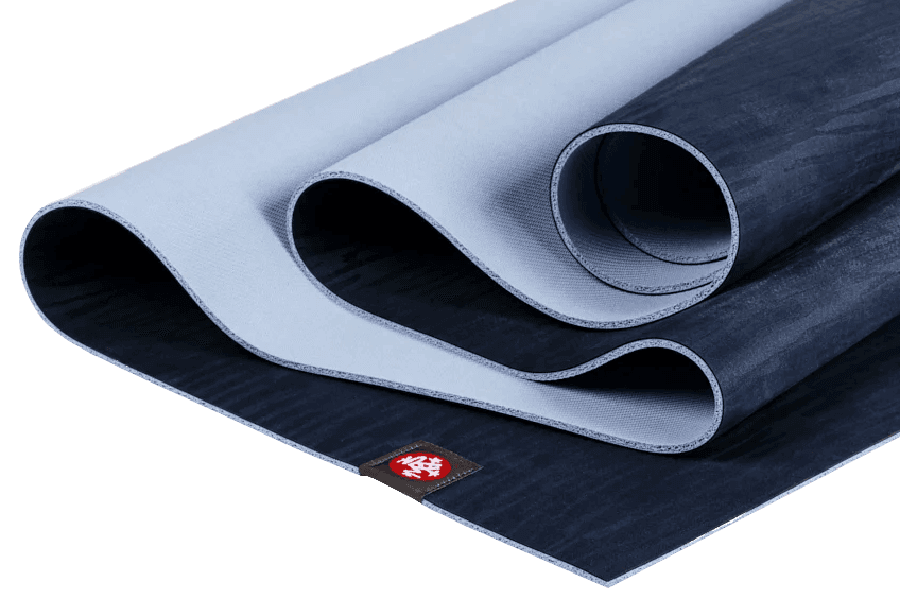
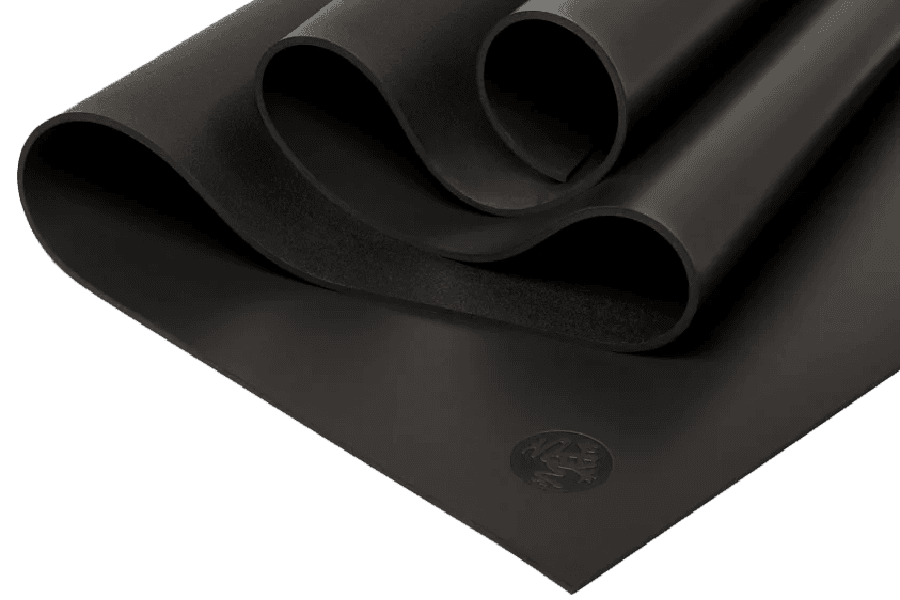
Only two tenths of a pound separate these Mandukas, but their shapes and surfaces differ. The eKO Lite Long is 79 by 24 inches and 4 mm with textured closed-cell rubber. The GRP Adapt 2.0 is 71 by 26 and 5 mm with an absorbent Satin Grip polyurethane face.
As an Amazon Associate, we earn from qualifying purchases made through links on this page. How this works
The quick answer
The eKO Lite Long is the better general-purpose mat for tall practitioners in unheated rooms. It costs $24 less, gives eight extra inches, and asks less after class.
Choose the GRP Adapt 2.0 if 71 inches fits and sweat is the recurring problem. It adds width, support, and award-winning hot-yoga grip. Tall hot-yoga practitioners should choose the GRP Long.
Get the eKO Lite Long if...
- You need 79 inches of length
- Your practice is mostly unheated
- You prefer textured natural rubber
- You would rather keep $24
Get the GRP Adapt 2.0 if...
- You practice hot yoga regularly
- Seventy-one inches fits your body
- You want 26 inches of width
- Your joints benefit from 5 mm support
Side by side
Price
The eKO Lite Long lists for $24 less.
$104
List price · check price at Amazon
$128
List price · check price at manduka.com
Thickness
The GRP Adapt 2.0 is 25% thicker.
4 mm0.16″
5 mm0.2″
Weight
The eKO Lite Long is 0.2 lbs lighter.
5.6 lbs2.5 kg
5.8 lbs2.6 kg
Size
The eKO Lite Long is 8″ longer; the GRP Adapt 2.0 is 2″ wider.
Same on both
- Natural rubber in the construction
- Grip without a break-in period
- Approximately 5.7 pounds
- Studio-friendly carrying weights
- No long-term warranty
- Not appropriate for latex sensitivity
Full specs
Dimensions
Materials & build
Eight inches against a hot-yoga surface
The eKO Lite Long measures 79 by 24 inches, is 4 mm thick, and weighs 5.6 pounds. The standard GRP Adapt 2.0 measures 71 by 26, is 5 mm, and weighs 5.8 pounds. Natural rubber gives the Lite dry texture; polyurethane gives the GRP absorbent wet grip.
Only $24 separates them. Tall fit favors the eKO, while broad frames, sensitive joints, and heated practice favor the GRP. Anyone who needs all of those attributes should choose the GRP Long rather than compromise.
Think about the class that exposes your current mat first. If it is savasana, long lunges, or floor work that runs past the ends, buy length. If it is a heated flow where hands slide as moisture builds, buy the absorbent surface. Both are credible daily mats, so the recurring failure is more useful than a general quality ranking. Your room temperature, floor, and usual sequence matter more than either mat’s broader reputation. Test those conditions honestly before ordering.
Long and narrow meets short and wide
The eKO’s 79 inches support most practitioners over six feet through savasana and long lunges. Its 24-inch width is conventional and fits crowded studio rows. The GRP loses eight inches of length but gains two across the mat.
Broad shoulders and wide floor work benefit from the GRP’s width. Tall bodies usually benefit more from length because head and heels cannot share 71 inches indefinitely. The 79 by 26 inch GRP Adapt 2.0 Long removes the dimensional tradeoff for $138.
Dry practice favors rubber; sweat favors GRP
Rippled eKO rubber feels tacky immediately and provides excellent dry traction without a break-in. Closed cells keep moisture outside, making cleanup easy. As sweat accumulates on top, that same design eventually becomes slippery.
Satin Grip polyurethane is smoother and absorbs moisture into the GRP. The standard 2.0 earned GearLab’s hot-yoga grip award in its 2026 test. That advantage matters for heated classes and heavy perspiration; in a dry room, the eKO’s simple tactile surface is easier to maintain.
The GRP adds one millimeter and firmer feedback
Four millimeters makes the eKO Lite Long a credible daily mat on wood and studio floors. The 5 mm GRP provides more protection in kneeling poses and feels firmer through its layered construction. Neither behaves like soft exercise foam.
Sensitive knees on concrete should favor the GRP if its length fits. The eKO creates a slightly more direct connection to the ground and remains stable during balance. Regular low lunges and tabletop work reveal the thickness gap more clearly than standing poses.
Weight ties, but the eKO rolls narrower
At 5.6 and 5.8 pounds, these mats feel almost identical over a shoulder. The eKO rolls to 24 inches across, while the GRP creates a 26-inch cylinder. The narrower roll is easier through buses, lockers, and packed studios.
The Lite’s extra length does not make it heavier than the GRP because it is thinner and narrower. Both are practical commuting mats. The decision should rest on whether the additional roll length or width is more awkward in your particular route and storage space.
The sweat specialist needs more after class
The eKO needs gentle wiping, full drying, and protection from direct sun or heat. The GRP absorbs sweat and must air dry completely before rolling. Oils, lotions, and unsuitable cleaners can mark or interfere with its polyurethane surface.
Neither mat carries a long-term warranty. Absorbent performance is useful enough to justify its routine for a hot-yoga regular. A dry practitioner receives no meaningful benefit from storing a mat open longer and monitoring body oils or stains.
Both contain rubber and exclude latex-sensitive buyers
Manduka makes the eKO Lite Long in Taiwan from natural rubber with recycled content and no PVC. The GRP is made in Spain from polyurethane, natural rubber, and latex with 20% recycled materials. Neither is safe for a true latex sensitivity.
The eKO has the simpler material stack and direct rubber feel. The GRP’s synthetic top exists for moisture management rather than decoration. Choose it for that performance, not from an assumption that a higher price means a universally better material.
Twenty-four dollars and very different color ranges
The Lite Long lists for $104 in Acai Midnight or Charcoal. Check its Amazon listing. The GRP lists for $128 in about five colors through Manduka.
The $24 premium buys width, thickness, and wet grip while giving up length. It is strong value for someone who fits 71 inches and sweats heavily. A tall dry-practice buyer should keep the money and choose the eKO’s more useful shape.
Bottom line
Buy the eKO Lite Long for height, dry rubber grip, easier ownership, and a narrower studio roll. It is the better general-purpose mat for a tall practitioner who does not regularly practice hot yoga.
Buy the standard GRP Adapt 2.0 if 71 inches fits and sweat is the reason you are replacing a mat. It adds room across the body and better knee support. Tall hot-yoga practitioners should step up to the GRP Long.

Manduka GRP Adapt 2.0
List price $128
Frequently Asked Questions
- Which mat is better for hot yoga?
- The GRP Adapt 2.0. Its open-cell Satin Grip polyurethane absorbs moisture and earned GearLab's hot-yoga grip award. The eKO Lite Long keeps sweat on top and eventually needs a towel.
- Which mat is better for tall people?
- The eKO Lite Long is eight inches longer at 79 by 24 inches. The standard GRP measures 71 by 26. Manduka also sells a 79 by 26 inch GRP Adapt 2.0 Long for tall hot-yoga practitioners.
- Which mat is more comfortable?
- The GRP is one millimeter thicker and provides more protection on hard floors. Its layered build feels firm. The eKO Lite Long is still comfortable on wood and studio floors and feels more direct underfoot.
- Which mat is easier to carry?
- Their weights nearly tie at 5.6 pounds for the Lite Long and 5.8 for the GRP. The eKO creates a narrower 24-inch roll, while the GRP is 26 inches across but eight inches shorter.
- Which mat is easier to clean?
- The eKO Lite Long. Its closed-cell rubber wipes clean and dries more predictably. The GRP absorbs sweat, must dry completely before rolling, and should stay clear of oils, lotions, and unsuitable cleaners.
- Are either mats latex-free?
- No. The eKO Lite Long is natural rubber, while Manduka lists natural rubber and latex in the GRP construction. Anyone with a true latex sensitivity should avoid both.
Related comparisons
- Manduka GRP Adapt 2.0 vs Yoga Design Lab Infinity 5mm
- Manduka GRP Adapt 2.0 vs Hugger Mugger Para Rubber 5mm
- Manduka GRP Adapt 2.0 vs Lululemon The (Big) Mat 5mm
- Lululemon The Mat 5mm vs Manduka GRP Adapt 2.0
- JadeYoga Harmony 74" vs Manduka eKO Lite Long
- JadeYoga Harmony 68" vs Manduka eKO Lite Long
- Manduka eKO Lite Long vs Suga SugaMat
- Manduka eKO Lite Long vs JadeYoga Harmony 2.0 68"
- Manduka eKO Lite Long vs Yoga Design Lab Combo 3.5mm