Lululemon The Mat 5mm vs Retrospec Solana 1": Which One Should You Buy?
These two get compared because they sit next to each other in search results, not because they do the same job. The Mat is Lululemon's polyurethane-topped rubber mat, fourth of 19 in GearLab's 2026 test. The Solana 1" is a full inch of soft foam aimed at people whose knees hurt. Picking between them means deciding what your session actually looks like.
As an Amazon Associate, we earn from qualifying purchases made through links on this page. How this works
The quick answer
The Mat scored 81 out of 100 with GearLab and won the award for mixed fitness routines, largely on the strength of a polyurethane top that absorbs sweat and a perfect 10 for comfort and support. The Solana 1" is 25 mm of NBR foam with a ribbed surface and a carry strap for about $40, holding 4.5 stars across roughly 14,900 Amazon ratings.
For yoga, take The Mat and do not think too hard about it; an inch of foam under a standing foot works against you in every balance pose. For stretching, mat Pilates, physio work or anything on your knees and back, the Solana is the more comfortable surface and it costs $78 less.
Get Lululemon The Mat if...
- You practice yoga rather than stretch and do floor work
- You sweat and need grip that survives it
- You want a stable surface in standing and balance poses
- You want 26 inches of width and a reversible rubber side
Get the Retrospec Solana 1" if...
- You want the most padding you can get for a hard floor
- Your sessions are stretching, Pilates or rehab work
- You want a strap included and 4 pounds to carry
- You'd rather keep about $78
Side by side
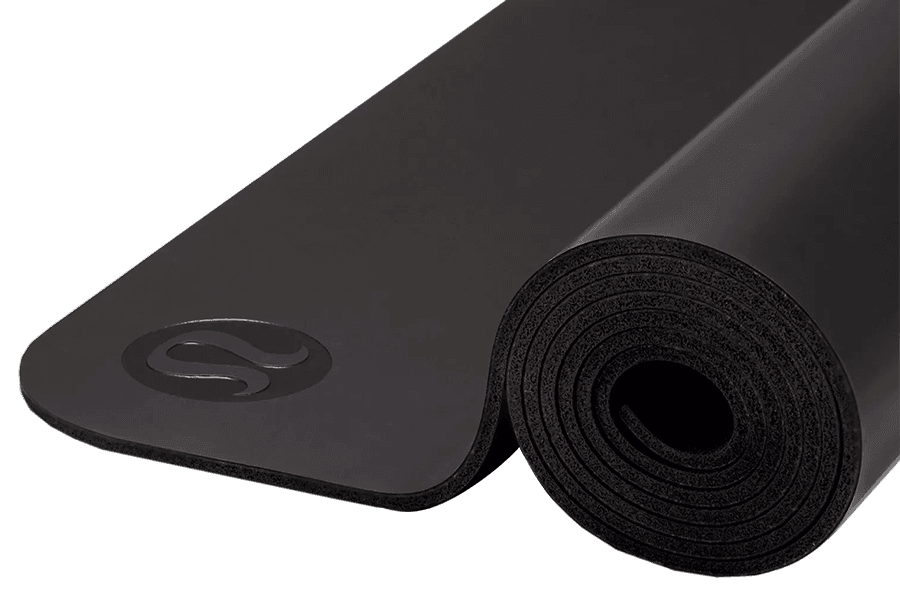
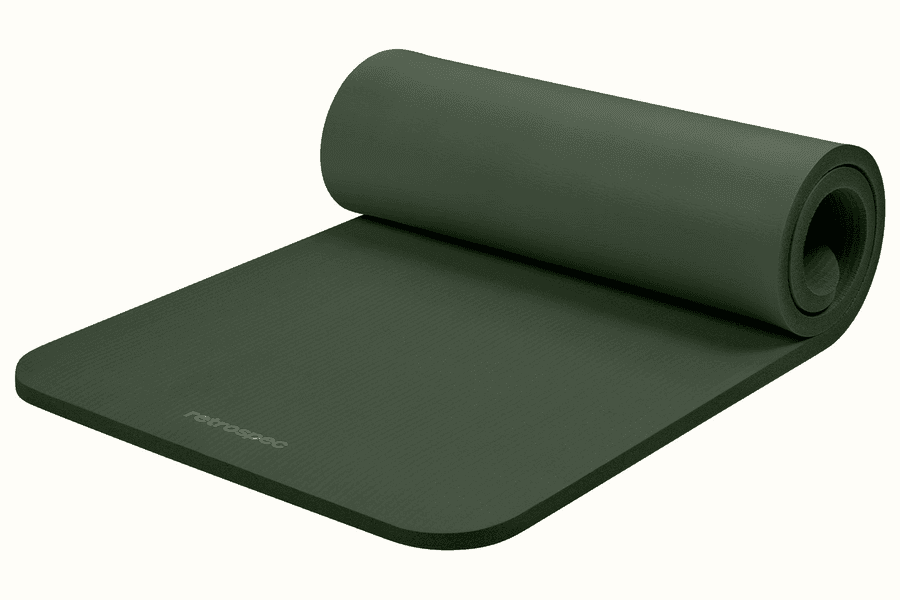
Price
The Solana 1" lists for about $78 less.
$118
List price · check price at lululemon.com
$39.99
List price · check price at Amazon
Thickness
The Solana 1" is 408% thicker.
5 mm0.2″
25.4 mm1″
Weight
The Solana 1" is 1.2 lbs lighter.
5.2 lbs2.4 kg
4 lbs1.81 kg
Size
The Solana 1" is 1″ longer; the Mat is 2″ wider.
Same on both
- About 72 inches long
- Both are best kept out of direct sun
- Both can be carried, though for different reasons
- Neither is meant for shoes
Full specs
Dimensions
Materials & build
Buying
Neighbours in search results, not on the shop floor
These two turn up together because Amazon files both under yoga mats. One is a $118 rubber mat with a grippy polyurethane top that GearLab placed fourth of 19 in its 2026 test. The other is a full inch of NBR foam for about $39.99, sold on joint relief and rated 4.5 stars by roughly 14,900 Amazon buyers.
Both are around 72 inches long, and after that the specs stop rhyming: 5 mm against 25.4, 26 inches wide against 24.
What 25 mm of foam does under a standing foot
The foam compresses more under your heel than under the ball of your foot, so the surface tilts as you shift weight and your ankle spends the pose keeping it level. Tree, warrior three and half moon become harder without becoming more useful. Retrospec’s own listing leads with stretching, mat Pilates and somatic work rather than yoga sequences.
The Mat does not deflect. GearLab’s perfect 10 for comfort and support is a measure of exactly that: 5 mm of dense rubber holds you up instead of absorbing you. If your practice involves standing on one leg, that is the property that matters most.
Grip: absorption against ribs
The Mat’s polyurethane top takes moisture in rather than letting it form a slick film. GearLab scored it 6.5 dry and 4.5 wet, which is mid-pack and lower than the mat’s reputation, so it is not invincible in a hot room. It is still a different mechanism from anything foam can do.
The Solana’s ribbed surface holds a dry bare foot on a hard floor. Damp palms sit on top of closed-cell foam with nowhere to drain, and the ribs stop mattering. In a heated class it becomes a hazard.
The Solana’s case, which is a real one
If a hard floor is what stops you practicing, an inch of foam solves that outright and no yoga mat comes close. Rehab exercises, core work on your back, seated practice, long stretching sessions: the Solana is the more comfortable surface for all of it and it costs $78 less.
The alternative is a firm mat plus a knee pad or a folded blanket, which puts the cushioning where it helps and leaves the rest stable. If most of your time is spent standing, that is the better answer.
The Mat has a second surface
Flip The Mat over and you get the natural rubber base, which is a drier, easier-to-clean surface for cool practice or for other floor training. Lululemon uses FSC certified rubber for that layer, which is a legitimate certification rather than a marketing badge.
That reversibility is part of why GearLab handed it the mixed fitness routines award. If your mat is doing double duty for weights or bodyweight work as well as yoga, it is a genuine advantage the Solana cannot match.
How each one ages
The polyurethane top is The Mat’s weak point. It is the part doing the gripping and the part that wears, and owners often report flaking or peeling after a couple of years of heavy use, accelerated by aggressive cleaning. Lululemon’s quality promise has no stated term, so treat it as a mat with a good few years in it rather than a decade.
The Solana dents permanently where weight sits, usually within the first year, and tears at the edges. Retrospec covers manufacturing defects for six months with a 30 day return window. Neither of these is a long-life mat; for that, our The Mat vs Manduka PRO comparison covers the alternative.
Buying: one is Amazon-only, one is not on Amazon at all
Lululemon sells The Mat exclusively through its own stores and website, so there is no Amazon listing and no third-party price to hunt for. The US list price is $118. Several review sites still quote $98, which is stale, so check lululemon.com rather than trusting an old article.
The Solana goes the other way. You can check its price at Amazon, which is where most of them are sold, and Retrospec also lists it on its own site.
Price and value
At $118 against $39.99, the gap is around $78. That money buys grip, stability and a second usable surface. It does not buy cushioning, and it does not buy a longer life than the Solana by as wide a margin as the price suggests.
Read the Solana’s reviews and most of the enthusiasm is about knees, home workouts and value rather than yoga practice. That is a fair reflection of what it is good at.
Bottom line
Buy Lululemon The Mat if you practice yoga in the usual sense, especially if you sweat. It scored 81 out of 100 with GearLab, grips better than anything at a quarter of the price, and flips over for dry work.
Buy the Retrospec Solana 1″ if your joints are the limiting factor and your session happens on the ground. If you want some cushion and some stability, Retrospec’s half inch version is the sensible middle of its own range.
Lululemon The Mat 5mm
List price $118
Retrospec Solana 1"
List price $39.99
Frequently Asked Questions
- Why is an inch of foam bad for yoga?
- It is not bad, it is just aimed elsewhere. On 25 mm of soft NBR your standing foot sinks unevenly, so your ankle stabilises the mat rather than you, and holding tree or half moon becomes a fight with the surface. Retrospec's own copy leads with stretching, mat Pilates and somatic movement, which is an honest description. If you want cushion for yoga, the half inch Solana is steadier.
- How much better is The Mat's grip?
- Meaningfully better, though not perfect. The polyurethane top absorbs moisture instead of letting a slick film form, and GearLab scored The Mat 6.5 out of 10 dry and 4.5 wet. That wet number is lower than the mat's reputation suggests, but the Solana's closed-cell foam offers nothing at all once your palms are damp; sweat just sits on the ribs.
- Which is more comfortable?
- Depends on the pose. GearLab gave The Mat a perfect 10 for comfort and support, which is about support rather than softness: 5 mm of dense rubber holds you up without sinking. The Solana is far softer under a kneecap and far less helpful under a standing leg. If your knees are the reason you are shopping, the Solana is the answer to that specific problem.
- Does The Mat wear out?
- The top layer does. Polyurethane grips well and is the part that goes first; owners often see flaking or peeling after a couple of years of hard use, and aggressive cleaning speeds it up. Lululemon backs the mat with a quality promise that has no stated term. The Solana's foam dents permanently within about a year of regular use, and Retrospec's warranty covers defects for six months.
- Can I get The Mat cheaper somewhere?
- Not really. Lululemon sells through its own stores and website only, with no Amazon listing, so there is no third-party price to chase. The list price is $118. A number of review sites still quote $98, which is out of date, so treat lower numbers with suspicion.
- Is there a middle option?
- Plenty. Natural rubber mats around $100 give you grip through absorption instead of a coating. Manduka's PROlite is $112 of dense PVC with a decade-long lifespan and no cushion to speak of. If padding is what you want in a real yoga mat, a 6 mm rubber or PVC mat is a better compromise than an inch of exercise foam.
Related comparisons
- Amazon Basics 1 Inch Extra Thick vs Retrospec Solana 1"
- JadeYoga Harmony 74" vs Lululemon The Mat 5mm
- Manduka PROlite Long vs Lululemon The Mat 5mm
- Lululemon The Mat 5mm vs JadeYoga Harmony 2.0 68"
- Manduka PROlite vs Lululemon The Mat 5mm
- Lululemon The Mat 5mm vs Manduka GRP Adapt 2.0
- Lululemon The Mat 5mm vs Manduka eKO
- Lululemon The Mat 5mm vs b, halfmoon B Mat Everyday 4mm
- Lululemon The Mat 5mm vs Manduka PRO Lite Terra 4.7mm