Liforme Classic vs Jade Harmony 2.0: Which Should You Buy?
The Liforme Classic and Jade Harmony 2.0 both offer strong traction without a break-in period. Liforme adds a smooth sweat-ready top, alignment guides and a larger practice area. Harmony keeps things simpler with textured natural rubber and a much lower price.
As an Amazon Associate, we earn from qualifying purchases made through links on this page. How this works
The quick answer
Liforme is better for hot yoga, alignment work and anyone who feels cramped on a standard mat. Harmony 2.0 is slightly thicker, 0.7 pound lighter and $55.05 cheaper. Its dry grip is excellent, though the texture can feel rough.
Get Liforme if you will use the extra space and alignment marks. Get Harmony 2.0 for dry practice and better value. Jade also provides a one-year warranty, while Liforme offers only a 30-day money-back period.
Get the Liforme Classic if...
- You want printed alignment guides
- You practice hot yoga regularly
- A 72.8 by 26.8 inch surface suits you
- You prefer smooth grip over tacky rubber
Get Harmony 2.0 if...
- You practice mostly dry yoga
- You want to save $55.05
- A lighter mat is easier for your commute
- You want a clear one-year warranty
Side by side
Price
The Harmony 2.0 lists for about $55 less.
$165
List price · check price at Amazon
$109.95
List price · check price at jadeyoga.com
Thickness
The Harmony 2.0 is 14% thicker.
4.2 mm0.17″
4.8 mm0.19″
Weight
The Harmony 2.0 is 0.7 lbs lighter.
5.5 lbs2.5 kg
4.8 lbs2.18 kg
Size
The Liforme is 4.8″ longer; the Liforme is 2.8″ wider.
Same on both
- Strong grip without a break-in period
- Natural-rubber construction
- Absorb moisture
- Firm, stable support
- Contain latex
- Current GearLab award winners
Full specs
Dimensions
Materials & build
Buying
- Long74" × 24"
Liforme adds space and alignment marks for $55 more
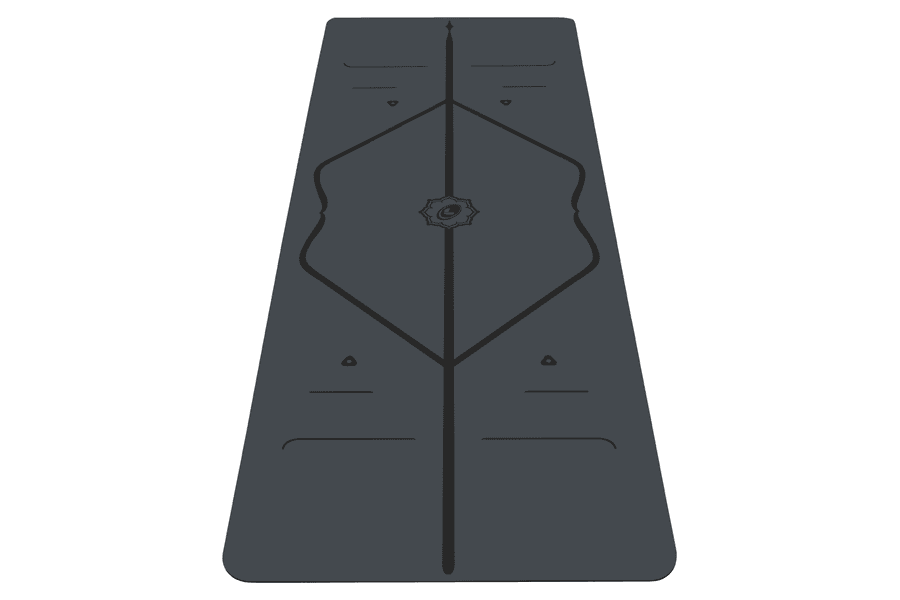
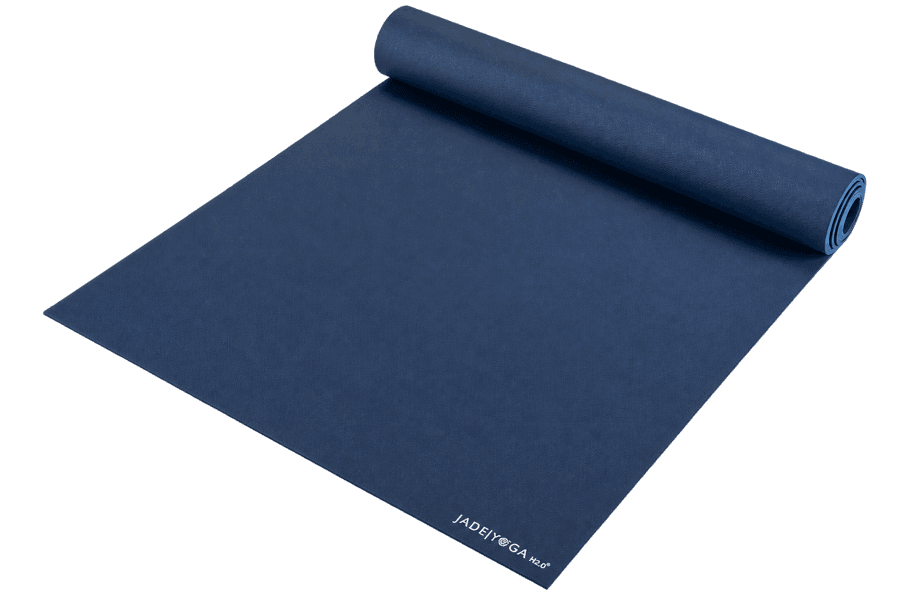
Both of these mats are known for grip, but they do not feel alike. The Liforme Classic has a smooth polyurethane top with printed alignment guides. Harmony 2.0 uses textured natural rubber without markings. Liforme is also longer, wider, and $55.05 more expensive.
We would buy Liforme for hot yoga, alignment help, and a roomier practice surface. Harmony 2.0 is the more sensible choice for most dry classes. It grips very well, weighs less, and leaves enough money for a strap or towel.
Both grip hard, but Liforme handles sweat better
Liforme’s GripForMe polyurethane is designed to stay secure as it gets damp. GearLab gave the Classic its alignment award and rated its wet and dry traction highly. The surface feels smooth rather than sticky, which makes flowing transitions easier.
Harmony 2.0 has excellent dry traction from its rubber surface. GearLab named it an eco-friendly dry-grip pick. Open cells absorb some moisture, but Jade is not positioned as a hot-yoga specialist. Heavy sweat is more likely to call for a towel.
Harmony’s texture can feel abrasive, particularly in poses that put bare knees or forearms on the mat. Liforme is friendlier to skin. For a mostly dry practice, that is a preference rather than a clear performance gap. For regular heated classes, Liforme is better.
Liforme’s alignment system is genuinely useful
The centerline, end-to-end line, and hand and foot markers make it easier to check symmetry without looking toward a mirror. They do not correct a pose for you, but they give repeatable reference points for hands, heels, and stance width. Beginners and people working on precise placement may use them every class.
Harmony 2.0 has a plain surface. Experienced practitioners may prefer the cleaner look, and nobody needs printed marks to practice well. Still, alignment guides are a real feature rather than decoration. If that is why you are considering Liforme, Harmony does not offer an equivalent.
Liforme is larger, while Harmony has more rubber underfoot
The Classic measures 72.8 by 26.8 inches. Harmony 2.0 is 68 by 24 inches. Liforme gives taller practitioners almost five extra inches of length and nearly three inches of width, which is easy to notice in supine poses and wider movement.
Harmony is 4.8mm thick, compared with 4.2mm for Liforme. Both are firm mats, and the 0.6mm difference is modest. Harmony provides a little more material between your joints and the floor. Liforme’s wider footprint will matter more to many people than the thickness difference.
Harmony is the easier studio commuter
Liforme weighs 5.5 pounds and Harmony about 4.8. The Classic also rolls into a wider bundle. Liforme includes a carrying bag, which helps, but the 0.7-pound difference still shows up on a long walk or a crowded train.
Harmony is not especially light, but it is easier to carry several times a week. Liforme also makes a thinner Classic Travel if you want its surface and markings with less weight. That model gives up much of the Classic’s cushioning.
Both require gentle cleaning and full drying
These absorbent mats need to dry completely after a sweaty class. Use a damp cloth and mild, well-diluted soap when needed. Strong cleaners, essential oils, soaking, and direct sun can damage their surfaces or rubber bases.
Liforme’s smooth top is easier to wipe, though it can show stains and wear in high-contact areas. Harmony collects more lint and may shed as its rubber ages. Jade says the 2.0 formula is tougher than the original, but there is not enough long-term ownership evidence yet to say how large the improvement will be.
Jade provides clearer sourcing and better coverage
Liforme uses a polyurethane top over a natural-rubber base and carries vegan certification. Harmony 2.0 uses FSC-certified natural rubber, is OEKO-TEX certified, and is made in Spain with renewable energy. Jade also plants a tree for every mat sold.
Harmony has a one-year warranty. Liforme offers a 30-day money-back guarantee but no ongoing product warranty. That is thin coverage for a $165 mat. Both contain natural rubber and should be avoided by people with latex allergies.
What the extra $55 buys
The Liforme Classic lists for $165. Harmony 2.0 is $109.95. Check the current Liforme price and the Harmony price at JadeYoga before ordering.
The extra cost makes sense if you use the alignment guides, need more space, or practice in enough sweat to benefit from Liforme’s polyurethane top. If those features are not important, Harmony gives you excellent grip and slightly more cushioning for much less money.
The Classic includes a carrying bag, while Harmony is sold without one. That saves a separate purchase and makes the heavier Liforme easier to manage, but it does not close a $55.05 price gap. We would treat the bag as a useful extra, not a reason to choose the mat.
Bottom line
Get the Liforme Classic if you want alignment guides, a generous surface, and reliable grip in heated classes. It is expensive and has weak warranty coverage, but its main features are useful and difficult to match in a cheaper mat.
Get Harmony 2.0 if you practice mostly dry and can fit on a standard 24-inch width. It is lighter, thicker, and $55.05 cheaper, with certified rubber and a one-year warranty. Its rougher texture and shorter length are the reasons to spend more on Liforme.
Liforme Classic
List price $165
Jade Harmony 2.0
List price $109.95
Frequently Asked Questions
- Which has better grip, Liforme or Harmony 2.0?
- Both have excellent grip. Liforme's polyurethane top is better suited to heavy sweat and feels smooth under skin. Harmony 2.0 has unusually strong dry traction, but its rubber texture can feel abrasive.
- Are Liforme's alignment marks useful?
- They can be. The marks provide reference points for the centerline, hands, feet and stance width. They are helpful for checking symmetry and repeating placement, though they do not replace instruction or make the mat necessary for good alignment.
- Which mat is better for tall people?
- The Liforme Classic. It measures 72.8 by 26.8 inches, compared with 68 by 24 inches for this Harmony 2.0. Jade sells a 74-inch Harmony, but it stays 24 inches wide.
- Which mat is easier to carry?
- Harmony 2.0. It weighs about 4.8 pounds and is 24 inches wide. Liforme weighs 5.5 pounds and rolls to a 26.8-inch width, though it includes a carrying bag.
- Does Harmony 2.0 last longer than Liforme?
- There is not enough comparable long-term evidence to promise that. Both absorb moisture and will wear with heavy use. Jade provides a one-year warranty, while Liforme provides a 30-day money-back guarantee without an ongoing product warranty.
- Are either of these mats safe for a latex allergy?
- No. Both use natural rubber and may contain latex. Anyone with a rubber or latex allergy should choose a latex-free mat instead.
Related comparisons
- Manduka PRO Lite Terra 4.7mm vs JadeYoga Harmony 2.0 68"
- Manduka PROlite vs JadeYoga Harmony 2.0 68"
- Lululemon The Mat 5mm vs JadeYoga Harmony 2.0 68"
- Suga SugaMat vs JadeYoga Harmony 2.0 68"
- Manduka PROlite Long vs JadeYoga Harmony 2.0 68"
- Manduka GRP Adapt Lite 2.1 4mm vs JadeYoga Harmony 2.0 68"
- Manduka eKO Lite Long vs JadeYoga Harmony 2.0 68"
- Manduka eKO vs JadeYoga Harmony 2.0 68"
- b, halfmoon B Mat Everyday 4mm vs JadeYoga Harmony 2.0 68"