Jade Harmony XW vs Manduka eKO Superlite: Which One Should You Buy?
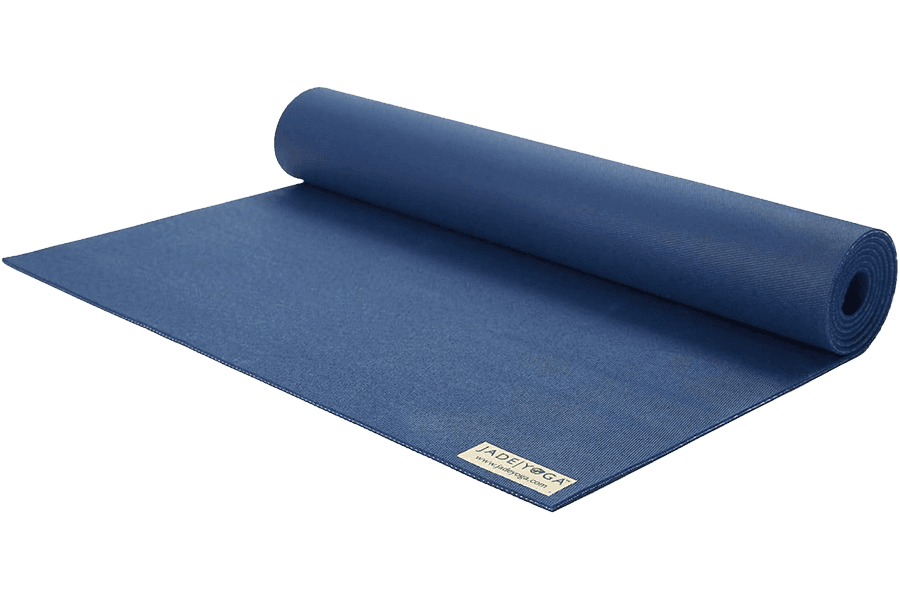
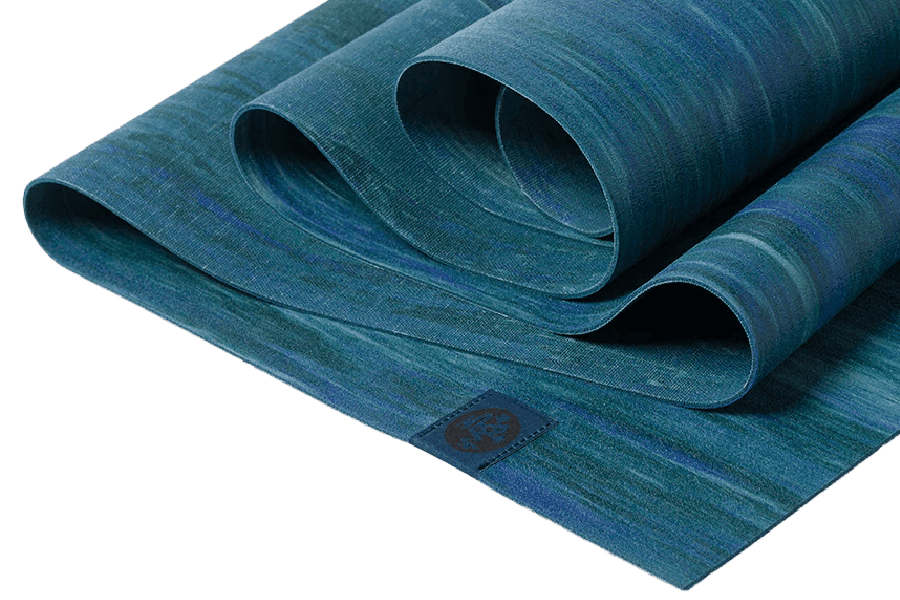
One of these is the biggest mat Jade makes; the other is close to the least mat Manduka will sell you. The Harmony XW is 80" × 28" of 4.8 mm open-cell rubber for practicing at home, 6.7 pounds of it. The eKO Superlite is 1.5 mm of closed-cell rubber that folds into a suitcase at 2.2 pounds. They share material and grip, and compete for almost nothing else.
As an Amazon Associate, we earn from qualifying purchases made through links on this page. How this works
The quick answer
As a primary mat the XW wins by default: it cushions knees, absorbs sweat, and fits any body, while the Superlite's 1.5 mm offers grip with no padding whatsoever. As a travel mat the Superlite wins just as automatically, folding flat at 2.2 pounds while the 6.7 pound XW won't even fit a standard mat strap.
Buy the XW if you're equipping the place you practice. Buy the Superlite if your practice keeps leaving town without a mat. Plenty of people should quietly buy both, since together they run about $204 and neither can cover for the other.
Get the Harmony XW if...
- You need the mat you'll practice on most days
- You're tall, broad, or both; 80" × 28" fits everyone
- You want real cushioning and sweat-absorbing grip
- A written 1 year warranty matters at this price
Get the eKO Superlite if...
- You already own a primary mat you're happy with
- You fly or pack light; it folds into a carry-on
- You want 2.2 pounds of mat, not 6.7
- You want the cheapest way to keep practice going on the road
Side by side
Price
The Superlite lists for about $96 less.
$149.95
List price · check price at Amazon
$54
List price · check price at Amazon
Thickness
The Harmony XW is 220% thicker.
4.8 mm0.19″
1.5 mm0.06″
Weight
The Superlite is 4.5 lbs lighter.
6.7 lbs3 kg
2.2 lbs1 kg
Size
The Harmony XW is 9″ longer; the Harmony XW is 4″ wider.
Same on both
- Natural rubber, tapped from trees
- Grip from the first practice, no break-in
- Not suitable for latex allergies
- Need shade, gentle cleaners, and no hot cars
Full specs
Dimensions
Materials & build
Almost nothing about these two overlaps
The Harmony XW is the biggest mat Jade makes: 80″ × 28″, 4.8 mm of tacky open-cell rubber, 6.7 pounds, $149.95. The eKO Superlite sits near the minimum a yoga mat can be: 71″ × 24″, 1.5 mm of closed-cell rubber, 2.2 pounds, $54, thin enough to fold flat into a suitcase.
Anyone weighing them against each other is usually still deciding what they’re shopping for: more mat at home, or a mat that can leave home. Both are natural rubber and both grip well from the first practice. Nearly everything else differs, so the useful work here is matching each product to the problem it was built for.
The case for the XW
The XW removes size from your practice entirely. Its 80 inches cover any height, its 28 inch width keeps shoulders, elbows, and wide-legged stances on the mat, and its 4.8 mm of firm open-cell rubber cushions kneeling work while staying stable under balance poses. The grip is the classic Harmony trait: tacky immediately, and it keeps holding when your palms get damp. Jade builds it in the USA and plants a tree for every mat sold, more than two million so far.
Its costs are physical, and they only apply in transit. Parked on a floor, 6.7 pounds is irrelevant and the oversized footprint is the entire appeal; carried around town, both become chores, and the roll is too wide for standard straps and bags anyway. Most owners leave it set up at home or park it in a studio locker, and it comes in Midnight Blue only. If 80″ × 28″ is more mat than your frame needs, the standard 68″ Harmony gives you the same surface for $50 less.
The case for the Superlite
The Superlite is built to disappear into luggage. It folds flat like a beach towel, weighs 2.2 pounds, and keeps a practice going in hotel rooms, guest rooms, and drop-in studios in cities you’re only visiting. At $54 it’s the kind of purchase you stop debating after the first trip where you wished you had one.
Its limits are equally clear. At 1.5 mm it provides grip and essentially nothing else; there is no cushioning to speak of. Its 71 inches cover practitioners to about six feet, and taller travelers should look straight at the 79″ Superlite Long at $58, one of very few packable mats in that length.
Where each one sits in its family
The XW is the top rung of a ladder. Jade sells the same rubber at 68″ × 24″ for $99.95 and at 74″ × 24″ for $109.95, so the XW’s premium buys dimensions, not a better surface. Its 80 inches cover any height; its 28 inch width is the spec with no substitute elsewhere in the line.
The Superlite family is two mats: this 71″ cut, which fits practitioners to about six feet, and the 79″ Long at $58 for those it doesn’t. Pick within each family by body; pick between the families by problem.
What 3.3 mm of missing rubber feels like
The XW’s 4.8 mm is firm by cushioned-mat standards but it’s real padding: knees and hips get support on hardwood, day after day, and the density that makes it firm also keeps it steady when you stand on one foot. On the Superlite the floor is right there. Kneeling poses over hardwood turn uncomfortable within minutes, and the common workaround, doubling the mat over under your knees, is a travel habit rather than something you’d accept at home.
A minority of practitioners actively like that much ground contact for standing and balance work, and on carpeted floors the thinness matters far less. As the only mat in the house, on hard floors, almost nobody stays happy with 1.5 mm. This is the spec that makes the two mats complements instead of rivals: the Superlite assumes a real mat exists somewhere in your life.
How each surface handles sweat
Rubber grips, and both of these grip well dry with zero break-in. The XW’s open-cell surface goes further by absorbing light sweat, so traction survives a damp class; that absorbency is the Harmony line’s calling card and the reason it needs regular cleaning and strict shade. The Superlite is closed-cell: sweat sits on top of its texture rather than soaking in, though the whole mat wipes off and dries within minutes at this thickness, a real virtue in something you repack an hour after practice.
Fully heated classes push past what either surface manages alone, so plan on a towel there no matter which mat wins this page. On trips, hot-yoga practitioners tend to rent the studio’s mat and use the Superlite as the top layer they trust.
Nineteen colorways against one
The color menu runs backwards here: the $54 travel mat offers 19 colorways at last count, more than any other rubber mat Manduka sells, while the $149.95 XW comes in Midnight Blue and nothing else. Jade trades color range for size across the Harmony line, and the XW sits at the far end of that trade. If a specific color is part of what you’re buying, the Manduka is the only mat on this page that offers you a choice, which is a strange sentence to write about a travel accessory but true at last count.
Durability, care, and coverage
Both live by rubber rules: out of the sun, gentle cleaners only, no hot cars, and a noticeable rubber smell for the first weeks. The XW wears like every Harmony, its surface slowly softening and shedding over years, with CNN Underscored putting a careful-owner ceiling around ten years. The Superlite carries no cushion that can flatten out, so wear arrives as surface scuffing instead of lost padding, and a mat that only leaves the closet for trips can serve for many years.
Jade covers the XW with a written 1 year warranty, excluding sun damage and harsh cleaners. Manduka covers the Superlite with a 30 day return window and nothing beyond it.
Price and value
List prices are $149.95 for the Harmony XW and $54 for the eKO Superlite. Check current prices on the Harmony XW and the Superlite.
The $96 between them separates product categories, not quality grades; full-size primary mats cost more than folding travel mats at every brand, and no discount turns one into the other. Worth noticing: the two together run about $204, and a big mat at home plus a folding mat in the bag is where a lot of practitioners eventually land, because neither product can do the other’s job at any price. If the budget only covers one right now, buy for the floor you’ll stand on most this year.
Bottom line
If you’re buying the mat you’ll practice on most days, get the XW. The Superlite can’t cushion anything, and a primary mat you avoid kneeling on doesn’t stay a primary mat for long.
If your home mat is settled and travel keeps breaking your practice, get the Superlite; the XW is the least packable mat Jade sells, and no mat bag changes that. And if both problems are real, this isn’t actually an either/or page: the pair together costs about $204 and covers everything from a home studio to a carry-on, with no compromises on either end.
Jade Harmony XW
List price $149.95
Frequently Asked Questions
- Could the eKO Superlite work as my only mat?
- Most people shouldn't try it. At 1.5 mm there is no cushioning, so kneeling work on hard floors turns painful within minutes. The exceptions are carpet practice and the small group who truly like feeling the floor. It's designed as the second mat in your life; the XW is designed to be the first.
- Why not just travel with the Harmony XW?
- Because it can't be packed. It doesn't fold, its rolled width of 28 inches exceeds mat straps and bags, and it weighs 6.7 pounds. The Superlite folds flat like clothing and adds 2.2 pounds to a suitcase. The XW is the least travel-ready mat Jade sells; the Superlite exists for exactly this job.
- How does each mat handle sweat and hot yoga?
- The XW's open-cell rubber absorbs light sweat and keeps gripping, which also means it needs regular washing. The Superlite's closed-cell surface leaves sweat sitting on top, but it wipes off and the whole mat dries in minutes. Neither surface survives a fully heated class without a towel, so hot-yoga practitioners should budget for one regardless.
- Am I too tall for either mat?
- Not for the XW; its 80 inches cover essentially any height, with 28 inches of width besides. The Superlite's 71 inches fit practitioners to about six feet. Above that, Manduka sells the eKO Superlite Long, the same 1.5 mm travel build at 79 inches for $58, one of the only packable mats that long.
- How do durability and coverage compare?
- The XW wears like every Harmony: the surface slowly softens and sheds, roughly a decade is possible for owners who keep it shaded and clean it gently, and Jade backs it with a written 1 year warranty. The Superlite has no padding to flatten, so it ages cosmetically, and travel-only use stretches it for years; Manduka covers it with 30 day returns only.
- Does the Harmony 2.0's press apply to the XW?
- No. The XW is part of the original US-made Harmony family. The Harmony 2.0 is a different mat produced in Spain, carrying FSC and OEKO-TEX certifications and a recent OutdoorGearLab award. Specs, prices, and reviews don't transfer between the two lines, so confirm which mat a source covers.
Related comparisons
- Manduka PROlite Long & Wide vs JadeYoga Harmony XW
- Manduka eKO Superlite vs JadeYoga Voyager
- JadeYoga Harmony XW vs Alo Warrior
- JadeYoga Harmony XW vs Manduka GRP Adapt 2.0 Long
- JadeYoga Harmony XW vs Manduka PRO Terra 6mm
- JadeYoga Harmony XW vs Yoloha Unity Pro Cork
- Manduka PRO vs JadeYoga Harmony XW
- JadeYoga Harmony XW vs Lululemon The (Big) Mat 5mm
- JadeYoga Harmony XW vs Liforme Classic