Jade Harmony 74" vs Manduka eKO Superlite: Which One Should You Buy?
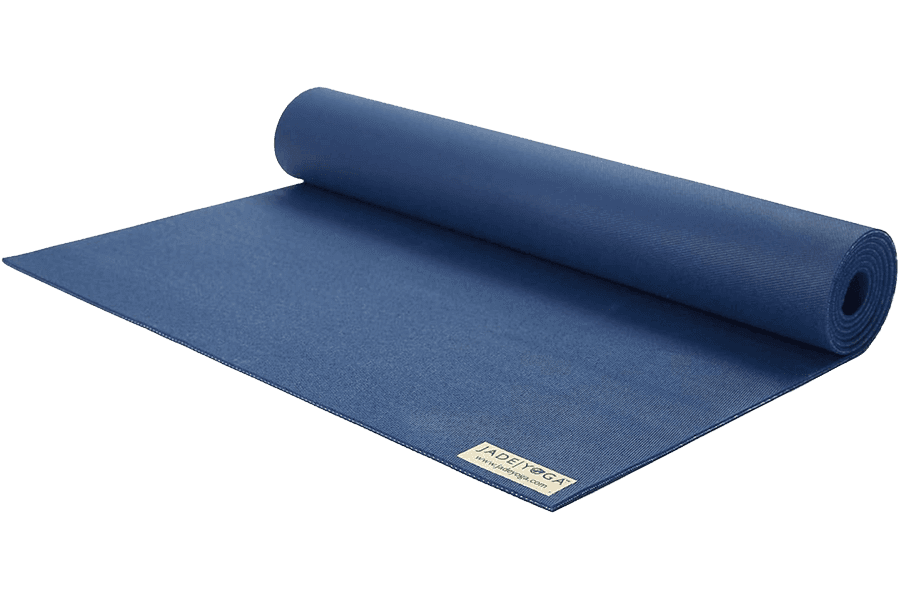
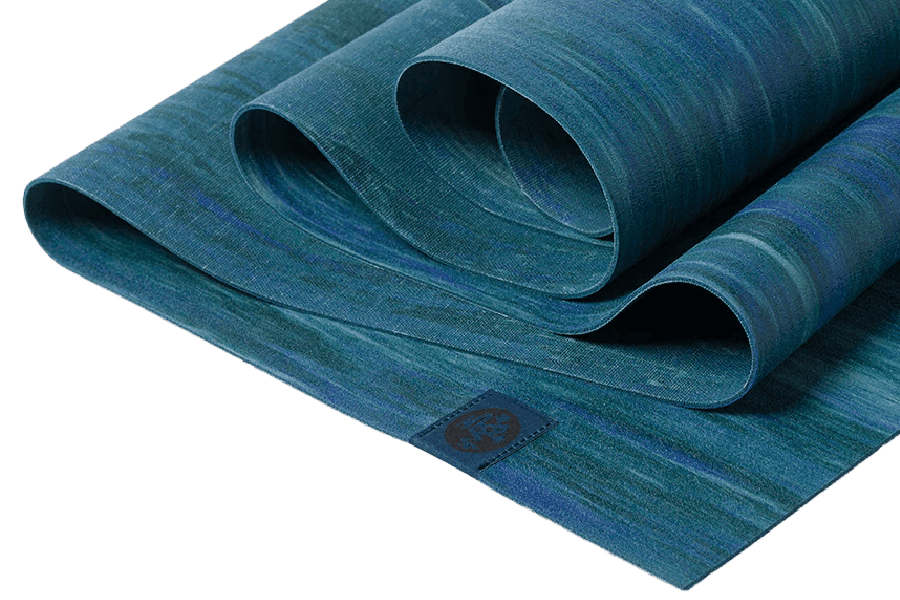
Both are natural rubber and that's roughly where the overlap ends. The Jade Harmony 74 is a daily practice mat: 74" × 24", 4.8 mm of tacky open-cell rubber, 5.3 pounds, $109.95. The Manduka eKO Superlite is travel gear: 1.5 mm of closed-cell rubber that folds flat into a carry-on at 2.2 pounds and $54. Deciding between them is really deciding which of two different problems you're paying to solve.
As an Amazon Associate, we earn from qualifying purchases made through links on this page. How this works
The quick answer
For everyday practice the Harmony 74 wins by default. Its 4.8 mm cushions knees, its open-cell surface keeps grip through damp palms, and its 74 inches cover practitioners up to about six foot one. Practicing daily on the Superlite means 1.5 mm between you and the floorboards, which most people find punishing on anything harder than carpet. For travel the comparison runs the other way just as decisively: the Superlite folds into a suitcase and the Harmony 74 is a 5.3 pound roll that never will.
Buy the Harmony 74 if you need a mat to practice on. Buy the Superlite if you already have one and need practice to survive your travel schedule. Many practitioners eventually own both, and that's a sensible outcome rather than an upsell.
Get the Harmony 74" if...
- You need a primary mat and you're up to about six foot one
- You want cushioning under knees and grip that survives damp palms
- You want the 1 year warranty and easy Amazon buying
- Travel means driving to class, not flying
Get the eKO Superlite if...
- You already own a primary mat you like
- You fly often and want a mat that folds into luggage
- You'd rather spend $54 than practice on hotel carpet
- You want 19 colorways to choose from
Side by side
Price
The Superlite lists for about $56 less.
$109.95
List price · check price at Amazon
$54
List price · check price at Amazon
Thickness
The Harmony 74" is 220% thicker.
4.8 mm0.19″
1.5 mm0.06″
Weight
The Superlite is 3.1 lbs lighter.
5.3 lbs2.4 kg
2.2 lbs1 kg
Size
The Harmony 74" is 3″ longer; same width.
Same on both
- Natural rubber, tapped from trees
- 24 inches wide
- Grip from the first practice, no break-in
- Not suitable for latex allergies
- Need shade, gentle cleaners, and no hot cars
Full specs
Dimensions
Materials & build
Buying
A practice mat and a piece of luggage
Sorting rubber mats by brand reputation lands these two on the same page, but they were built for different rooms. The Jade Harmony 74 is a daily practice surface: 74″ × 24″, 4.8 mm of tacky open-cell rubber, 5.3 pounds, made in the USA. The Manduka eKO Superlite is what you pack when the practice has to come along: 1.5 mm of closed-cell rubber that folds flat, weighs 2.2 pounds, and costs half as much.
Very few people are genuinely torn between them. The useful question is which gap in your setup you’re filling, and this page sorts that out factor by factor.
As an everyday mat, the Harmony 74 wins on arrival
The Harmony 74 has the three things a primary mat needs. Its 4.8 mm of open-cell rubber cushions knees and hips while staying firm enough for balance work. Its surface is tacky from the first class, with the damp-palm traction that made the Harmony a studio default for two decades. And its 74 inches cover practitioners up to about six foot one, which is the whole reason this cut exists over the standard 68″ Harmony at $10 less.
The Superlite offers none of that on purpose. At 1.5 mm it’s a surface, not a cushion; kneeling poses on hardwood come through undiluted, and most practitioners find daily practice on it spartan unless the floor underneath is carpet. Manduka built it as a second mat, and judging it as a first one misses the design.
As travel gear, the roles reverse completely
The Superlite folds. That single verb is most of its value: it goes flat into a carry-on at roughly the footprint of a folded sweater, weighs 2.2 pounds, and turns a hotel room or a rented studio mat into a place you can actually practice. At $54 it costs less than many single checked-bag fees.
The Harmony 74 rolls into a 24 inch cylinder that weighs 5.3 pounds. That’s fine over a shoulder on the walk to class and a nonstarter in an overhead bin. If flying is part of your year, no amount of preferring the Harmony makes it packable, and that constraint is what puts the Superlite in so many bags that already share a closet with a full-size mat.
Grip and sweat: open-cell against closed-cell
Both surfaces are natural rubber and both grip immediately, with no break-in period. The difference is what happens as a class warms up. The Harmony’s open-cell surface absorbs light moisture, so a damp palm stays planted; this is the trait Wirecutter has praised in sweaty sessions and the practical reason people pay Harmony prices. The Superlite is closed-cell, so sweat stays on top of its textured surface rather than soaking in.
The travel mat claws back a little ground on cleanup: a sealed 1.5 mm sheet wipes down and dries in minutes, which suits a mat that gets repacked into luggage. And in a genuinely dripping hot class, both are out of their depth; heavy sweaters end up with a towel over either one.
Sizes: the travel mat is not the short one
Counterintuitively, the Superlite is longer than most primary mats: 71 inches against the standard 68, covering practitioners to about six feet. The Harmony 74 still outreaches it at 74 inches, good to roughly six foot one. Both are 24 inches wide.
Taller travelers have a rare option here: the 79″ Superlite Long at $58 is one of the only packable mats that covers a six-foot-plus frame. On the Jade side, height beyond six foot one means the 80″ × 28″ Harmony XW, which is very much a mat you carry rather than pack.
Durability, care, and what stands behind each
Both mats live by rubber’s rules: out of direct sun, away from hot cars, gentle cleaners only, and neither suits a latex allergy since both are tapped tree rubber. Jade says its mats are 99% latex free, which still leaves trace proteins it won’t recommend to allergic practitioners, and Manduka’s eKO line is built on the same material.
The wear patterns differ with the builds. The Harmony’s surface softens and sheds over years of hard practice, with CNN Underscored putting the gentle-care ceiling around a decade. The Superlite has no thickness to lose, so it ages at the surface rather than flattening, and treated as occasional travel gear it lasts years. Coverage is lopsided: Jade writes a 1 year warranty, Manduka offers 30 day returns and nothing after.
Colors and buying
The Superlite is, oddly, the colorful one: 19 colorways at last count, the widest palette in Manduka’s rubber line, many of them marbled patterns. The Harmony 74 runs 5 colorways at last count, a shorter list than the 68″ version’s dozen.
Both sell on Amazon at first-party prices, which keeps the comparison convenient in a way several Manduka specialty mats aren’t.
Price and value
List prices are $109.95 for the Harmony 74 and $54 for the Superlite, a gap of about $56. Check current prices on the Harmony 74 and the eKO Superlite, since both dip below list from time to time.
Because the two do different jobs, the price gap mostly isn’t a decision point. Nobody should buy the Superlite as a main mat to save $56; the savings would arrive as sore knees. And nobody should buy the Harmony 74 for travel it can’t do.
Bottom line
Get the Harmony 74 if you need a mat to practice on. It cushions, it grips through damp palms, it fits bodies to about six foot one, and it carries the only warranty here.
Get the Superlite if your primary mat is already settled and travel keeps interrupting your practice. It packs where no rolled mat can and costs $54. A lot of practitioners eventually own this exact pair, one for the floor at home and one for the suitcase, and that’s the honest resolution of this page.
Jade Harmony 74"
List price $109.95
Frequently Asked Questions
- Can the eKO Superlite replace a regular mat?
- Only if you practice on carpet or genuinely prefer feeling the floor. At 1.5 mm there's no meaningful padding, so kneeling poses on hardwood or tile are uncomfortable for most people. Manduka designed it as a second mat: laid over studio rentals, folded into a suitcase, packed for a retreat. The Harmony 74 is designed to be the mat you practice on every day.
- Which handles sweat better?
- The Harmony 74. Its open-cell rubber absorbs light moisture and keeps traction as palms get damp, which is the trait Wirecutter has praised in sweaty sessions. The Superlite is closed-cell, so sweat stays on the surface; its texture helps, and at 1.5 mm it dries almost instantly after a wipe, but it isn't a hot yoga mat and neither, in a truly drenching class, is the Harmony.
- How do the lengths compare?
- The Harmony 74 is 74 inches, enough for practitioners to about six foot one. The Superlite is 71 inches, which covers to roughly six feet, a nice bonus for a travel mat since most fold-up options run shorter. Taller travelers can step up to the 79 inch Superlite Long for $58, sold through manduka.com.
- Why is the Harmony twice the price?
- More material and a different job. You're paying for 4.8 mm of American-made rubber against 1.5 mm from Taiwan, a surface built for daily wear, and a written 1 year warranty against a 30 day return window. Judged as a primary mat the price difference is fair; judged as luggage, the Superlite's $54 is the better spend.
- Could I travel with the Harmony 74 instead?
- Not in a suitcase. It rolls into a 24 inch cylinder at 5.3 pounds, which is fine over a shoulder on the way to class and hopeless in an overhead bin. The Superlite folds to about the size of a folded sweater at 2.2 pounds. If flights are part of your practice, no rolled mat solves that, this one included.
- Are these mats okay for latex allergies?
- No, both are natural tree rubber. Jade describes its mats as 99% latex free but notes possible trace latex proteins and doesn't recommend them for latex allergies, and Manduka's eKO line is built from the same base material. With a latex allergy, look at TPE or PVC mats instead.
Related comparisons
- JadeYoga Harmony 74" vs Manduka PRO Lite Terra 4.7mm
- Manduka PROlite vs JadeYoga Harmony 74"
- Manduka eKO Superlite vs JadeYoga Voyager
- JadeYoga Harmony 74" vs Lululemon The Mat 5mm
- JadeYoga Harmony 74" vs Suga SugaMat
- JadeYoga Harmony 74" vs Manduka eKO Lite Long
- JadeYoga Harmony 74" vs Manduka eKO
- Manduka PROlite Long vs JadeYoga Harmony 74"
- JadeYoga Harmony 74" vs Manduka GRP Adapt Lite 2.1 4mm