Jade Harmony 74" vs Gaiam Premium 6mm: Which One Should You Buy?
There is $80 between these two, which is most of the reason anyone compares them. The Harmony 74 is natural rubber made in the USA, six inches longer than the standard Harmony, and grips from the first class. The Gaiam Premium is the mat that shows up in every big-box store for about $30 and holds OutdoorGearLab's Best Buy award as a first mat. Both are legitimate; they are not for the same person.
As an Amazon Associate, we earn from qualifying purchases made through links on this page. How this works
The quick answer
If you practice more than twice a week, the Harmony is the mat. Rubber holds your hands where PVC foam gives up, the 74-inch length covers taller bodies, and the mat wears in rather than compressing flat. It costs $80 more, it weighs two pounds more, and its rubber means it is off the list for anyone with a latex allergy.
If you are starting out, or you want a mat for occasional floor work at home, the Gaiam Premium is genuinely fine and hard to beat at the price. Six millimetres of soft foam is kinder to knees than the Harmony, it weighs 3.3 pounds, and the lifetime guarantee is unusual at $30. Expect the surface to slide once your palms are damp.
Get the Jade Harmony 74" if...
- You practice regularly and grip is what keeps failing you
- You are tall enough that 68 inches runs out
- You want natural rubber rather than PVC
- You want a mat that lasts years rather than a season
Get the Gaiam Premium 6mm if...
- You are new to yoga and not sure it will stick
- You want the most cushion for knees and elbows
- You have a latex allergy that rules rubber out
- You'd rather spend $30 than $110
Side by side
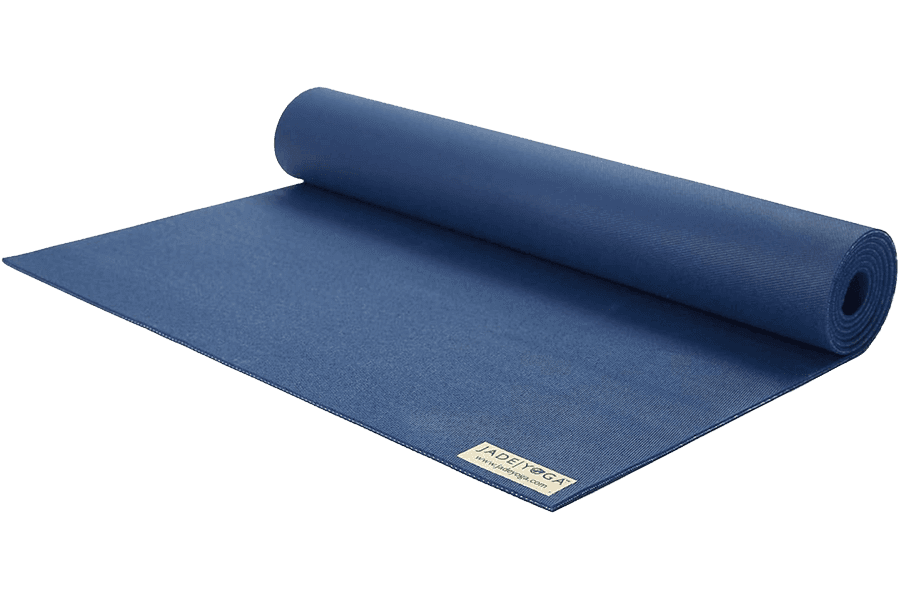
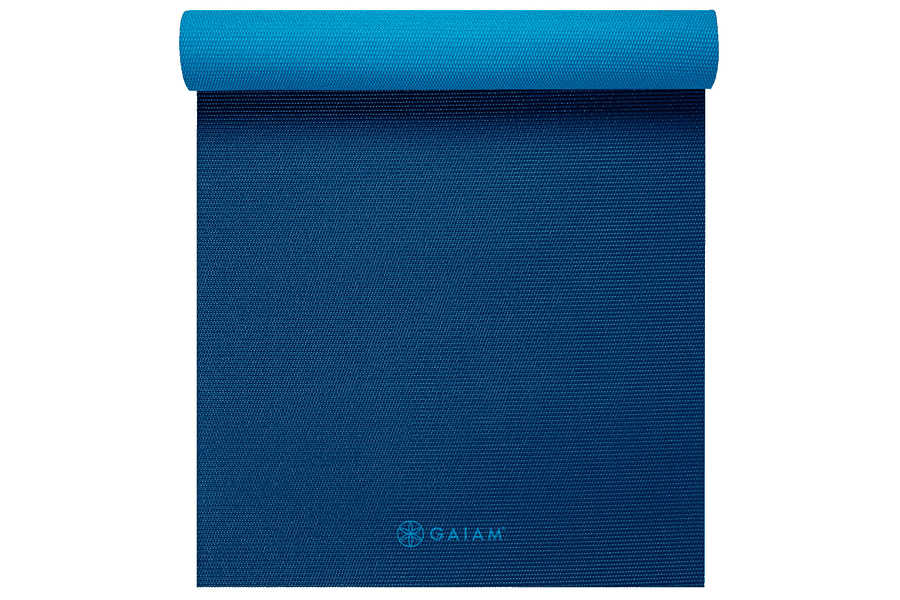
Price
The Gaiam Premium lists for about $80 less.
$109.95
List price · check price at Amazon
$29.98
List price · check price at Amazon
Thickness
The Gaiam Premium is 25% thicker.
4.8 mm0.19″
6 mm0.24″
Weight
The Gaiam Premium is 2 lbs lighter.
5.3 lbs2.4 kg
3.3 lbs1.5 kg
Size
The Harmony 74" is 6″ longer; same width.
Same on both
- Both are 24 inches wide
- Both work as a general floor-exercise mat, not just for yoga
- Both are sold in several colors
- Neither needs breaking in
Full specs
Dimensions
Materials & build
Buying
An $80 gap and what it actually buys
The Harmony 74 is Jade’s long-standing natural rubber mat in its 74″ length, made in the USA at $109.95. The Gaiam Premium is the $29.98 PVC foam mat sold in every big-box store in the country, and it holds OutdoorGearLab’s Best Buy award as a first yoga mat.
Both are legitimate products. They are not aimed at the same person, and the gap between them shows up in exactly one place first: what happens to your hands halfway through a class.
Grip is the whole argument
Jade built its reputation on traction and the Harmony delivers it from the first unroll. Open-cell rubber pulls moisture in rather than letting it sit on the surface, which is why a Jade mat tends to hold better as a class goes on rather than worse. Owners describe it as simply gripping whatever touches it.
The Gaiam is a textured sticky PVC finish, and GearLab scored it 6 out of 10 dry and 4 wet. That is a fair account: perfectly usable in a cool room while your palms are dry, and unreliable the moment they are not. If you are in a gentle class and not sweating, you will never think about it. If you sweat, you will think about it a lot.
The cheap mat is the comfortable one
The Gaiam is 6 mm of soft foam against the Harmony’s 4.8 mm of dense rubber, and the difference under a knee is obvious immediately. For kneeling sequences, forearm work and anything on your spine, the $30 mat is genuinely kinder.
The trade shows up standing. Soft foam compresses unevenly under a single foot, so tree pose and warrior three feel less settled than they do on rubber. GearLab scored the Gaiam 6.5 out of 10 for comfort and support, which reflects that mix of good padding and middling stability. The Harmony gives you less cushion and a much more planted feel.
Six inches of length, same width
Both are 24 inches wide, so nobody wins there. Length is the difference: 74″ against 68″. Sixty-eight inches is short for anyone near six feet, and in a full-length pose you end up choosing between your head and your heels.
If the extra length is not why you are here, Jade’s standard 68″ Harmony costs $10 less than this one, and the Harmony XW goes to 80″ × 28″ if you want room in both directions.
Tree rubber against PVC
The Harmony is natural rubber tapped from trees and made in the USA, and Jade plants a tree for every mat it sells, a program that has passed two million. That is a program rather than a certification, so treat it as a reason to feel good rather than a spec, but the material itself is the real credential.
The Gaiam is PVC. It is latex free, which matters if you have an allergy, and it is a plastic with an unappealing end of life. GearLab scored its materials 6 out of 10 and the Harmony’s rubber sits well above that. Neither mat carries a third-party certification.
Worth flagging the other way: natural rubber contains latex, and Jade describes its mats as 99% latex free rather than latex free. If you have a genuine allergy, the Gaiam is the only one of these two you can use.
How each one fails
The Harmony wears slowly and predictably. Rubber softens and eventually sheds a little with heavy sweaty use, and direct sun will ruin it faster than anything you do on it. Jade covers it for one year and excludes sun damage and harsh cleaners, which tells you what actually kills these mats. Kept in the shade and wiped down, it gives you years.
The Gaiam’s foam takes compression set. Heels, knees and elbows leave dents that gradually stop springing back, and GearLab has found this same foam showing compression over time. Gaiam advertises a lifetime guarantee, which is worth having, but it is a manufacturing-defect promise rather than a promise about wear.
Weight and cleaning
The Gaiam is 3.3 pounds and the Harmony 74 is 5.3, and GearLab measured a Gaiam at 3.3 on its own scale. Two pounds is noticeable on a walk to the studio but not decisive; both are ordinary mats to carry.
Cleaning favours the Gaiam, which wipes down and dries fast because nothing soaks in; GearLab rated its care and cleaning 8 out of 10. The Harmony absorbs, so the sweat you leave on it is now inside it, and regular cleaning is not optional if you practice often. Use mild soap and a damp cloth, dry it flat, and keep it out of the sun.
Price and value
$109.95 against $29.98. Check the live numbers on the Harmony 74 and the Gaiam Premium; the Gaiam in particular swings by color and is often below list.
Value depends on how much you practice. One Harmony that runs five or six years beats replacing a compressed $30 mat every couple of years, and it grips the whole time. If you practice once a fortnight and mostly stretch, the Gaiam will outlast your interest in it and you will have saved $80.
Bottom line
Get the Harmony 74 if you practice regularly, if grip is the thing that keeps letting you down, or if you are tall enough that 68 inches has become annoying. It is the better mat by a clear margin and it should last long enough to justify the price.
Get the Gaiam Premium if you are starting out, if you want the softest surface for the least money, or if latex is a problem. It is a genuinely good $30 mat with an award to back that up. Buy it, use it for six months, and let your practice tell you whether you need rubber.
Jade Harmony 74"
List price $109.95
Gaiam Premium 6mm
List price $29.98
Frequently Asked Questions
- Is the Gaiam Premium grippy enough for yoga?
- Dry, in a cool room, yes. OutdoorGearLab scored it 6 out of 10 for dry grip and 4 for wet, which describes it well: fine for a gentle class, unreliable once your hands get damp. The Harmony's rubber is a different category of traction and it is the single biggest reason to spend the extra money. If you sweat at all, the Gaiam will need a towel.
- Is the Jade Harmony 74" the same as the Harmony 2.0?
- No, and this trips people up. The Harmony 2.0 is a newer, separate mat made in Spain, and it is the version that carries the FSC and OEKO-TEX certifications and OutdoorGearLab's recent award. This page covers the original Harmony, which Jade still makes in the USA and sells at $109.95 in the 74-inch length. Reviews of the 2.0 do not automatically describe this mat.
- Which is more comfortable on the knees?
- The Gaiam, clearly. Six millimetres of soft PVC foam compresses more than the Harmony's 4.8 mm of dense rubber, so kneeling and forearm work are gentler. The trade is stability: soft foam moves under a standing foot, which is why the Harmony feels more planted in balances. If your knees are the limiting factor and your balance is fine, the cheaper mat is genuinely the better one for you.
- How long will each one last?
- The Harmony should give you years with basic care, and Jade backs it for one year against defects. Its rubber does eventually shed and soften, and direct sun ruins it, so keep it out of a hot car. The Gaiam's foam is the part that gives out: GearLab has noted compression in this foam over time, which is the usual failure for cheap PVC. Gaiam does advertise a lifetime guarantee on it, which is worth having but is a manufacturing-defect promise rather than a wear promise.
- Does the Jade Harmony smell?
- It has a distinct rubber smell out of the box that fades over a few weeks. Most owners describe it as noticeable rather than unpleasant, and airing the mat out flat speeds it up. The Gaiam has a milder plastic smell that also fades. Neither smell is a reason to avoid a mat, but if you are sensitive, unroll whichever you buy in a ventilated room for a few days first.
- Does Jade really plant a tree for every mat?
- Yes, through a partnership that has passed two million trees. It is a program rather than a certification, so treat it as a reason to feel good about the purchase rather than a spec. The Harmony's harder environmental credential is the material itself: natural tree rubber made in the USA, against the Gaiam's PVC, which is a plastic with a much less appealing end of life.
Related comparisons
- Gaiam Premium 6mm vs Gruper TPE 6mm
- Manduka PROlite vs JadeYoga Harmony 74"
- JadeYoga Harmony 74" vs Lululemon The Mat 5mm
- Amazon Basics 1/4 Inch Thick TPE vs Gaiam Premium 6mm
- Gaiam Premium 6mm vs YogaAccessories Extra Thick Deluxe 1/4"
- JadeYoga Harmony 74" vs Suga SugaMat
- JadeYoga Harmony 74" vs Manduka eKO Lite Long
- Manduka PROlite Long vs JadeYoga Harmony 74"
- JadeYoga Harmony 74" vs Manduka eKO