Jade Harmony vs Retrospec Solana 1/2": Which One Should You Buy?
The Harmony is a natural rubber mat that grips from the first class and absorbs sweat rather than letting it sit on the surface. The Solana is half an inch of NBR foam that costs about a quarter as much and cushions far more. These two solve different problems, and knowing which one you have makes the choice easy.
As an Amazon Associate, we earn from qualifying purchases made through links on this page. How this works
The quick answer
The Harmony is the yoga mat of the pair. Open-cell natural rubber pulls moisture in instead of letting a slick film build up, which is why the mat has been a studio standard for two decades, and it needs no break-in. The Solana 1/2" is 12.7 mm of soft foam with a ribbed surface, a nylon strap, about $25, and roughly 9,200 Amazon ratings averaging 4.4 stars.
If you sweat, do standing sequences, or want a mat that holds you in down dog, the Harmony is worth the $75 difference. If your floor is hard, your knees hurt, and most of your session happens on the ground, the Solana is the more comfortable place to be and the money stays in your pocket.
Get the Jade Harmony if...
- Your hands slide once you warm up
- You want grip that works from the first class, with no break-in
- You want a firm surface that holds you steady in balance poses
- You like that Jade plants a tree for every mat sold
Get the Retrospec Solana 1/2" if...
- You need padding for knees, hips or spine on a hard floor
- You mostly stretch or do floor work rather than flow
- You want a light 3 pound mat with a strap included
- You'd rather keep about $75
Side by side
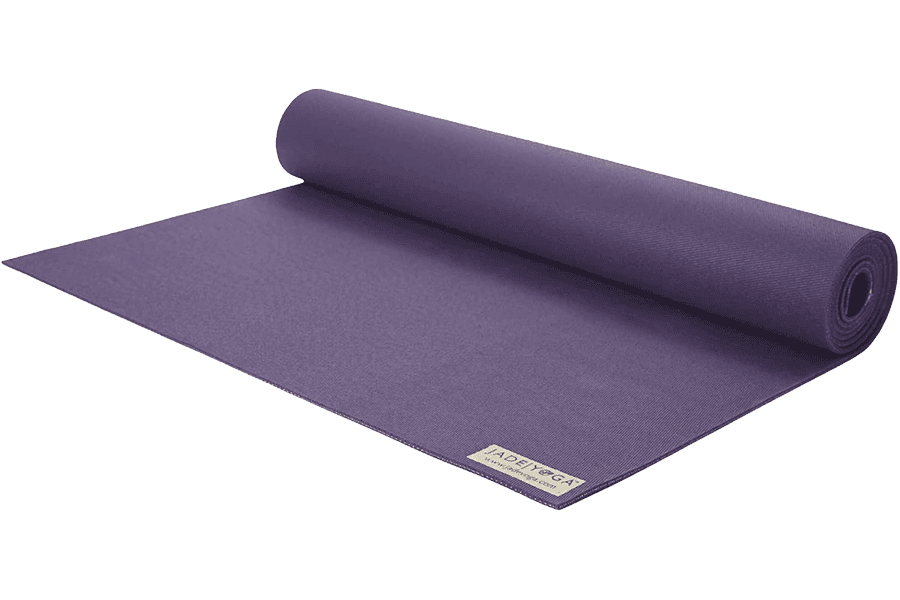
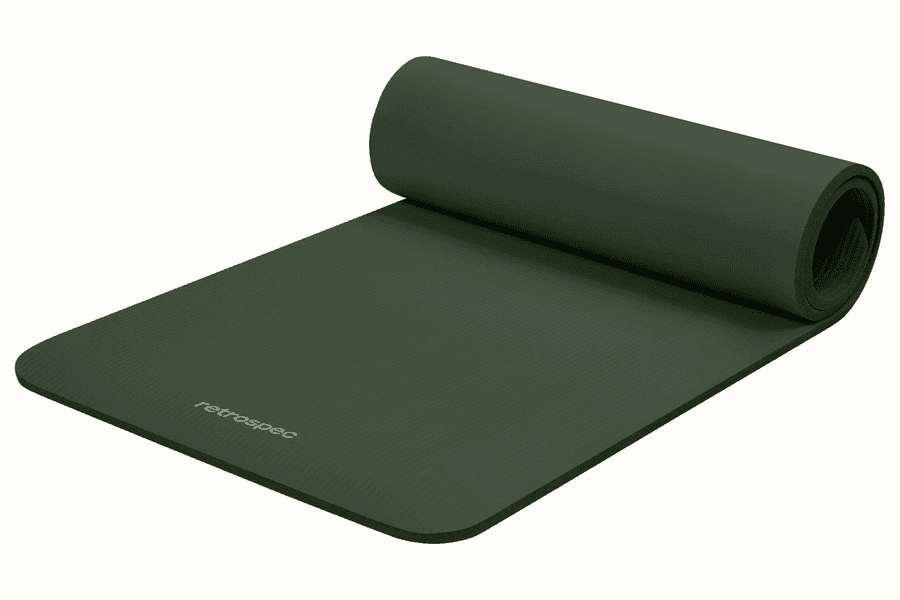
Price
The Solana 1/2" lists for about $75 less.
$99.95
List price · check price at Amazon
$24.99
List price · check price at Amazon
Thickness
The Solana 1/2" is 165% thicker.
4.8 mm0.19″
12.7 mm0.5″
Weight
The Solana 1/2" is 1.8 lbs lighter.
4.8 lbs2.2 kg
3 lbs1.36 kg
Size
The Solana 1/2" is 4″ longer; same width.
Same on both
- 72 inches or 68 inches long, both roomier than a budget mat suggests
- Roll up without a fight and travel with a strap
- Neither one likes direct sunlight
- Both are around 3 to 5 pounds
Full specs
Dimensions
Materials & build
Buying
One mat solves grip, the other solves padding
The Harmony is 4.8 mm of open-cell natural rubber that grips from the first class and pulls sweat into the surface instead of letting it pool. The Solana 1/2″ is 12.7 mm of soft NBR foam built to take pressure off knees and hips on a hard floor. Between them sits about $75.
Almost nobody needs both problems solved at once, which makes this an unusually clean decision. Work out whether you are sliding or aching, and the mat picks itself.
Grip: absorption beats texture every time
Open-cell rubber has an obvious mechanical advantage over any textured foam. Sweat gets absorbed into the surface rather than forming a film between your palm and the mat, so traction holds up as you warm up rather than falling apart. Wirecutter credits that absorption for the Harmony’s reputation in sweaty practice, and it is the reason studios have stocked this mat for two decades.
The Solana’s ribs do hold a dry bare foot on a hard floor. Once your hands are damp there is nowhere for the moisture to go, and closed cell foam simply cannot fix that. A towel patches it, at which point the towel is the grip surface and the mat is padding.
Cushion: the Solana wins the part it was built for
Half an inch of soft foam is far kinder on a kneecap than 4.8 mm of dense rubber. Retrospec designed the mat around joint relief and it delivers that, particularly on tile or hardwood in low lunges, table top and anything kneeling.
Jade specs the Harmony at 3/16 of an inch, which retailers usually round to 5 mm, and the rubber is dense enough that it supports rather than sinks. If your knees are the only thing bothering you, a folded blanket on a Harmony gets you most of the padding without softening the whole surface. That is worth trying before you commit to a foam mat.
Stability under a standing leg
The trade for cushion is control. At 12.7 mm your foot sinks unevenly, so your ankle stabilises the mat as well as your body, and balance holds get noisier. Retrospec’s own framing is that the half inch is the steadier of its two Solanas, which is true relative to the 1″ version and not relative to a yoga mat.
The Harmony does not compress meaningfully. Its rubber base also holds position on wood and tile in a way a 3 pound foam mat does not always manage during a fast sequence.
Natural rubber, synthetic rubber, and the latex question
The Harmony is natural rubber tapped from trees and made in the USA, and Jade plants a tree for every mat it sells, more than two million so far. That is a program rather than a certification, but it is a real one and Jade has run it for years.
One caution: Jade describes its mats as 99% latex free, which is a deliberate phrase for a natural rubber product, and it does not recommend them for anyone with a latex allergy. The Solana’s NBR is a synthetic rubber foam, and Retrospec lists the mat as free of latex, BPA, phthalates and heavy metals. If allergy is the issue, that settles it.
Both smell at first, for different reasons
Retrospec tells buyers the foam may release a harmless odor and asks them to unroll the mat and air it for a day or two. That is standard for NBR and worth planning around if the mat is going in a bedroom.
The Harmony has a rubber smell of its own, which most people stop noticing within a couple of weeks. Cleaning is where the two really diverge: open-cell rubber absorbs everything, so it wants a gentle rinse and thorough drying, and Jade’s warranty excludes damage from harsh cleaners. The Solana wipes down with mild soap and water and nothing soaks in.
How long each one lasts
Neither is a decade mat. Jade’s warranty is one year and excludes sun damage and harsh cleaners, both of which destroy natural rubber quickly, and heavy sweaters wear an open-cell mat faster because it drinks everything. Kept indoors and cleaned gently, several years of steady practice is a fair expectation.
The Solana takes permanent dents where knees, elbows and heels land, usually inside a year of regular use, and the edges tear before the middle gives up. Retrospec warrants manufacturing defects for six months and takes returns within 30 days. For a mat that outlasts both, our Harmony vs Manduka PRO comparison covers the long-life option.
Sizes, and which Harmony you are buying
The Harmony comes in this 68″ version, a 74″ Long and an 80″ × 28″ XW, so length is solvable if 68 inches feels tight. The Solana only comes as 72″ × 24″, in half inch and one inch.
Worth checking before you order: Jade also sells a Harmony 2.0, a different mat made in Spain with different certifications, and that is the version carrying the recent OutdoorGearLab award. A review of one does not describe the other, and the listings look similar at a glance.
Price and value
List prices are $99.95 and $24.99. Check the current price on the Harmony at Amazon and the Solana at Amazon, where the Solana holds a 4.4 star average across roughly 9,200 ratings.
Four Solanas cost about what one Harmony costs, but they are not interchangeable units. If sliding is your problem, buying four foam mats does not fix it. If padding is your problem, spending $100 on grip you did not need is the wrong trade.
Bottom line
Buy the Jade Harmony if your hands slide once you warm up, if you practice standing sequences, or if you want a natural rubber mat made in the USA. It grips out of the box with no break-in and it is the better yoga mat here by a wide margin.
Buy the Retrospec Solana 1/2″ if your knees hurt on a hard floor and most of your session happens on the ground. It is comfortable, cheap and light, and it makes no pretence of being a studio mat.
Jade Harmony
List price $99.95
Retrospec Solana 1/2"
List price $24.99
Frequently Asked Questions
- Which one is better for sweaty hands?
- The Harmony, by a distance. Its open-cell rubber absorbs moisture rather than letting it pool between your palm and the mat, which is the single reason the mat is still in studios after twenty years. The Solana's closed-cell foam does the opposite: sweat sits on the ribbed surface and your hand slides on it. A towel patches that on the Solana, but then the towel is doing the work.
- Is 4.8 mm of rubber enough cushion?
- For standing and flowing, yes; for kneeling on tile, less so. Jade specs the Harmony at 3/16 of an inch, which retailers usually round to 5 mm, and the rubber is dense so it supports rather than sinks. That firmness is exactly what makes the Solana's half inch of soft foam feel so much kinder on a kneecap and so much less stable under a standing leg.
- How long does each one last?
- Neither is a decade mat. Jade's warranty is one year and specifically excludes sun damage and harsh cleaners, and open-cell rubber wears faster for heavy sweaters because it absorbs everything. Kept indoors and rinsed gently, several years of steady practice is fair. Retrospec covers manufacturing defects for six months and takes returns for 30 days, and soft NBR foam usually shows permanent dents where knees and elbows land within a year of regular use.
- Is the Harmony safe if I have a latex allergy?
- No. Jade describes its mats as 99% latex free, which is a deliberate phrase: there is natural rubber in them and they are not suitable for anyone with a latex allergy. The Solana's NBR foam is a synthetic rubber and Retrospec lists the mat as latex free, so it is the safer choice in that situation.
- Does the Solana smell when you unroll it?
- Often, yes. Retrospec tells buyers the foam may release a harmless odor and recommends unrolling the mat and airing it for a day or two. The Harmony has a rubber smell of its own that some people notice for the first couple of weeks; it is a different smell, and it fades.
- Which Harmony am I buying?
- Check carefully, because Jade sells two. The original Harmony this page covers is made in the USA and lists at $99.95. The Harmony 2.0 is a different mat, made in Spain, with different certifications, and it is the version that carries the recent OutdoorGearLab award. Reviews of one do not apply to the other.
Related comparisons
- JadeYoga Harmony 68" vs Suga SugaMat
- Amazon Basics 1/2 Inch Extra Thick vs Retrospec Solana 1/2"
- JadeYoga Harmony 68" vs Manduka PRO Lite Terra 4.7mm
- JadeYoga Harmony 68" vs Manduka eKO Lite
- Manduka PROlite vs JadeYoga Harmony 68"
- JadeYoga Harmony 68" vs Manduka GRP Adapt 1.0
- JadeYoga Harmony 68" vs Manduka eKO Lite Long
- JadeYoga Harmony 68" vs Manduka GRP Adapt Lite 2.1 4mm
- JadeYoga Harmony 68" vs Lululemon The Mat 5mm