Manduka PROlite Long vs Amazon Basics 1/2 Inch: Which One Should You Buy?
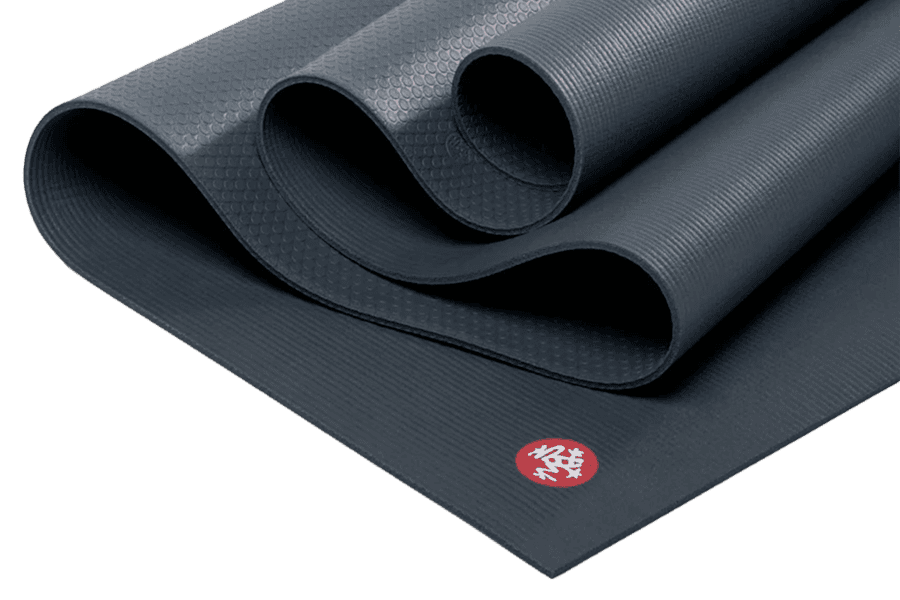
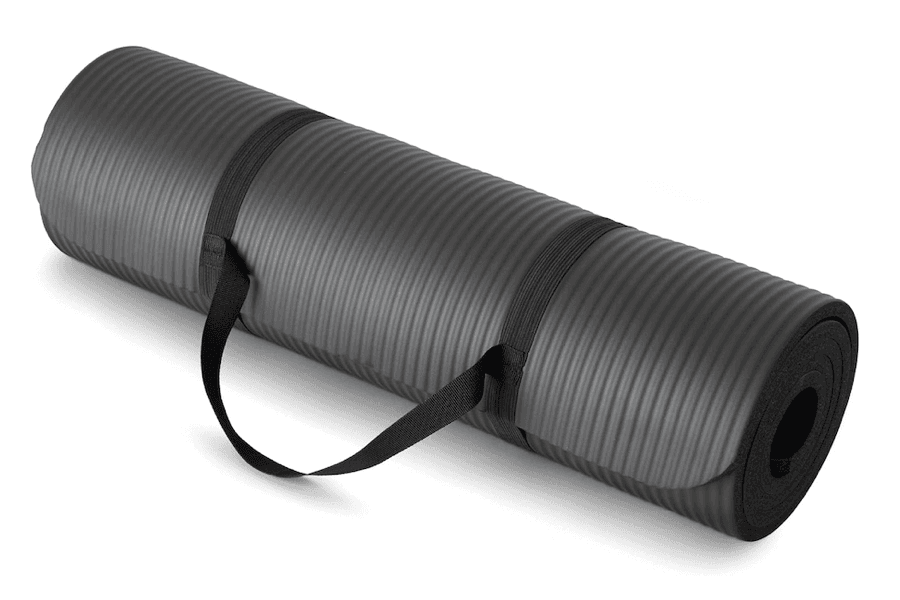
One of these is yoga equipment and the other is gym padding, and the product names don't make that obvious. The Manduka PROlite Long is a 79 inch, 4.7 mm slab of firm PVC built for standing practice on hard floors, at $124. The Amazon Basics 1/2 inch is 74 inches of soft NBR foam with a carry strap, around $22, and genuinely pleasant for stretching. Put a warrior pose on each and the difference stops being abstract.
As an Amazon Associate, we earn from qualifying purchases made through links on this page. How this works
The quick answer
For yoga the PROlite Long wins on category: firm PVC holds a standing foot level and a planted palm steady, while half an inch of squishy foam rolls ankles and swallows wrists. It also outlasts the foam mat by roughly a decade. What the Amazon Basics offers is padding per dollar: about $22 for a thick, comfortable layer between you and a hard floor, strap and 1 year warranty included.
If you practice yoga, especially anything standing, buy a firm mat; if you're tall, the PROlite Long is one of the few premium 79 inch options. If what you actually do is stretch, rehab, or core work, the Amazon Basics does that job well for a fraction of the price.
Get the PROlite Long if...
- You practice yoga with standing and balance poses
- You're tall; 79 inch mats are rare at any price
- You want a decade of service and the guarantee
- You want grip that improves with use
Get the Amazon Basics if...
- You mostly stretch or do floor exercises
- You want soft, thick padding under knees and back
- You're spending about $22, not $124
- The included strap and 2.2 pound carry appeal
Side by side
Price
The Amazon Basics lists for about $102 less.
$124
List price · check price at Amazon
$22.48
List price · check price at Amazon
Thickness
The Amazon Basics is 170% thicker.
4.7 mm0.19″
12.7 mm0.5″
Weight
The Amazon Basics is 2.8 lbs lighter.
5 lbs2.3 kg
2.2 lbs1 kg
Size
The PROlite Long is 5″ longer; same width.
Same on both
- Same 24" width
- Fine for stretching and floor work
Full specs
Dimensions
Materials & build
Buying
Same shelf, different sports
Retail files both of these under yoga mats, which is how a $124 precision tool ends up cross-shopped against roughly $22 of foam. The Manduka PROlite Long is 79″ of firm, 4.7 mm PVC engineered for standing practice on hard floors, guaranteed for life. The Amazon Basics 1/2 inch is 74″ of soft NBR foam with a carry strap: half an inch of squish that feels wonderful under a spine and treacherous under a standing foot.
The gap between them isn’t quality so much as species. Once you know which activity you’re actually equipping, most of this comparison collapses into a single paragraph. We’ll take the scenic route anyway, because the details are where buyers get burned.
Standing poses are the dividing line
Yoga asks a mat to be still while you wobble. The PROlite Long’s dense PVC compresses barely at all, so a standing foot stays level, ankles stack over heels, and a balance pose fails or succeeds on your own merits. The Amazon Basics inverts this: 12.7 mm of soft foam sinks unevenly under load, tilting whichever edge you weight, and every one-legged pose becomes a fight with the surface itself.
Owners notice fast; reviews of thick foam mats used for yoga reliably mention the wobble. It isn’t a manufacturing flaw. Soft NBR is doing exactly what it’s for, which is cushioning bodies lying on it, not stabilizing bodies standing on it.
The knee question, answered properly
Thick foam looks like the obvious buy for sore knees, and for floor-only exercise it honestly is; nothing firm competes with half an inch of NBR under a kneeling hip stretch or a long sit-up session. That’s the Amazon Basics doing its real job, and at about $22 it does it well.
For yoga the logic breaks, because practice moves. Joint protection mid-flow comes from density, a surface that catches and holds a kneecap, not depth that lets it sink until it finds the floor. The PROlite Long’s firm 4.7 mm protects better in motion than foam twice as deep, and a folded blanket handles the rare pose that needs more. Deep-but-soft is for staying down; dense-but-thin is for practicing.
Grip, sweat, and the break-in asterisk
Fresh from the box, the cheap mat briefly wins: the Amazon Basics’ textured foam grips fine dry, while a new PROlite Long is in its slick phase, the few weeks of use Manduka’s PVC needs before the surface breaks in. That window closes, and afterward the PROlite Long offers the kind of secure, consistent dry traction foam never reaches.
Add moisture and the foam is done; damp palms slide on NBR immediately. The PROlite Long tolerates modest sweat once broken in, though as a closed-cell mat it wants a towel for genuinely wet classes too. Neither belongs in a hot studio; that’s absorbent-surface territory, like Manduka’s GRP Adapt 2.0.
One of these mats has a decade in it
The Amazon Basics’ 1 year warranty is well matched to the product: NBR foam under regular use compresses flat at the elbow and knee zones, tears at stress points, and typically needs replacing within a year or two. At its price, owners mostly shrug and reorder.
The PROlite Long belongs to the opposite tradition. Its PVC construction is the one GearLab keeps finding alive after five to twenty years, and Manduka’s lifetime guarantee commits to roughly a decade of regular use in the fine print, one replacement, authorized-seller receipt required. Spread over their real lifespans, the price gap narrows from six-to-one toward parity, though the foam mat’s buyers were never doing that math and don’t especially need to.
Sizes, colors, and the strap
Credit where due: at 74″ the Amazon Basics is longer than almost everything else at its price, and a six-footer fits it lying down. The PROlite Long still holds the length card at 79″, and its family offers real choices: 68″ and 71″ PROlite sizes and a 79″ × 30″ Long & Wide, in 4 colorways at last count for the Long itself.
The Amazon Basics counters with three colors, a 1 inch sibling, an included strap, and a 2.2 pound carry weight that makes the 5 pound Manduka feel substantial. For a mat that lives in a gym bag between stretch sessions, those are genuine conveniences.
Price and value
List prices are $124 for the PROlite Long and around $22 for the Amazon Basics. Check current prices on the PROlite Long and the Amazon Basics 1/2 inch at Amazon.
A hundred dollars only feels like the decision until the activity is settled. For stretching and floor work, the Amazon Basics is the right purchase at any budget; a premium yoga mat would be worse at that job. For yoga, the foam mat isn’t a discount, it’s a detour, and the budget path that actually works is a firm cheap mat like Amazon’s own 1/4 inch TPE at about $26.
Bottom line
Buy the PROlite Long to practice yoga on, especially if you’re tall: stable, long, essentially permanent, and worth its price in the one arena the foam mat can’t enter.
Buy the Amazon Basics 1/2 inch to cushion floor exercise, and enjoy it guilt-free; it’s a fair product at a fair price. Just don’t ask either mat to moonlight as the other, because that’s the one configuration where both of them disappoint.
Amazon Basics 1/2 Inch Extra Thick
List price $22.48
Frequently Asked Questions
- Is the Amazon Basics 1/2 inch mat good for yoga?
- Only for the floor-bound parts. Gentle, restorative, and stretching-heavy sessions work fine on it. Standing sequences don't: soft NBR foam compresses unevenly under a loaded foot, so balance poses wobble and ankles and wrists work overtime. It's a padded exercise mat wearing a yoga label, and the label is the only part that does yoga.
- Wouldn't half an inch of foam be better for my knees?
- Kneeling on it feels plush, but joint protection during practice comes from density more than depth. Soft foam bottoms out under concentrated weight, while the PROlite Long's firm 4.7 mm keeps a kneecap suspended off tile. If your knees need more than that, a dense 6 mm mat or a folded blanket under the joint works better than thick soft foam does.
- How do the lengths compare?
- Closer than you'd guess: the Amazon Basics runs 74 inches, longer than most budget mats, against the PROlite Long's 79. A six-footer fits the foam mat lying down with a little to spare. Length isn't the reason to pick between these; firmness is. The PROlite Long also offers sibling sizes (68", 71", and a 79" x 30") where the Amazon Basics has just its 1 inch twin.
- How long does the Amazon Basics mat last?
- Regular use typically compresses or tears the foam within a year or two, which is what its 1 year warranty quietly acknowledges. The PROlite Long is the other extreme: a construction GearLab keeps finding alive after five to twenty years, backed by a lifetime guarantee that promises roughly a decade of regular use. Cost per year, the Manduka is closer than the stickers suggest.
- What about grip and sweat?
- Dry, the foam mat's textured surface is adequate and the new PROlite Long is actually the slicker of the two until a few weeks of use break in its PVC. Damp, the ranking is settled: sweaty palms skate on NBR foam, while a broken-in PROlite Long holds well short of dripping conditions. Neither is a hot yoga mat; that takes an absorbent surface like Manduka's GRP line.
- What should I buy for yoga on an Amazon Basics budget?
- Their 1/4 inch TPE mat, at about $26. It's firm enough to balance on, light, and a legitimate starter yoga mat in a way the thick foam mats aren't. Start there, and if the practice takes hold, a premium mat like the PROlite Long (or the 71 inch PROlite if you're not tall) is the natural upgrade.
Related comparisons
- Amazon Basics 1/2 Inch Extra Thick vs Retrospec Solana 1/2"
- Manduka PROlite Long vs Lululemon The Mat 5mm
- Manduka PROlite Long vs JadeYoga Harmony 74"
- Manduka PROlite Long vs b, halfmoon B Mat Everyday 4mm
- Manduka PROlite Long vs Lululemon The (Big) Mat 5mm
- Manduka PROlite Long vs Yoga Design Lab Combo 3.5mm
- Manduka PROlite Long vs JadeYoga Harmony 68"
- Manduka PROlite Long vs Suga SugaMat
- Manduka PROlite Long vs b, halfmoon B Mat Strong 6mm