Manduka PRO Squared vs Jade Harmony 74": Which One Should You Buy?
If you are tall, both of these mats solve your problem, just at wildly different scales. The Jade Harmony 74" adds six inches to the classic rubber mat for $109.95 and stays light enough to carry to any class. The Manduka PRO Squared is the same length in every direction: 78 inches whichever way you face, 26 pounds of dense PVC, $350, permanently installed at home. The length question is settled either way; everything else is what you are actually choosing between.
As an Amazon Associate, we earn from qualifying purchases made through links on this page. How this works
The quick answer
The Harmony 74" is the tall person's version of the most familiar mat in yoga: grippy from the first practice, 5.3 pounds, five colorways, natural rubber that asks to be kept out of the sun and replaced after some years of hard use. The Squared costs about $240 more and weighs five times as much, and what that buys is area and permanence: room for two people, no direction to face, PVC that shrugs off decades, and Manduka's lifetime guarantee.
If your mat travels, the Harmony 74" is the obvious buy and the one we would make. The Squared makes sense for the much smaller group with a dedicated home practice room, especially households where two people share it.
Get the PRO Squared if...
- You practice at home in a room the mat can keep
- You want to flow in any direction, or practice alongside someone
- You are buying once for the next decade, with a guarantee
- A latex allergy takes rubber off the table
Get the Harmony 74" if...
- You are tall and your mat still needs to reach class
- You want rubber grip the day the box opens
- 5.3 pounds and a normal mat bag fit your routine
- You'd rather keep about $240
Side by side
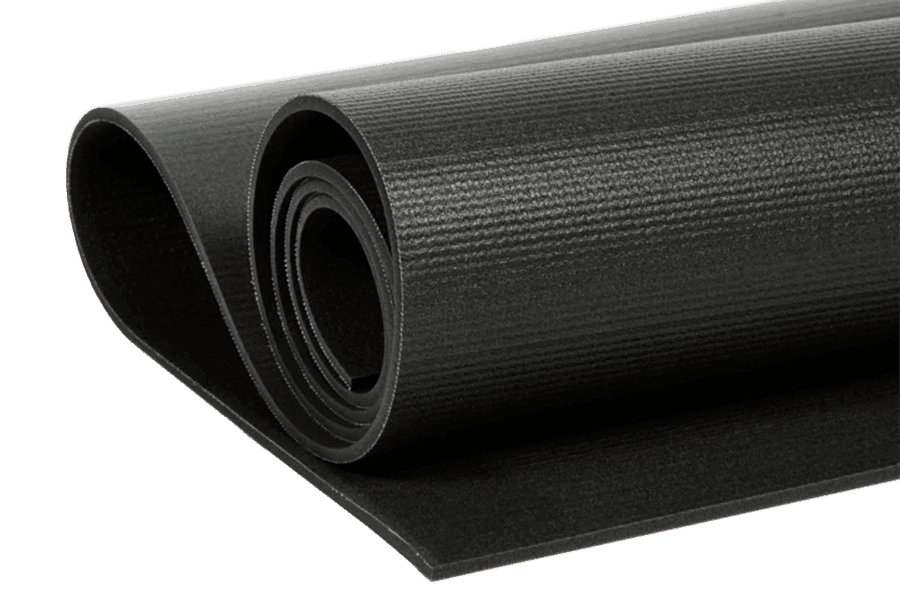
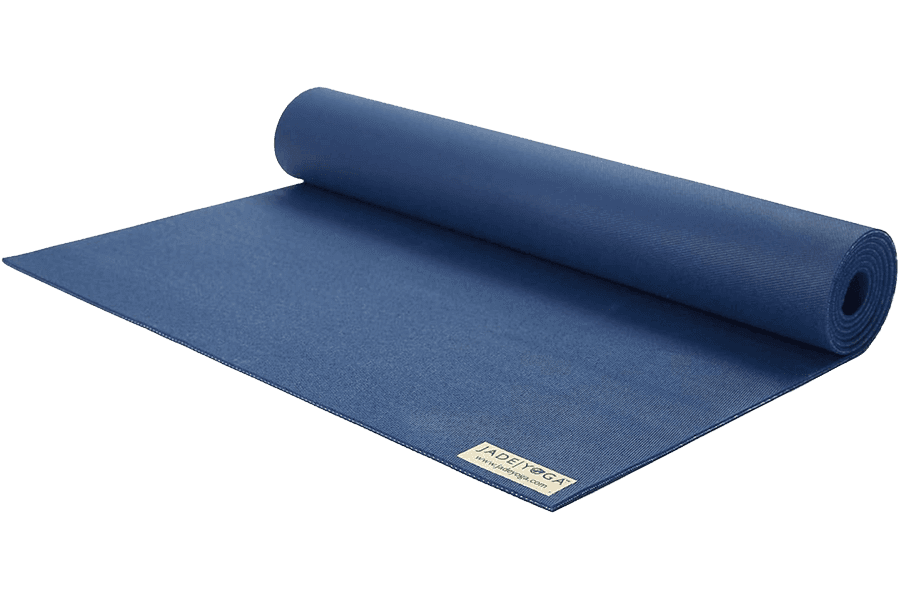
Price
The Harmony 74" lists for about $240 less.
$350
List price · check price at Amazon
$109.95
List price · check price at Amazon
Thickness
The Squared is 25% thicker.
6 mm0.24″
4.8 mm0.19″
Weight
The Harmony 74" is 20.7 lbs lighter.
26 lbs11.8 kg
5.3 lbs2.4 kg
Size
The Squared is 4″ longer; the Squared is 54″ wider.
Same on both
- Long enough for practitioners over six feet
- Steady footing in standing poses
- Premium builds from specialist yoga brands
Full specs
Dimensions
Materials & build
Buying
- Short68" × 26"
- Standard71" × 26"
- Long85" × 26"
- Long & Wide79" × 52"
- Standard68" × 24"
- Harmony XW80" × 28"
Two fixes for the same tall-person problem
Most people find this page because a standard mat stopped fitting them. The Jade Harmony 74″ fixes that the ordinary way, by adding six inches to the most familiar rubber mat in yoga for $109.95. The Manduka PRO Squared fixes it a different way: a 78 inch square of dense PVC where length and width are the same measurement, at $350 and 26 pounds.
With length settled on both sides, the choice runs on everything else: whether your mat travels, how you feel about a break-in period, how long you expect a mat to last, and whether about $240 of price difference buys anything your practice will use.
Length: both pass the tall test
The Harmony 74″ lets you lie fully flat to around six foot one or six foot two. The Squared reads 78 inches whichever way you face, which covers taller still, and diagonal savasana is always an option. If you are past six foot two and set on Jade, the 80″ Harmony XW is the length champion of the rubber side at $149.95.
The practical point: do not pick between these two on length. They both solve it. Pick on width, weight, and material, where they could hardly be more different.
Width is what the Manduka money buys
The Harmony 74″ stays 24 inches wide, the width yoga has always been. Hands and feet leave it in wide-legged poses, floor work spills off the sides, and broad shoulders overhang it in savasana. None of that is a defect; it is just how a standard mat works.
The Squared is 78 inches across, 1,776 square inches against 6,084 in total. Practicing on it, the edge stops existing as a thing you manage. You can flow facing any wall, roll through floor sequences without aiming, and share the surface with a second person while both of you keep more room than a standard mat offers. If that description stirs nothing in you, the Squared is the wrong purchase at any price.
One of these still goes to class
At 5.3 pounds the Harmony 74″ is a touch heavier than its 68 inch sibling and still an easy carry: normal roll, normal bag, no planning. Tall practitioners who commute to studios buy this mat for exactly that reason.
The Squared does not commute. Twenty-six pounds rolls into a bundle you carry like a rolled rug, no strap or bag accommodates it, and moving it between rooms is an event you will schedule rather than repeat. It is made to be unrolled once and left flat, which its PVC does perfectly, with no curl and no settling-in period for the shape.
Grip: no contest for the first month
The Harmony 74″ grips the day it arrives. Open-cell natural rubber is tacky under dry or damp hands and drinks light sweat into the surface. There is nothing to wait for and nothing to condition, and that immediacy is most of why Jade mats fill studios.
The Squared opens slick, the standing complaint against the whole PRO family. The top needs a few weeks of consistent practice before it comes good; Manduka used to suggest a salt scrub, has retired that advice, and now says the slickness resolves with use, which owner reports back up. After break-in the dry grip is excellent for years. Sweat is its permanent weakness: the closed-cell surface absorbs none of it, so a hot practice means a towel on the Manduka forever, while the Jade only needs one when things get genuinely dripping.
Underfoot: springy rubber, unyielding PVC
The two mats feel nothing alike. The Harmony 74″ has the warm, slightly giving feel of 3/16″ of rubber; your joints land a little softer, and the surface has texture your hands read instantly. The Squared is 6 mm of PVC that hardly compresses, firm in a way that some knees resent and every balance pose rewards; OutdoorGearLab scored the PRO construction perfectly on comfort and support for exactly that density.
On hard floors, concrete or tile, the Manduka protects better in long kneeling holds despite feeling harder, because nothing sinks to the floor through it. On wood or carpet the two are closer than their spec sheets suggest.
Lifespan and the two warranties
Buy the Squared once and the question is closed. Dense PVC barely wears; GearLab’s testers keep turning up instructors’ PRO-family mats between five and twenty years old, and the lifetime guarantee formalizes it, covering roughly ten years of regular use with one replacement, proof of purchase from an authorized seller required. Amazon counts when the mat is sold and shipped by Amazon itself.
The Harmony 74″ lives on rubber time. Under hard, sweaty practice the surface softens and sheds within a few years; sunlight stiffens it, hot cars age it, and Jade’s 1 year warranty excludes exactly those hazards along with harsh cleaners. Cared for gently it goes well past its warranty, but nobody should buy it expecting a decade.
Rubber, latex, and the Harmony 2.0 mixup
Jade’s material story is the stronger one: tree-tapped rubber, made in the USA, a tree planted per mat sold, over two million so far. Manduka answers with permanence and OEKO-TEX Standard 100 certification, and 26 pounds of PVC lasting twenty years is a defensible kind of green, though it is still 26 pounds of PVC. One caution: Jade mats are 99% latex free, not latex free, so an allergy points you to the Manduka.
Also mind which Harmony you research. This page covers the original US-made Harmony line. The Harmony 2.0 is a separate mat made in Spain, about $10 more per length, and it is the version behind the newest certifications and the recent OutdoorGearLab award. Prices and reviews for the two get tangled together constantly online.
Price, colors, and the middle ground
List prices run $350 for the Squared against $109.95 for the Harmony 74″. Check current prices on the PRO Squared and the Harmony 74″ before you decide. The Jade comes in five colorways at last count, the Manduka in Black or Black Sage.
If the Squared tempts you but the full square is too much, Manduka sells something in between: the PRO Long & Wide at 79″ × 52″ and $288 is a genuine home surface that costs $62 less, and our Long & Wide vs Harmony 74″ comparison walks through that version of this same decision.
Bottom line
Buy the Harmony 74″ if all you needed was a longer mat. It grips immediately, carries easily, costs about $240 less, and fixes the height problem as thoroughly as the Manduka does. Treat the rubber kindly and replace it in some years without regret.
Buy the PRO Squared if what you really want is a permanent practice surface for home, not just a longer mat. Nothing Jade makes is that.
Jade Harmony 74"
List price $109.95
Frequently Asked Questions
- Is 74 inches really long enough for a tall practitioner?
- For most, yes. At 74 inches you can lie fully flat to about six foot one or six foot two before anything hangs off. If you are taller than that, Jade's 80" Harmony XW at $149.95 covers you, and the PRO Squared's 78 inches works in any direction. Length is rarely the deciding factor between these two; width and weight are.
- What does the PRO Squared give a tall person that the Harmony 74" doesn't?
- Width, mostly. The Harmony 74" is still a 24 inch strip, so wide-legged standing poses and sprawled floor work leave the mat the same way they do on any standard cut. The Squared is 78 inches across, which means hands, feet, and rolling transitions never reach an edge, and a second person fits with room to spare. Whether that is worth $240 and a dedicated room is the whole question.
- Can the PRO Squared be moved once it's set up?
- Between rooms, with effort and both arms. To a studio, no. Twenty-six pounds of 6 mm PVC rolls into a bundle no mat bag or strap will hold, and it is designed to be unrolled once and left flat. If any part of your practice happens outside the house, the Harmony 74" wins by default.
- How do the two surfaces compare for grip?
- The Jade grips immediately; tacky open-cell rubber is its whole reputation, and light sweat soaks in rather than pooling. The Squared starts out slick, which is the most common complaint about the entire PRO family, and takes a few weeks of consistent practice to come good. Manduka now says plainly that the slickness resolves with use. Once broken in it grips well when dry, but sweat sits on the closed-cell surface, so hot practice means a towel.
- What do the warranties say about how long these mats last?
- Manduka guarantees the Squared for life, which its fine print defines as roughly ten years of regular use with one replacement, requiring proof of purchase from an authorized seller. Jade covers the Harmony for 1 year and excludes sun damage and harsh cleaners. That gap tracks the materials: dense PVC barely wears, while natural rubber softens with heavy use and hardens in sunlight, so hard-practicing owners replace Harmonys every few years.
- Does the Harmony 74" come in the same colors as the standard Harmony?
- Fewer. The 74" length runs five colorways at last count against roughly twelve for the 68", though the staples like Midnight Blue, Black, and Jade Green are there. The PRO Squared offers exactly two: Black and Black Sage. None of these mats is a fashion purchase, but the Jade gives you more say.
Related comparisons
- JadeYoga Harmony 74" vs Manduka PRO Lite Terra 4.7mm
- Manduka PROlite vs JadeYoga Harmony 74"
- JadeYoga Harmony 74" vs Lululemon The Mat 5mm
- JadeYoga Harmony 74" vs Suga SugaMat
- JadeYoga Harmony 74" vs Manduka eKO Lite Long
- JadeYoga Harmony 74" vs Manduka eKO
- Manduka PROlite Long vs JadeYoga Harmony 74"
- JadeYoga Harmony 74" vs Manduka GRP Adapt Lite 2.1 4mm
- JadeYoga Harmony 74" vs Manduka GRP Adapt 1.0