Manduka GRP Adapt 2.0 vs Gaiam Performance Dry-Grip Long & Wide: Which One Should You Buy?
Both of these are marketed at people who sweat, which makes the test results worth reading closely. GearLab measured wet grip on both and got 8.5 for one and 3.5 for the other. The cheaper one is also seven inches longer, so this is not as simple as buying the winner.
As an Amazon Associate, we earn from qualifying purchases made through links on this page. How this works
The quick answer
GearLab scored the GRP Adapt 2.0 82 out of 100 with 9.5 dry grip and 8.5 wet, the best wet number of the 19 mats it tested in 2026, plus the hot yoga award. It scored the standard Gaiam Dry-Grip 62, with 8 for comfort and support, 4 for materials, 6.5 dry and 3.5 wet, the second worst wet result in the field. The Long & Wide is that same mat at 78 by 26 inches for $74.98.
Get the GRP Adapt 2.0 if the heated-practice claim is why you are shopping, because only one of these mats delivers on it. Get the Gaiam if you want the most floor for the money and your room is not heated, and treat its hot yoga marketing as marketing.
Get the Manduka GRP Adapt 2.0 if...
- You genuinely practice hot yoga
- Your hands slide once a class warms up
- You want a mat that holds up for years
- You want around five colorways to choose from
Get the Gaiam Dry-Grip Long & Wide if...
- You are tall enough to want 78 inches
- You want the softer, more cushioned surface
- You'd rather keep about $53
- You practice in a cool room where its topcoat works
Side by side
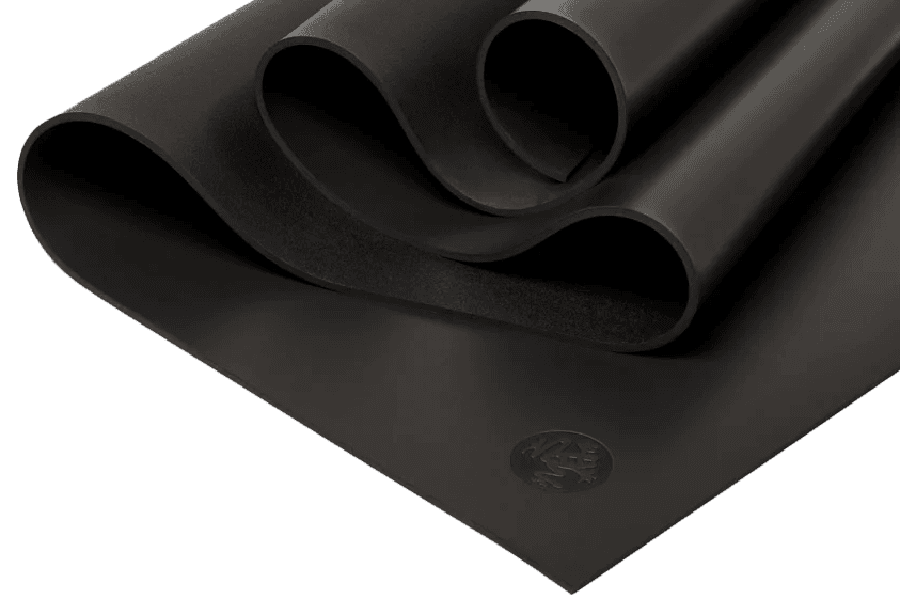
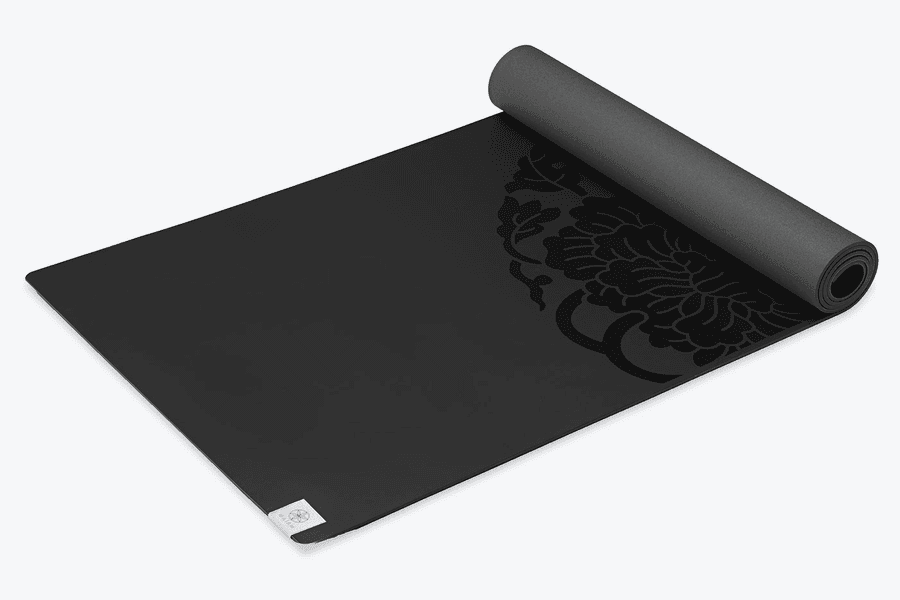
Price
The Dry-Grip L&W lists for about $53 less.
$128
List price · check price at manduka.com
$74.98
List price · check price at Amazon
Thickness
Identical thickness.
5 mm0.2″
5 mm0.2″
Weight
The Dry-Grip L&W is 0.8 lbs lighter.
5.8 lbs2.6 kg
5 lbs2.27 kg
Size
The Dry-Grip L&W is 7″ longer; same width.
Same on both
- 5 mm thick and 26 inches wide
- Coated surfaces rather than bare foam
- Around 5 to 6 pounds
- Both are marketed for heated practice
Full specs
Dimensions
Materials & build
Two mats sold for the same job
Both of these are marketed at people who sweat. One is called Dry-Grip and its listing recommends it for hot yoga; the other is Manduka’s heated-practice flagship. GearLab tested both and measured wet grip on each.
It got 8.5 out of 10 for the GRP Adapt 2.0 and 3.5 for the Gaiam. That is the widest split on a single measurement we have seen between two mats sold for the same purpose, and it is the reason this page exists.
Why the numbers go that way
The GRP’s Satin Grip polyurethane takes moisture into the top layer, so the surface holds as a class heats up rather than falling away. That mechanism earned it the roundup’s best wet score of 19 mats and the hot yoga award.
The Gaiam’s topcoat repels moisture instead of absorbing it, so sweat pools on top with nowhere to go. GearLab’s 3.5 was the second worst wet result in the whole field, against 6.5 dry. The name describes what it does dry, which is the part people misread.
The cheaper mat is seven inches longer
The Gaiam Long & Wide is 78″ × 26″. The GRP is 71″ × 26″. Same width, seven inches of length in the Gaiam’s favor, and $53 less.
That is a real argument if you are over about five foot ten, where a 71 inch mat runs out in savasana. Manduka’s answer is the GRP Adapt 2.0 Long at 79 by 26 for $138, in Carbon Black only, which closes the gap for $10 more.
Comfort: the Gaiam is the softer one
GearLab rated the standard Dry-Grip 8 out of 10 for comfort and support, which is good for the price and comes from a softer PVC at the same 5 mm.
The GRP scored 8.5 through density rather than softness: it does not deflect under a standing foot, which is better for balance work and less forgiving under a kneecap. Neither is a thick mat, and for padding you want 6 mm of foam instead.
Materials: 8 against 4
GearLab scored the GRP 8 for materials and the standard Dry-Grip 4, the lowest mark in that column across all 19 mats it tested. Polyurethane over natural rubber made in Spain, against coated PVC with no stated origin.
The practical consequence is latex. The GRP’s rubber base makes it unsuitable for a latex allergy; the Gaiam is latex-free PVC. Neither is a natural-materials choice in the way cork or plain rubber would be.
Both have a coating that wears
The Gaiam’s topcoat thins exactly where hands and feet land, and the grip goes with it. Once that happens you are practicing on plain PVC, which is not what you paid for.
The GRP’s polyurethane top has the same vulnerability, though it starts from a much higher level and takes a couple of years of heavy heated use to show. The routine that extends both is identical: damp cloth, mild spray, dried flat, out of the sun.
The lifetime guarantee is on the weaker mat
Gaiam covers the Dry-Grip for life, which covers manufacturing defects rather than a topcoat worn thin by normal use. Manduka gives the GRP a 30 day return window and nothing after it, since the lifetime guarantee applies to the PRO and PROlite lines only.
So the longer promise sits on the mat that will need it sooner, and it does not cover the failure mode either mat actually has. Read the coverage as a defect policy rather than a lifespan estimate.
Weight and handling
5 pounds for the Gaiam and 5.8 for the GRP, close enough that neither wins on a shoulder. Both lie flat from the first unroll with no curling.
Rolled, the Gaiam is bulkier because it is longer and wider. If it is going in a car footwell or a studio cubby, measure first; 78 by 26 inches of 5 mm PVC makes a large cylinder.
Where to buy, and two listing traps
The Gaiam sells on Amazon, but the listing covers several sizes and its default bullets describe the 68 inch standard mat while the detail table shows 78 by 26. Check the current price and confirm the size before you order. The standard version is $69.98, only five dollars less, so the bigger one is the sensible pick of the two.
The GRP Adapt 2.0 sells direct from manduka.com at $128. The older GRP Adapt 1.0 still circulates on Amazon as runout stock near $94, and it is a different mat from the Spanish-made 2.0 that GearLab tested and awarded.
Bottom line
Buy the GRP Adapt 2.0 if the heated-practice claim is why you are shopping. Only one of these two mats delivers on it, and the testing is not ambiguous: 8.5 against 3.5 on the exact property both are sold for.
Buy the Gaiam Dry-Grip Long & Wide if you want the most floor for the money and your room is not heated. Seven extra inches for $53 less is a genuinely good deal on a dry mat. Just ignore the hot yoga framing on the box.
Manduka GRP Adapt 2.0
List price $128
Frequently Asked Questions
- Why is the Gaiam's wet grip so poor?
- Its topcoat repels moisture rather than absorbing it, so sweat pools on the surface with nowhere to go. GearLab measured the standard version 3.5 out of 10 wet, second worst of 19 mats, against 6.5 dry. The name and the listing copy both point at hot yoga, and the testing does not support it.
- What makes the GRP different?
- Its Satin Grip polyurethane layer takes moisture into the top rather than leaving it on the surface, so grip holds as a class heats up instead of falling away. That is a mechanism rather than a texture, and it is why GearLab gave it 8.5 wet and the hot yoga award over every other mat it tested.
- Is the Gaiam's extra size worth it?
- If you are tall, yes. At 78 by 26 inches it fits most people over six foot in savasana, where the GRP's 71 inches runs short above about five foot ten. Manduka does sell a GRP Adapt 2.0 Long at 79 by 26 for $138, in Carbon Black only, which closes that gap for $10 more.
- Which is more comfortable?
- The Gaiam, slightly. GearLab rated the standard version 8 out of 10 for comfort and support thanks to a softer PVC at the same 5 mm. The GRP is firmer, which is better under a standing foot and less forgiving under a kneecap. Neither is a thick mat; for padding you want 6 mm or more.
- How do they hold up over time?
- The GRP runs for years, though its polyurethane top eventually flakes under heavy heated use. The Gaiam's topcoat wears thin exactly where hands and feet land, and the grip goes with it. GearLab's 4 out of 10 for materials on that mat was the lowest score in that column across the entire field.
- Where do I buy each one?
- The GRP Adapt 2.0 sells direct from manduka.com at $128; it is not a stable Amazon listing, and the older 1.0 still floats around there as runout stock near $94. The Gaiam is on Amazon, but the listing covers several sizes and its default bullets describe the 68 inch standard mat, so confirm 78 by 26 before you order.
Related comparisons
- Manduka GRP Adapt 2.0 vs Lululemon The (Big) Mat 5mm
- Manduka X vs Gaiam Performance Dry-Grip Long & Wide
- Lululemon The Mat 5mm vs Manduka GRP Adapt 2.0
- JadeYoga Harmony 74" vs Manduka GRP Adapt 2.0
- Hugger Mugger Earth Elements 5mm vs Gaiam Performance Dry-Grip Long & Wide
- Manduka GRP Adapt 1.0 vs Gaiam Performance Dry-Grip Long & Wide
- Suga SugaMat vs Gaiam Performance Dry-Grip Long & Wide
- JadeYoga Level One vs Gaiam Performance Dry-Grip Long & Wide
- IUGA Eco Friendly Non Slip PU vs Gaiam Performance Dry-Grip Long & Wide