Jade Harmony 74" vs Jade Fusion XW: Which One Should You Buy?
The Fusion XW is the largest, thickest, heaviest, and most expensive mat JadeYoga makes: 80" × 28" of 8 mm open-cell rubber at 11 pounds and $249.95, in a single colorway. The Harmony 74 is the everyday version of the same material, 74" × 24" at 4.8 mm, 5.3 pounds and $109.95, in five colorways. The rubber, the factory, the warranty, and the grip are identical. What separates them is $140 and whether you want a mat you can carry.
As an Amazon Associate, we earn from qualifying purchases made through links on this page. How this works
The quick answer
The Fusion XW gives you 26% more surface and two and a half times the depth, which is a real answer for tall or broad practitioners and for anyone whose knees dictate terms. It's also 11 pounds, comes in one color, takes days to dry after a sweaty class, and costs more than twice as much. It is a mat you unroll in a room and leave there.
The Harmony 74 is the mat most people should buy: same celebrated surface, enough length for practitioners up to about six foot one, light enough to carry without thinking, and $140 cheaper. Take the XW only if both its dimensions and its cushioning are things you actually need, because paying for one without the other is expensive.
Get the Harmony 74" if...
- You carry your mat; 5.3 pounds is the difference that decides it
- 74 inches covers your height and 24 inches your shoulders
- You practice without joint pain and prefer a firm, steady surface
- You'd rather keep $140 and choose from five colorways
Get the Fusion XW if...
- You're tall and broad; 80" × 28" is the most Jade offers
- Kneeling and floor work hurt on a standard-thickness mat
- The mat has a permanent home and never travels
- You want maximum cushioning without leaving natural rubber
Side by side
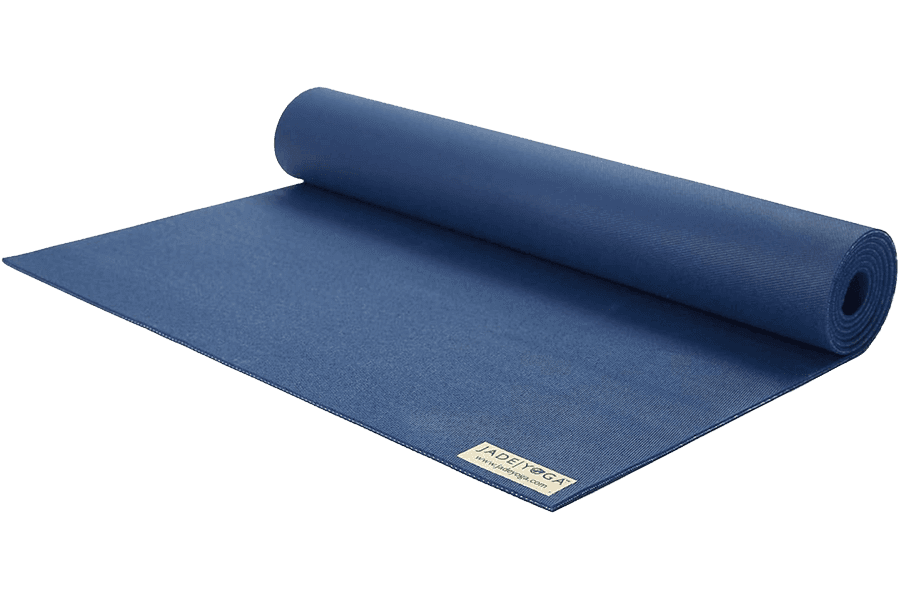
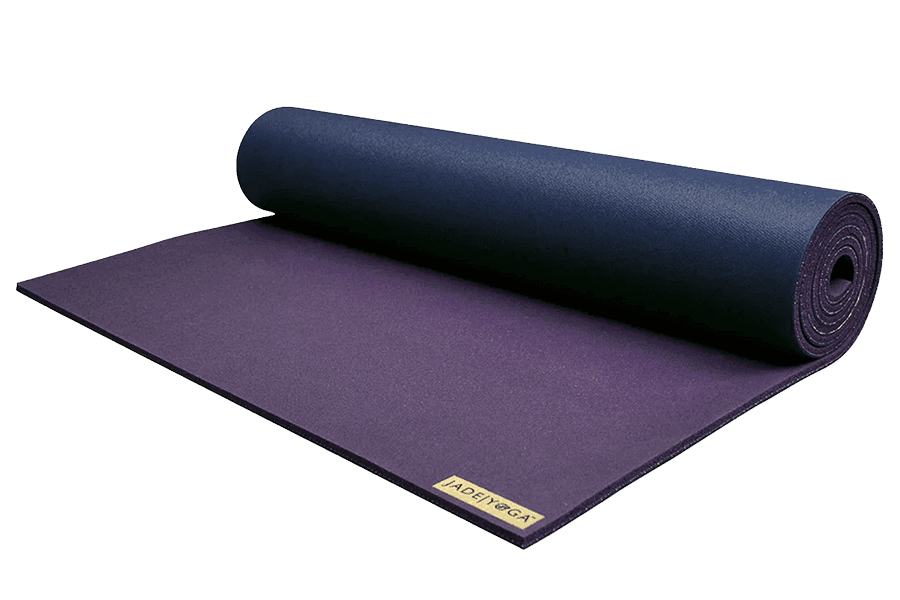
Price
The Harmony 74" lists for $140 less.
$109.95
List price · check price at Amazon
$249.95
List price · check price at Amazon
Thickness
The Fusion XW is 67% thicker.
4.8 mm0.19″
8 mm0.31″
Weight
The Harmony 74" is 5.7 lbs lighter.
5.3 lbs2.4 kg
11 lbs5 kg
Size
The Fusion XW is 6″ longer; the Fusion XW is 4″ wider.
Same on both
- Made by JadeYoga in the USA
- Open-cell rubber that absorbs sweat
- Tacky grip from the first practice, no break-in
- 1 year warranty, sun damage excluded
- A tree planted per mat sold
Full specs
Dimensions
Materials & build
Buying
Jade’s everyday mat against Jade’s biggest
The Fusion XW is the largest, thickest, heaviest, and priciest mat JadeYoga makes: 80″ × 28″ of 8 mm open-cell rubber at 11 pounds and $249.95, in one colorway. The Harmony 74 is the everyday version of the same material, 74″ × 24″ at 4.8 mm, 5.3 pounds and $109.95, in five colorways.
Surface, factory, warranty, and care rules are identical, so this comes down to $140 and whether you want a mat you can pick up. Both of the XW’s upgrades, size and cushioning, arrive together whether you need both or not.
Who the 80″ × 28″ footprint is actually for
Practitioners over about six foot one, whose heels start finding the floorboards on a 74 inch mat in savasana, and broad-shouldered people whose hands land off the edge in wide stances. Four extra inches of width shows up in more poses than six extra inches of length does, which is worth knowing if only one of the two dimensions is your problem.
If neither describes you, the XW’s size mostly becomes a storage question. Jade’s own middle option is the Harmony XW at 80″ × 28″ and $149.95, which is the same big footprint at the Harmony’s standard 4.8 mm and 6.7 pounds, and it’s the mat most people wanting room rather than cushioning should be looking at.
Eight millimeters of rubber
The XW’s depth is the Fusion formula, and OutdoorGearLab scored that line’s comfort perfect with best-in-class traction alongside. For kneeling lunges, forearm work, and long floor holds on tile or concrete, it’s a genuinely different experience from a standard-thickness mat, and for practitioners with sore joints it can be the difference between practicing and not.
The Harmony 74 is firm and honest about the floor. Nothing hurts on it if nothing hurts to begin with, and its firmness is an advantage in standing balance work. The XW is softer underfoot; because it’s dense rubber rather than soft foam it doesn’t sink and shift the way a thick exercise mat does, but the Harmony is still the steadier of the two.
Eleven pounds is a lifestyle decision
The XW weighs more than double the Harmony 74 and more than the famously hefty 71″ Manduka PRO. Weight is only half of it: 8 mm of rubber at 28 inches wide rolls into a cylinder no mat sling will hold. This is a mat you unroll in a room and leave there, and Jade doesn’t pretend otherwise.
The Harmony 74 goes anywhere a standard mat goes, at 5.3 pounds in a 24 inch roll. If you want Jade’s cushioning in something you can still carry, the Fusion 74 at $199.95 is 8.8 pounds and rolls to 24 inches, which is the compromise most Fusion buyers actually want.
Grip, sweat, and drying
No difference in grip. Both are open-cell natural rubber, tacky from the first practice with no break-in, and both absorb light moisture, the quality Wirecutter credits for the Harmony’s traction in sweaty sessions. A genuinely dripping hot class overwhelms open-cell rubber either way, and heavy sweaters end up with a towel over both.
Drying is where the thickness returns. A soaked XW takes days to dry all the way through; the Harmony 74 is ready by morning. For a daily sweaty practice that turnaround is a practical argument for the thinner mat, since rolling a damp open-cell mat is how rubber mats begin to smell.
Price and value
List prices are $109.95 for the Harmony 74 and $249.95 for the Fusion XW. Check current prices on the Harmony 74 and the Fusion XW.
Because both wear out on the same schedule, the $140 buys features rather than longevity. That’s fine if you use both features. Paying XW money for size you need and cushioning you don’t, or the reverse, is the expensive mistake here, and Jade sells a cheaper mat for either half of that.
Bottom line
The Harmony 74 is the right mat for most people reading this: same celebrated rubber, enough length for practitioners to about six foot one, light enough to carry without thinking, five colors, $140 less.
The Fusion XW earns its price for a specific person: tall, broad, joint-sore, practicing at home on a hard floor, with somewhere to leave a mat unrolled. If that’s you, nothing else in natural rubber offers all of it at once. If you only need one of those things, Jade’s catalog has a cheaper answer for it.
Jade Harmony 74"
List price $109.95
Jade Fusion XW
List price $249.95
Frequently Asked Questions
- Who genuinely needs 80" × 28"?
- Practitioners over about six foot one, whose heels leave a 74 inch mat in savasana, and broad-shouldered people whose hands land on the floor in wide stances. Four extra inches of width shows up in more poses than six extra inches of length does. If neither describes you, the XW's size is mostly a mat that's harder to store and impossible to carry.
- Is 11 pounds really that bad?
- It's more than double the Harmony 74 and heavier than almost any mat on the market, including the famously hefty Manduka PRO. The bigger issue is bulk: 8 mm of rubber at 28 inches wide rolls into a cylinder that no mat sling holds. Treat the XW as furniture. If you need Jade's cushioning in something more portable, the 74 inch Fusion at $199.95 is 8.8 pounds and rolls to 24 inches.
- Do they grip differently?
- No. Same open-cell natural rubber surface, tacky from the first practice on both, and both absorb light moisture, which is what Wirecutter credits for the Harmony's traction in sweaty sessions. The Fusion line's cushioning drew a perfect comfort score from OutdoorGearLab alongside best-in-class traction. After a sweaty class, though, the XW's 8 mm takes days to dry through where the Harmony 74 recovers overnight.
- Does the XW feel unstable in balance poses?
- It's softer than the Harmony underfoot and some practitioners notice that in tree pose or warrior three. Because it's dense rubber rather than soft foam, it doesn't sink and shift the way a thick NBR foam mat does, so the effect is mild. Still, the Harmony 74 is the steadier surface of the two, and if balance work is central to your practice that's worth weighing.
- How long do these last?
- The same clock applies to both, since the material is identical: surfaces soften and shed with heavy practice, and hard-practicing owners replace theirs every few years, with CNN Underscored putting the gentle-care ceiling around ten years. Jade covers both for 1 year, excluding sun damage and harsh cleaners. Neither tolerates direct sun, hot cars, or aggressive cleaners.
- Are these safe with a latex allergy?
- No. Both are tapped tree rubber, and Jade describes its mats as 99% latex free while noting they may carry trace latex proteins and shouldn't be used by people with latex allergies. If that applies to you, a PVC or TPE mat is the category to shop, not either of these.
Related comparisons
- JadeYoga Harmony 74" vs Manduka PRO Lite Terra 4.7mm
- Manduka PROlite vs JadeYoga Harmony 74"
- JadeYoga Harmony 74" vs Lululemon The Mat 5mm
- JadeYoga Harmony 74" vs Suga SugaMat
- JadeYoga Harmony 74" vs Manduka eKO Lite Long
- JadeYoga Harmony 74" vs Manduka eKO
- Manduka PROlite Long vs JadeYoga Harmony 74"
- JadeYoga Harmony 74" vs Manduka GRP Adapt Lite 2.1 4mm
- JadeYoga Harmony 74" vs Manduka GRP Adapt 1.0