Jade Harmony 74" vs Amazon Basics 1/2 Inch Extra Thick: Which One Should You Buy?
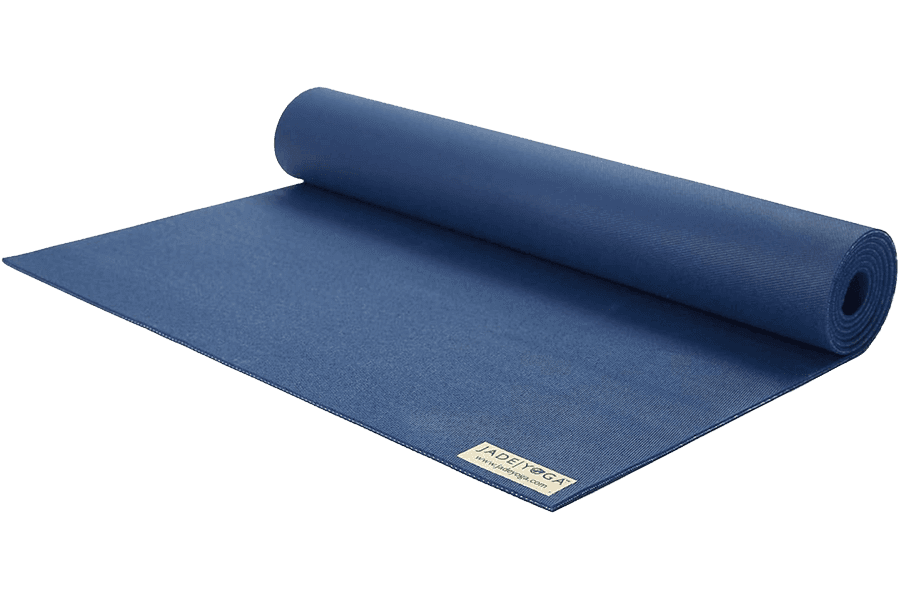
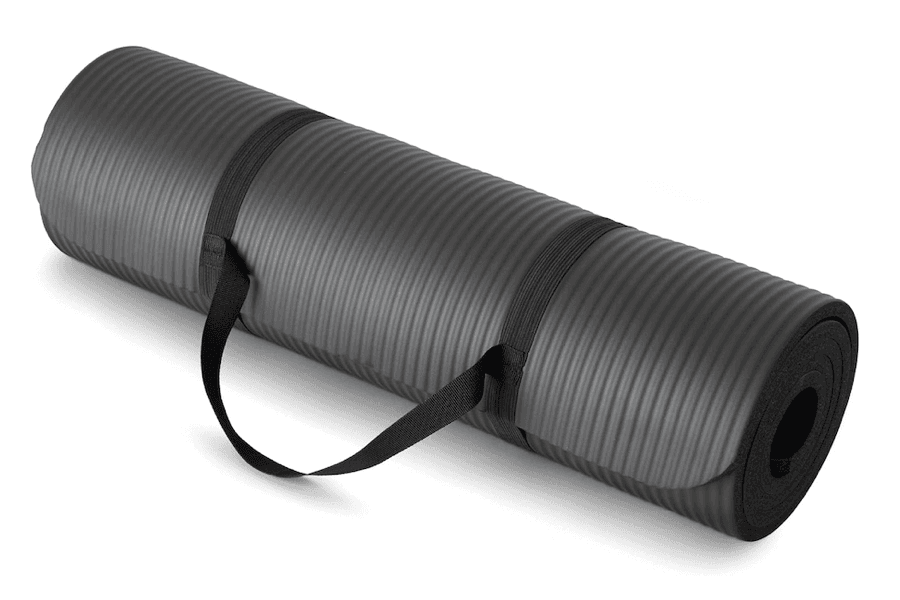
These two share an identical 74" × 24" footprint and belong in different aisles. The Jade Harmony 74 is a yoga mat: 4.8 mm of firm, tacky rubber that keeps hands and feet planted through standing practice, at $109.95. The Amazon Basics 1/2 Inch Extra Thick is an exercise pad: soft NBR foam that makes hard floors comfortable to lie on, at about $22 with a carry strap included. Matching size, opposite purposes, and the right buy depends entirely on which one is yours.
As an Amazon Associate, we earn from qualifying purchases made through links on this page. How this works
The quick answer
For yoga the Harmony 74 wins everything that matters: a firm base that holds balance poses steady, rubber grip that survives damp palms, and a surface built for years of standing practice. Soft foam can't run a standing practice; feet sink unevenly, wobbles multiply, and sweat makes it slick. For horizontal work the rankings flip: for stretching, physical therapy, and core routines, the Basics' half inch of cushioning is more comfortable than any yoga mat, at a fifth of the price.
Buy the Harmony 74 if you practice yoga. Buy the Amazon Basics if your floor time is stretching and exercises. Crossing those wires wastes money in one direction and comfort in the other.
Get the Harmony 74" if...
- Yoga, with standing and balance poses, is the activity
- You need grip that holds when palms get damp
- You're tall; both are 74 inches but only this one practices
- You want a mat that serves years of use
Get the Amazon Basics if...
- Your floor time is stretching, PT, or core work
- Soft padding on a hard floor is the actual goal
- You want 74 usable inches for about $22
- Yoga isn't really the plan
Side by side
Price
The Amazon Basics lists for about $87 less.
$109.95
List price · check price at Amazon
$22.48
List price · check price at Amazon
Thickness
The Amazon Basics is 165% thicker.
4.8 mm0.19″
12.7 mm0.5″
Weight
The Amazon Basics is 3.1 lbs lighter.
5.3 lbs2.4 kg
2.2 lbs1 kg
Size
Same length; same width.
Same on both
- Same 74" × 24" footprint
- 1 year warranties at both price points
- Sold on Amazon at first-party prices
- Roll up and store easily
Full specs
Dimensions
Materials & build
Buying
Identical footprint, unrelated products
Here’s a coincidence that confuses shoppers: both of these measure exactly 74″ × 24″. The Jade Harmony 74 fills that rectangle with 4.8 mm of firm, tacky natural rubber built for a standing yoga practice, at $109.95. The Amazon Basics 1/2 Inch Extra Thick fills it with 12.7 mm of soft NBR foam built to make hard floors comfortable, at about $22 with a carry strap in the box.
Amazon’s search page will happily present them as alternatives. They aren’t. Which one you should own depends on what your body is doing on the floor, and once that’s named, this comparison resolves itself.
Standing yoga needs firmness, and only one mat has it
A standing practice asks the floor for two things: stability underfoot and grip under hands. The Harmony delivers both. Its 4.8 mm of dense rubber barely compresses under a loaded foot, so tree pose wobbles only as much as you do, and its open-cell surface keeps traction as palms go damp, the quality Wirecutter has commended in sweaty sessions.
Half an inch of soft foam fails both requests. A foot sinks unevenly, so balance poses topple for reasons that have nothing to do with ability; hands pressed into downward dog drift as the foam gives; and sweat makes the surface slick. Seated and lying poses work fine on it. A practice with standing poses does not.
Horizontal comfort belongs to the foam
Reverse the posture and the ranking reverses. For stretching routines, physical therapy exercises, core work, and simply lying on a hard floor without your spine complaining, 12.7 mm of soft NBR foam beats any yoga mat made, the Harmony included. The full 74 inch length fits complete lying stretches, which budget pads often don’t.
This is the job the Basics was built for, and at about $22 it does the job well. Judging it as a failed yoga mat misses that it was never entered in that event.
Wear: gradual against sudden
The Harmony wears the way natural rubber does: the surface slowly softens and sheds over years of practice, with CNN Underscored putting the careful-owner ceiling around a decade. Jade covers the first year in writing against defects and premature wear.
Soft NBR foam wears by flattening. Knees, heels, and elbows compress it permanently where they land most, and owner reviews report tears and shedding within a year or two of steady use. Amazon matches Jade’s 1 year warranty on paper, which says more about paper than about foam. For occasional use the pad lasts fine; under daily workouts it’s a consumable.
Sweat and cleaning
The Harmony absorbs light sweat into its open-cell surface, which is how it keeps grip, and asks for gentle cleaners, shade, and no hot cars in return. It’s also tapped tree rubber, so it isn’t suitable for latex allergies; Jade says as much despite the 99% latex free phrasing.
The foam pad wipes clean easily but turns slippery when sweat sits on it, one more reason vigorous exercise isn’t its lane. NBR is a synthetic rubber, so the latex concern doesn’t carry over.
If the budget is the point, aim between them
If you landed here because $109.95 for a yoga mat feels steep, the answer isn’t soft foam; it’s a cheap firm mat. Amazon’s own 1/4 Inch TPE mat runs about $26, stays stable under standing poses, and is nearly as long as the Harmony at 73.6 inches. Manduka’s Begin at $62 adds a genuinely helpful alignment stripe for beginners.
Firmness is the non-negotiable part of a yoga mat. Everything else, grip longevity, feel, warranty, is what the Harmony’s price adds on top.
Price and value
List prices are $109.95 for the Harmony 74 and about $22.48 for the Amazon Basics. Check current prices on the Harmony 74 and the Amazon Basics pad; both sell on Amazon and the pad’s price wanders with colorway.
The $87 difference isn’t a premium for a nicer version of the same thing; it’s the distance between categories. Spent on the activity you actually do, either price is fair. Spent across the category line, both are wasted.
Bottom line
Buy the Harmony 74 if yoga, with its standing poses and sweaty palms, is the activity. It’s a working tool with two decades of studio credibility, and its 74 inches make it the rare premium mat that fits tall practitioners out of the box.
Buy the Amazon Basics if your floor time is stretching, physical therapy, or core work done lying down. It’s more comfortable for all of that than any yoga mat, at a fifth of the price. The only wrong purchase on this page is the crossover one.
Jade Harmony 74"
List price $109.95
Amazon Basics 1/2 Inch Extra Thick
List price $22.48
Frequently Asked Questions
- Can I practice yoga on the Amazon Basics half inch mat?
- Seated and lying poses, comfortably. Standing practice, no: half an inch of soft foam compresses unevenly under a loaded foot, so balance poses wobble regardless of your skill, and hands sink in downward dog. Sweat also turns the foam surface slick. If yoga is the goal on a budget, a firm cheap mat like Amazon's own 1/4 inch TPE serves far better than thick soft foam.
- What is the foam mat actually good for?
- Comfort work. Stretching routines, physical therapy exercises, sit-ups, foam-free knee poses, resting a tight back on a hard floor: 12.7 mm of soft NBR foam makes all of it pleasant, and the 74 inch length means full-body lying stretches fit. As padding per dollar it's genuinely good. It just isn't a platform for standing on one leg.
- Is the Harmony really worth $87 more?
- As a yoga mat, yes, because the foam pad isn't one; the comparison is a working tool against the wrong tool. Against other yoga mats the Harmony's price buys US-made rubber, sweat-absorbing grip, and a company that's supported the product for decades. If the $87 stings, the budget path is a firm TPE mat in the $25 range, not softer foam.
- Which is more comfortable?
- Depends on your orientation. Lying down, the foam by a wide margin; half an inch of squish beats firm rubber for anything horizontal. Standing, the Harmony, because comfort in a standing pose is stability, and firm rubber provides it where foam wobbles. That split is the entire comparison compressed into one question.
- How does durability compare?
- The Harmony serves a real practice for years, with a surface that wears gradually and a company that honors its 1 year coverage; careful owners report far longer. The Basics' soft foam flattens where knees and heels concentrate weight, and owner reviews mention tears and permanent compression within a year or two of steady use. Both technically carry 1 year warranties; only one product tends to outlive it.
- Both are 74 inches. Does the tie matter?
- It's the one spec where they genuinely meet, and it makes each the long option in its own category. For tall practitioners the Harmony 74 is the point of the product. For tall stretchers the Basics is a lucky find, since budget pads often run short. The shared length just doesn't make them substitutes for each other.
Related comparisons
- JadeYoga Harmony 74" vs Manduka PRO Lite Terra 4.7mm
- Manduka PROlite vs JadeYoga Harmony 74"
- Amazon Basics 1/2 Inch Extra Thick vs Retrospec Solana 1/2"
- JadeYoga Harmony 74" vs Lululemon The Mat 5mm
- JadeYoga Harmony 74" vs Suga SugaMat
- JadeYoga Harmony 74" vs Manduka eKO Lite Long
- JadeYoga Harmony 74" vs Manduka eKO
- Manduka PROlite Long vs JadeYoga Harmony 74"
- JadeYoga Harmony 74" vs Manduka GRP Adapt Lite 2.1 4mm